Somewhere around week eleven of my daughter’s life, a small white box showed up on my desk at the office — not from me, from a coworker who’d had a baby two months earlier. Inside was rice cake, plain and white and slightly sweet, wrapped in cellophane with a ribbon. “Baek-il,” she said, like that explained everything, and honestly, once she walked me through it, it kind of did. That box was the moment baek-il (백일) stopped being a word I nodded along to and became something I actually understood — Korea’s 100th-day celebration for a newborn, and a much older, much heavier tradition than the cute cake photos on Instagram let on.
If you’ve spent any time around Korean parenting culture, you’ve probably heard of doljanchi (돌잔치), the elaborate first-birthday party with the hanbok and the doljabi table where the baby grabs an object to predict their future — I’ve written about what my daughter grabbed at her own doljanchi and what it meant to me. Baek-il is different, and it’s worth keeping the two straight, because they’re not just the same party held twice. One marks a full year of survival with fanfare. The other marks a much shorter, much more fragile stretch — and it comes from a darker place than the pastel decorations suggest.
Why the 100th day, specifically
Here’s the part that surprised me most: baek-il isn’t really about the number 100 being lucky or round. It’s about survival. For most of Korean history, infant mortality was brutally high — babies who made it through pregnancy and birth still faced a real chance of not making it through the first few months, from infection, malnutrition, or simple lack of medicine. A hundred days was, in practical terms, roughly the point where a baby’s odds improved enough that families felt safe exhaling. Turns out that’s not a uniquely Korean idea, either — you see faint echoes of it across East Asia — but Korea built an entire ritual calendar around that specific number, and it stuck for centuries even after modern medicine made the original danger largely disappear.
There’s a practical layer underneath the symbolic one, too. Traditionally, newborns and their mothers stayed home for the full hundred days, away from visitors and the outside world — a custom tied to postpartum recovery for the mother as much as protection for the baby. So baek-il wasn’t only “the baby survived,” it was also “we can finally show the baby to people.” The party doubled as the introduction. You’d think a culture this modern and this online would’ve quietly dropped a ritual rooted in centuries-old fears about infant death, but even now, baek-il photo packages are a whole industry in Korea, and most families still mark the day somehow, even if it’s just cake and a phone call to grandparents.

The food isn’t just decoration — it’s the whole message
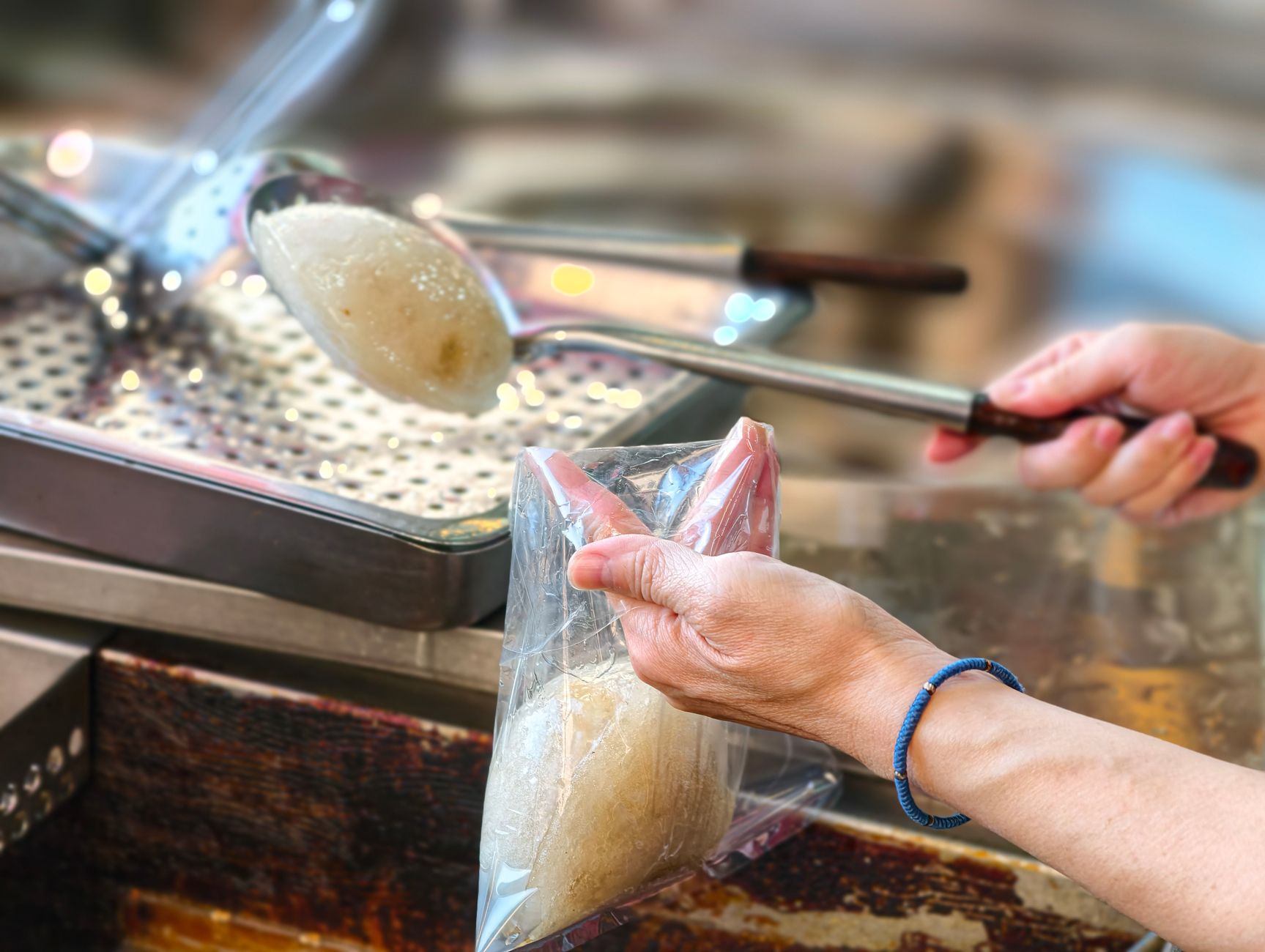
If there’s one dish that defines baek-il, it’s baekseolgi (백설기), a plain white steamed rice cake with almost no sweetness and no toppings — deliberately so. The word baek (백) is doing double duty here: it means both “hundred” and “white,” which is exactly the kind of wordplay Korean food culture loves to lean on. White stands for purity and a clean, unmarked start, so the cake becomes a wish, laid out in edible form, that the child grows up honest and untouched by trouble. It looks almost plain next to a doljanchi spread, and that’s sort of the point — baek-il food is meant to be humble, not showy.
Sitting next to the white cake, you’ll almost always find patteok (팥떡), red bean rice cake, and this one’s got a very different job. Red beans, in Korean folk belief, ward off bad luck and evil spirits — the same color shows up at housewarmings and other transitional moments for exactly that reason. So the pairing on a baek-il table is basically two prayers side by side: white for purity, red for protection. Neither one is subtle once you know what you’re looking at, but I’ll admit, for months I just thought it was two kinds of rice cake because they tasted good together.
The other tradition tied to the food is the one that still gets me a little, honestly. Families used to try to share baekseolgi with 100 different people — neighbors, coworkers, distant relatives, anyone reachable — on the belief that spreading the cake around would spread long life and good fortune back to the baby. A hundred people, for a baby who’d just made it a hundred days. You don’t have to be sentimental to feel the symmetry there. Nobody’s literally counting to 100 anymore, but the habit of sending little boxes of rice cake out to coworkers and friends around baek-il is still very much alive — that’s exactly how the box landed on my desk in the first place.
What baek-il actually looks like today
You’d think, given how much doljanchi has ballooned into a full event-planning industry in Korea — hired photographers, rented halls, coordinated hanbok — that baek-il would have followed the same trajectory. Surprisingly, it mostly hasn’t. Most families I’ve talked to describe baek-il as noticeably quieter: a home gathering with grandparents and close relatives, a rice cake spread, maybe a studio photo session, and that’s largely it. Part of that is practical — a hundred-day-old baby isn’t exactly ready to be paraded around a banquet hall for three hours — but part of it is also that Korean tradition has always treated the 100-day mark as more private and protective than celebratory in the loud sense.
That said, the photo studio piece has become a genuine institution on its own. Baby photo studios across Korea run dedicated “baek-il photoshoot” packages, often with props, soft blankets, and staged setups that show up all over Korean parenting blogs and social feeds. It’s become almost its own mini-industry sitting next to, but separate from, the actual family gathering. Some parents skip the home ceremony altogether these days and treat the studio photos as the main event — which would’ve been unthinkable a generation or two ago, when the point was survival, not aesthetics, but that’s modern Korea for you: the ritual bends, the sentiment mostly holds.
Gifts: what people actually bring
Cash is still the default gift at a baek-il gathering, much like at Korean weddings, though the amount runs smaller and more casual — usually somewhere in the tens of thousands of won from friends, more from close family, tucked into an envelope rather than handed over loose. Gold rings used to be a standard baek-il gift, based on the old logic that gold holds value and can be sold later if the family needs cash — a very practical kind of sentimentality. Rising gold prices have made that custom less common than it used to be, though grandparents especially still lean toward it. Beyond that, you’ll see the expected baby gear — clothes, blankets, sometimes a small keepsake tied to the child’s name — but nothing close to the elaborate hanbok and gold rings that flood a doljanchi table a year later.
If you’re a foreigner invited to a baek-il and unsure what to bring, cash in a plain envelope is the safest move, and nobody will think less of you for keeping it simple — this isn’t the milestone where lavish gestures are expected. Strange as it sounds coming from someone who once way overthought a wedding envelope, baek-il gifting is genuinely one of the lower-stakes moments in the whole calendar of Korean life events.
Baek-il and doljanchi: not the same party twice
It’s easy to lump these two together if you’re new to Korea — both involve a baby, rice cake, and relatives showing up with envelopes. But the emotional register is different, and once you notice it, you can’t unsee it. Baek-il is relief. It’s the quiet exhale of “we made it through the dangerous part,” rooted in an era when that was never guaranteed. Doljanchi, by contrast, is closer to a full celebration of identity and future — the doljabi table, the fortune-telling, the bigger crowd, the sense that the child has now cleared enough ground to be introduced to the world as a person with a path ahead. One is about survival. The other is about possibility. Both matter, but they’re not interchangeable, and conflating them is a pretty easy way to miss what makes baek-il quietly moving in its own right.
Frequently asked questions
Is baek-il still widely celebrated in Korea today, or is it fading out?
It’s still common, though the scale has shrunk compared to a generation ago. Most families do something — a home gathering, a photo session, rice cake shared with coworkers — even if it’s nowhere near the size of a doljanchi. In cities especially, it’s common now to hear of parents doing a small studio photoshoot and a quiet family dinner instead of inviting a wide circle of guests, which would’ve been more typical decades back when survival itself was the thing being marked.
What should I say or bring if a Korean coworker invites me to their baby’s baek-il?
Cash in a plain envelope is the standard, low-stress choice — there’s no need to agonize over it the way you might for a wedding. If you’d rather bring something physical, baby clothes or a small gift for the child work fine too. Congratulating the parents with something like “baek-il chukhahamnida” (백일 축하합니다, congratulations on the 100th day) covers you well even if your Korean is otherwise limited.
Why does the rice cake matter so much if it’s basically plain and unsweetened?
That plainness is the entire point rather than an oversight. Baekseolgi is deliberately unadorned because it’s meant to represent purity and an unmarked start in life, not to be the most exciting item on the table. It’s less a dessert and more a small, edible wish — which, once you know that, makes it taste a little different even if the recipe never changes.
Leave a Reply