The first time a saju master asked me for my birth hour and not just my birth date, I genuinely didn’t know the answer. My mother did, of course, because in Korea that number gets written down somewhere the way a blood type does, filed away for the day someone might need it. I called her from the waiting room of a small office above a dry cleaner’s in Sinchon, feeling faintly ridiculous, and that phone call turned out to be the most useful thing that happened all afternoon.
Saju, or the Four Pillars of Destiny, is built on exactly that kind of specificity. You give a practitioner four pieces of information — year, month, day, and hour of birth — and each one becomes a “pillar” made of two Chinese characters, a heavenly stem and an earthly branch. Eight characters total, so a lot of older Koreans just call the whole system “palja,” literally “eight characters.” The idea, inherited from centuries-old Chinese cosmology and filtered through Korean tradition, is that the balance of yin and yang and the five elements — wood, fire, earth, metal, water — at the moment of your birth leaves an imprint a trained reader can decode. If a reader tells you you’re “missing wood,” for instance, the fix isn’t mystical at all — it’s often as mundane as wearing more green, choosing a certain direction for your desk at work, or, in more serious cases, picking a baby name whose characters are believed to supply whatever element the birth data seems short on. It’s less a prediction machine than a very old, very elaborate personality framework, and the people who practice it seriously spend years learning to read the interactions between those elements the way a music theory student learns counterpoint.
Why Koreans still bother with birth hours
What surprised me, coming into this as an adult rather than growing up steeped in it, is how unevenly serious people are about it. I’ve sat with relatives who treat a saju reading the way some people treat a horoscope app — a bit of fun before New Year’s, forgotten by February. And I’ve also sat in a room where a reading genuinely delayed a wedding date by three weeks because the numbers “didn’t line up,” and nobody in that family found that strange. Marriage dates are probably the single most common reason people still consult a saju master with real intent. Couples bring their birth details in and ask a practitioner to check “gunghap,” or compatibility, before anything gets booked with a wedding hall. Business openings work the same way — a lot of small shop owners I’ve talked to picked their opening day, sometimes even the exact hour they first unlocked the door, based on what a reading suggested was auspicious.
This is the part that outsiders find hardest to square: Korea is a country with excellent universities, a brutally competitive tech sector, and one of the highest rates of higher education in the world, and yet none of that seems to override the impulse to check whether Saturday or the following Tuesday is the better day to sign a lease. I don’t think it’s a contradiction so much as a separate lane. Most people I know who’ve had a reading done aren’t rejecting science or reason; they’re adding one more layer of ritual and reassurance on top of decisions that already feel heavy — marriage, a new business, a big move. Turns out the two impulses coexist pretty comfortably once you stop expecting them to compete.
The saju cafe: an old practice in a pastel wrapper
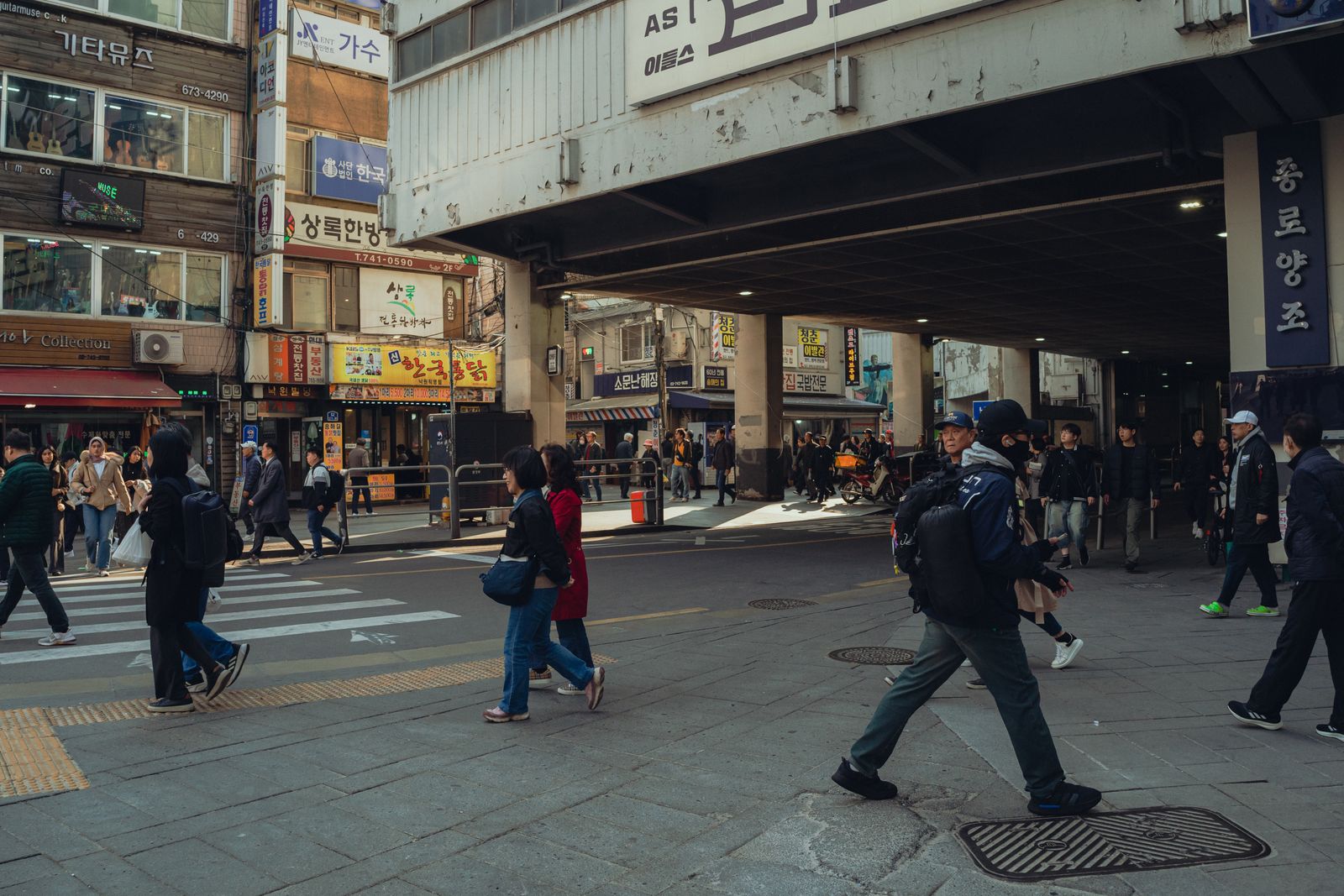
If you want to see how this tradition has adapted, go to a university neighborhood like Hongdae or Sinchon on a weekend evening. Saju cafes have sprung up there in numbers, tucked between bubble tea shops and secondhand clothing stores, usually a narrow storefront with a small sign showing the eight-trigram symbol or a stylized eye. Compare that to the older, traditional offices you still find in residential neighborhoods — sliding glass doors with a faded red signboard, a low table, stacks of well-worn reference books, sometimes a red ink stamp the master presses onto a printed chart at the end of the session — and the cafe version feels almost like a different industry entirely, right down to the menu boards done up in pastel fonts. You order a drink, sit down with a reader, and for somewhere between fifteen and thirty thousand won you get maybe twenty minutes on your career prospects, your love life, or whatever specific question you walked in with. It’s marketed at students and twenty-somethings, and the tone is noticeably lighter than what you’d find in an older neighborhood.

I expected these cafes to feel like a gimmick the first time I sat down in one near Ewha Womans University, and in some ways they are — nobody pretends this carries the same gravity as visiting a fortune teller your grandmother has used for thirty years. Even so, the reader across the table pulled out a printed chart of my eight characters within about a minute of hearing my birth details, scribbled a few notes in the margins in pencil, and then talked for twenty straight minutes without once glancing back at her notes — which told me the training underneath the pastel branding was real, whatever you make of the conclusions. A friend described her own session as “half therapy, half cold read,” which is about as honest a summary as I’ve heard anyone give. You’re not required to believe any of it to get something out of sitting there and talking through what’s on your mind with a stranger who has no stake in the answer.
Tarot cafes: the spinoff nobody quite expected to take over
Stay in those same university alleys long enough and you’ll notice tarot has crowded in right alongside saju, sign for sign. Walk down a single block near Hongik University and it’s common to pass three or four tarot storefronts before you hit one saju cafe, which tells you something about where younger interest has shifted over roughly the last decade. Tarot has an obvious appeal for a generation raised on MBTI personality quizzes and Instagram — it’s visual, it’s shareable, and it doesn’t require you to know your birth hour, which plenty of younger people simply don’t have memorized the way their parents’ generation does.
What’s interesting is that a lot of these cafes now offer both saju and tarot side by side, sometimes even letting a customer request both in the same sitting, cross-referencing one against the other. That would have seemed strange to an older generation of saju masters who trained for years in a specific lineage, but the current crop of readers, especially the ones in their twenties and thirties working these cafes, seem far more comfortable blending traditions. I’ve also started seeing MBTI worked into the pitch — a reader glancing at your saju pillars and then asking whether you’re an INFP, treating the two systems as complementary rather than contradictory. It’s a strange hybrid, and probably not one a purist would endorse, but it fits the mood of these neighborhoods perfectly.

Where fun ends and genuine belief begins
The honest answer to “do Koreans actually believe this stuff” is that it depends entirely on who you ask, and even asking the same person twice might get you two different answers depending on what’s going on in their life that month. I’ve watched people laugh off a bad reading in November and then quietly bring it up again in March when something the reading mentioned seemed to line up. That’s not proof of anything — it’s just how memory and coincidence work, and most people I’ve talked to would readily admit that if you pressed them. But admitting it doesn’t always stop the behavior. A reading that predicts trouble around a certain age, or advises against a particular business partnership, tends to linger in a way a fortune cookie never does, mostly because it was delivered with specificity and confidence by someone treating your birth data seriously.
I’d put the range roughly like this: at one end, a saju reading is a novelty activity, barely different from doing a personality quiz with friends over coffee. At the other end, families still consult professional saju masters — the kind who’ve built decades-long reputations, often passed down within a family practice — before naming a newborn, choosing a wedding date, or deciding whether to expand a business. Naming especially still carries weight; a surprising number of parents I know paid a practitioner specifically to select characters for their child’s name that would balance out whatever elements the birth data seemed to be lacking.
Where I’ve personally landed, after enough of these sessions to lose count, is somewhere in the middle of that spectrum myself — I don’t plan my week around what a reader tells me, but I’d be lying if I said none of it stuck. And that, more than anything, is probably the most Korean part of the whole practice: whether or not the underlying system holds any predictive power is a separate question entirely from whether it functions as a meaningful ritual, and most people here seem to hold both possibilities at once without much internal conflict. None of this should be read as an endorsement of saju or tarot as a reliable way to make real decisions about money, health, or anything else with actual stakes. It’s folklore with a very long history and a genuine cultural function — as ritual, as conversation starter, as a way of externalizing anxiety about big decisions — but the eight characters in your birth data are not a substitute for a financial advisor, a doctor, or your own judgment, and no cafe reader I’ve met would claim otherwise if you asked them directly. The practice survives because it’s flexible enough to be taken exactly as seriously as the person sitting across the table wants to take it, and in my experience most Koreans, even the ones who go every New Year without fail, understand that distinction better than outsiders tend to give them credit for.
FAQ
Do I need to know my exact birth hour to get a saju reading? Traditional saju readings do ask for it, since the hour forms one of the four pillars, but plenty of modern saju cafes will still do a reading with just the year, month, and day if you don’t know it, and tarot readings don’t require birth data at all.
How much does a typical saju cafe session cost in a place like Hongdae? Casual sessions at university-area cafes generally run somewhere in the fifteen-to-thirty-thousand-won range for about fifteen to twenty minutes, though a longer session or a well-known independent master’s office can cost considerably more.
Is it considered normal to plan a wedding date around a saju reading? It’s common enough that many wedding halls and planners are used to couples requesting a specific date range after a compatibility reading, though plenty of other couples skip this step entirely and just pick a date that works with everyone’s schedules.