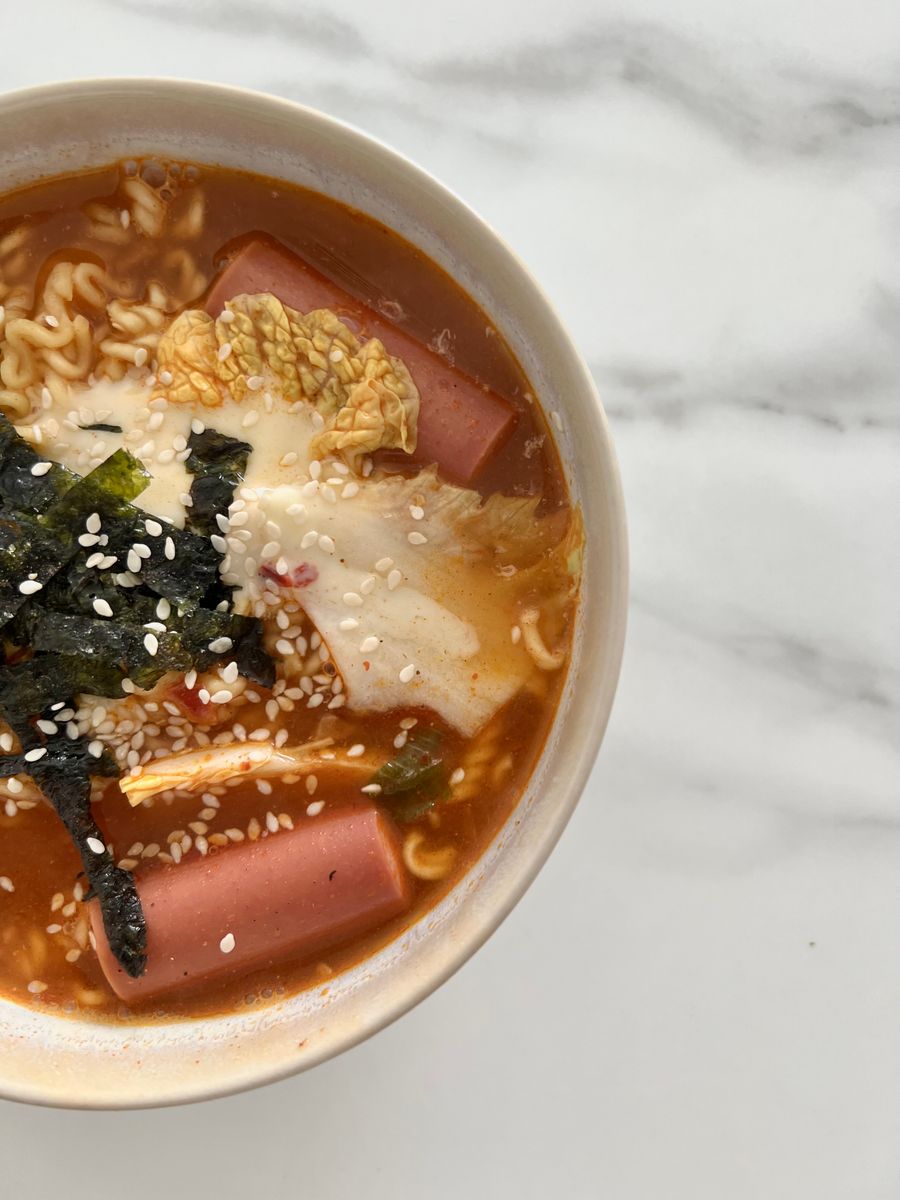
A Korean friend once handed me a bowl of jjamppong — the deep red, slightly murky kind, with a slick of chili oil pooling on top before you even stir it — and said, casually, “it’s not that spicy.” I was three bites in, eyes watering, groping blindly for my ice water like it was a matter of national security. She wasn’t lying to me. She genuinely believed it. That gap — between what a Korean tongue registers as “a little kick” and what the rest of us register as a five-alarm fire — is the whole reason this post exists. Korean spiciness isn’t one thing. It’s a stack of different chemistries, different cultural habits, and different pain tolerances, all disguised under the exact same shade of angry red, and once you can tell them apart, eating in Korea stops being a guessing game.
Gochugaru and gochujang are not the same heat
Here’s the mix-up almost every visitor makes: they see red powder or red paste on a label and assume “chili” means one consistent level of pain. It doesn’t. Gochugaru, the dried red pepper flake, is the actual firepower — it typically sits somewhere around 1,500 to 10,000 Scoville Heat Units depending on the batch, which is a wide enough range that two bags from two different markets can taste nothing alike. It’s what gives kimchi its sharp, immediate bite and what makes a bowl of sundubu jjigae sting the second it hits your lips.
Gochujang, on the other hand, is the fermented chili paste — and despite looking like the spicier of the two (it’s thicker, darker, more intense-looking), it actually clocks in under 1,000 SHU most of the time. That’s because gochujang isn’t just chili. It’s chili powder blended with glutinous rice, fermented soybean, barley malt, and salt, then aged for months. The fermentation mellows the raw heat and swaps a chunk of it for sweetness and umami. So when a dish is built around gochujang — think tteokbokki, or a bibimbap sauce — you’re tasting a slow, rounded warmth. When it’s built around gochugaru, you’re getting hit fast and sharp. Same red color, genuinely different experience, and almost nobody explains this to foreigners before they order.

Why Buldak became a global dare while Koreans just ate it for lunch
Once that natural baseline of pepper and paste is set, modern Korean food culture takes the same heat and cranks it up into something almost entirely synthetic — which is exactly where Buldak comes in. You’d think a country with this much nuance in its chili game would be a little embarrassed by Buldak Bokkeummyun turning into a worldwide dare. It isn’t. If anything, Koreans find the international “fire noodle challenge” mildly amusing, because the original Buldak sits at roughly 4,404 SHU — spicy, sure, but nowhere near the top of what’s sold on Korean shelves. The 2x Spicy version jumps to around 8,706 SHU, and the 3x Haek variant pushes past 13,000. Compare that to gochugaru’s upper range and you’ll notice something: Buldak’s sauce isn’t relying on gochugaru alone. It leans on concentrated chili extract and oil-based capsaicin, which spreads across your whole mouth instead of landing in one spot — part of why it feels so relentless compared to a spicy stew that at least gives your tongue a break between spoonfuls.
What’s easy to miss from outside Korea is how ordinary the noodles actually are here. Grab a convenience store cup version at a GS25 late on a Friday night and you’ll see office workers eating it standing up at the plastic counter after a round of drinks, treating it like a hangover snack rather than a medieval torture device. The dare framing exploded abroad around 2014 and never really was a “challenge” domestically to begin with — it was just instant noodles that happened to be hot. That says something about how differently the exact same bowl can be read depending on which side of the ocean you’re standing on.
The cheese-and-mayo strategy nobody warns you about
If you’ve ever watched a Korean coworker dump shredded cheese onto Buldak, or squeeze mayo over a plate of tteokbokki at a street cart, it might look like they’re ruining the dish. They’re not — they’re managing it. Capsaicin, the compound responsible for the burn, is oil-soluble, not water-soluble. That’s why chugging ice water when your mouth is on fire is basically a fool’s errand; it just spreads the oil around instead of clearing it out. Dairy fat is what actually works, because casein — a protein in milk products — binds to capsaicin molecules and pulls them off the receptors in your mouth. Cheese, mayo, and condensed milk all do this job, which is exactly why cup-bap and tteokbokki carts treat a squirt of kewpie-style mayo or a slice of gooey processed cheese as practically mandatory rather than optional, and why convenience stores sell a “cheese sachet” add-on for spicy ramyeon in the first place.
This isn’t a hack foreigners invented online. It’s baked into how the food is actually built and sold. Cream cheese tteokbokki, rose (creamy gochujang) sauces, cheese-topped budae jjigae — these aren’t watered-down versions for people who “can’t handle it.” They’re a legitimate second category of Korean spicy food, one where the fat is doing real, measurable work against the capsaicin instead of just sitting on top for flavor. Cheese Buldak, for context, comes in around 2,323 SHU — roughly half the original — and it consistently outsells several of the hotter variants, which tells you plenty about what most people actually want when the packaging says “fire.”
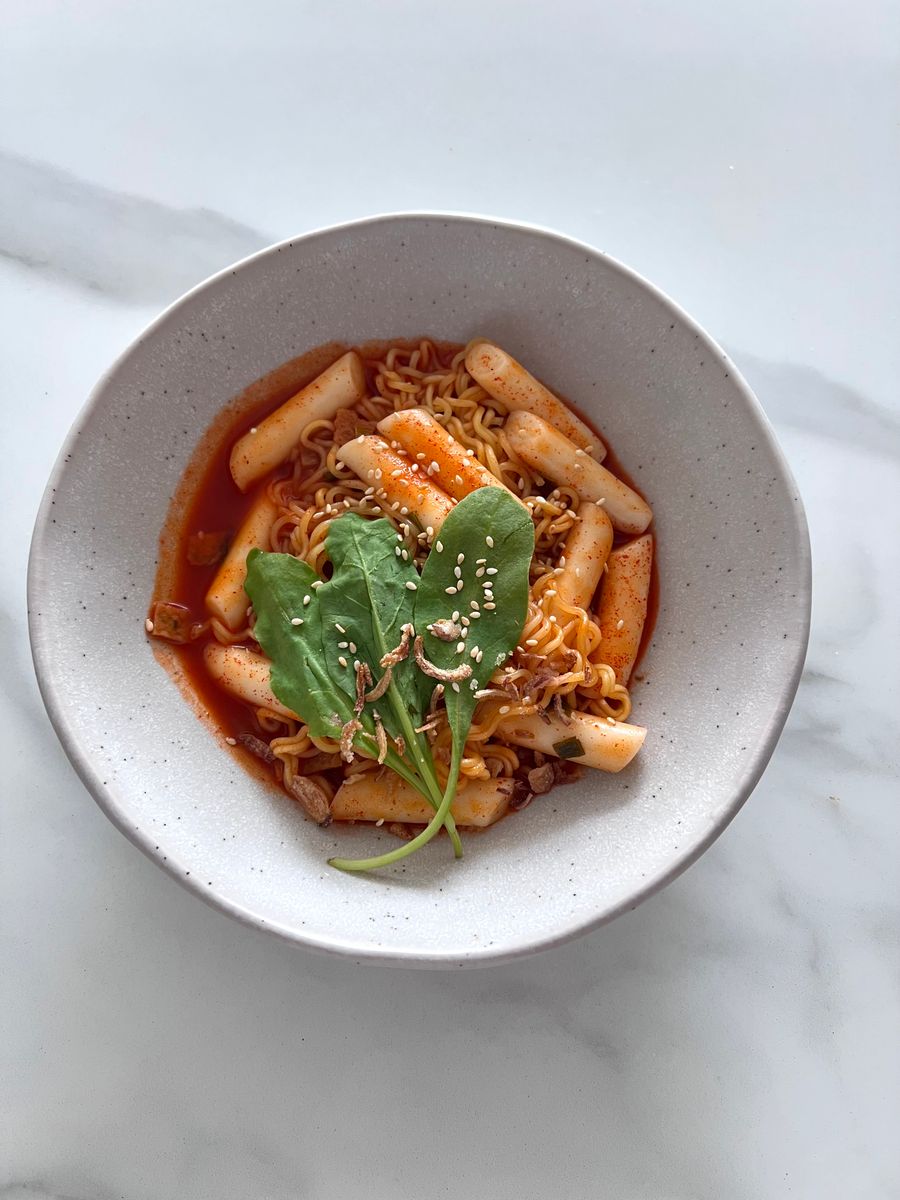
So why do Koreans keep saying it’s “not spicy” when you’re sweating
This is the part that actually annoys foreigners the most, and I get it — you’re crying over a bowl of soup and the person across the table is calmly finishing theirs while telling you it’s “mild.” It’s tempting to assume they’re just tougher, or exaggerating for effect, but the more boring explanation is closer to the truth: repeated exposure to capsaicin from early childhood genuinely blunts the pain response over time. The trigeminal nerve, which is what actually registers that burning sensation (not your taste buds, despite what it feels like), adapts with consistent exposure. Someone who’s been eating gochugaru-laced side dishes since they were five years old is working from a recalibrated baseline that a first-time visitor simply doesn’t have yet.
There’s also a labeling problem hiding underneath this. Korean menus and product packaging run on their own internal spice scale — mild, medium, “maeun-mat” (spicy flavor), and then the genuinely dangerous stuff — and that scale was calibrated against a population with a much higher average tolerance. A dish rated “medium” on a Korean scale can land firmly in “why is my nose running” territory for someone who grew up on food that barely uses black pepper. Neither side is wrong about their own experience. They’re just measuring against two completely different baselines, and nobody bothers to translate between them until you’re already three spoonfuls in and it’s too late to send it back gracefully.
How to actually navigate it if you’re new here
If you’re trying to build up tolerance instead of avoiding spicy food entirely, the smarter path is starting with gochujang-based dishes before gochugaru-heavy ones, since the paste gives you the flavor without the same sharp spike. Ordering “half spicy” (banmae) is a completely normal, non-embarrassing request at most restaurants that let you customize heat, and asking for extra cheese or a side of milk isn’t seen as weak — it’s practically a built-in menu option at this point. If a Korean friend tells you a dish “isn’t spicy,” it’s worth treating that less as a fact and more as a translation problem: ask them to compare it to something specific you’ve already tried, because a direct comparison is far more useful than a vague reassurance from someone whose baseline sits nowhere near yours. And if you do end up in over your head, reach for dairy before water — a small carton of banana milk from the fridge case works better than an entire bottle of Coke, no matter what the vending machine next to it is trying to tell you.
FAQ
Is gochugaru always spicier than gochujang?
By raw Scoville numbers, generally yes — gochugaru lands around 1,500 to 10,000 SHU while gochujang usually sits under 1,000 SHU thanks to fermentation and the added rice, soybean, and malt. But brand and pepper batch matter too, so a seed-heavy, high-quality gochugaru can feel sharper than a cheap gochujang cut with extra sugar, and the reverse is possible as well.
Does drinking water actually help with Buldak-level spice?
Barely. Capsaicin is oil-based, so water just spreads it around instead of washing it away. Dairy fat — milk, yogurt, cheese — works better because casein binds to the capsaicin and helps clear it off your receptors, which is exactly why those cheese sachet packets sold with spicy ramyeon aren’t just a flavor gimmick.
Why does a “medium” dish in Korea feel extremely hot to me?
Korean spice labeling is calibrated against a population that’s built up tolerance since childhood through repeated capsaicin exposure, which gradually dulls the trigeminal nerve’s pain response. A “medium” rating on that scale reflects a much higher baseline than most first-time visitors carry, so it’s less that the label is wrong and more that two different reference points are colliding on the same spoon.
Leave a Reply