
Here’s a scene that trips up almost every foreigner who starts working at a Korean company: someone calls out “Kim Gwajang-nim!” down the hallway, and three heads turn at once. Not because anyone misheard — because there really are three people named Kim holding the title gwajang on that floor, and somehow everyone else in the room already knows which one is being summoned from tone and context alone. One of them is in his mid-thirties and has been gwajang for two years. Another just got promoted into it last spring and still looks a little startled when someone uses the title. The third is closer to forty and clearly the one people defer to when the three of them disagree. To an outsider it looks like a sitcom bit. To everyone else on the floor, it’s just Tuesday. Nobody uses first names. Nobody, most days, even uses last names alone. You are your title, and your title is doing a lot more work than just describing your job.
I want to walk through why that is, because it’s not just a quirk of vocabulary. The title ladder in a Korean office is basically a visible frame holding up who has to speak carefully to whom, who pours the drink first at dinner, and who gets to leave the building before anyone else does. Once you can read that frame, half of what feels confusing or even a little cold about Korean office life starts making a strange kind of sense.
The ladder itself: sawon to bujang and beyond
Most traditional Korean companies — the big conglomerates especially — run on a title system that looks roughly like this, moving up: sawon (사원), then daeri (대리), then gwajang (과장), then chajang (차장), then bujang (부장), and from there into director-level titles like isa (이사) and beyond. You might think this just maps onto “junior, mid-level, senior manager” the way most countries do it, and structurally, sure, it does. But the gap between each rung tends to run three to five years, sometimes longer if the company is conservative about promotions, so a title isn’t really telling you what someone does day to day. It’s telling you how long they’ve been putting in time, and by extension, how much deference the room owes them.
Put rough ages on it and the ladder gets easier to picture. Sawon is typically someone in their late twenties, fresh out of school with a first business card and a first title. Daeri tends to land in the early thirties, after three or four years of proving you can be trusted with something without being watched the whole time. Gwajang usually shows up somewhere in the mid-thirties, and this is arguably the title you’ll bump into most in any office, since it covers the broadest swath of people who are competent enough to run things but not yet senior enough to be in charge of them. Chajang, late thirties to early forties, sits in an odd, in-between spot — deputy department head, essentially, the one who quietly does a lot of the bujang’s actual work without getting the title’s full weight. Bujang, usually mid-forties and up, is the department head himself (and yes, still overwhelmingly “himself” at a lot of legacy firms, though that’s shifting). Above bujang you get into isa, sangmu, jeonmu — director and executive tiers that function almost like their own separate species inside the company.

What surprised me most when I first had this explained to me wasn’t the ladder itself — every country has some version of junior-to-senior. It was learning that the ladder isn’t really optional cultural flavor here. It’s load-bearing, in the literal engineering sense of the word — pull one rung out of place and the whole social structure around it wobbles. Skip a rung, or misjudge where someone sits on it, and you’ve made a real error, not just a minor faux pas.
Why nobody just says your name
This is the part that feels the strangest coming from a Western workplace: you basically stop being addressed by your name the moment you’re hired. Colleagues call each other Kim Daeri-nim, Park Gwajang-nim, Lee Bujang-nim — surname plus title plus the honorific suffix “-nim.” Using someone’s bare name at work, especially toward somebody senior to you, can come across as almost insultingly casual, like walking up to a judge in court and calling them by their first name.
The logic isn’t really about formality for formality’s sake, though. Korean has a whole grammar of speech levels baked into verb endings — the way you conjugate a sentence to someone senior is structurally different from how you’d say the same thing to a peer or a junior — and title-based address is the social anchor that tells everyone which register to use. Say the wrong verb ending to your bujang and it can land as either weirdly stiff or, worse, disrespectful. Using the title correctly is a shortcut that keeps that whole machinery running smoothly without anyone having to think about it consciously.
It also means titles function as a kind of public scoreboard. Everyone in the office roughly knows, at a glance, who’s been there ten years and who’s been there ten months, just from what gets attached to their name — an invisible rank pinned to your collar that never comes off, even at lunch. You might assume that’s uncomfortable, and for some people it genuinely is — being surrounded by reminders of exactly where you rank. But there’s also something almost freeing about it: the ambiguity of “wait, am I allowed to disagree with this person” mostly disappears, because the title already answered that question before the conversation started.
Nunchi: reading the room as an actual job skill
If the title system is the visible structure, nunchi (눈치) is the invisible operating system running underneath it. Nunchi roughly translates to “eye-measure” or “the sense to read a situation,” and in an office context it means noticing, without being told, when your boss is in a bad mood and shouldn’t be approached with a request right now, or that the meeting is dragging because the most senior person in the room hasn’t spoken yet and everyone’s waiting for that cue.
You’d think this is just generic social intelligence, the kind every workplace rewards to some degree. What’s different in Korea is that nunchi gets treated almost as a formal competency — people genuinely get evaluated, informally, on whether they “have” it or not. Someone described as “nunchi-eopda” (눈치 없다, literally “has no nunchi”) is being quietly criticized for a real professional shortcoming, not just an amusing personality trait. It shows up in small moments: knowing not to leave your seat for lunch until the more senior people have moved first, sensing that a junior colleague’s silence in a meeting means they disagree but won’t say so directly, noticing that the copier line should be yielded to the bujang without anyone announcing it.
The reason this matters more here than in a lot of workplaces circles back to the hierarchy itself. In a flatter office culture, if you misjudge the room, the cost is usually mild — a little awkwardness, maybe. In a title-and-seniority system, misjudging the room can mean you’ve accidentally undercut someone senior in front of other seniors, and that’s a much harder thing to walk back.
Why leaving before your boss feels like a small crime
Nunchi doesn’t clock out at six. If anything, that’s when it gets tested the hardest — in a lot of Korean offices, there’s a real reluctance to leave the building before your boss does, even after your own work is finished. You might be completely done for the day, laptop closed, nothing left on your plate, and still find yourself scrolling your phone at your desk because the bujang hasn’t left yet.
It’s not usually an explicit rule anyone states out loud. It’s closer to an accumulated social pressure — leaving early can be read as a signal that you don’t respect the senior person’s time, or that you’re not fully invested in the team’s workload even if your individual piece is done. Some of this traces back to an older cultural assumption that showing your face matters as much as showing your output, that being visibly present is itself a form of contribution. And there’s a status dimension too: the boss walking out last, or being seen to still be working, reinforces the sense that their time and their burden outweighs everyone else’s.
This is exactly the kind of norm that’s under the most active pressure right now, and it’s the same generational fault line that runs through nearly every custom in this list — more on that in a minute. Younger employees are increasingly willing to just leave at their contracted time, work finished, without waiting for permission that was never going to be explicitly granted anyway. It causes friction — plenty of older managers still read it as a lack of loyalty — but it’s also one of the clearest signs that the unspoken rulebook is actually being rewritten, not just complained about.
Hoesik: the dinner that’s technically optional
And then there’s the version of the workday that happens after the workday ends. Hoesik (회식) is the company dinner — usually grilled meat and soju, sometimes moving to a second or third round at a different bar — and it gets described in almost every guide to Korean work culture as “team bonding.” That’s true, but it undersells what’s actually going on. If nunchi is the operating system running quietly in the background all day, hoesik is the moment it gets stress-tested in real time, under the added pressure of alcohol and a much less formal setting. Hoesik is where a lot of the real business of the office happens: the informal permission-seeking, the venting that can’t happen at a desk, the moment your bujang decides whether he actually trusts you or just tolerates you.
It’s called optional, and legally, sure, it is. In practice, skipping hoesik too often — especially as someone junior — can read as a lack of commitment to the team, even if nobody says that out loud. There’s also a specific etiquette layered on top of the dinner itself: you generally don’t pour your own drink, you pour for the person senior to you and let them or someone else return the favor, and you’re expected to turn your body slightly away and cover your glass with your hand when drinking in front of someone significantly senior. That gesture has real weight behind it — it traces back to an older Confucian-influenced idea that you don’t drink facing a superior head-on, since meeting their eyes over a glass reads as too direct, almost confrontational. None of this is written down anywhere. You’re just supposed to pick it up by watching, which loops right back to nunchi again.
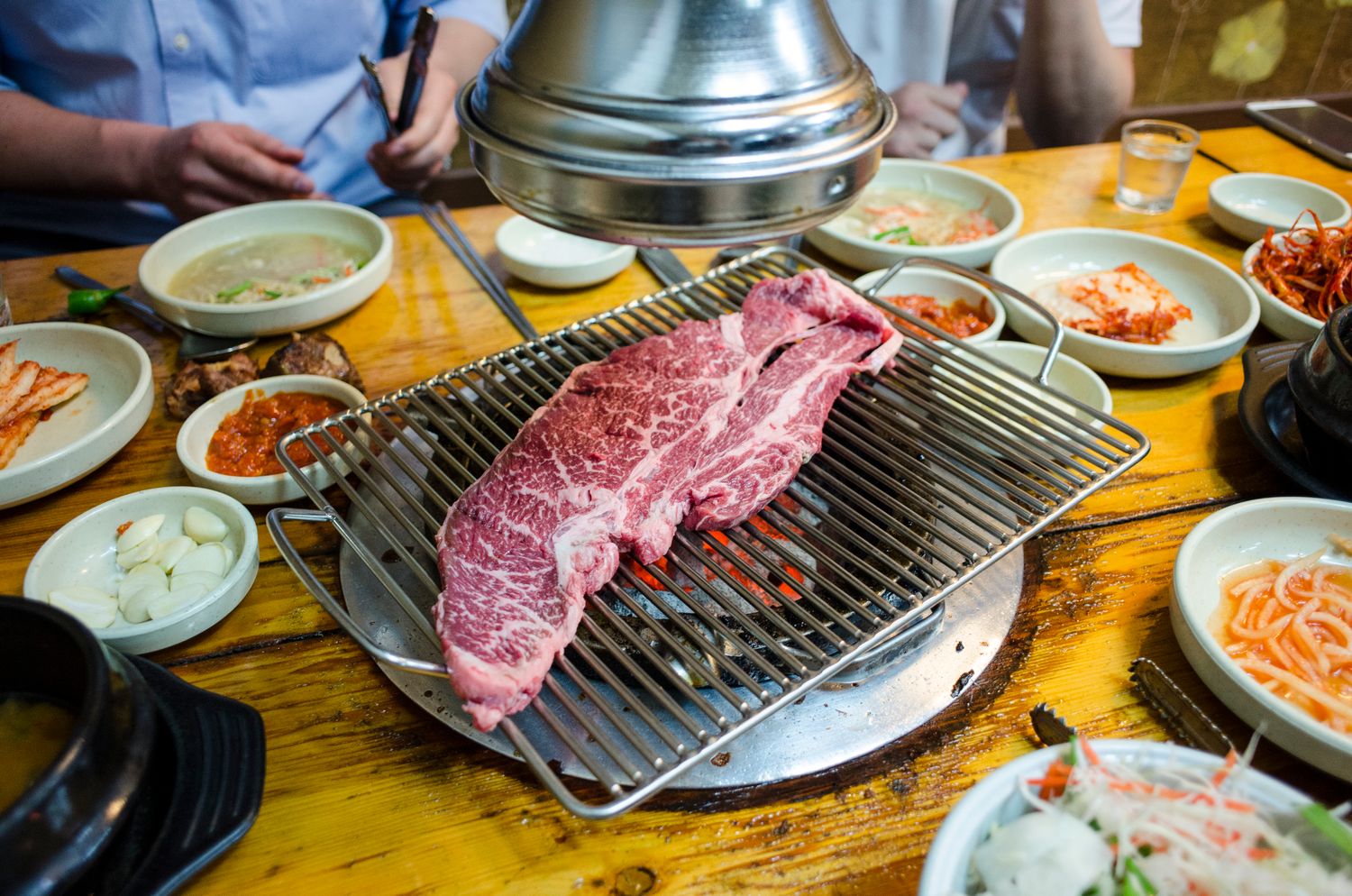
What’s interesting is that hoesik culture is genuinely getting lighter than it used to be, at least at a lot of companies. A decade or two ago it wasn’t unusual for a dinner to roll into a second and third venue late into the night, multiple nights a week. Now it’s much more common to see a single dinner, done by nine or so, with companies increasingly offering “healthy hoesik” alternatives like movie nights or bowling instead of the drinking-heavy version. The instinct behind it hasn’t disappeared, but the format is visibly softening.
The MZ generation is quietly renegotiating the whole system
“MZ” in Korea gets used as shorthand for millennials and Gen Z together, and in office-culture conversations it’s become the label for a fairly specific pushback: younger workers who see age-based, tenure-based seniority as something closer to a bug than a feature. The employees quietly skipping hoesik and packing up at six sharp aren’t really rebelling against any one rule — they’re the visible edge of this same generational shift working its way through the whole system at once. The complaint isn’t usually “hierarchy is bad” in the abstract — it’s more that deciding who leads a project based on how many years they’ve logged, rather than what they’re actually good at, produces worse outcomes and quietly discourages the more capable junior people from speaking up.
You see this show up in small, specific frictions rather than one big dramatic clash. A newer hire questioning a decision directly in a meeting, where an older-generation employee would have waited and raised it privately afterward. Someone declining a hoesik invitation without much apology attached. A junior employee using a messaging app to flag a problem to a senior colleague instead of walking over and asking in person, which some older employees experience as strangely blunt even though nothing about the message itself was rude.
None of this means the title ladder is disappearing — sawon, daeri, gwajang, bujang are all still very much in daily use, and probably will be for a long time, since restructuring an entire linguistic and social system isn’t something that happens overnight. But the meaning attached to each rung is shifting. It matters less now, at a growing number of companies, whether you climbed the ladder purely by waiting your turn, and more whether you’re actually good at the job once you’re on a given rung. That’s a real change, even if it’s showing up gradually rather than all at once.
FAQ
Do I have to use someone’s title even at a small startup?
It depends a lot on the company, honestly. A lot of Korean startups and tech companies have deliberately moved away from the traditional title ladder, sometimes having everyone use an English nickname or just “-nim” attached to a first name regardless of rank, specifically to flatten the hierarchy a bit. But at traditional conglomerates and most small-to-mid-size traditional businesses, the sawon-daeri-gwajang structure and title-based address are still the default, and skipping it would genuinely stand out as unusual.
What happens if you get promoted past someone who’s older than you?
This does happen, and it’s one of the more socially awkward situations the system produces, since age-based sunbae-hoobae etiquette and title-based rank don’t always line up neatly. In practice, most offices default to respecting the formal title first — the older-but-lower-ranked employee will typically still use respectful language toward the younger-but-higher-ranked one, at least in work contexts — but plenty of people describe it as genuinely uncomfortable for a while until everyone settles into the new normal.
Is it true you can get in trouble for not attending hoesik?
Nobody’s writing you up on paper for skipping a company dinner, and legally there’s no requirement to attend. But there’s a real difference between the formal rule and the informal read on you. Missing hoesik occasionally, with a decent reason, is generally fine almost everywhere now. Making a habit of it, especially early in your time at a more traditional company, is the kind of thing that can quietly affect how included you feel on the team, even if nobody ever says so directly.
Leave a Reply