There is a particular kind of standing I have gotten good at over the years — one hand looped through the ceiling strap, feet braced against the sway of the train, body angled just enough to leave room for the person getting off at the next stop. I do a lot of my thinking this way, somewhere between Sadang and Seolleung on Line 2, watching the doors open and close. It was on one of these ordinary commutes, years ago, that I first noticed the empty seat.
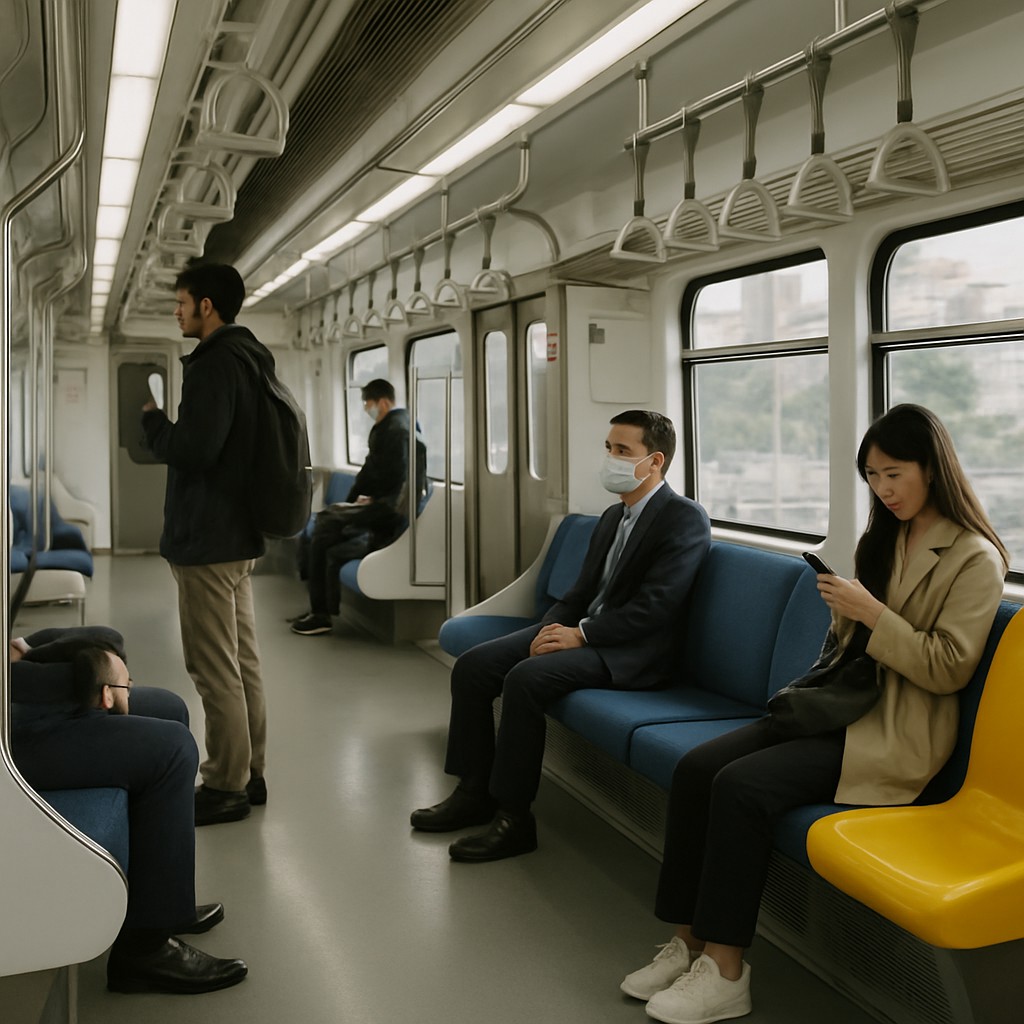
Not empty because the train was quiet — it was packed, the kind of packed where you can feel the backpack of the guy next to you pressing into your ribs. Empty because it was yellow. A single yellow seat at the end of the row, sitting there unclaimed while a dozen tired people stood over it. I remember thinking, with the particular arrogance of someone who has been in a country for about six months, that surely nobody would mind if I just sat down for one stop.
I did not sit down. Something in the collective posture of the car told me not to — the way nobody even glanced at the seat, the way an older woman shifted her shopping bag but made no move toward it either. I have since learned that instinct was correct, and that the empty priority seat is one of the more quietly instructive things about living in Korea.
The seats nobody sits in
Every subway car in Seoul has a designated priority section — 노약자석, literally “seats for the old, weak, and infirm” — usually a cluster of seats at each end of the car, often a different color from the rest, sometimes with pictograms of a cane, a pregnant figure, a person on crutches, a parent holding a baby. Since 2013, many lines have added a further layer: pink seats, 임산부 배려석, reserved specifically for pregnant passengers, part of a campaign the city ran after complaints that expectant mothers were being crowded out of ordinary priority seats by elderly riders who technically outranked them in the unwritten hierarchy. The pink seats even come with a small motion sensor and light on some newer trains that glows when someone is seated, a quiet nudge rather than an enforcement mechanism.
What struck me as a newcomer was not that these seats existed — plenty of transit systems have some version of reserved seating — it was how thoroughly they were treated as off-limits, full stop, whether or not anyone who obviously needed them was in the car. Where I grew up, a priority seat was something you sat in freely and gave up the moment someone who needed it more got on. Here, the norm runs differently: you leave it empty as a default, and you only occupy it if you clearly qualify, or in a genuine pinch, and even then you keep half an eye on the door.
Learning the choreography
I want to be careful not to make this sound like a rulebook, because nobody handed me one. There is no sign that says “foreigners, please note.” It is something you absorb by watching — the twentysomething in a school uniform who stands the entire way from Konkuk University to Wangsimni rather than take the open yellow seat, the businessman who will sit in every other seat in the car except that one, the way a mother with a stroller gets a small, automatic clearing of space near the doors even in seats that are not technically marked. I noticed that older riders themselves rarely rush for these seats either — there is a kind of mutual deference at play, an assumption that someone else in the car might need it more, and a general discomfort with being seen to claim a special status too eagerly.
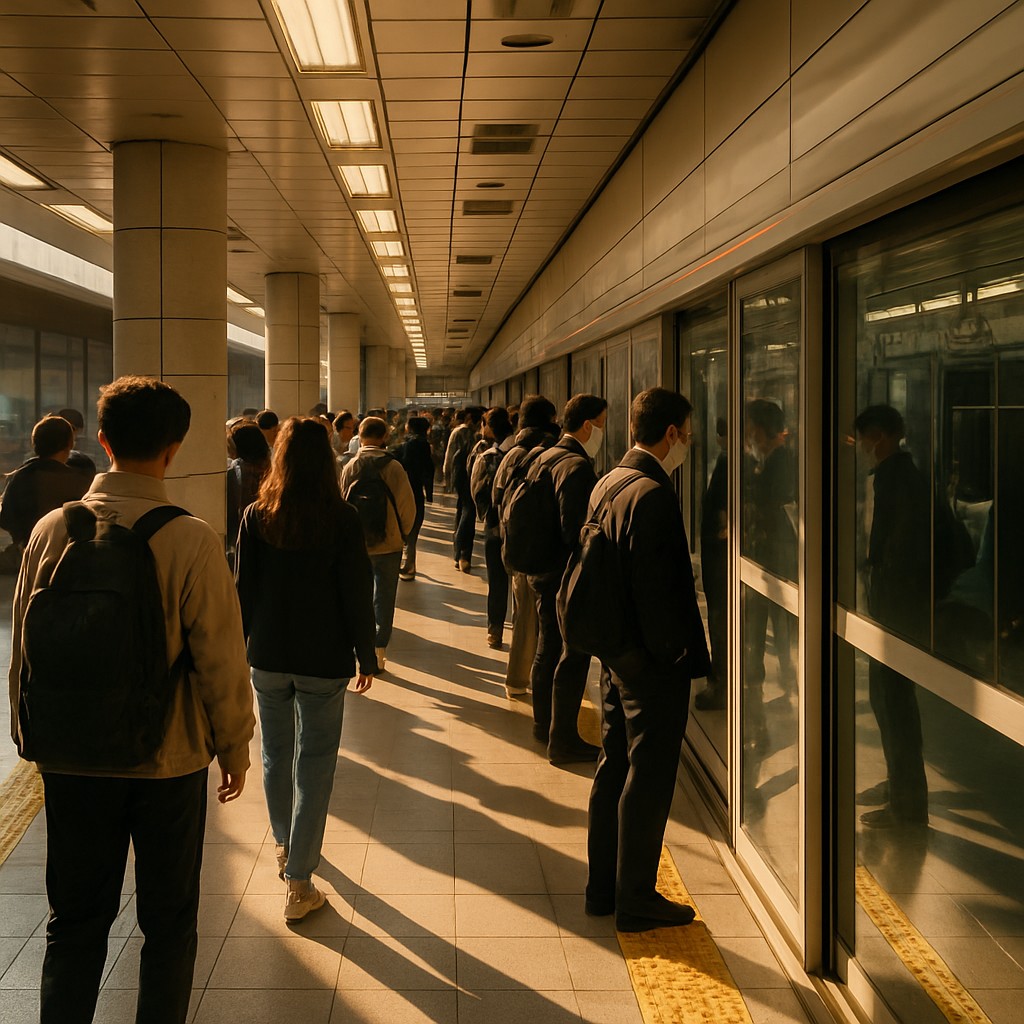
Somewhere around year two, I stopped even glancing at the yellow seats as an option, the same way I stopped glancing at the pink ones after I had children. It became less a rule I was following and more a habit of attention — the same reflex that has you check whether the elevator is full before stepping into a jjimjilbang lobby, or lower your voice slightly on a night bus. Korean public space runs on a lot of these unspoken calibrations, small readings of who is around you and what they might need, and the subway priority seat is maybe the clearest, most physical version of it, because it is marked in actual paint on actual seats.
What it taught me, actually
I think what got under my skin about this, in a good way, was realizing how much of Korean social etiquette is built around anticipating need rather than waiting to be asked. Giving up a seat here is rarely a negotiation — nobody asks you to move, and asking would itself be a small breach of face for the person who has to ask. The seat stays empty so the moment of asking never has to happen. It shifts the burden of politeness from the person who needs help to the person who might be able to give it, which, once I understood it, felt less like rigid rule-following and more like a fairly elegant solution to an awkward social problem.
It also recalibrated something in me about age and visibility. My in-laws are of a generation that grew up with a very clear sense of where they fit in a room, a bus, a dinner table — and standing on the subway watching a car full of twenty-somethings instinctively avoid six empty yellow seats told me more about how that generational respect actually functions day to day than any conversation could have. It is not performed respect, trotted out for holidays. It is baked into how people arrange their bodies in a train car at 8:40 on a Tuesday morning.
These days, when I ride with my kids, I find myself narrating it to them a little — not lecturing, just pointing out the pink seats, explaining who they’re for, watching my older one start to notice the pattern on her own the way I once had to learn it from scratch. It is a small thing, one seat among dozens on one train among hundreds running under this city every day, but it is the kind of small thing that, stacked up over years, ends up telling you something true about the place you have decided to live.
FAQ
Is it actually against the rules to sit in a priority seat if it’s empty?
No — there is no fine or official penalty for sitting in an empty priority seat, and the seats are not physically locked or restricted. It is entirely a social norm rather than a written rule, which is exactly what makes it interesting: the seats stay empty because of a shared, unspoken agreement rather than enforcement.
What should I do as a tourist if I accidentally sit in one?
Simply stand up if someone who appears to need the seat boards, or move preemptively once you notice the seat’s designation. Nobody expects visitors to know the etiquette perfectly, and a quick, unbothered move is all that is needed — no apology performance required.
Are priority seats only for elderly people?
No. The yellow priority seats are intended for elderly passengers, people with disabilities, pregnant passengers, and those traveling with infants, while the separate pink seats found on many trains are reserved specifically for pregnant passengers, marking a distinction the city introduced after the general priority seats proved too contested to reliably serve expectant mothers.
Leave a Reply