Three months into living in Korea, I got scolded by my mother-in-law without a single word being said. We were sitting around the table at a family dinner, I reached for the last piece of galbi, and the room went quiet for about a second and a half. Nobody said “don’t.” Nobody said anything at all. But I felt it, that tiny drop in temperature, and I put the tongs down. Later my wife explained it to me: her older brother, sitting two seats away, hadn’t eaten yet. I was supposed to have noticed that on my own. That, more or less, is my origin story with nunchi.
So what is nunchi, actually?
The dictionary definition is “eye-measure,” and yes, that’s the phrase every article on this word opens with, myself apparently included — but stick with me. It’s the skill of reading a room fast enough to adjust before anyone has to tell you what’s wrong. Koreans grow up practicing this from childhood — I’ve watched my own kids, half-Korean and raised here, do it instinctively at family gatherings in ways that still catch me off guard. My son, at maybe six years old, once quietly moved his chair a few inches when his grandfather sat down, before anyone asked him to, before there was even room to ask. I didn’t teach him that. He just absorbed it, the way you absorb a language you’re immersed in rather than one you study from a textbook.
You might assume this is just politeness, the same instinct that makes people hold doors or say “bless you.” It isn’t quite that. Western politeness tends to be rule-based — you learn the rules, you follow them, you’re done. Nunchi is closer to a continuously running background process. You’re not just being polite in a moment; you’re constantly scanning: who’s tired, who’s annoyed, who’s waiting for someone else to speak first, whose silence means something. It’s closer to a wifi connection that never drops than a switch you consciously flip, and that’s exactly what makes it so hard to explain to someone who didn’t grow up doing it.
Why Korea, specifically, built a whole vocabulary around this
Here’s where it gets interesting, and where I think a lot of explainer articles stop too early. Korean social structure runs on hierarchy — age, job title, seniority, who arrived at the company first, even who was born earlier in the same calendar year. Once you stack that many layers of hierarchy on top of each other, direct confrontation becomes expensive. You can’t just tell your boss he’s wrong in a meeting the way you might in, say, an American startup culture that prizes “radical candor.” So a huge amount of communication gets pushed underground, into tone, timing, posture, the length of a pause before someone answers. Nunchi is the tool that lets people navigate all of that without anyone losing face.
I used to think this made Korean workplaces less honest than what I was used to back home. Give it a few years here, though, and you start to see it differently. It’s not dishonesty, it’s a different information channel. My father-in-law, who worked at a mid-sized manufacturing company in Incheon for nearly thirty years before retiring, once told me that the loudest disagreement he ever had with his own boss happened almost entirely in silence — a slightly longer pause, a specific way of setting down a teacup, a meeting that got rescheduled twice. Everyone in the room understood exactly what was going on. I would have understood absolutely nothing.
The paradox that trips up almost every foreigner here
This is the part I really want to get across, because it’s the part that surprised me most. Korea feels warm. People smile, they’re generous with compliments, strangers help you find your subway platform without being asked twice. So naturally you assume you’re reading the situation correctly — the friendliness itself becomes the trap. People say “it’s fine” when it very much is not fine. They say “let’s meet up sometime” as pure social lubricant, not an actual plan. Even now, after eleven years here, I occasionally get this wrong, and it’s almost always because I trusted the surface-level warmth instead of watching for the smaller signal underneath it. There’s a specific flavor of embarrassment that comes from realizing, three weeks too late, that someone’s relentless niceness was actually a polite wall.
One specific memory: a coworker at a hagwon I used to teach at kept saying “I’m okay, don’t worry about it” every time I asked if a lesson plan change was a problem, always with the same easy smile and the same slight tilt of her head. She said it maybe four times over two weeks. It wasn’t until another Korean teacher pulled me aside — kindly, almost apologetically — and told me she’d actually been quietly frustrated the whole time, that I understood the mismatch. The words were consistent. The nunchi signal, which I simply wasn’t picking up on, had been screaming the opposite the entire time.
Can an outsider actually learn this, or is it too late by adulthood?
People ask me this a lot, usually somewhere between their second and third year here, right around the point where the honeymoon phase wears off and the friction starts to feel personal. The honest answer is yes, but it’s slower than learning the language, and it doesn’t come from a textbook. It comes from getting it wrong in front of people you respect, feeling that specific brand of quiet embarrassment, and adjusting.
Euny Hong, who wrote a whole book on the subject, frames it less as a cultural fluke and more as trainable emotional intelligence — closer to reading a poker table than memorizing an etiquette guide. I’d agree with that, mostly. Age helps, oddly enough. Being older in Korea means people expect less patience from you and give you more grace as you fumble through it, which sounds backwards until you’ve lived it.
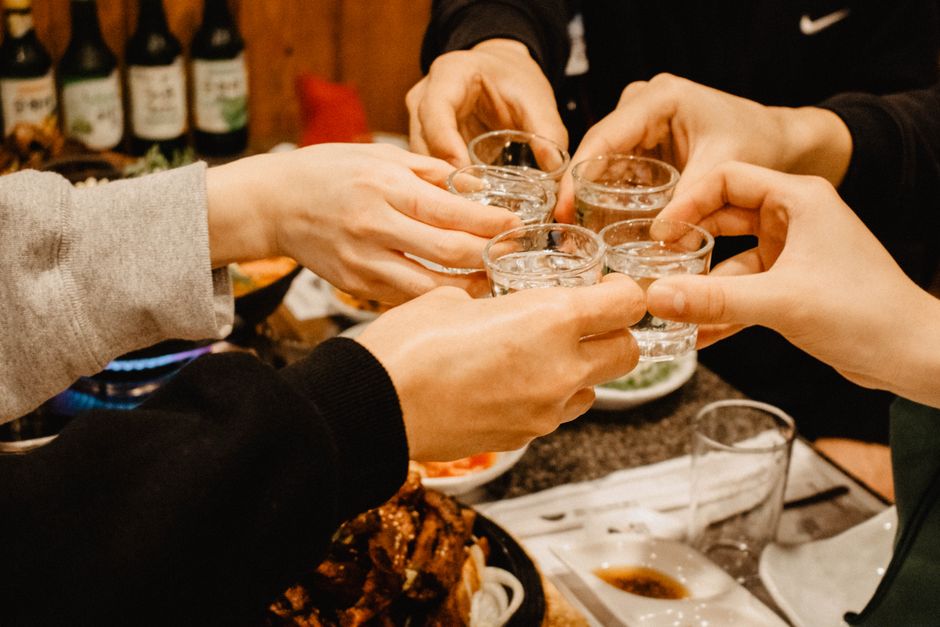
What actually moved the needle for me wasn’t studying Korean harder, even though that obviously helped with vocabulary. It was watching pauses instead of words. Who speaks first in a meeting, and who waits. Whether someone’s “no, it’s fine, really” comes with eye contact or without it. Whether a drink gets poured for you unprompted, which usually means you’re doing something right, or whether it gets poured a beat too fast, which sometimes means the opposite. None of this shows up in a phrasebook. You just have to sit in enough rooms, embarrass yourself enough times, and slowly start noticing the pattern before the mistake happens instead of after.
A few situations where nunchi shows up more than you’d expect
Elevators are a surprisingly good training ground, actually. Watch who presses the “close door” button and how fast, watch who steps back to let the eldest person exit first without being told. Restaurant tables are another one — who picks up the check, who reaches for it exactly one beat too late on purpose, because reaching too eagerly can read as showing off, and not reaching at all can read as stingy. Even something as mundane as texting on KakaoTalk carries nunchi weight; leaving someone on “read” for too long after a certain kind of message is its own small social statement, whether you meant it that way or not. None of these are written rules anywhere. You just learn them by watching what happens when someone gets it wrong and the room quietly recalibrates around it.
I’ll admit there’s a version of this that can wear you down if you let it. Constantly reading a room is tiring, and there were stretches in my first few years here where I genuinely missed the bluntness of back home, the relief of someone just telling me directly that something was wrong instead of making me guess. But I’ve also come to think nunchi solves a real problem that direct communication cultures often don’t handle well — it lets people disagree, adjust, and save face all at once, without anyone having to be the villain in the story. It’s not better or worse than directness. It’s just a completely different operating system, and once you’re running it, plenty of things about life here start clicking into place that never made sense before.
Frequently Asked Questions
Is nunchi the same thing as emotional intelligence?
They overlap, but they’re not the same tool. Western emotional intelligence puts a lot of weight on understanding and managing your own feelings. Nunchi barely cares about your internal state at all — it’s almost entirely outward-facing, judging the temperature of one specific room at one specific moment, and it expects you to act on that reading in real time, not journal about it later.
Do Korean parents actually teach nunchi directly, or is it just absorbed?
Mostly absorbed, in my experience, though the phrase itself gets used constantly. A parent might say “have you got no nunchi?” to a kid who talked over an adult or missed an obvious social cue, which is less a lesson than a nudge — you’re expected to figure out the actual rule from the correction itself rather than getting it explained step by step.
What’s the fastest way for a visitor to avoid an obvious nunchi mistake?
Slow down and watch before you act, especially around meals, drinks, and elevators. Let the oldest or most senior person move first, wait a beat before reaching for shared food, and if someone says “it’s fine, don’t worry” with a tone that doesn’t quite match their face, it’s worth gently checking in again rather than taking the words at face value.
Leave a Reply