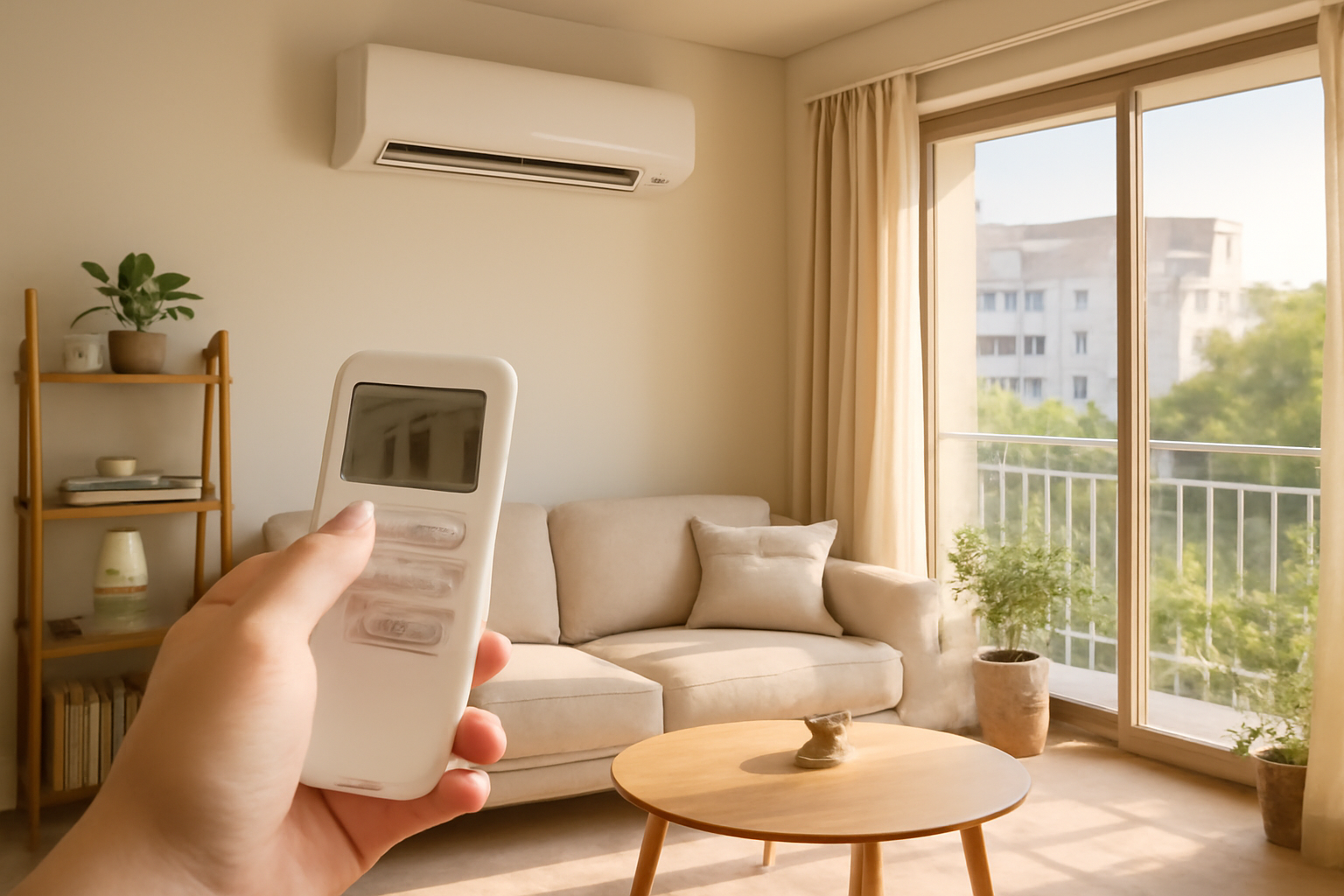
지난달 관리비 고지서를 확인하다가 손이 멈췄다. 같은 20평대 아파트인데 445kWh를 쓴 옆집은 8만 4천 원이 나왔고, 455kWh를 쓴 우리 집은 9만 4천 원이 찍혀 있었다. 겨우 10kWh 차이 아니냐고 할 수도 있지만, 에어컨 기준으로 치면 하루 저녁 두어 시간 더 튼 정도인데 요금은 벌써 만원 가까이 벌어져 있었다. 8월 하순, 에어컨을 하루 6시간 넘게 돌리는 집이라면 남 일이 아니다. 원인은 의외로 단순했다. 누진세 3단계 구간을 넘는 순간 기본요금과 kWh 단가가 통째로 바뀌기 때문이다.
2026년 여름철 누진세 구간, 어디서 요금이 튀는가
주택용 저압 전기요금은 평소 200kWh·400kWh를 기준으로 3단계 구간이 나뉜다. 7~8월 여름철에는 이 기준이 300kWh·450kWh로 완화되는데, 그만큼 여유가 생긴 거라 여기기 쉽지만 실제론 그렇지 않다. 에어컨 때문에 사용량이 급증하는 계절을 감안한 조치인 건 맞지만, 문제는 완화된 기준선 바로 위에서 요금이 계단식으로 뛴다는 점이다.
구간
사용량
기본요금
전력량요금(kWh당)
1단계
300kWh 이하
910원
약 120원
2단계
300~450kWh
1,600원
214.6원
3단계
450kWh 초과
7,300원
307.3원
450kWh를 10kWh만 넘겨도 기본요금이 1,600원에서 7,300원으로 뛰고, kWh당 단가는 214.6원에서 307.3원으로 올라간다. 겨우 10kWh 갖고 무슨 차이가 있겠냐 싶겠지만, 월 사용량 450kWh를 넘기지 않는 것이 여름철 가계부를 지키는 마지노선인 셈이다. 월 1,000kWh를 초과하는 슈퍼유저 구간은 kWh당 736원으로, 일반 3단계의 2.4배에 달한다.
여름철 3단계 구간 진입 기준은 450kWh, 이 선을 넘기지 않는 게 핵심이다.
에어컨 효율적으로 트는 법, 실전에서 통하는 방법들
26~27도 + 선풍기 병행
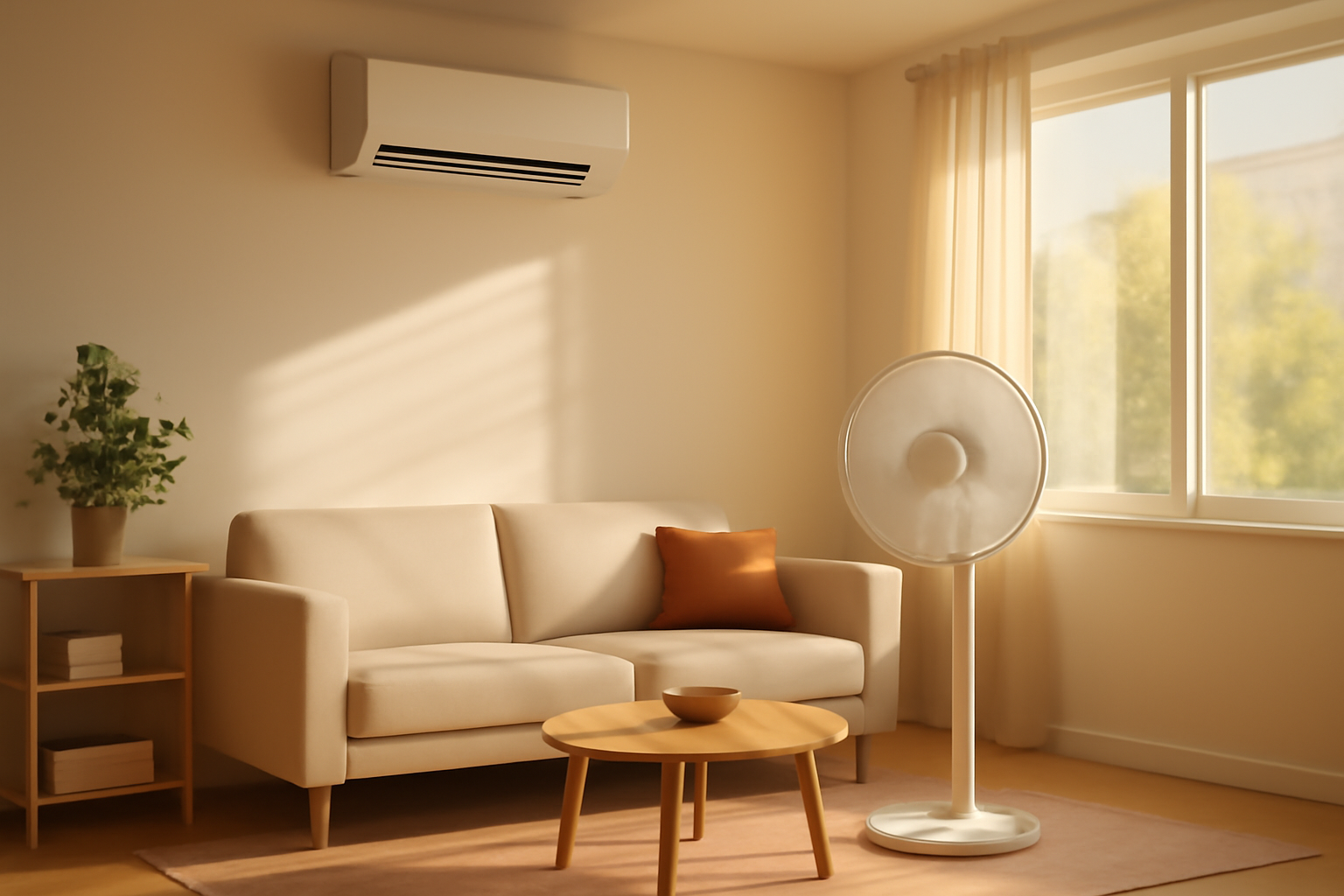
24도로 단독 냉방할 때보다 26~27도로 설정하고 선풍기를 함께 돌리면 체감 온도는 비슷하면서 전력 소비는 30% 가까이 줄어든다. 온도를 2~3도나 올리면 덥게 느껴질 것 같지만, 선풍기가 찬 공기를 방 전체로 순환시켜 에어컨 압축기가 덜 힘들게 일하기 때문에 체감은 생각보다 차이가 없다. 실외 온도가 33도를 넘는 폭염일에도 26도 설정이면 충분한 냉방 효과를 낸다는 게 여러 가전 업체 실측 데이터가 공통적으로 보여주는 부분이다.
취침 모드와 타이머 활용
잠들고 나서 2~3시간이 지나면 체온이 떨어져 냉방이 덜 필요해진다. 자면서까지 온도를 신경 쓰기 번거롭다면 취침 예약 기능을 쓰면 된다. 새벽 2~3시쯤 온도를 1~2도 올리도록 설정하면 밤새 튼 것 대비 하루 1kWh 안팎을 아낄 수 있다. 한 달이면 30kWh, 앞서 본 구간표 기준으로는 3단계 진입 여부를 가를 만한 수치다.
실외기 관리 — 그늘과 통풍
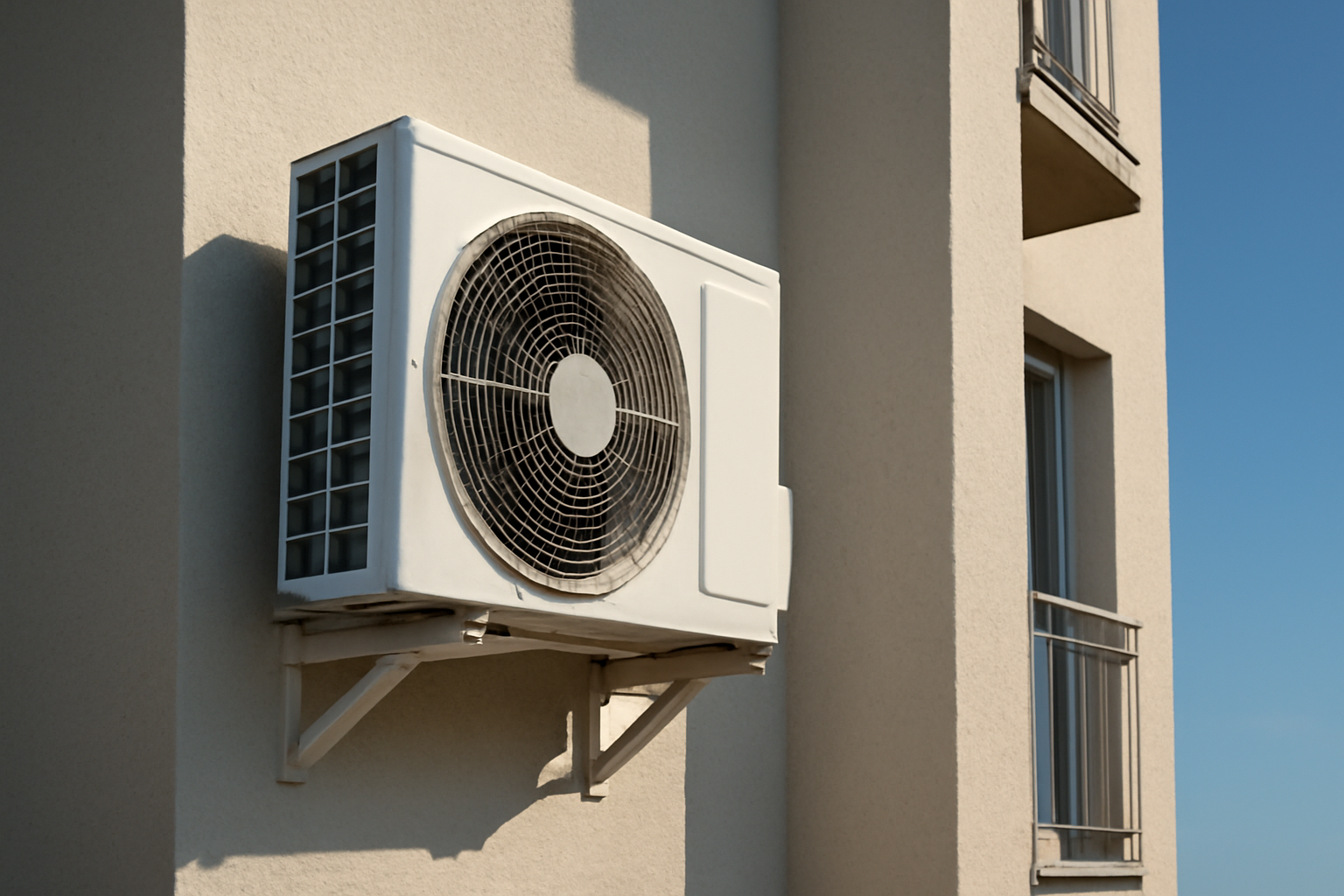
실외기가 직사광선을 받으면 냉매를 식히는 효율이 떨어져 같은 온도를 유지하는 데 전력이 더 든다. 실외기는 밖에 두는 기계라 신경 쓸 게 없다고 생각하기 쉽지만, 실외기 앞뒤로 30cm 이상 공간을 비워 뜨거운 배기가 다시 흡입되지 않게 하고, 가능하면 오후 직사광선을 가리는 것만으로도 소비전력이 5~10% 줄어든다는 실험 결과가 있다.
실외기 주변 통풍 공간을 확보하면 냉방 효율이 눈에 띄게 달라진다.
필터 청소는 2주에 한 번
먼지가 낀 필터는 바람을 막아 같은 냉방력을 내기 위해 압축기가 더 오래 돌아가게 만든다. 필터 청소쯤 안 해도 그만이라 여기기 쉽지만, 2주에 한 번 필터를 물로 씻어 완전히 말린 뒤 끼우는 것만으로 전력 소비를 최대 5%까지 낮출 수 있다는 게 제조사들의 공식 권장 사항이다. 여름철엔 사용 빈도가 높은 만큼 주기를 지키는 게 생각보다 큰 차이를 만든다.
실제 절약 사례 — 4인 가구 8월 사용량 비교
서울 마포구에 거주하는 4인 가구 기준으로 살펴보면 차이가 뚜렷하다. 24도로 하루 10시간 에어컨만 단독으로 튼 집은 8월 한 달 사용량이 520kWh, 요금은 약 11만 2천 원이 나왔다. 온도 몇 도 차이로 얼마나 달라지겠냐 싶지만, 같은 조건에서 26도 + 선풍기 병행, 취침 예약, 실외기 그늘막을 적용한 옆집은 사용량 415kWh, 요금 약 7만 9천 원으로 끝났다. 단순히 온도 2도와 습관 몇 가지 차이로 한 달 전기요금이 벌써 3만 원 넘게 벌어진 셈이다. 1년으로 환산하면 냉방 기간만 따져도 10만 원 이상 차이가 난다.
26~27도 설정에 선풍기를 병행하면 24도 단독 냉방 대비 전력 소비가 크게 줄어든다.
에너지캐시백으로 아닌 만큼 현금으로 돌려받기
한전 ON 앱에서 신청할 수 있는 에너지캐시백은 지난해 같은 기간 대비 전기 사용량을 줄이면 절감량 1kWh당 30원을 현금으로 환급해주는 제도다. 2026년 7월부터는 참여 기준이 완화되면서 아파트 단지 단위로도 신청이 쉬워졌다. 월 30kWh를 아끼면 900원 수준이라 별거 아닌 것처럼 보이지만, 앞서 본 것처럼 30kWh 차이가 누진세 구간 자체를 가르는 경우가 많아 체감 절약액은 캐시백 금액보다 훨씬 크다.
절감량을 미리 계산해두면 캐시백과 누진세 구간 두 가지를 동시에 챙길 수 있다.
자주 묻는 질문
Q. 에어컨을 껐다 켰다 반복하는 게 절약될까, 계속 켜두는 게 나을까?
외출 시간이 30분 이내라면 켜둔 채로 온도만 1~2도 올리는 편이 낫다. 어차피 안 쓸 거면 꺼두는 게 당연히 이득 아니냐 싶지만, 껐다가 다시 켜면 실내 온도를 처음부터 다시 낮춰야 해서 압축기가 최대 출력으로 돌아가는 시간이 길어지고, 결과적으로 전력 소비가 더 커지는 경우가 많다. 2시간 이상 자리를 비운다면 그때는 완전히 끄는 편이 유리하다.
Q. 10년 넘은 오래된 에어컨도 절약 팁이 효과가 있을까?
오래된 에어컨은 뭘 해도 소용없을 것 같지만, 효과는 분명 있다. 다만 한계도 있다. 2016년 이전 모델은 최신 인버터형 에어컨 대비 소비전력이 30~40% 높은 경우가 흔해서, 온도 설정이나 필터 청소만으로는 상쇄되지 않을 수 있다. 실외기 관리와 선풍기 병행은 여전히 유효하지만, 5년 넘게 쓴 정속형 에어컨이라면 인버터 모델 교체 시 정부 에너지효율 등급제 환급을 함께 알아보는 게 장기적으로 이득이다.
Q. 자취방 같은 1인 가구도 누진세 영향을 받을까?
1인 가구는 사용량 자체가 적어 1~2단계 안에서 끝나는 경우가 대부분이라 체감이 덜하다. 혼자 사는데 누진세 신경 쓸 일이야 있겠냐 싶지만, 여름철 원룸에서 창문형 에어컨과 냉장고, 세탁기를 같은 시간대에 몰아 쓰면 300kWh를 넘기기도 한다. 사용량이 250kWh를 넘어가는 시점부터는 에어컨 사용 시간대를 분산하는 것만으로도 다음 단계 진입을 피할 수 있다.
The first time I moved into a Korean apartment, the moving crew got there before I did. You’d think movers hauling furniture all day would be the last people worried about a little dirt, but by the time I walked in, three men were already carrying my mattress frame through the front door in their socks, and a fourth was standing at the threshold pulling plastic covers over his boots before he’d take another step. I was still holding a box of kitchen utensils in my shoes when one of them looked at my feet, then at the floor, then back at my feet, and said nothing at all. He didn’t have to. That one look taught me more about Korean home culture in three seconds than any guidebook had in three months.
I go by Yijidaddy, and I’ve lived in Korea long enough now that taking my shoes off before I’m even fully through a doorway has become an involuntary reflex, the kind of thing my body does before my brain catches up. Strange as it sounds, it took a while to get there, and the “why” behind it turned out to be a lot deeper than I expected.
The Floor Is the Furniture
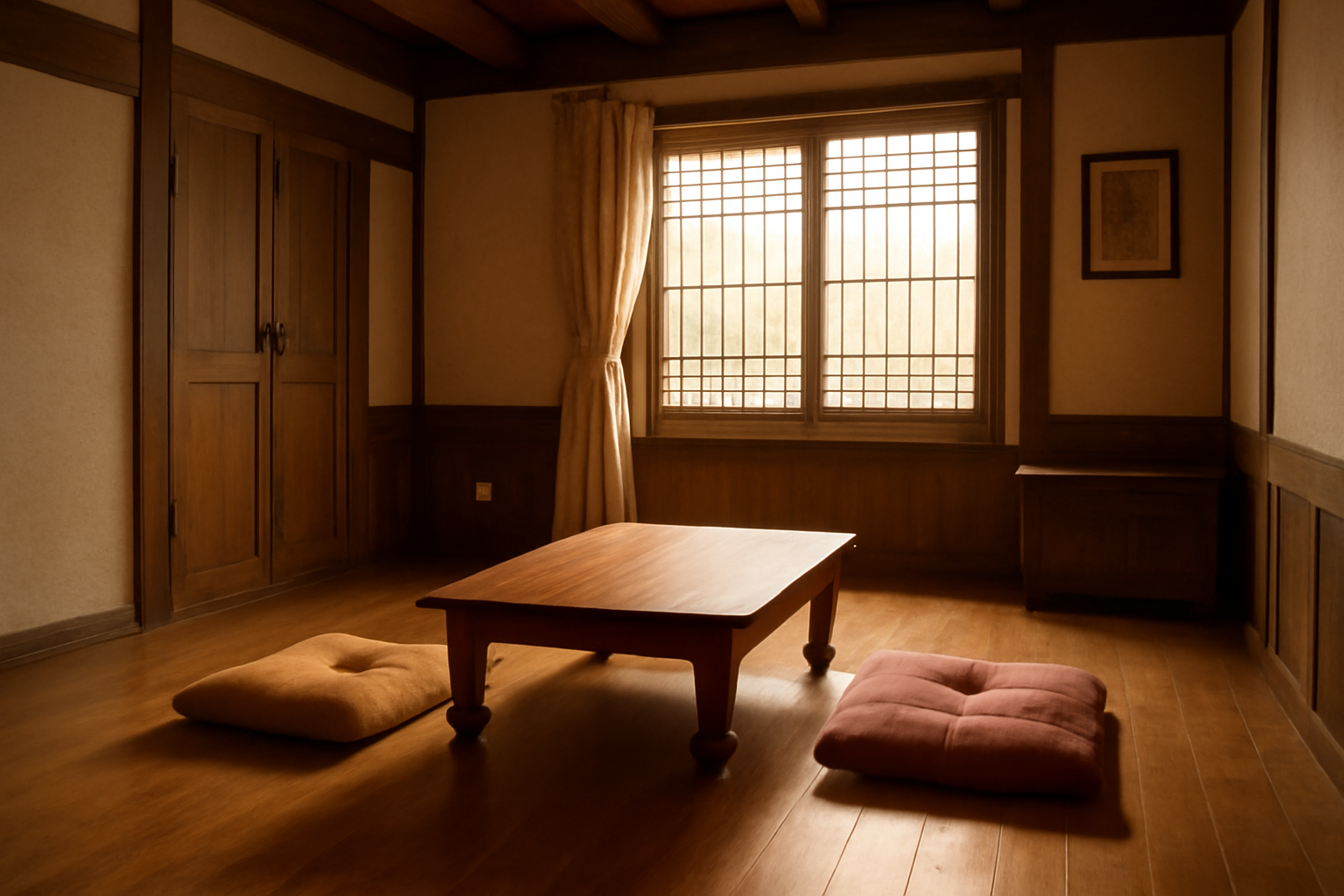
Most explanations of this custom start and end with “it’s cleaner,” which is true but incomplete. Even so, the real starting point is architectural, not hygienic. Traditional Korean homes were built around a heating system called ondol, and archaeologists have traced early versions of it back roughly three thousand years, long before anyone was debating carpet versus hardwood.
The system worked by channeling heat and smoke from a cooking fire through stone flues running beneath the floor. The stones absorbed the heat and released it slowly upward, warming the entire room from the ground up rather than through the air, the way a fireplace or a radiator does. That single design choice shaped almost everything else about how people lived inside a Korean home. If the floor is the warmest, most comfortable surface in the house, you don’t put your furniture on it, you put yourself on it. Families ate at low tables while sitting on the floor. They slept on thin padded mats called yo, laid out directly on the warm ondol surface at night and folded away in the morning. The floor wasn’t something you walked across to get to the furniture. It was the furniture.
Once you understand that, the shoes rule stops looking like an arbitrary custom and starts looking like plain common sense. Still, it’s easy to underestimate how much this shapes daily behavior, and nobody wants to eat dinner, let alone fall asleep, on a surface that strangers have been tracking street dirt across all day.
It’s Not Just About Dirt
The hygiene argument is real, and Koreans will happily explain it to you in detail: shoes carry rain, mud, dust, and whatever else the city sidewalk had to offer, and none of that belongs on a surface where children crawl, elderly relatives sit, or anyone might eventually stretch out for a nap. But there’s a second layer to it that took me longer to notice, which is that removing your shoes functions as a kind of quiet ceremony. It marks the exact moment you stop being a visitor from the outside world and become a guest inside someone’s private space. You see this most clearly at a Korean funeral hall or a friend’s family gathering, where the row of shoes lined up neatly at the entrance says something the doorbell already announced: everyone who matters is already here, and you’re about to join them on equal footing, literally.
Where the Rule Follows You Outside the Home
The entryway step
Nearly every Korean home, and a fair number of older public buildings, has a small sunken entry area called a hyeon-gwan, usually just a step down from the main floor. This is the transition zone, and it trips up more visitors than you’d expect. You take your shoes off standing in that lower section, then step up onto the raised floor in socks or bare feet. Getting this backwards, planting a shod foot on the raised part even for a second, is the kind of mistake that draws a polite but pointed look, the same one I got on moving day.
Restaurants and floor seating
Traditional Korean restaurants, particularly ones serving barbecue or home-style meals, often have a floor-seating section with low tables and cushions instead of chairs. Shoes come off at the edge of the platform and go into a small cubby or shelf built for exactly that purpose. I’ve watched plenty of first-time visitors freeze at that threshold, unsure whether the shoe rule from home really applies to a restaurant too. It does. If there are cushions on a raised platform, shoes stay behind, no exceptions.
Offices, schools, and the indoor slipper
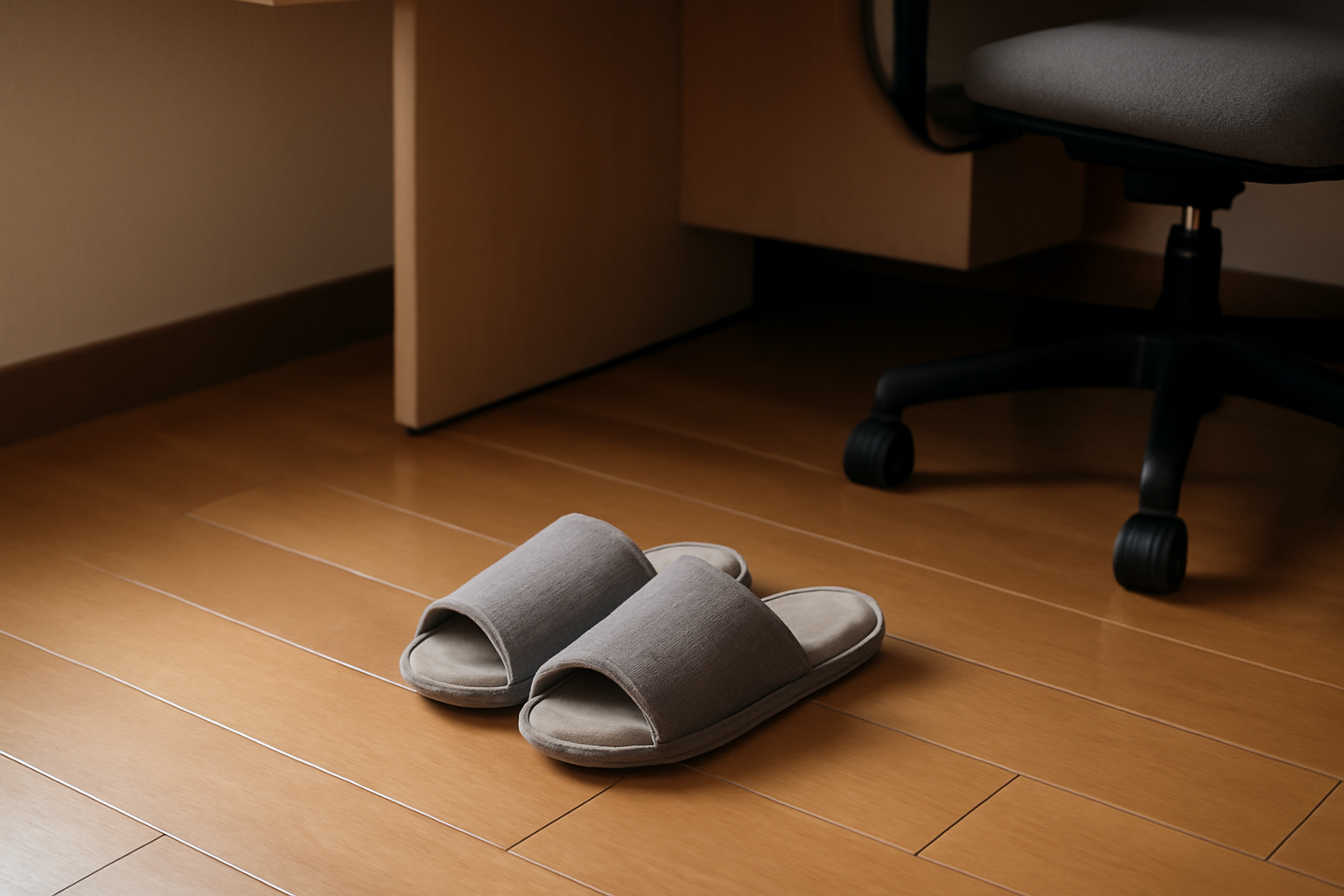
This is the one that surprises newcomers most. Plenty of Korean offices, schools, and academies keep a shelf of slippers at the entrance, and employees switch out of their outdoor shoes the moment they arrive, working the entire day in slip-ons under their desk. You might think this is overkill for a workplace, but it’s less about hygiene at that point and more about comfort and habit; after a lifetime of associating “indoors” with “shoes off,” sitting at a desk in dress shoes for eight hours just feels wrong to a lot of people. Cafes and Western-style restaurants are generally the exception. If everyone is seated at a normal table and chairs, your shoes stay on.
What I Had to Unlearn
Adjusting to this wasn’t hard exactly, but it was humbling in small ways. I remember standing in a friend’s kitchen holding a bag of takeout, having already taken my shoes off at the door like a good guest, and then realizing I’d walked across the living room and back out toward the balcony without ever thinking about where the “indoor” zone actually ended. Balconies in Korean apartments are often unheated and tiled, closer in spirit to the outside world than the living room, and some hosts genuinely prefer shoes back on out there. Oddly, nobody had told me that rule existed until I’d already broken it.
What eventually clicked for me wasn’t a set of rules so much as a mental model: treat the floor the way you’d treat someone’s bed. You wouldn’t climb into a friend’s bed in your shoes, and once you think of a Korean living room floor the same way, the whole system makes sense without needing to memorize anything. These days I notice the opposite problem when I visit family back home, standing at their door out of habit, waiting for a shoe rack that isn’t there.
Frequently Asked Questions
What if I’m wearing socks with holes in them?
It happens to everyone eventually, and nobody will say a word about it. That said, if you know you’re heading somewhere shoes will come off, like a Korean home or a floor-seating restaurant, it’s worth keeping a decent pair of socks in your bag for exactly this reason. A small habit, but it saves a little embarrassment.
Do Airbnbs and short-term rentals in Korea expect this too?
Almost always, yes. Look for a small entryway with a step down, or a shoe rack near the door, and take that as your cue. Many hosts leave a note about it, but even without one, following the entryway design is a safe bet. Most places also keep a pair of guest slippers waiting for you just past the door.
Is it rude to ask a Korean friend whether shoes off is expected?
Not at all, if anything it’s the opposite. If you’re ever unsure walking into someone’s home, glancing at the entryway for a row of shoes or simply asking is completely normal, even for Koreans visiting an unfamiliar place. Nobody expects a foreigner to know every detail on the first try, and asking shows more respect than guessing wrong.
The room went dead silent for maybe two seconds, though at the time it felt like two full minutes. It was my first Chuseok dinner with my wife’s family, and I’d just reached across the table for a piece of galbi, forgotten all about the bowl of rice sitting right in front of me, and left my chopsticks standing straight up in it — two little flagpoles nobody had asked for. My mother-in-law’s eyes flicked to the bowl, then to me, then back down to her plate. Nobody yelled. And yet nobody explained anything either. My wife just reached over, quietly laid my chopsticks flat across the rim of the bowl, and gave me a look that said we’d be talking about this later. We did. That was the night I found out that a bowl of rice with chopsticks jutting straight up looks, to Korean eyes, exactly like the incense offered to the dead.
I’m Yijidaddy, and I’ve now lived in Korea long enough to have personally made almost every mistake on this list, usually in front of an in-law. Nobody hands you a manual when you land at Incheon; you just quietly embarrass yourself a few times, get corrected if you’re lucky, and eventually the rules stop feeling like rules and start feeling like common sense. This post is the manual I wish someone had handed me on day one. It won’t cover everything, nothing really could, but it covers the mistakes that actually land foreigners in awkward territory, ranked by how often I still see visitors make them.
Nine Things Not to Do in Korea (Learned the Hard Way)
1. Don’t leave your chopsticks standing up in your rice
This is the one that gets me every time someone visits from abroad. Sticking chopsticks vertically into a bowl of rice mimics the incense sticks placed at funeral altars and ancestral rites, strange as it sounds to explain out loud, it’s not a minor faux pas. It touches on death and mourning, so it lands harder than most table manners slip-ups. If you need to set your chopsticks down mid-meal, rest them across the top of your bowl or on the little chopstick rest, if there is one. It becomes automatic after a while, but for the first few months I had to consciously think about it every single meal.
2. Don’t write someone’s name in red ink
I found this one out by accident, signing a birthday card for a Korean coworker with the only pen on my desk, which happened to be red. She didn’t say anything cruel, but the pause before she thanked me told me something was off. Red ink was traditionally used to record the names of the deceased, and oddly, even today writing a living person’s name in red still carries an association with death and bad luck that most Koreans feel instinctively, even if they can’t always explain why. Stick to black or blue for names, cards, and signatures.
3. Don’t hand things to elders with one hand
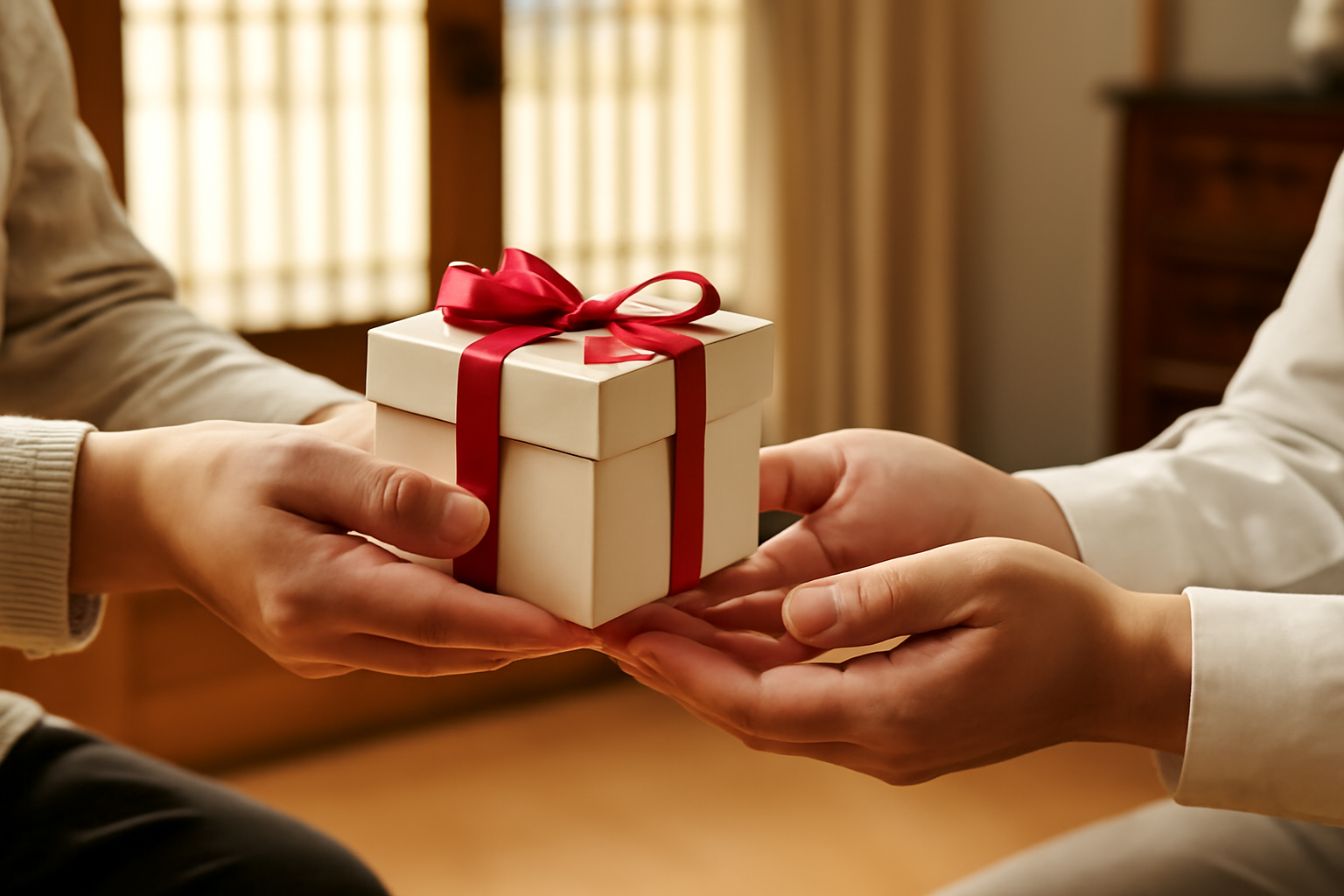
Whether it’s passing a business card, handing over cash at a market stall, or receiving a drink from someone older than you, the two-hand rule matters more than almost anything else on this list. If both hands genuinely aren’t free, the fallback is to support your extended arm at the wrist or elbow with your other hand. You might assume this is a formality reserved for boardrooms. It isn’t. My father-in-law still notices when I hand him something with one hand, even now, and he’s too polite to say anything, which somehow makes it worse.
4. Don’t tip at restaurants
This one trips up visitors in the opposite direction, they worry about being rude by not tipping. And yet in Korea, tipping isn’t expected and can genuinely confuse or fluster restaurant staff, who may chase you down the street to return money they think you accidentally left behind. Service charges, where they exist, are already built into the price. Save the tipping instinct for places abroad where it’s actually the custom.
5. Don’t jaywalk, especially anywhere near a police box
Seoul’s crosswalks can feel like mere suggestions when you’re jetlagged and running late, and you might figure nobody’s watching at that hour, but Korean traffic law takes jaywalking seriously, with real fines attached, and enforcement has tightened in recent years around high-traffic tourist areas. Beyond the legal risk, it’s one of those visible behaviors that shapes how foreigners get perceived in a neighborhood. I’ve waited at empty three-lane crossings at midnight with elderly Koreans standing beside me, not moving an inch until the light changed. That patience isn’t performative. It’s just the norm.
6. Don’t blow your nose at the table
This was a hard habit to break. Where I grew up, a quiet nose-blow during a meal barely registers. In Korea, it’s considered one of the ruder things you can do at a shared table, on par with talking with your mouth full in other cultures. If you need to, excuse yourself to the restroom. You might think this is overkill, but it stops feeling that way once you notice nobody else at the table is doing it, ever.
7. Don’t wear your outdoor shoes past the entryway
Most Korean homes, plenty of traditional restaurants, and some guesthouses expect shoes off at the door, no exceptions. Look for the raised floor level, the shoe cubbies, or a small pile of slippers by the entrance, still, take the hint even if nobody explicitly tells you. I once kept my sneakers on at a friend’s parents’ house because I genuinely didn’t notice the step up in the entryway. My friend caught it before his mother did, which I count as one of my luckier escapes on this list.
8. Don’t pour your own drink at a group meal
Drinking culture in Korea runs on reciprocity. You pour for others, they pour for you, and you’d think refilling your own glass mid-meal is no big deal, even so, it reads as a small signal that you’re not paying attention to the people around you. When someone senior pours for you, receive the glass with both hands, and when you drink with someone considerably older, it’s polite to turn your head slightly away from them as you drink. I got this backwards for months, cheerfully topping off my own soju like I was at a backyard barbecue, until a coworker gently took the bottle out of my hand and did it for me.
9. Don’t sit in the priority seats on the subway, even if they’re empty
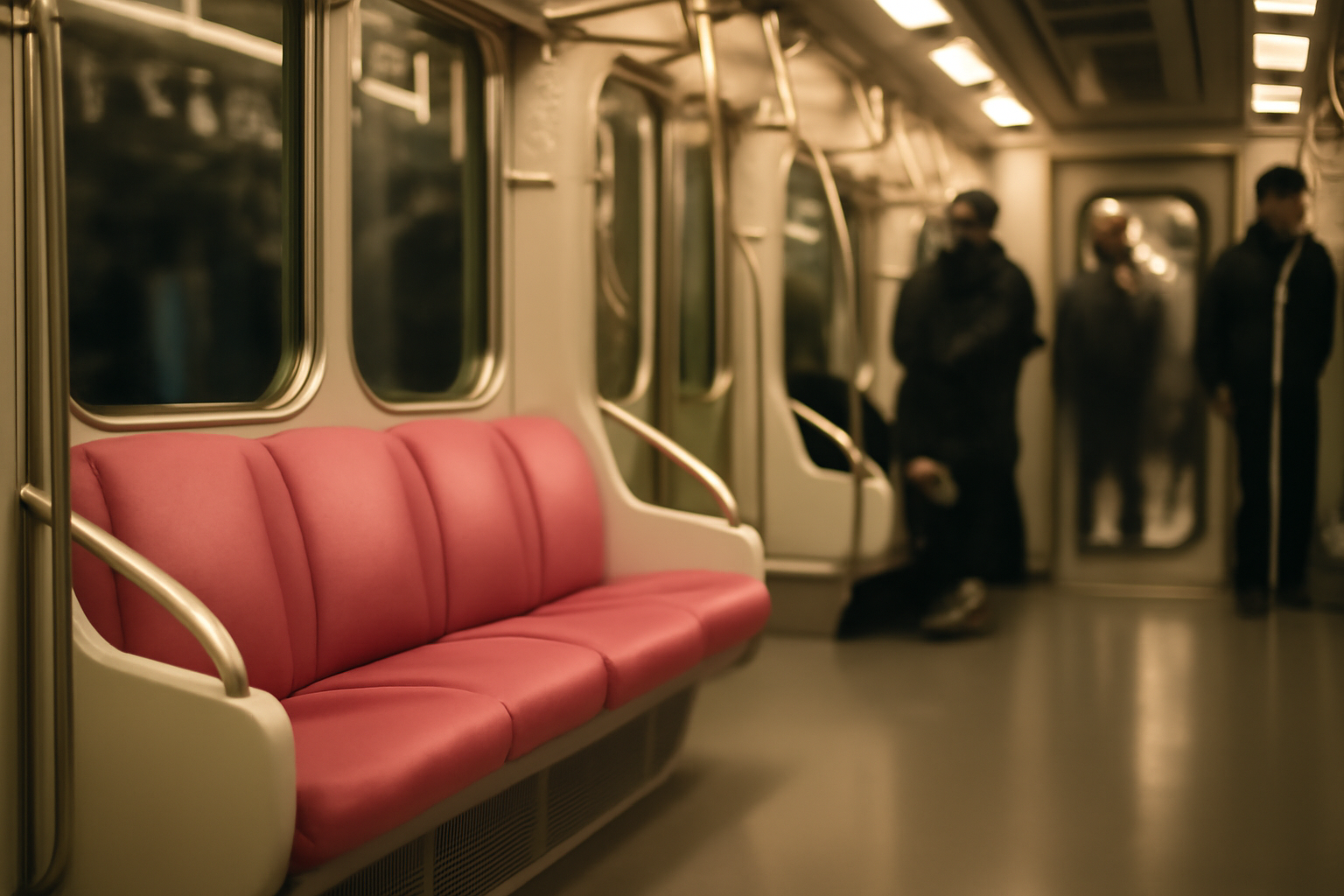
The pink, yellow, or blue seats near the ends of subway cars are reserved for elderly passengers, pregnant women, and people with disabilities, and the expectation holds even when the car is nearly empty and those seats are the only ones open. I used to think an empty priority seat was fair game. A pointed look from an ajumma boarding at the next stop taught me otherwise. Just stand, or find a regular seat further down the car.
Frequently Asked Questions
Will Koreans get truly offended if I mess up?
Almost never in a lasting way. Most Koreans recognize instantly that a foreigner reaching across the table or waving with one hand isn’t trying to be disrespectful, and genuine effort tends to earn more goodwill than the mistake costs you. The chopsticks-in-rice one and anything touching on funeral symbolism land harder than the rest, so those are worth getting right early. Everything else is far more forgivable than it feels in the moment.
What’s the one mistake first-time visitors make most?
In my experience, it’s the one-handed exchange, handing over payment, a business card, or a gift with a single hand without realizing an older person or someone in a service role noticed. It’s such a small physical habit that most visitors never think to unlearn it before landing, and oddly, it’s also the easiest one to fix once someone points it out.
Is it okay to ask about etiquette in the moment?
Yes, and honestly it’s often appreciated more than staying quiet and guessing. A simple “is this okay?” before you do something you’re unsure of shows more respect than silently getting it wrong. I still ask my wife or her parents when I’m not sure, even years in. Nobody has ever seemed annoyed by the question.
None of this is meant to make Korea sound like a minefield. It isn’t. Most of these rules exist for reasons that make sense once you understand them, respect for elders, respect for the dead, respect for shared space, and once you’ve internalized a few, the rest tend to follow naturally. I still catch myself slipping occasionally, usually when I’m distracted or tired, but the learning curve flattens out faster than you’d expect. Get the chopsticks right, use both hands with your elders, and give up the seat. The rest comes with time.
It’s almost 1 a.m. and I’m standing in front of the fridge case at a CU near my apartment in Seoul, fogging up the glass door with my breath, trying to decide between a banana milk and a bottle of sujeonggwa. You’d assume that’s a strange way to spend a night, and maybe it is, but this is not a rare occurrence for me — this is just a Tuesday. If you’ve spent any real time in Korea, you already know that the convenience store isn’t a backup plan for when the restaurants are closed — it’s its own destination, its own meal, its own late-night ritual. I’m Yijidaddy, and I have eaten an unreasonable number of triangle kimbap in my life. So let’s rank them.
A quick note before we start: this list leans toward the big four chains you’ll find on basically every block — CU, GS25, 7-Eleven, and Emart24 — and it’s built entirely on personal taste, tested over years of 2 a.m. cravings and lazy Sunday lunches. That might sound unscientific for a ranking this confident, but taste buds don’t really work any other way. Your mileage may vary, and if your top pick isn’t on here, that’s what the comments are for.
Why Korean convenience stores hit different
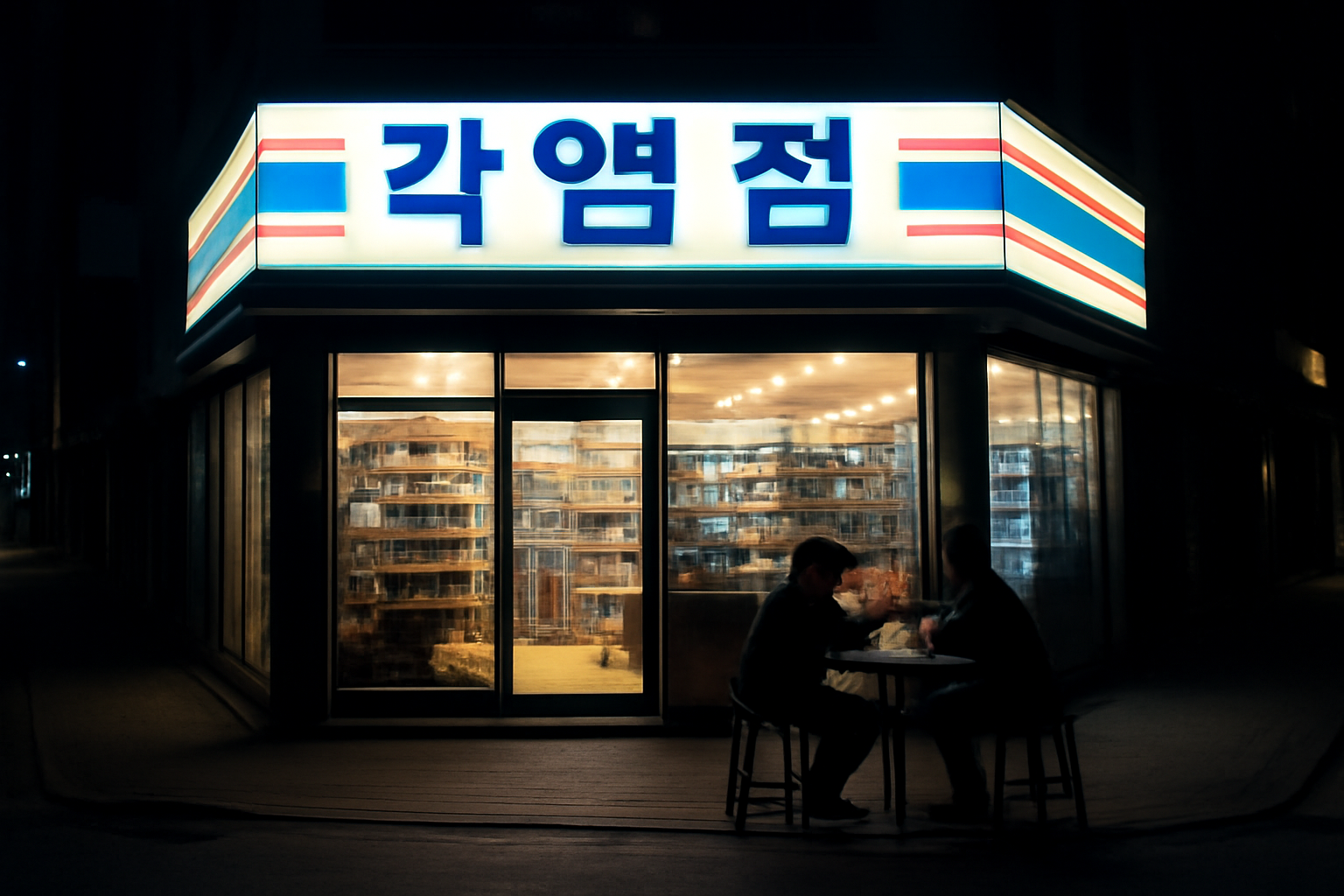
Before I get to the ranking, it’s worth explaining why this even works as a category. Korean convenience stores aren’t just places to grab gum and a lighter, strange as that might sound to anyone used to the Western version of a corner store. They’re open 24 hours, they have hot water dispensers and microwaves built right into the layout, and most locations have a little standing table — sometimes with actual stools — bolted outside or just inside the door. That table is doing more cultural work than people give it credit for. It’s where salarymen inhale a cup noodle before the last subway, where students split a bag of honey butter chips at midnight, where I have personally eaten more meals than I’d like to admit to my mother.
Then there’s the hot food warmer — usually a little glass case near the register stacked with fried chicken pieces, corn dogs, and fish cakes on skewers sitting in warm broth. It sounds like a minor detail, but combine that with dirt-cheap prices and you get a genuine food culture, not just a snack aisle. Okay. Rankings.
The ranking, from great to absolute legend status
9. Jjolbyeong (쫄병 어묵)
Starting near the bottom because it’s polarizing, not because it’s bad. These are the little sausage-shaped fish cake sticks, usually grabbed from the hot case and dunked in the communal broth. Bouncy, slightly rubbery, faintly sweet from the fish paste — not exactly a description that sells itself, I know. I like them when they’re fresh off a busy shift; day-old jjolbyeong from a quiet store has a sad, deflated quality that ruins the whole experience. High variance snack. When it’s good, it’s a solid 7. When it’s been sitting there since lunch, it’s a 3.
8. Honey Butter Chips
I know, I know — ranking a snack that once caused actual store shortages and resale scalping this low feels close to a crime. Even so, here’s my honest take: the sweet-savory potato chip idea is genuinely great, executed at a 9/10 level rather than a full 10/10. The honey note turns a little cloying by the bottom third of the bag, and I catch myself reaching for a drink halfway through. Still an essential, still worth the hype it got — just not quite top tier for me personally.
7. Egg Mayo Sandwich
The unsung hero of the sandwich fridge. Soft white bread, a thick layer of chopped boiled egg bound in Kewpie-style mayo, sometimes a little sugar in the mix that you don’t notice until it’s not there. Written out like that it sounds almost too basic to matter, and yet the texture — pillowy bread against that dense, slightly sweet egg filling — is genuinely comforting in a way I can’t fully explain. This is my go-to when I’m hungover and need something that won’t fight back.
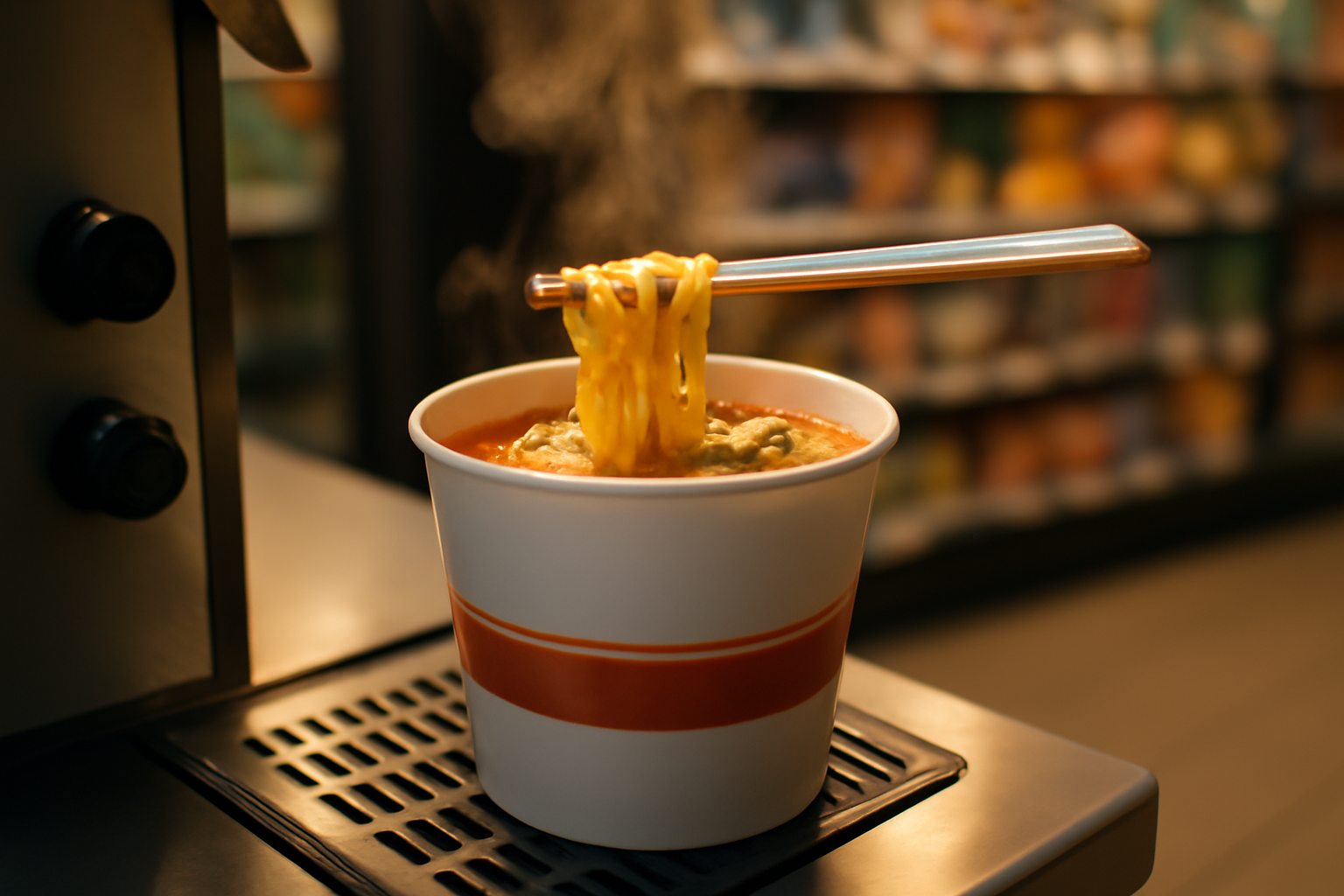
6. Ssamzangmyeon
This one deserves more international attention than it gets. It’s an instant jjajangmyeon-style noodle cup, but the trick is you don’t just add hot water — you’re supposed to drain it, then add the black bean sauce packet and toss. You wouldn’t expect much from a two-minute instant cup, but the result is a shockingly close approximation of real jjajangmyeon for something that costs less than a coffee. Rich, a little sweet, faintly savory from fermented black bean paste. I’ve genuinely fooled visiting friends into thinking I made real noodles for them.
5. Choco Pie
The elder statesman of this whole list. Two soft cocoa cakes, a marshmallow center, a thin chocolate shell that cracks just slightly when you bite in. It’s not flashy, it’s not new, and there’s nothing about it that will surprise you — but that’s exactly the appeal. Choco Pie is the snack equivalent of a reliable old friend. I ranked it mid-list not because it’s mediocre, but because at this point in the countdown I’m comparing legends against legends, and something has to sit in the middle.
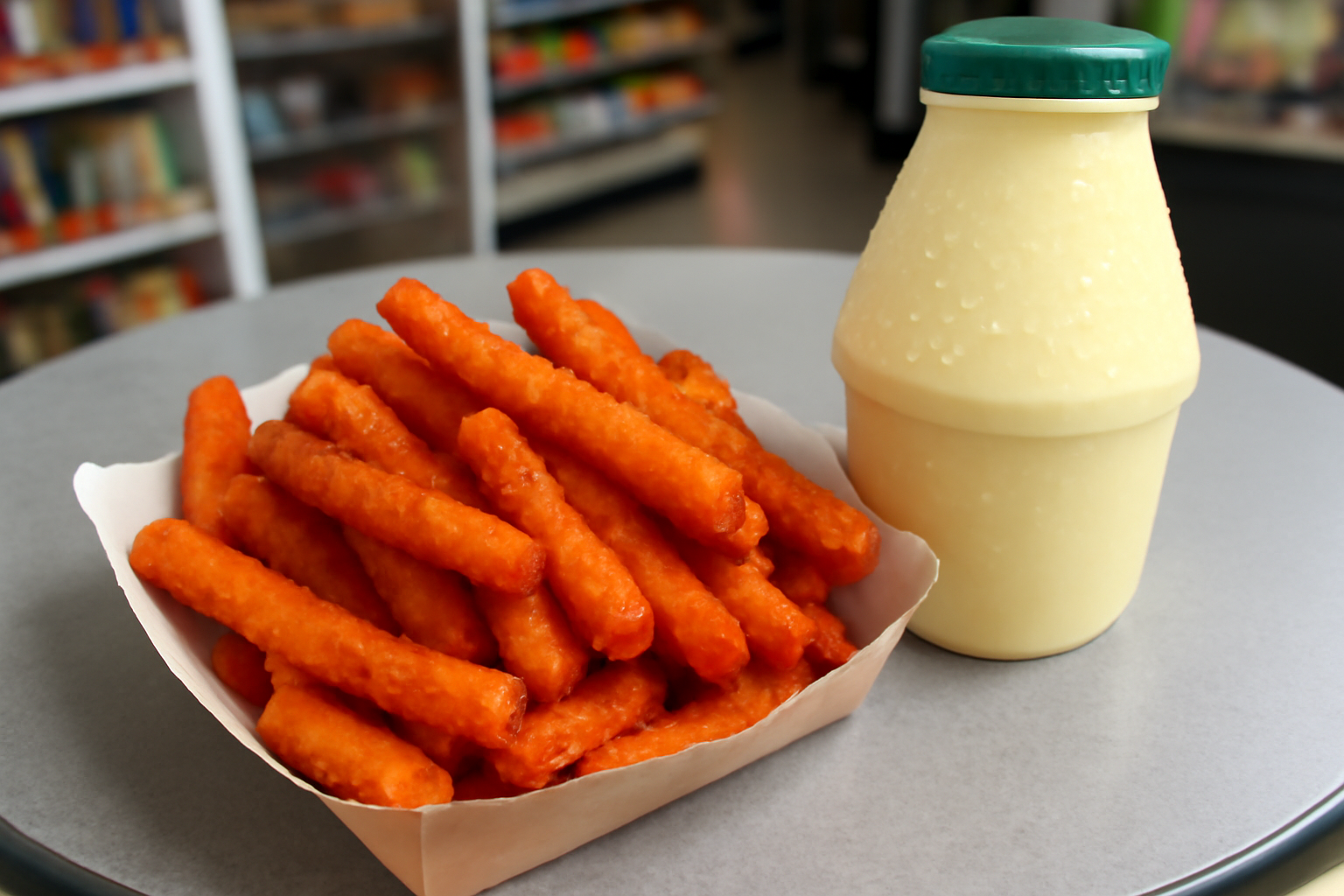
4. Samyang Buldak Fries
Spicy chicken fries that basically take the buldak flavor profile — that garlicky, sweet-hot, faintly smoky heat — and put it on a crunchy potato stick instead of a noodle. I keep a bottle of banana milk nearby specifically for these, because oddly, the burn builds slowly and then sits on your tongue for a solid ten minutes. The exterior has a satisfying crackle, the inside stays soft, and the seasoning coats every single fry evenly, which is more than I can say for a lot of “flavor dust” snacks that only hit the top layer of the bag.
3. Homerun Ball
A small chocolate-coated sphere of choux pastry filled with soft whipped cream, and somehow one of the most satisfying textures in the entire convenience store lineup. The shell gives a slight resistance before caving to that light, almost airy cream center. I’ve tried to ration myself to two per box, and yet I have never once succeeded. If you only try one item off this list, and you have a sweet tooth, make it this one.
2. Banana Milk
Not exciting to talk about because everyone already knows it’s great, but that’s precisely the point — this is a snack that has earned its status through decades of consistency rather than a viral moment. The pale yellow bottle, the slightly grainy texture, the not-too-sweet banana flavor that tastes more like actual banana than most banana-flavored things do. It pairs with everything on this list. I have never regretted buying one.
1. Triangle Kimbap (Samgak Gimbap), Spicy Pork Version
This had to be number one. Triangle kimbap in general is the backbone of convenience store eating in Korea — cheap, filling, and available in more filling varieties than I can count — but the spicy pork (jeyuk) version is the one I default to almost every time. The rice is seasoned just enough, the seaweed stays crisp because of that clever plastic separator trick, and the filling has real heat balanced against a little sweetness from the gochujang-based sauce. At around 1,200 to 1,500 won, it might sound like an odd thing to call one of the best value-for-money meals I’ve had anywhere in the world, but that’s exactly what it is, convenience store or otherwise. I’ve eaten one standing at that outdoor table more times than I can count, and I’ll do it again tonight.
Frequently asked questions
Are convenience store meals actually good, or just convenient?
Both, honestly. Nobody’s claiming triangle kimbap belongs on a fine dining menu, but the quality-to-price ratio is genuinely impressive, and chains like CU and GS25 have leaned hard into better ingredients and rotating menus over the past several years. I eat convenience store food by choice, not just when I’m desperate.
What’s the cheapest full meal you can put together?
A triangle kimbap, a cup of instant noodles from the hot water dispenser, and a small carton of milk will run you somewhere around 3,000 to 4,000 won total, and it’s a genuinely filling meal despite the price tag suggesting otherwise. Add a piece of hot case fried chicken if you’re feeling fancy.
Do all four chains — CU, GS25, 7-Eleven, and Emart24 — carry the same snacks?
Mostly the big national brands overlap, but each chain also runs its own private-label and collaboration items, so it’s worth popping into more than one if you’re on a snack-hunting mission. CU tends to lean into its hot food counter, while GS25 is known for more experimental limited releases.
Final thoughts
Ranking convenience store snacks is a little bit ridiculous as an exercise, and I say that as someone who just spent an evening doing exactly that. But there’s something honest about it, too — these are the foods that actually get eaten, at odd hours, by real people, standing at a plastic table on a street corner. No reservation required. If you’re ever in Korea and unsure where to start, walk into the nearest CU or GS25, grab a spicy pork triangle kimbap and a banana milk, and you’ll understand the appeal within about ninety seconds.
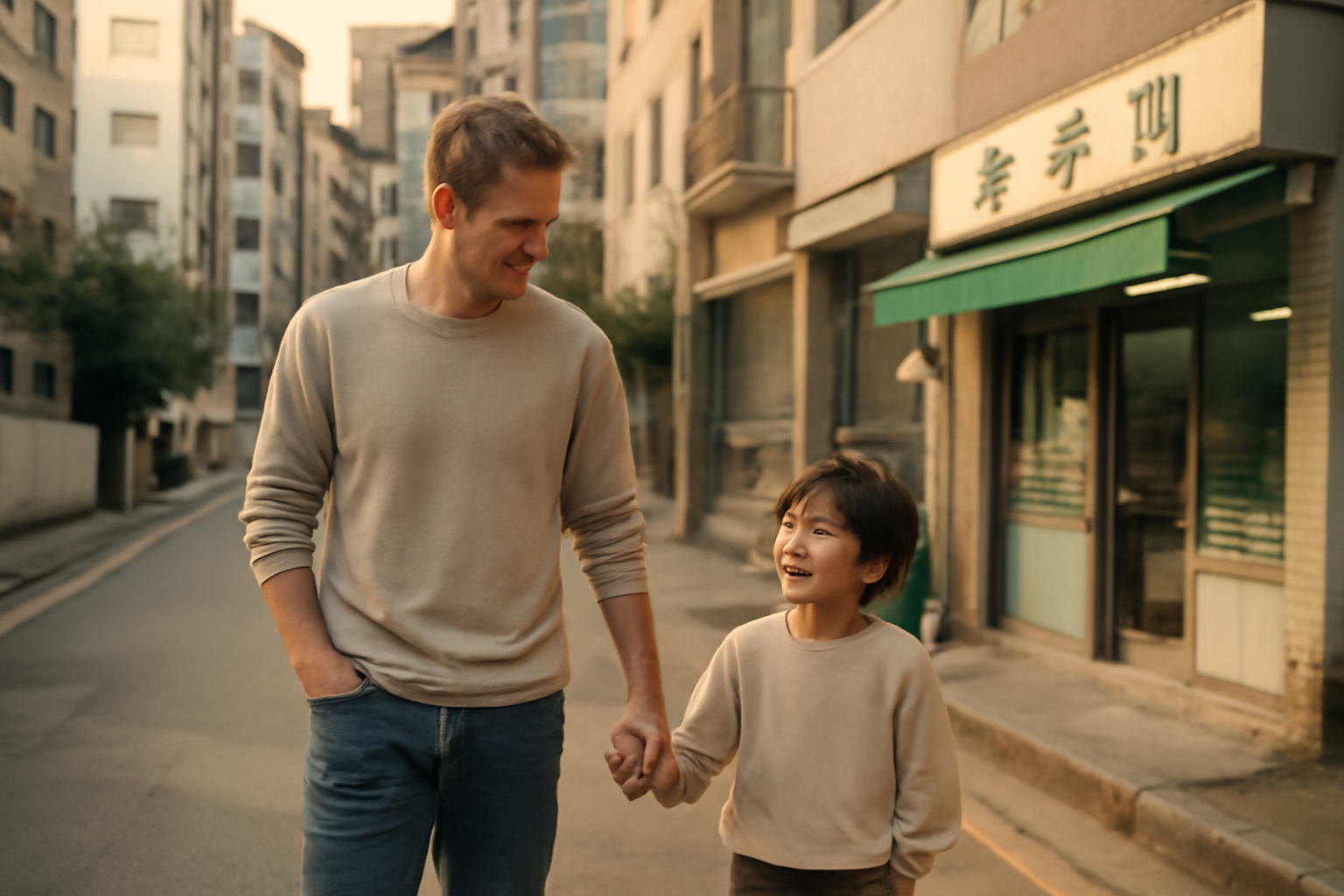
My son came home from his Korean kindergarten with a name tag sewn onto his gym bag, and for a second I didn’t recognize it. The teacher had written it the way the school always does — family name first, given name second, no comma, no flip. I’d filled out the enrollment paperwork myself weeks earlier, and still needed a beat to place it. Strange as it sounds, you can understand Korean name order perfectly in theory and still feel your Western brain stutter the first few times you see it in the wild.
I’m Yijidaddy, an American dad raising a family in Korea, and this is one of those small, everyday puzzles that trips up almost every foreigner here at some point. It looks simple on paper — and yet it gets less simple the moment you’re holding someone’s business card, trying to figure out which half of the name to actually call them by.
The basic structure: family name comes first
In Korea, the surname is written and spoken before the given name. Always. There’s no ambiguity the way there sometimes is in, say, Hungarian contexts where usage varies by setting. You might expect some wiggle room somewhere in there, but there isn’t: a Korean name is built as family name, then given name — typically one syllable for the surname and one or two for the given name, so the full name usually runs two or three syllables total.
Take a name like Kim Min-jun. Kim is the family name, Min-jun the given name. In English-language media you’ll sometimes see this flipped to “Min-jun Kim” to match Western reading habits, but that’s a translation convention, not how the name actually works in Korean. Even so, on his Korean ID card, at his workplace, on his mailbox, it’s Kim first.
How it looks on paper
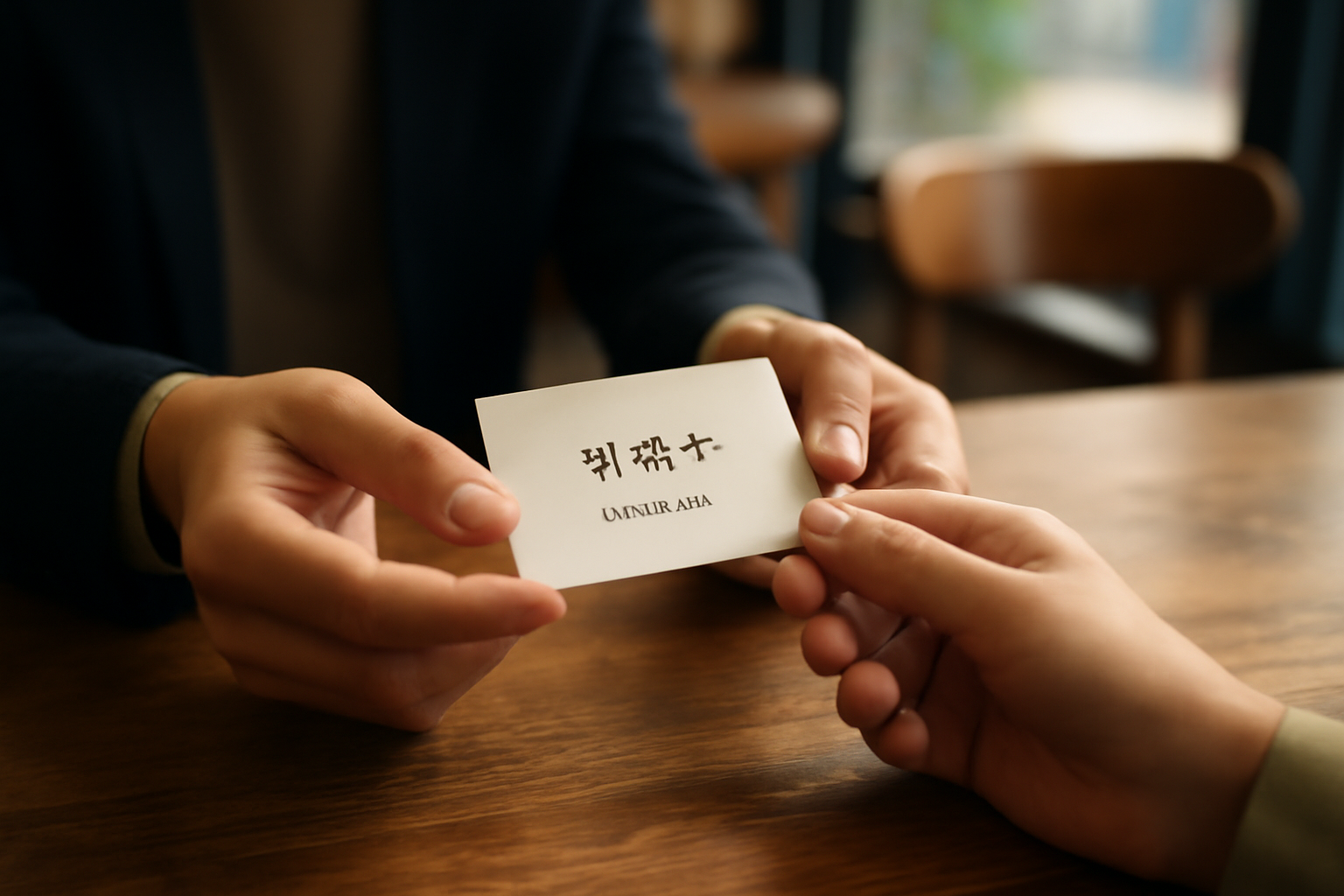
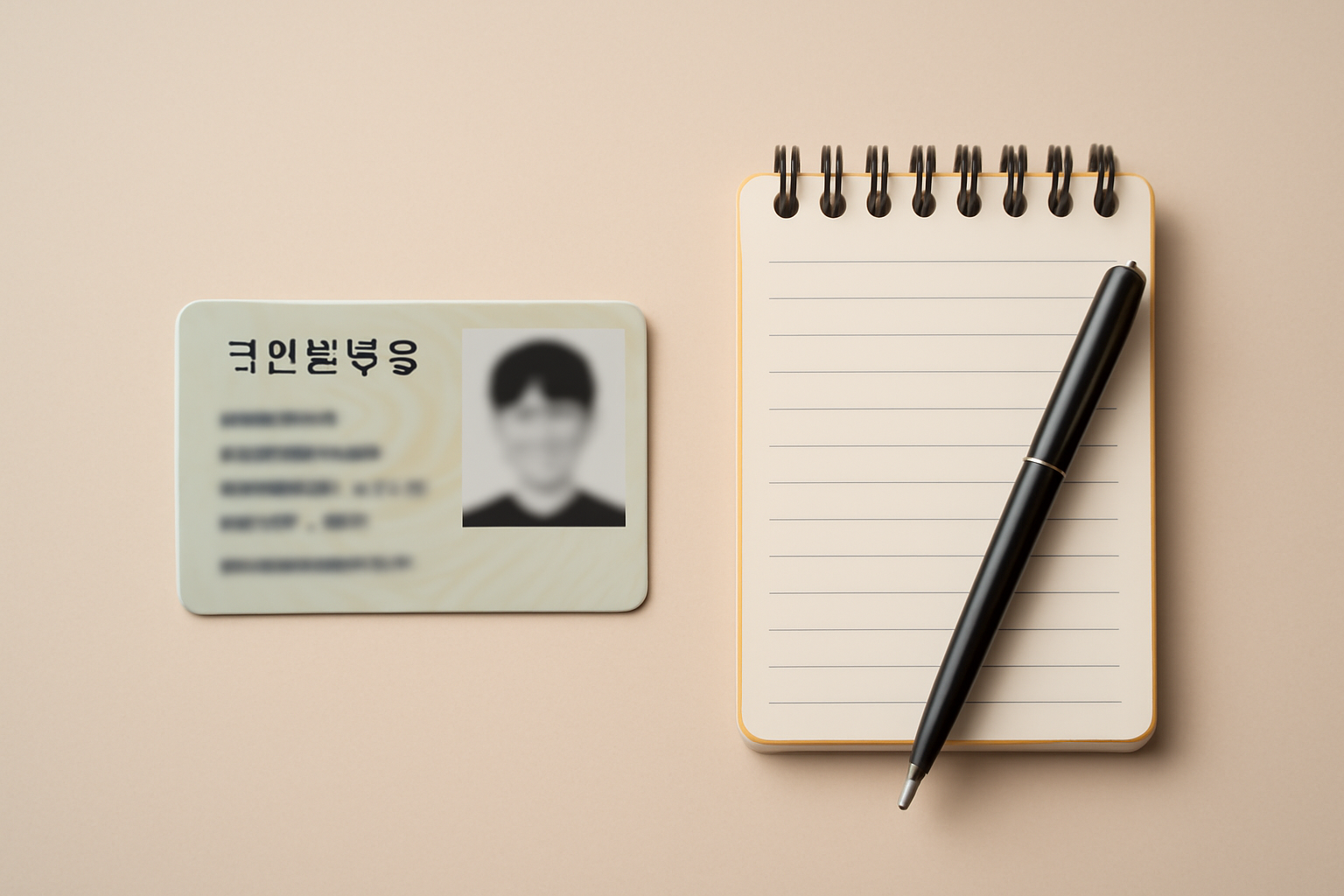
On a Korean resident registration card — the local equivalent of a national ID — the name field reads surname-first with no punctuation separating the two parts; it’s just one continuous string of syllables. Business cards follow the same logic. When a Korean colleague hands you a card, the top line is almost never split into “first name / last name” the way Western cards are — it’s the full name, family name leading, usually followed by a job title, and increasingly an English line underneath that keeps the same order instead of flipping it.
The surnames you’ll see constantly
You’d think a population this size would spread across hundreds of common surnames. It doesn’t. One reason the family-name-first structure stands out so much in Korea is how few surnames there actually are, relative to the population. Kim, Lee, and Park together account for roughly 45 percent of the country’s family names, and Kim alone covers around one in five Koreans. Add in Choi, Jung, Kang, Cho, Yoon, Jang, and Lim, and you’ve got maybe ten surnames covering a huge share of the population.
That concentration is partly historical — during the late Joseon dynasty, non-aristocratic families increasingly adopted surnames, many gravitating toward established, high-status clan names. The result is a country where surnames alone carry almost no distinguishing information; it’s the given name and the clan or regional lineage (bon-gwan) behind the surname that actually differentiate people. Oddly, two Kims might not be related at all, or they might belong to entirely different Kim clans going back centuries. Practically, this means any Korean classroom or office is full of people who share a surname but are complete strangers.
Where Westerners get tripped up
Mistake one: assuming the last word is the surname
Coming from English, the instinct is to treat whatever comes last as the family name — that’s how it works with “John Smith.” You’d assume the same logic carries over to Korean names. It doesn’t. Applied to a name like Park Ji-sung, that instinct produces “Mr. Sung,” which is wrong on two counts: Park is the surname, and Ji-sung isn’t split into two separate calling names anyway.
Mistake two: calling someone by their given name too early
This one isn’t really about word order — it’s about what the order signals. Korean given names are generally reserved for close friends, family, or a senior addressing someone junior. In most everyday and professional interactions, Koreans use surname plus title rather than a bare given name. A foreigner who learns that “Min-jun” is Mr. Kim’s given name and starts using it right away, thinking it’s the friendly move, can come across as oddly familiar. I made a version of this mistake early on — using a new acquaintance’s given name because it felt warmer — and got a slightly startled look before someone quietly set me straight.
Mistake three: flipping Western names into Korean order unnecessarily
Some foreigners, trying to be culturally sensitive, reverse their own Western name on Korean business cards to mimic the local order. You might think that’s the considerate move — most etiquette guidance actually recommends against it. Koreans doing business internationally are generally aware that Western names run given-name-first, and flipping your own name can create more confusion than it resolves — nobody’s sure anymore which part is your surname. Keeping your name in its normal order, and adding a Korean-script line if you want to be thorough, tends to land better.
How this plays out day to day, as a foreign parent
Living here, the surname-first structure stops being an abstract fact and turns into muscle memory fast. School documents, hospital check-in screens, delivery labels — they all default to the Korean order, and you adjust without noticing you’ve adjusted. Still, where it stays genuinely interesting is at the intersection of two naming systems, which is exactly where international families in Korea live.
When you’re naming a child with one Korean parent and one non-Korean parent, the ordering question gets real fast. Some families give the child a Korean given name that follows the Korean parent’s surname for official documents here, while using a separate Western-order name for the other side of the family or an international birth registration. Others keep one unified name and just accept that it reads differently depending on which country’s form you’re holding. I’ve watched friends weigh exactly this — how a name functions on a Korean ID versus a US passport versus everyday conversation — since something that works cleanly in one system doesn’t always carry over without friction.
None of it amounts to a crisis. It’s more a recurring small negotiation between two grammars of identity, and every mixed family I know here has worked out its own version of an answer.
Why the order exists at all
The family-name-first convention reflects a historical emphasis on lineage and household over the individual — identified first by the family or clan, and only then by the specific person within it. You might expect that emphasis to still visibly shape daily life. It doesn’t, not really — the naming convention has simply outlasted the social structure that produced it, the way naming customs tend to everywhere. Nobody in Seoul is consciously thinking about Joseon-era clan hierarchies when introducing themselves as Lee Somebody. It’s just how names work here, the same unconscious way “Smith” trailing “John” is just how names work in Ohio.
FAQ
Is the family name always first in Korea, with no exceptions?
In native Korean-language contexts — official documents, workplaces, everyday introductions — yes, the surname consistently comes first. It only flips when a name is deliberately rendered for an English-speaking audience, such as some international news bylines, and even then, plenty of Korean public figures keep their name surname-first in English too.
How do I know which part of a Korean name is the surname?
If the name is two or three syllables long and you don’t already know the person, the safest assumption is that the first syllable is the surname — especially if it’s one of the common ones like Kim, Lee, Park, Choi, or Jung. When in doubt, it’s completely normal to just ask; Koreans are used to explaining this to foreigners and won’t think less of you for checking.
Should I address a Korean colleague by their given name?
Generally not, unless they’ve specifically invited you to. Surname plus an appropriate title, or a workplace role term, is the safer default in professional settings. Given-name usage tends to open up naturally as a relationship grows closer or more informal, and it’s usually the Korean person who signals when that shift is welcome.
Names are one of those small doors into how a culture thinks about identity, and Korea’s surname-first order is a good example of a minor formatting detail that carries real social weight. Get the order right, and you’re not just avoiding an awkward moment — you’re showing you noticed something that matters here. That’s usually enough to earn a small, appreciative nod, even from someone who’s heard a foreigner get it wrong a hundred times before.
Every year around this time, the Seoul subway starts to look different. It’s not the usual rush-hour crush of briefcases and backpacks — it’s people hauling gift boxes wrapped in ribbon, carried with both arms because they’re heavier than they look. Spam gift sets. Boxes of Korean pears the size of softballs. Someone’s always balancing three sets of something on top of a rolling suitcase, trying not to knock into the doors. Strange as it sounds, that’s how I know Chuseok is close — not a calendar, just Line 2 the week before.
I’m Yijidaddy, and I still remember my first Chuseok as a foreign son-in-law — standing in my in-laws’ kitchen with genuinely no idea what I was supposed to be doing with my hands. Nobody handed me a manual. If you’re new to Korea, married into a Korean family, or just curious what the fuss is about every autumn, here’s the breakdown: what Chuseok actually is, when it happens in 2026, and what it’s like living through it, first as an outsider and then, slowly, as family.
So what exactly is Chuseok?
Chuseok (추석) is Korea’s harvest festival, often shorthanded as “Korean Thanksgiving” — a comparison that gets the spirit right even if the details don’t quite line up, and yet it’s the one explanation that actually lands with people back home. The name roughly means “autumn evening,” and the holiday centers on the full moon: it falls on the 15th day of the 8th month of the lunar calendar, every single year. That’s why the date shifts on the Western calendar instead of sitting on a fixed day the way Christmas does.
At its core, Chuseok is about gratitude and ancestry — families give thanks for the year’s harvest and honor the generations before them. It sounds like it should be one tidy event. Even so, it’s really a cluster of customs: a ritual at home, a trip to the family hometown, a table of specific foods, and a few days off that the entire country uses for exactly one purpose — going home.
When is Chuseok in 2026?
In 2026, Chuseok falls on Friday, September 25. Because it’s such a major holiday, the government tacks on extra days around it, so the official holiday period runs from Thursday, September 24 through Saturday, September 26. If you’re trying to plan travel, book anything, or just brace for how quiet — or chaotic — your neighborhood is about to get, that’s the window to circle.
A quick note for anyone new to this: you might assume you can just add 365 days to this year’s date and get next year’s — you can’t. Because Chuseok tracks the lunar calendar, it can land anywhere from early September to early October depending on the year. I learned that the hard way, once confidently telling a coworker the “usual date” and landing nearly three weeks off.
The rituals: charye and the ancestral table
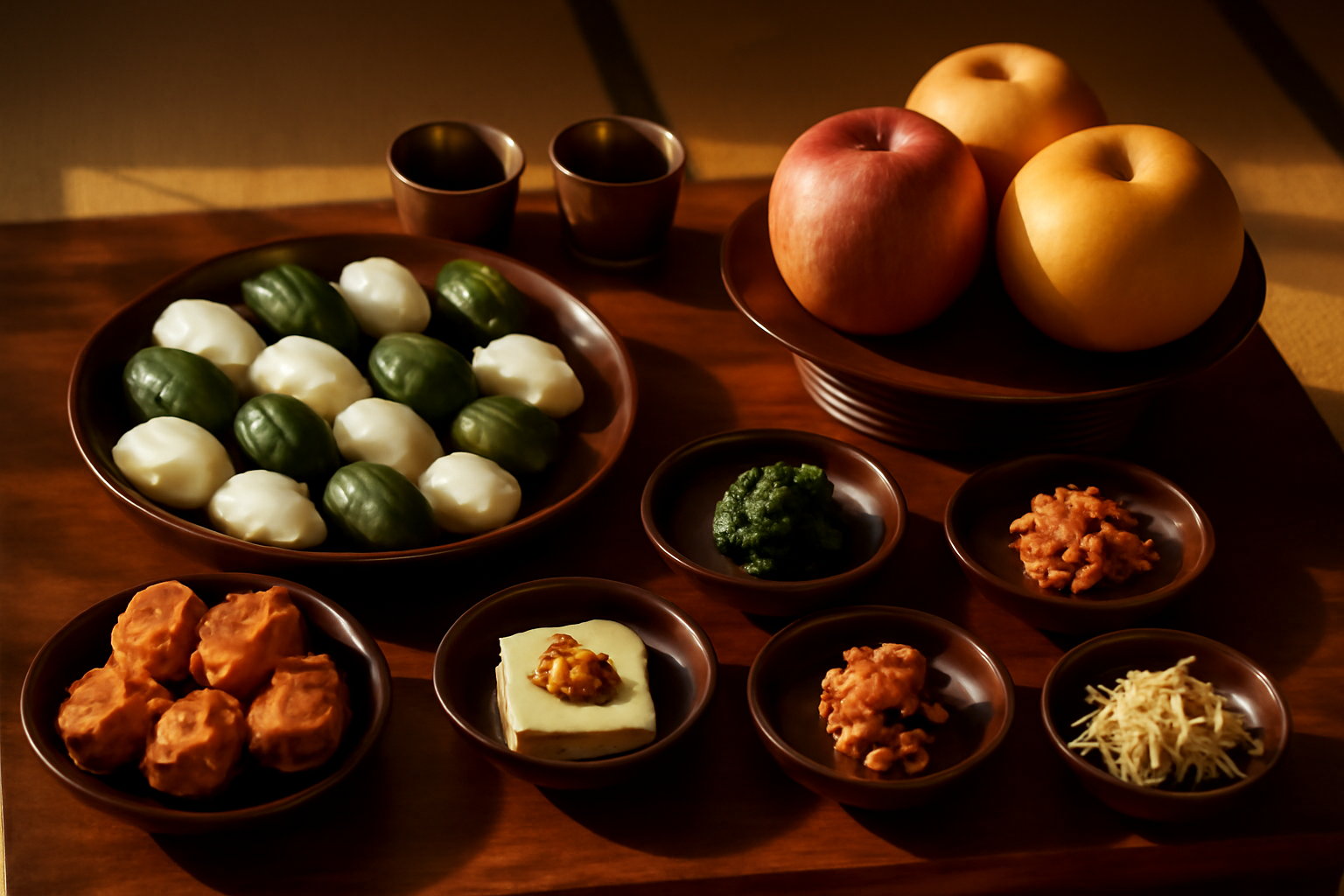
The heart of Chuseok morning, for families who observe it, is charye (차례) — an ancestral memorial rite performed at home. It sounds formal on paper, but it’s oddly quieter and more domestic than that. The family sets up a low table, arranges food in a specific order — fruit here, rice cakes there, fish and meat on designated rows — and the eldest members lead a series of bows toward photos of ancestors. Not somber exactly. Just serious.
The rules about placement vary by family and region, and even Koreans argue about the “correct” way to do it — still, everyone seems to have strong opinions about it anyway. My advice as an outsider: watch, follow whoever’s directing traffic, and don’t move a plate without asking. Some families also visit ancestral graves before or after, called seongmyo, to clear weeds and tidy the site: a small, physical act of respect.
Songpyeon: the rice cake that defines the holiday
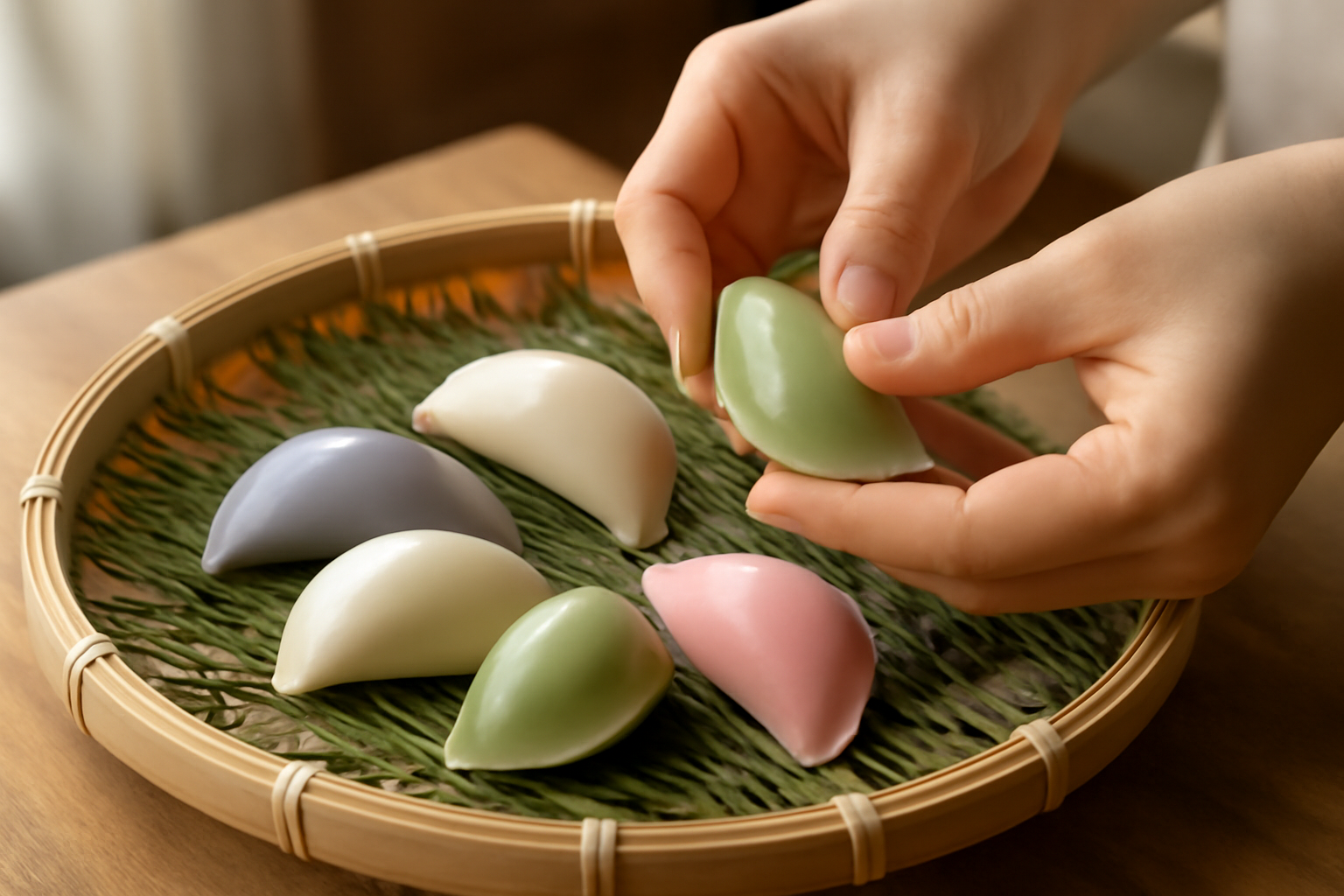
If there’s one food that says “Chuseok” more than any other, it’s songpyeon — small, half-moon-shaped rice cakes filled with sweetened sesame, red beans, or chestnut paste, steamed over a bed of pine needles that leave a faint, resinous scent behind. You might expect the shape to be arbitrary. It isn’t: a crescent moon, not a full one, symbolizes growth and potential — things still becoming, still on their way to fullness.
Making songpyeon together is still, in a lot of families, a genuinely communal activity — everyone gathered around a table pinching dough into shape. There’s a saying that whoever makes a beautifully formed songpyeon will have a beautiful daughter, or a handsome son, depending on who’s telling it. My own first attempts looked more like deflated dumplings than crescent moons, and my mother-in-law was diplomatic enough not to comment. Mostly.
Gift-giving season: Spam boxes and fruit sets
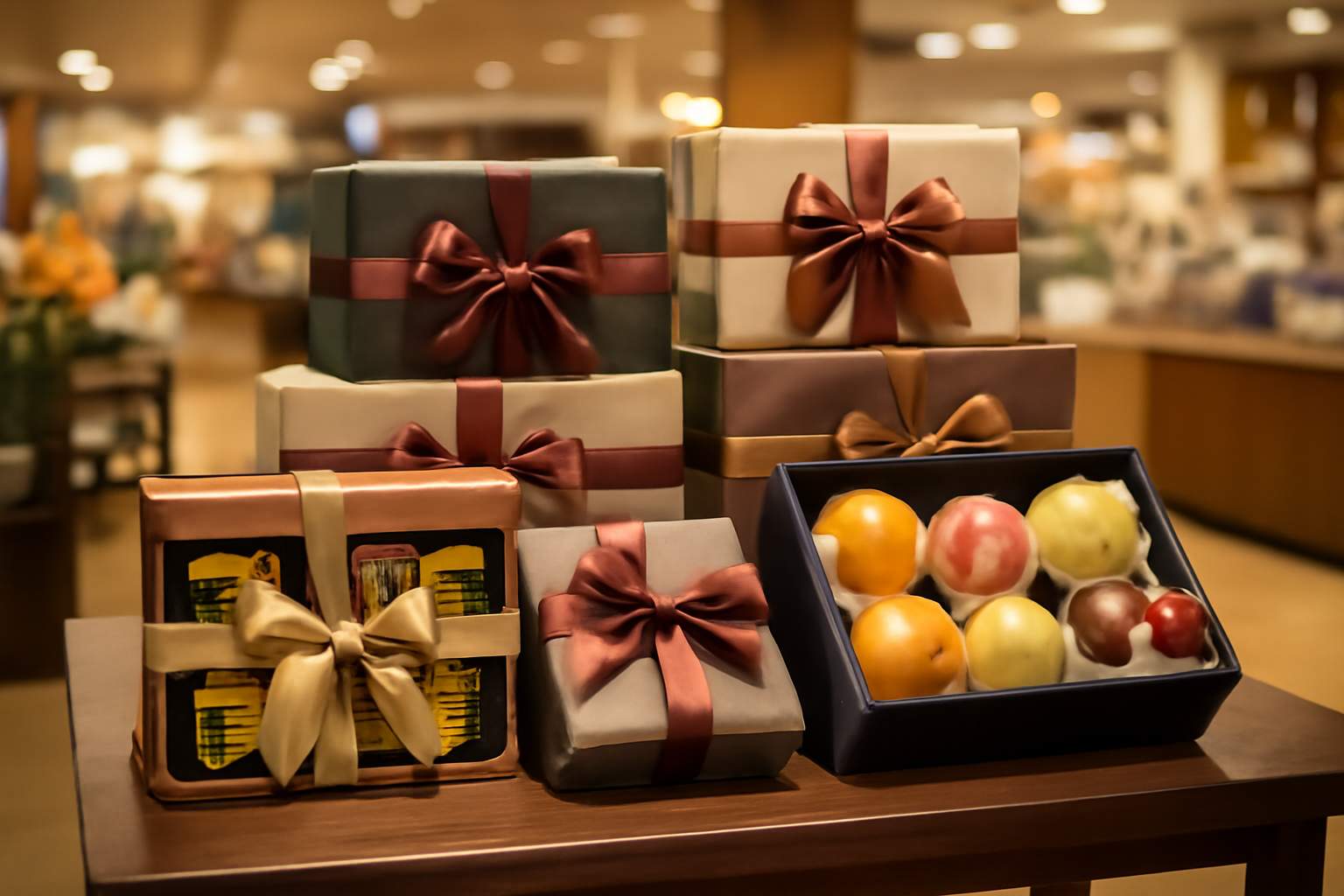
This is the part that catches foreigners off guard, and strange as it sounds, it genuinely delighted me the first time I understood it: canned meat is a normal, respectable, even prestigious holiday gift in Korea. Spam gift sets — tins boxed with a plastic window, sometimes paired with cooking oil — sell by the millions before Chuseok. Department stores build entire display sections around them, alongside fruit sets: curated boxes of Korean pears and apples chosen for size and unblemished skin, the way you’d pick out flowers.
These gifts move in every direction — employees to bosses, adult children to parents, between neighbors. The logic makes sense once you sit with it: everyone’s cooking a big holiday meal anyway, and everyone appreciates useful, non-perishable food. If you’re invited somewhere for Chuseok and unsure what to bring, a fruit set from a department store food hall is close to a foolproof choice.
Gwihyanggil: the journey nobody escapes
And then there’s the traffic. Koreans call the trip home for the holiday gwihyanggil (귀향길) — literally, the road home — and oddly, it might be the most universally shared experience of Chuseok, foreigners included, since anyone near a highway those days feels it whether they want to or not.
A trip that normally takes three hours can stretch to eight or nine. News broadcasts run live traffic maps the way other countries run election results. Rest stops along the expressway turn into their own small festivals, packed with people stretching their legs, buying hotteok, and comparing notes on which route is moving. The first year I drove my wife’s family to her hometown, a four-hour trip took nearly nine — an entire nation, at the same time, trying to reach the same kind of place: grandma’s house. There’s something oddly moving about that, even stuck in gear one on the highway.
Watching it from the outside, then slowly from the inside
My first couple of Chuseoks in Korea, I was mostly an observer — noticing the empty streets as everyone left town, wondering what was happening behind closed doors in houses I’d never been invited into. It can feel isolating without a Korean family or close friends pulling you in, and still, there’s no real shortcut around that. You just wait it out.
That changed once I married into a Korean family. Suddenly I was hauling gift boxes onto the train, standing awkwardly during charye trying to remember which direction to bow, getting handed a mound of songpyeon dough and told to make it look nicer. It’s still not effortless — there are customs I get wrong, honorifics I fumble — but there’s a real warmth to being folded into something this old and specific, even imperfectly.
Frequently asked questions
Do foreigners get invited to Chuseok?
It depends on your personal connections. Chuseok is a family holiday observed at home, not a public festival, so an invitation usually comes through a Korean partner, spouse, close friend, or host family. If you don’t have that yet, it’s not a dead end — cities like Seoul run public Chuseok programs at folk villages and palaces, with hanbok rentals, traditional games, and sometimes open demonstrations for visitors.
What should I bring as a gift if I’m invited to someone’s home for Chuseok?
A boxed fruit set or a nicely packaged food gift from a department store is close to universally appropriate. Avoid anything too casual, like a single item without wrapping — presentation matters here more than you’d expect. If you want to lean into the culture, a Spam gift set is a well-received, slightly playful choice once you know the household well enough.
One last thing
If you’re spending your first Chuseok in Korea this September, my honest advice is to lean into what feels strange rather than waiting for it to make sense first. Eat the songpyeon even if your shape came out lopsided. Sit through the charye even if you don’t understand every step. Get stuck in gwihyanggil traffic at least once — that shared frustration is, oddly, its own kind of belonging. Nobody expects a foreigner to get it perfect. They just seem to appreciate that you showed up.
지난주 토요일, 이불을 걷다가 재채기가 연달아 세 번 나왔다. 창문을 열어둔 지 몇 시간 지나지도 않았는데 코끝이 간지러웠다. 혹시나 해서 베개를 코에 대보니 시큼한 냄새까지 났다. 장마가 끝나고 습도 90%를 넘나들던 8월이 지나면 침구 속 집먼지진드기와 곰팡이균이 오히려 가장 왕성해지는 시기라고 한다. 여름 내내 땀을 흡수한 이불을 그대로 두고 가을을 맞으면, 정작 두꺼운 겨울 이불을 꺼낼 때쯤엔 이미 손 쓰기 늦은 상태가 되기 쉽다.
시트·베개커버는 일주일, 이불 속통은 2~3주가 기준
침구 관리에서 가장 헷갈리는 부분을 꼽으라면 단연 세탁 주기다. 매트리스에 바로 닿는 시트와 베갯잇은 주 1회 세탁이 기본이라는데, 매주는 좀 번거롭다 싶어도 땀을 많이 흘리거나 반려동물과 함께 잔다면 3~4일에 한 번으로 당겨야 한다. 반면 이불 속통, 그러니까 솜이 든 본체는 매주 빨 필요까진 없다. 대신 2~3주에 한 번은 중성세제로 물세탁해 진드기 사체와 배설물을 씻어내는 게 좋다. 몇 년에 한 번만 세탁해도 된다는 오래된 통념을 믿고 미루다 보면, 그 사이 알레르기 유발 물질만 조용히 쌓여간다.
이불 전용 코스 없이 그냥 돌려도 되지 않을까 싶지만, 세탁기에 이불 전용 코스가 있다면 반드시 그걸 써야 한다. 일반 코스로 두꺼운 이불을 돌리면 세제가 완전히 헹궈지지 않아 잔여물이 남고, 탈수 과정에서 솜이 한쪽으로 몰리는 경우도 의외로 흔하다. 통돌이 세탁기라면 이불 하나만 넣고 물을 최대로 채워 헹굼을 두 번 이상 돌리는 편이 안전하다.
진드기는 세제보다 온도에 반응한다
집먼지진드기는 섭씨 60도 이상에서 대부분 죽는다고 하니 뜨거운 물로만 빨면 될 것 같지만, 정작 가정용 세탁기 대부분은 온수 세탁 기능을 갖추지 못했다. 그래서 물세탁만으로는 진드기를 완전히 없애기 어렵고, 건조기의 열풍 코스를 함께 활용하는 게 그나마 현실적인 대안이 된다. 극세사 담요나 도톰한 차렵이불은 건조기에서 고온 코스로 20~30분만 돌려도 습기와 진드기, 곰팡이균을 상당 부분 잡을 수 있다니 의외로 간단하다.
건조기가 없는 집이라면 어떻게 해야 하나 싶은데, 오후 1시에서 3시 사이 자외선이 가장 강한 시간대에 이불을 널어 양면을 각각 최소 1시간씩 말리는 방법이 있다. 다 널고 나서 막대기나 이불털이로 세게 두드려주면 죽은 진드기와 먼지가 생각보다 많이 떨어져 나간다. 아파트라 마당이 없다고 포기할 필요는 없다. 베란다 창을 활짝 열고 빨래 건조대에 걸쳐 맞바람이 통하게 하는 것만으로도 효과가 있다.
베개 속통, 생각보다 자주 갈아야 한다
베개는 세탁만 잘하면 오래 써도 되지 않나 싶지만, 메모리폼이 아닌 솜이나 폴리에스터 충전재 베개라면 2년에 한 번씩 교체하는 게 위생 관리 측면에서 낫다. 세탁을 아무리 반복해도 속통 안쪽까지 완전히 마르지 않으면 냄새의 원인이 되는 세균이 그대로 남기 때문이다. 베개 커버 안쪽에 손을 넣어봤을 때 눅눅한 느낌이 든다면, 세탁 후 건조가 제대로 안 된 상태라는 뜻이다. 건조대에 세워서 말리기보다 눕혀서 자주 뒤집어가며 말려야 안쪽까지 마른다.
라텍스 베개는 물세탁이 아예 불가능한 제품이 많으니, 구입 전 세탁 방법부터 확인해두는 게 좋다. 대신 젖은 수건으로 겉면만 닦고 그늘에서 자연 건조시키는 방식을 쓰면 된다.
겨울 이불 꺼내기 전, 마지막으로 할 일
10월 중순쯤 두꺼운 극세사 이불이나 오리털 이불을 꺼내야 한다면, 이불장에 넣기 전 반드시 완전히 마른 상태인지부터 확인해야 한다. 다 말랐겠거니 넘겨짚었다가 조금이라도 습기가 남은 채 압축팩에 넣으면 이불장 안에서 곰팡이가 슬 수 있다. 압축팩을 쓸 때는 공기를 뺀 뒤에도 통풍이 되는 부직포 커버를 한 겹 더 씌워두면 다음 해 꺼낼 때 냄새 걱정이 훨씬 줄어든다.
자주 묻는 질문
Q1. 이불을 매주 빨 시간이 없는데, 세탁 대신 할 수 있는 방법이 있을까요?
매주 물세탁이 어렵다면 최소한 이불 커버만이라도 주 1회 교체하자. 이불 본체는 2주에 한 번 30분씩 햇볕에 널어 터는 것만으로도 진드기 밀도를 꽤 낮출 수 있다. 세탁 자체를 완전히 대체하진 못해도 응급 조치로는 충분하다.
Q2. 알레르기 비염이 있는 아이 방 침구는 어떻게 관리해야 하나요?
침구만 신경 쓰면 되지 않을까 싶지만, 아이 방은 성인 침구보다 한 단계 더 신경 써야 한다. 시트와 베갯잇은 3~4일 간격으로 교체하고, 인형이나 쿠션류도 한 달에 한 번은 세탁기에 함께 돌리는 걸 권한다. 증상이 심하다면 침구 관리만으로 해결하려 하지 말고, 소아과나 이비인후과 전문의와 상담해 원인부터 정확히 확인하는 게 우선이다.
Q3. 이불에서 나는 쿰쿰한 냄새, 세탁해도 계속 남는 이유는 뭔가요?
분명 깨끗이 빨았는데도 냄새가 남는다면, 세탁 후 완전히 마르지 않은 상태로 개켜둬서 그 사이 세균이 다시 번식했을 가능성이 크다. 탈수를 충분히 돌린 뒤 통풍이 잘 되는 곳에서 최소 하루 이상 널어 완전 건조시키고, 그래도 냄새가 남는다면 세제 잔여물이 원인일 수 있으니 헹굼 횟수를 한 번 더 늘려보는 걸 추천한다.
1908년 6월 30일 아침 7시 14분, 시베리아 중부의 사냥꾼들은 하늘 저편에서 태양보다 밝은 빛줄기가 지평선을 가로지르는 것을 봤다. 몇 초 뒤, 땅이 흔들렸다. 나무가 통째로 뽑혀 나갔고, 수백 킬로미터 밖 유럽의 지진계 바늘까지 흔들렸다. 그런데 정작 그 자리에는 운석 구덩이도, 부서진 잔해도 남지 않았다. 118년이 지난 지금까지도 과학자들이 완전히 답을 내리지 못한 사건, 퉁구스카 대폭발 이야기다.
지도에도 없던 강 유역에서 벌어진 일
사건은 러시아 시베리아의 포드카멘나야 퉁구스카강 유역, 사람이 거의 살지 않는 침엽수림 지대에서 일어났다. 폭발은 지표면이 아니라 상공 5~10km 고도에서 터진 것으로 추정된다. 에너지는 TNT 약 15메가톤급, 히로시마 원폭 위력의 무려 1000배에 달하는 규모였다. 사냥꾼들이 목격한 섬광과 굉음, 뜨거운 돌풍은 그 자체로 하나의 재난이었지만, 정작 조사대가 현장에 도착한 건 그로부터 19년이 지난 1927년이었다. 혁명과 내전으로 어수선했던 러시아 사정 탓에, 세상에서 가장 큰 폭발 흔적 하나가 거의 20년간 방치돼 있었던 셈이다.
나무 8천만 그루가 한 방향으로 쓰러지다
레오니트 쿨리크가 이끈 소련 조사단이 마주한 광경은 상상을 뛰어넘었다. 약 2000제곱킬로미터, 서울 면적의 세 배가 넘는 구역에서 나무 8000만 그루가 폭심지를 중심으로 부챗살처럼 방사형으로 쓰러져 있었다. 100제곱킬로미터 넘는 숲은 그을려 있었다. 그런데 이상한 점이 있었다. 폭심지 바로 아래 나무들은 오히려 가지만 잘린 채 똑바로 서 있었다. 폭발이 지면이 아니라 공중에서 일어났다는 뜻이었다. 크레이터도, 큼직한 파편도 없었다. 하늘에서 뭔가가 통째로 사라진 것처럼 보였다.
운석일까, 혜성 조각일까
가장 널리 받아들여지는 가설은 소행성이 대기권에 진입하며 공중에서 폭발했다는 것이다. 2001년 연구는 물체가 소행성대에서 왔을 확률을 83%로 제시했고, 2013년에는 현장 토양에서 채취한 미세 입자에서 철질 운석 성분이 검출됐다는 분석도 나왔다. 반대편에는 혜성설이 있다. 1930년대 영국 천문학자 F. J. W. 휘플이 제안한 이 가설은, 물체가 얼음과 먼지로 이뤄진 혜성 파편이었기에 대기와 마찰하며 순식간에 통째로 증발해버려 지상에 남길 잔해 자체가 없었다고 설명한다. 두 가설 모두 폭심지에 크레이터가 없는 이유는 설명하지만, 어느 쪽도 결정적 물증까지 내놓지는 못했다.
화산 가스 분출설이나 지구 내부 에너지 방출설처럼 지구 자체에서 원인을 찾으려는 시도도 있었지만 주류 학계에서는 힘을 얻지 못했다. 반면 미확인비행물체나 소형 블랙홀 충돌 같은 이야기는 어디까지나 대중문화 속 추측일 뿐, 학술적으로 뒷받침되는 근거는 없다는 점은 짚어둘 필요가 있다.
왜 100년 넘게 결론이 안 나올까
가장 큰 이유는 단순하다. 남은 게 거의 없다. 폭발이 지상이 아니라 대기 중에서 일어나면서 물체 대부분이 산산이 흩어지거나 증발했고, 현장 조사도 사건 후 수십 년이 지나서야 이뤄졌다. 그마저도 시베리아의 늪지대와 혹독한 기후 탓에 정밀한 발굴이 쉽지 않았다. 수집된 것은 나무 수지에 섞인 미세 입자와 1mm도 안 되는 조각들뿐이다. 이 정도 증거로는 소행성인지 혜성인지, 정확한 크기와 구성 성분이 무엇인지를 못 박아 말하기 어렵다.
그럼에도 이 사건이 계속 회자되는 이유는 명확하다. 만약 폭발 시각이 몇 시간만 늦었다면, 지구 자전으로 인해 폭심지는 상트페테르부르크나 유럽의 대도시였을 수도 있었다는 계산이 있기 때문이다. 우연히 인구가 거의 없는 시베리아 오지에 떨어졌을 뿐, 같은 규모의 사건이 도시 위에서 벌어졌다면 어땠을지는 지금도 소행성 방어 연구자들이 인용하는 사례다.
증거가 부족한 채로 세월만 흐르면 미스터리는 더 짙어지기 마련이다. 1947년 로즈웰 UFO 사건 역시 물증 부족과 뒤늦은 조사라는 비슷한 조건 속에서 온갖 추측을 낳은 사례다. 퉁구스카가 자연현상 쪽으로 무게가 실린 미스터리라면, 로즈웰은 정부 발표 자체에 대한 불신이 핵심이라는 차이가 있을 뿐이다.
자주 묻는 질문
퉁구스카에서 운석 조각이 발견됐나요?
큼직한 파편이나 확실한 운석 덩어리는 발견되지 않았다. 다만 현장 토양과 나무 수지에서 소행성 기원으로 추정되는 미세한 입자들이 검출된 바 있다. 이 입자들이 사건 자체와 직접 연관됐는지에 대해서는 여전히 이견이 있다.
왜 아직도 정확한 원인을 모르나요?
물체가 지면에 닿기 전 공중에서 폭발해 대부분 증발하거나 흩어졌고, 조사단이 현장에 도착한 것도 사건 발생 19년 뒤였다. 남은 물증이 극히 적다 보니 소행성설과 혜성설 모두 정황은 뒷받침하지만 결정적으로 하나를 확정 짓지는 못하는 상태다.
비슷한 규모의 폭발이 다시 일어날 수 있나요?
2013년 러시아 첼랴빈스크 상공에서 있었던 소행성 폭발이 퉁구스카와 자주 비교된다. 규모는 훨씬 작았지만 대기권 공중에서 터졌다는 점만큼은 똑 닮았다. 소행성 공중폭발 자체는 드물지 않게 일어나는 현상이라, 각국 우주기관들이 근지구 소행성 감시 체계를 운영하는 이유이기도 하다.
The first time I tried to tip someone in Korea, I chased a taxi driver down the sidewalk with a five thousand won note in my hand. He had already pulled away from the curb by the time I realized he wasn’t going to take it, and I stood there for a second feeling like an idiot before I understood what had actually just happened. He hadn’t misunderstood me. He’d understood perfectly, and declined.
That was maybe three months into living here, back when I was still translating every interaction through the assumptions I’d grown up with. Where I’m from, you tip. You tip the waiter, you tip the bartender, you tip the guy who cuts your hair, you tip the driver, and you feel a little guilty if you don’t, like you’ve stiffed someone who was counting on that extra cash to make rent. So when I got out of that taxi in Seoul and handed over exact change automatically got handed back to me — folded, not even counted twice — my instinct was to push a bit more into his hand as a thank you. He looked at me like I’d offered him a strange gift he didn’t know what to do with, said something quick I didn’t catch, and drove off.
So does anyone tip in Korea? Short answer: basically no
Once you’ve lived here a while, the no-tipping thing stops feeling like an absence and starts feeling like the default setting the rest of the world forgot to use. You eat at a restaurant, you look at the menu, the price on the menu is the price you pay. No mental math, no calculating twenty percent, no awkward moment at the end of the meal where you’re doing arithmetic in your head while trying to look like you’re not doing arithmetic in your head. The bill comes, you pay the number on it, everyone moves on with their lives.
Taxis work the same way. You look at the meter, you pay what the meter says. A lot of Koreans will round up to the nearest thousand won just because carrying around a fistful of loose coins is annoying, not because they feel obligated to reward the driver for doing his job. Hair salons, the same. Delivery drivers, the same, even though I still sometimes feel a flicker of American guilt watching a guy on a scooter show up in the rain with my food and take nothing beyond what I already paid online.
Why there’s no tipping culture here
The explanation I eventually pieced together — partly from Korean friends, partly from just paying attention over the years — comes down to a few things layered on top of each other.
The price already includes it
Korea moved toward what’s basically a “what you see is what you pay” system for restaurants. There was actually a legal push for this: menu prices are supposed to reflect the final amount, taxes and any service charge already folded in, rather than restaurants tacking on surprise fees at the register. So there’s no gap for a tip to fill, because the whole point of the pricing is that there shouldn’t be a gap. A tip on top of that isn’t generous, it’s confusing — it doesn’t correspond to anything the math already accounts for.
Service workers aren’t paid on the assumption that tips will cover the shortfall
This is the part that took me longest to really internalize. Where tipping culture is strongest, it’s often propping up a wage structure where the base pay assumes tips will make up the difference. Korea doesn’t really run on that model. A server’s wage isn’t built around the hope that a foreign customer will feel generous that night. Which means the good service you get isn’t a performance aimed at your wallet — it’s just what the job is.
Offering money can actually read as insulting
This one surprised me the most. I assumed a tip would always land as a compliment, cash version of “great job.” But in a culture where a lot of pride is tied up in doing your job properly and being seen as competent, sliding someone extra money after a completely normal transaction can imply something uncomfortable — like you’re treating a professional interaction as if it were charity, or like you doubted they’d be paid fairly otherwise. It’s not that people get offended constantly. It’s more that it creates this weird beat of “why is this foreigner handing me money outside the transaction we both understood.”
Hospitality as the default, not the reward
What actually changed my mental model was realizing that a lot of what I used to associate with “good service worth tipping for” — refilling your water without asking, bringing extra side dishes, remembering you liked something spicier last time — isn’t treated here as above-and-beyond. It’s just baseline hospitality. You don’t tip someone for being polite to you any more than you’d tip a friend for holding the door. The generosity is baked into the culture of how people are supposed to treat guests, not metered out transaction by transaction with cash as the currency of appreciation.
I’ve written before about some of the other adjustments that catch foreigners off guard in Korea, and tipping usually makes that list — it’s one of the more concrete examples of an assumption you don’t even know you’re carrying until it gets gently rejected.
The exceptions — because of course there are some
Korea isn’t a monolith on this, and a few situations have genuinely started to bend.
Tour guides and private drivers who work mainly with foreign tourists are the biggest exception. Because their whole job is built around international visitors who come from tipping cultures, it’s become common enough — and generally accepted — to offer a tip at the end of a tour, especially a full-day one. The etiquette I’ve seen recommended: do it privately, at the end, with both hands, in an envelope if you have one, rather than just shoving cash at them in front of the group. Something like 20,000 won for a solid half or full day is treated as a generous, appropriate gesture, not an insult.
Some high-end hotels are murkier. A few international luxury properties, especially ones aimed at foreign business travelers, have staff who are used to tips from bellhops or concierge and won’t necessarily refuse one, but it’s far from expected the way it is in, say, a New York hotel.
Outside of those specific corners, though, the safest assumption anywhere in Korea is still: don’t tip, and don’t be offended when it’s not expected of you either.
What foreigners consistently get wrong
The mistake I see other visitors and new expats make isn’t malicious, it’s just automatic. You’ve tipped your whole life, so you tip here too, on reflex, and then you get that same look I got from my taxi driver — polite confusion, sometimes a quick head shake, occasionally the change gets physically placed back in your hand like it’s returning something you dropped. Some people take that as rudeness. It isn’t. It’s just a completely different logic about what a fair transaction looks like, and pushing past someone’s “no thank you” on a tip can actually make things more awkward than just accepting that the price on the receipt really is the whole story.
The other common misstep is the opposite problem — assuming the “no tipping” rule is universal and then feeling weird tipping a tour guide who’s clearly expecting it in a tourism-heavy context, or being stiff about it in a way that reads as unfamiliar rather than respectful. Reading the specific situation matters more than applying one blanket rule everywhere.
FAQ
Should I tip my Korean tour guide after a full-day trip?
If it’s a private tour guide or driver working primarily with foreign tourists, a tip at the end of the day is generally accepted and even appreciated — hand it over privately, ideally with both hands, rather than in front of the rest of the group. If it’s a regular local guide leading a walking tour aimed mostly at domestic visitors, skip it; it’s more likely to cause confusion than gratitude.
What if a taxi driver refuses my change or won’t take extra money?
Just take it back without making a scene. Refusing a tip isn’t the driver being cold — it’s the normal, expected response. Pushing the extra cash on him a second time usually just extends an already slightly awkward moment. Rounding up to the nearest convenient bill is fine if you want to be tidy about it, but it’s optional and mostly for your own convenience, not his.
Is it rude to tip at a Korean restaurant if I really want to show appreciation?
It’s not going to get you kicked out, but don’t expect the gesture to land the way it would back home. If you genuinely want to express thanks for great service, a sincere “jal meogeosseumnida” (thank you for the meal) on your way out, or telling the owner directly that the food was excellent, tends to mean more than cash they weren’t expecting and likely won’t accept anyway.
My daughter finished the entire bowl of gyeranmari before our galbi even hit the grill. Not a bite left, just a smear of egg on the little metal dish. I was already reaching for my wallet in my head, doing the math on ordering a second rolled egg as a real menu item, when the ajumma walked by, glanced at the empty dish, picked it up without asking, and came back two minutes later with a fresh one. No charge. No comment. She didn’t even blink. My daughter just kept eating like nothing had happened, because to her, nothing had.
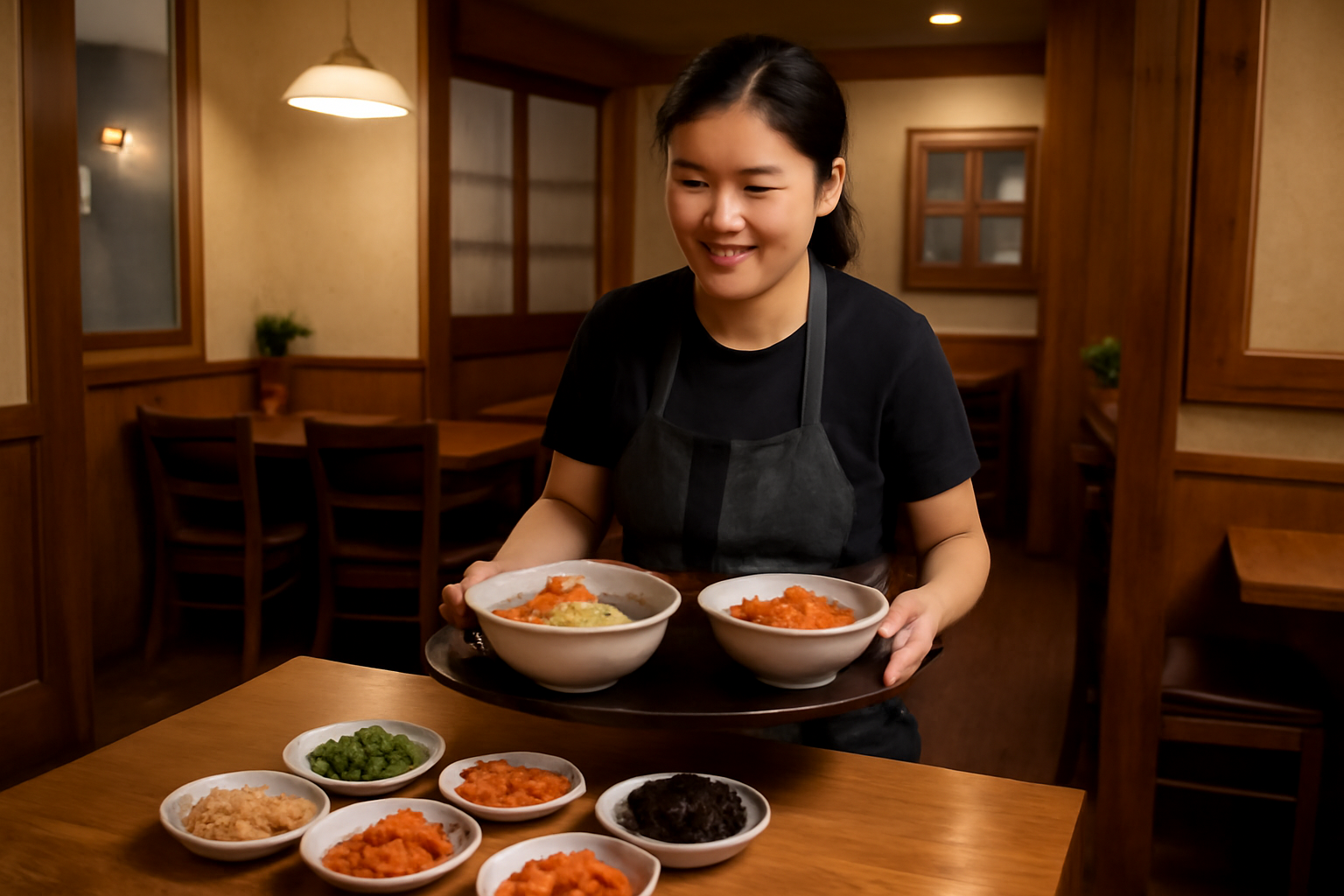
That’s when it hit me, maybe four or five years into living here, that I still hadn’t really thought about banchan as its own thing. It was just always there. The little dishes. The refills. The fact that a Korean meal without eight bowls of assorted vegetables and pickles around the main plate feels almost naked to me now. So let’s talk about it properly, because it’s one of those pieces of daily life in Korea that foreigners either love immediately or find mildly overwhelming, and I’ve been on both sides of that.
What Banchan Actually Means
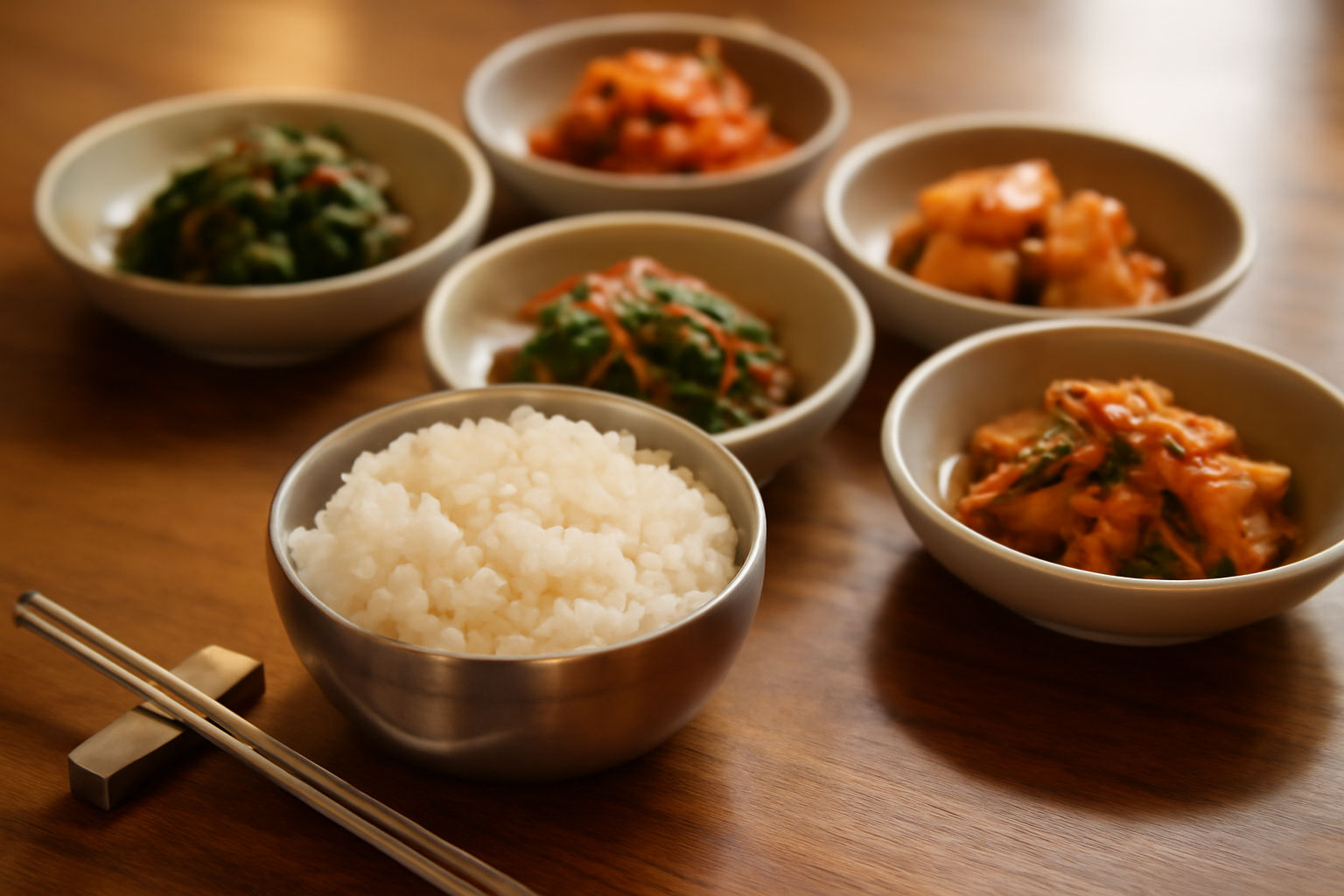
Banchan (반찬) is the umbrella word for the side dishes that show up around your rice and main dish at basically every Korean meal, whether that’s at home, at a work cafeteria, or at a restaurant. It’s not garnish. It’s not an appetizer course you finish before the “real” food comes. Everything arrives at once, or close to it, and you eat from all of it throughout the meal, alongside your rice, in whatever order you like.
Some banchan you’ll see constantly: kimchi, obviously, in more forms than most foreigners realize exist. Kongnamul (seasoned soybean sprouts). Myeolchi bokkeum, those tiny stir-fried dried anchovies glazed in soy and a little sugar that I genuinely didn’t like the first time and now actively crave. Gyeranmari, the rolled omelette my daughter demolished. Sigeumchi namul, blanched spinach with sesame oil. Jangjorim, soy-braised beef in little dark threads. A dozen more depending on the restaurant, the season, and honestly the mood of whoever’s cooking.
The Refill Thing That Still Gets People
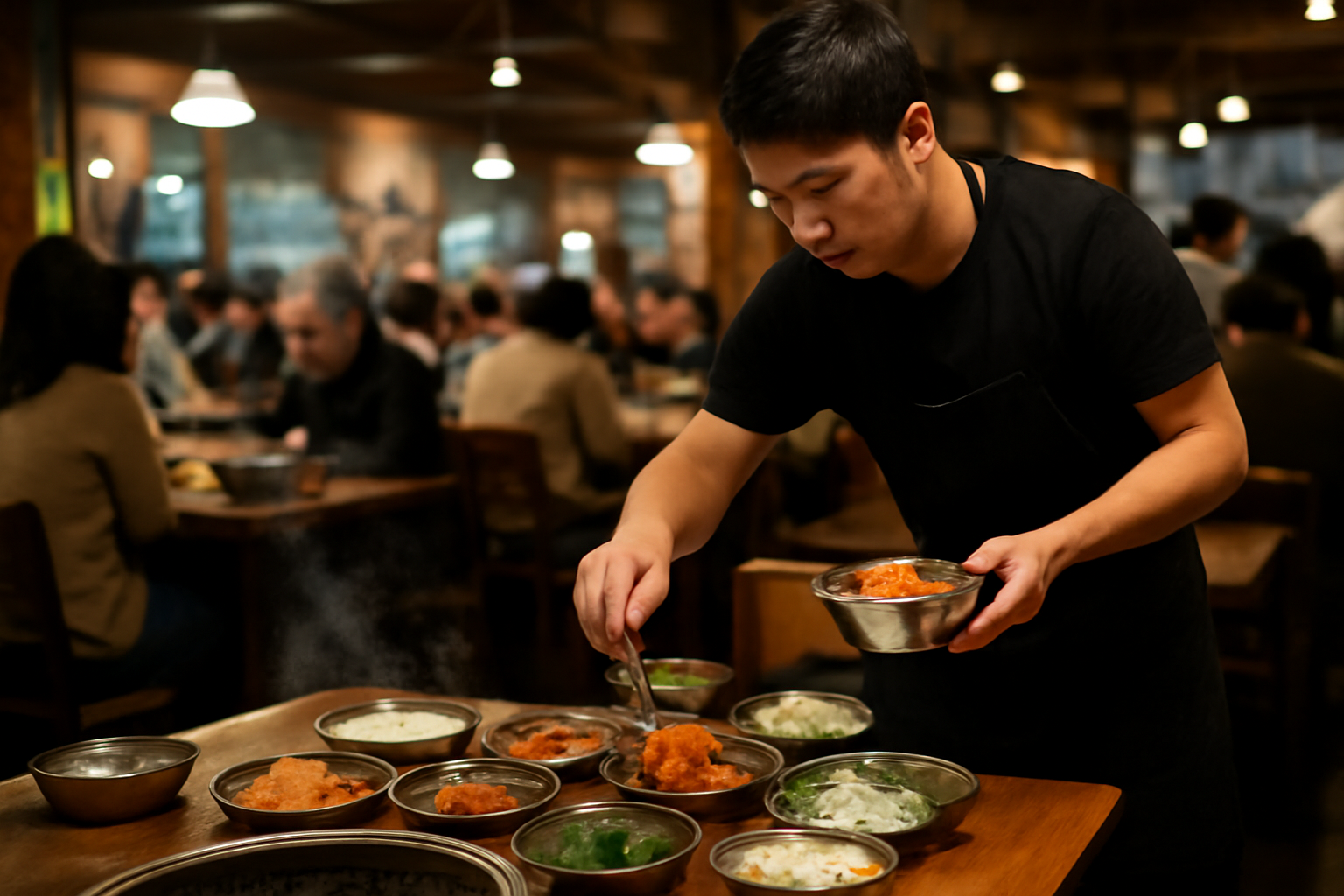
Here’s the part that trips up almost every visitor I’ve brought to a Korean restaurant. You finish the kimchi. You look around for a waiter. Somebody notices, or you flag someone down, and the empty dish just gets swapped for a full one. No extra line on the bill. No awkward negotiation. It happens so smoothly that first-timers usually ask me afterward, quietly, like they’re worried they broke a rule, “wait, was that actually free?”
It is, and it isn’t, if that makes sense. You’re not paying per refill, but the price of your galbi or your bibimbap already has that cost baked in somewhere. Restaurants aren’t running a charity. But the effect at the table is real generosity, and I don’t think that’s an accident. A big part of eating out in Korea is the sense that you won’t leave hungry, that the table will keep giving until you’re actually full, not until you’ve spent enough money to be full. That’s a genuinely different feeling from a lot of the dining culture I grew up with, where every basket of bread or refill has an invisible meter running.
Where I Think This Habit Actually Comes From
My own theory, formed mostly from conversations with my mother-in-law and a lot of meals, is that it traces back to leaner decades when rice itself was the expensive part of a meal and vegetables, pickled and fermented to survive the winter, were the cheap and plentiful part. Filling people up on banchan instead of endless rice refills made economic sense, and somewhere along the way that turned into a point of pride. A restaurant with a stingy banchan spread gets a certain reputation fast. Nobody wants to be that place.
Restaurant Banchan vs. Home Banchan
These are honestly two different worlds, and it took me a while to notice how different. A mid-range restaurant might set out five to eight banchan with a barbecue order, more if it’s a proper hanjeongsik set meal, where I’ve counted well past a dozen small dishes before the main course even lands. Home is a different rhythm entirely. My mother-in-law usually keeps three or four banchan in steady rotation, maybe five if guests are coming, and they’re not trying to impress anyone. They’re just what’s in the fridge that week, cycling based on what vegetables were cheap at the market or what needs to get eaten before it turns.
Restaurant banchan also tends to be a bit more standardized and, I’ll say it, sometimes a bit blander, optimized for consistency across a hundred tables a night. Home banchan has more range, in both directions. My mother-in-law’s kongnamul is better than almost anywhere we eat out. Her doenjang-based dishes have this depth that I’ve never quite gotten from a restaurant version. But some of what she makes is also an acquired taste even for me after all these years, in a way a restaurant chasing repeat customers would probably tone down.
The Banchan Drawer Every Korean Fridge Seems to Have
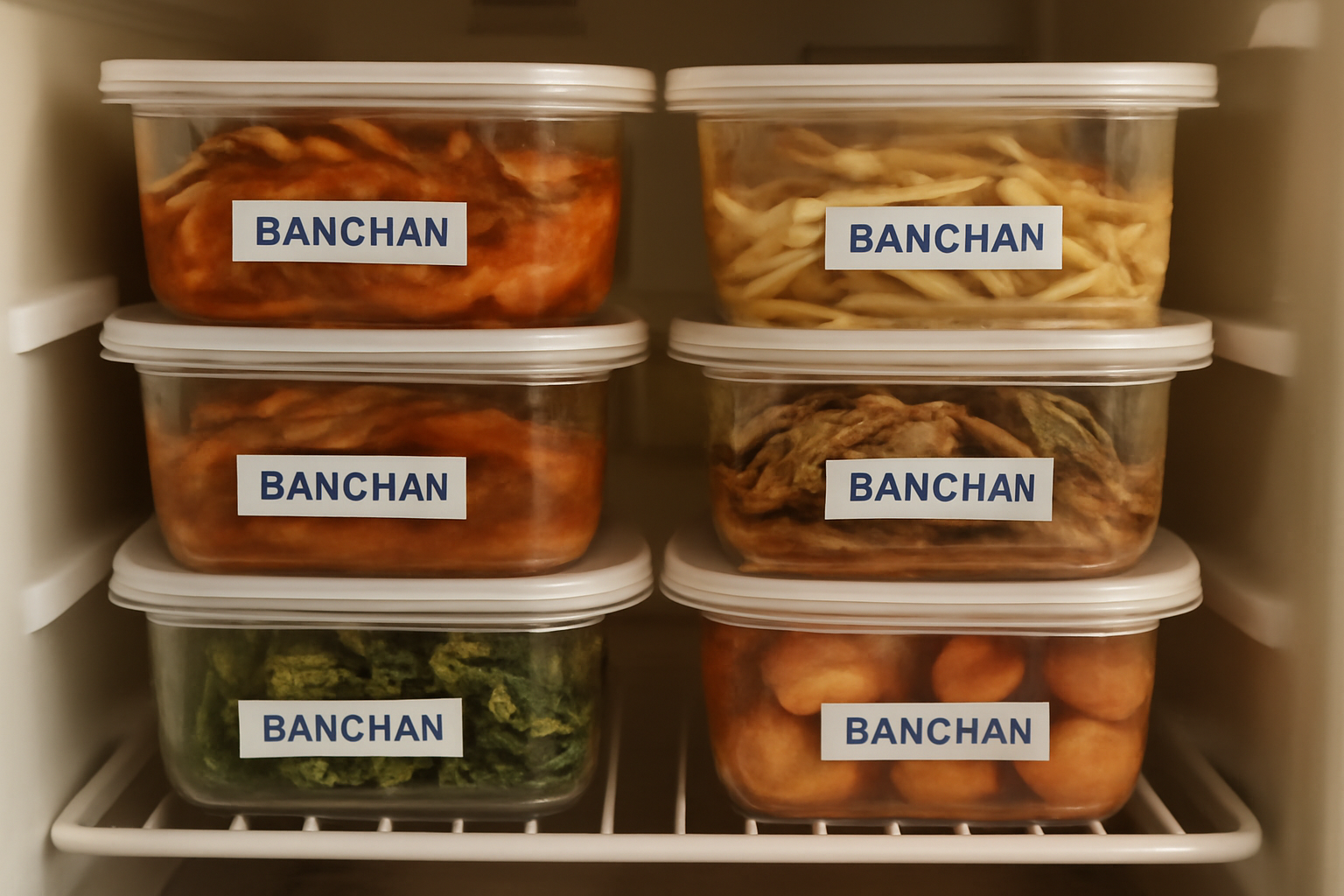
If you’ve never lived with a Korean family, the fridge situation might surprise you. There’s usually a dedicated shelf, sometimes a whole drawer or a second small fridge just for kimchi, stacked with shallow rectangular containers, each one a different banchan in rotation. Ours currently has kongnamul, a spicy squid-and-radish salad my wife makes when she’s got extra energy, some braised lotus root that’s been in there a suspiciously long time, and at least two kinds of kimchi at different stages of fermentation, because apparently you want some fresh and some sour depending on what you’re cooking.
The rule of thumb I’ve picked up, mostly by getting it wrong, is that banchan gets made in batches to last three or four days to a week, not cooked fresh every single meal. A working parent isn’t stir-frying anchovies every night. You make a big batch on Sunday, portion it out, and it becomes the backbone of dinner all week alongside whatever soup or main dish you’re making that day. It’s meal prep, basically, except nobody in Korea calls it that or treats it like a trend. It’s just how the kitchen has always worked.
Etiquette I Had to Learn the Slow Way
A few things I got wrong early on, for anyone newer to this than me. Banchan dishes on a shared table are communal, meant for everyone, so you take a small portion onto your own plate or rice bowl rather than eating straight out of the shared dish with your own chopsticks going back in every time. It’s not a hard rule everyone enforces, especially among close family, but I got a few polite looks before I caught on. Don’t feel like you have to finish every single banchan either, and don’t feel shy about which ones you go back for again and again. Some dishes at the table are clearly there for one person’s taste more than the group’s, and that’s fine.
If you want to see how this same generosity-and-etiquette dance plays out when you’re eating solo instead of at a shared table, I wrote a bit about that over in my notes on honbap culture, where the banchan still shows up even for a table of one.
Frequently Asked Questions
Is it rude to ask for banchan refills?
No, not at all, and restaurant staff genuinely expect it. If your dish is empty and nobody’s noticed, it’s completely normal to catch a server’s eye, point at the empty bowl, or just say you’d like more. Some places even have a call button at the table for exactly this. The only slightly awkward version is asking for a refill of something unusual or expensive, like extra meat sauce dishes at certain barbecue spots, so if you’re not sure, a quick glance at what other tables are doing usually clears it up.
Do you have to finish all your banchan?
You don’t, and nobody’s counting. Banchan portions are meant to be small and replenishable precisely so you can try a little of everything without pressure to clean every dish. What matters more, especially at a home meal with family or in-laws, is not leaving huge untouched piles that suggest you disliked something specific, which can come across differently than simply not finishing a small taste of six or seven different sides.
Can you take leftover banchan home from a restaurant?
This one varies a lot. Some smaller, family-run places are happy to pack up unfinished banchan for you if you ask, especially with a regular customer they know. Larger or busier restaurants, and definitely most barbecue chains, generally don’t do this for the side dishes even if they’ll box up leftover meat, partly because banchan portions are often replenished from a shared prep batch rather than plated fresh per table. If it matters to you, it never hurts to ask, but don’t be surprised by a polite no.
Why It Still Gets Me, Even Now
What sticks with me isn’t really the food itself, as much as I love the kongnamul and the jangjorim and, yes, even the anchovies now. It’s that quiet, no-fuss generosity built right into how a meal works here, the same instinct that had that ajumma refilling my daughter’s egg dish without a second thought. Nobody made an announcement about hospitality. It’s just the shape the table takes, every single time, and after enough years here, I’d genuinely miss it if it were gone.