Blog

  • Things That Surprised Me Moving to Korea

    Things That Surprised Me Moving to Korea

    It was raining hard, past eleven at night, and I was standing on my balcony in socks watching a delivery scooter lean into a turn three floors below like it was qualifying for a race. Ten minutes later my phone buzzed, and a soaking-wet guy in a helmet handed me a paper bag of fried chicken that was still hot enough to fog up my glasses when I opened it. The chicken wasn’t the surprising part. The fact that I’d ordered it on impulse, in the rain, at midnight, and genuinely never doubted it would show up — that was the moment I understood I wasn’t in my home country’s version of “normal” anymore.

    I’m Yijidaddy, and I’ve been raising a kid and building a life in Korea long enough now that most of this stuff doesn’t register as strange anymore. But when I go back through old messages I sent to friends and family in my first year or two here, they’re full of exclamation points about things that, honestly, embarrass me a little now because they seem so mundane in hindsight. That gap — between what shocked me then and what feels invisible now — is basically the whole story of adjusting to a new country. So instead of another generic “things I wish I knew” list, I wanted to just walk through the actual surprises, in the order of how hard they hit me, good and bad.

    The Delivery Speed Isn’t a Gimmick, It’s Infrastructure

    Before I moved here, I assumed “Korea has fast delivery” meant something like a slightly quicker Amazon. I did not understand that it meant hot food, cold groceries, and even random convenience items could show up at your door in under thirty minutes almost anywhere in a city, at almost any hour, with a tracking map that shows the rider’s dot moving toward you in real time like you’re watching a tiny video game. What actually got me wasn’t the first fast delivery. It was the fifth or sixth one, when I caught myself getting mildly annoyed that it took twenty-five minutes instead of fifteen. That’s when I realized my baseline for “reasonable” had completely recalibrated without my permission.

    Convenience Stores Are Basically Tiny Department Stores

    I went into my first Korean convenience store expecting gas-station snacks and lottery tickets. What I found was a place where I could pay my utility bill, print a document, buy decent instant coffee, sit at a little window counter and eat a full meal, and pick up a package I’d ordered online — all in the same five minutes. I remember standing there the first week just sort of turning in a slow circle, recalibrating what the word “convenience store” was allowed to mean. Back home the equivalent store was where you went when you’d run out of options. Here it’s often the first option.

    A brightly lit convenience store storefront at night in a Korean city

    The Quiet Kind of Safety

    Nobody tells you how physically your body reacts to safety until you notice yourself relaxing muscles you didn’t know were tense. I remember watching someone leave a laptop and a phone sitting on a café table, unattended, to go order at the counter, and just… walk away for a few minutes. Where I’m from, that’s an invitation. Here, nobody even glanced at the table. It took me a long time to stop instinctively grabbing my bag every time I stood up, and even longer to admit that the instinct wasn’t really protecting me from anything anymore — it was just a habit from somewhere else.

    Work Dinners Are a Whole Second Job

    I’d heard the phrase “drinking culture” before I arrived, and I pictured something like after-work happy hour back home — one round, some laughs, everyone home by eight. What actually surprised me was the structure of it: how a single evening could move through multiple locations, multiple courses, and multiple rounds of drinks with what felt like genuine choreography behind it. It’s not chaotic. It’s almost formal, in its own way, with its own unwritten rules about who pours for whom and when you’re allowed to leave. I don’t drink like that anymore, and honestly most of my Korean friends don’t either these days, but the first time I experienced a full “hoesik” evening, I came home and just sat on the floor of my apartment for a while, recalculating my whole concept of what an office dinner could be.

    Everyone Wants to Know How Old You Are, Immediately

    In a lot of Western small talk, asking someone’s age early on can feel almost rude, like you’re sizing them up. Here, it’s closer to a functional question, because age determines so much about how two people are supposed to speak to each other — which verb endings to use, who defers to whom, even who picks up the check sometimes. The surprise wasn’t that people asked. It was how quickly the conversation could recalibrate once they had the number, like a switch flipped somewhere and the whole tone of the interaction shifted a few degrees. I used to find it invasive. Now I mostly find it efficient, which says something about how much my own expectations have moved.

    Strangers Are Distant, Neighbors Can Be Surprisingly Warm

    This one cuts both ways and I think it trips people up because they only notice the first half. Walking down the street, riding the subway, standing in line — there’s a kind of comfortable anonymity here, minimal eye contact, no small talk with the cashier, no chatting with strangers in an elevator. I found that cold at first, coming from a place where “how’s it going” is basically a reflex. But the surprise came later, once I’d been in the same neighborhood long enough that the woman at the produce stand started tossing an extra piece of fruit into my bag without saying much about it, or a neighbor left a container of homemade side dishes outside our door around a holiday. The warmth exists. It’s just not distributed to strangers by default — it’s earned through proximity and time, which is a completely different social operating system than the one I grew up with.
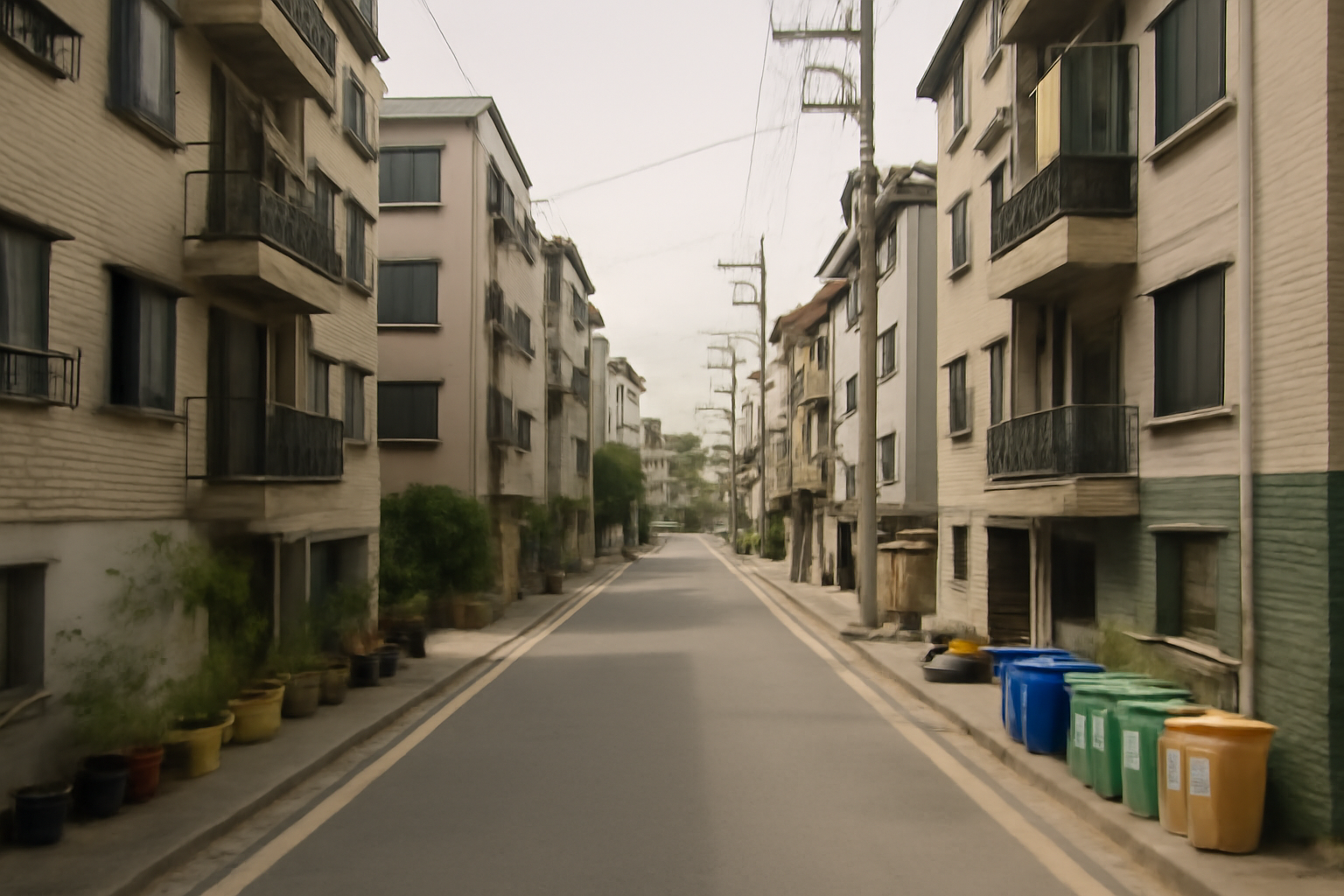
    A quiet residential street in Korea lined with apartment buildings

    Apartment Living Has Its Own Unspoken Rulebook

    Nobody handed me a manual when I moved into my first Korean apartment, and I definitely could have used one. Heated floors that you control like a thermostat instead of radiators. A recycling and food-waste system specific enough that I once stood in the building’s trash room for a genuinely uncomfortable amount of time trying to figure out which bin took what. Building announcements that come through an intercom speaker mounted in the kitchen, occasionally waking up my kid. None of it is difficult once you know it, but the learning curve in the first few months was steeper than I expected for something as basic as “where does the trash go.”

    “Pali Pali” Is a Real Operating Speed, Not a Stereotype

    I’d read about “pali pali” (hurry hurry) culture before moving here and assumed it was exaggerated, the way every country has some stereotype about itself. Then I watched an entire subway car worth of people speed-walk in unison toward a transfer, watched a kiosk order get placed and confirmed faster than I could read the menu, watched construction that seemed to finish overnight. The pace isn’t rude, exactly. It’s just calibrated differently, and standing still in the middle of it — literally, on an escalator, not walking up the left side — will get you a very clear, wordless signal that you’re in someone’s way.

    The Service Speed Extends to Almost Everything Official

    This was one of the good surprises. I went in expecting the usual bureaucratic slog for anything involving paperwork, because that had been my experience elsewhere. Instead, tasks that I assumed would eat an entire afternoon — getting a phone plan sorted, handling paperwork at a local government office, even certain medical appointments — moved through in a fraction of the time I’d budgeted. I’ve shown up to appointments with a book to read and barely cracked the cover before I was called in. It recalibrated how much slack time I build into a day here, which took a while to trust.

    Sitting With All of It

    None of these things are good or bad on their own — they’re just different defaults, and the surprise fades into normalcy faster than you’d think. What stays with me isn’t any single item on this list, honestly. It’s the general experience of having so many assumptions about how ordinary life works quietly rewritten, one convenience store trip or office dinner or trash room standoff at a time. That process didn’t stop after year one, and I don’t think it ever fully stops. It just gets quieter.

    Frequently Asked Questions

    Was the culture shock mostly positive or negative for you?

    Mostly positive, though it wasn’t evenly split day to day. The infrastructure-related surprises — delivery, safety, convenience, service speed — were almost universally pleasant once I adjusted. The social ones, like the hierarchy in language or the pace of work dinners, took longer to feel comfortable with, and a few of them I still navigate more carefully than a local would.

    How long did it take before these things stopped feeling surprising?

    Honestly, it varied a lot by category. Practical stuff like the convenience stores or delivery apps felt normal within a couple of months. The deeper social patterns — how age shapes conversation, how warmth gets extended to neighbors versus strangers — took closer to a year or two before they stopped registering as “different” and just became how I expected things to work.

    Did having a family change which surprises stood out most?

    Definitely. Safety and the apartment-building routines mattered a lot more once I had a kid to think about, in a way they wouldn’t have if I’d moved here on my own. Things like leaving a stroller in a building hallway without worrying about it, or the sheer predictability of the trash and delivery systems, went from “interesting cultural note” to “genuinely useful part of daily life” pretty quickly.
  • Is It Rude to Eat Alone in Korea? A Foreign Dad’s Notes on Honbap Culture

    Is It Rude to Eat Alone in Korea? A Foreign Dad’s Notes on Honbap Culture

    The first time I ate alone in Korea, I didn’t plan it that way. I’d gotten off work early, my wife had the kids at a birthday party across town, and I found myself standing in front of a small jjigae place near the subway station with about forty minutes to kill before I actually needed to be anywhere. I almost kept walking. There’s a specific kind of hesitation that hits you at a restaurant door when you’re by yourself, a half-second where you calculate whether it’s worth the awkwardness of asking for “just one.” I went in anyway. The ajumma running the place glanced up, said “honja seyo” — alone? — more as a statement than a question, and pointed me to a two-top by the window like it was the most unremarkable thing in the world. I ate my doenjang jjigae, read something on my phone, paid, and left. Nobody looked twice.

    That non-event stuck with me, honestly, because I’d absorbed enough secondhand nervousness about eating alone in Korea before I moved here that I expected something closer to a scene. It never came. And the more I’ve thought about it since, the more I think that gap — between the reputation honbap culture has abroad and what actually happens at a random restaurant on a Tuesday — is worth unpacking.

    What Honbap Actually Means

    Honbap (혼밥) is a compound of honja, meaning alone, and bap, meaning rice or, more broadly, a meal. It sits alongside honsul (drinking alone) and honyeong (watching a movie alone) in a small family of words that Korean has developed for solo activities that used to be assumed to require company. The prefix “hon-” has become its own little cultural marker over the past decade, shorthand for an entire shift in how people, especially younger Koreans, structure their time.

    I bring this up because the word itself tells you something. Languages don’t usually bother naming things that are unremarkable. English doesn’t have a dedicated word for eating alone because nobody felt the need to flag it as a category. Korean did, and that’s a clue that solo dining was, at some point fairly recently, notable enough to require its own vocabulary.

    The Stigma Wasn’t Imaginary

    It’s worth being honest about where honbap culture came from, because I think foreigners sometimes hear “eating alone used to be looked down on in Korea” and assume it’s an exaggeration, or some kind of Orientalist flourish added to make the culture seem more exotic than it is. It wasn’t exaggerated. Korean dining, for a long time, was built around groups by default. Meals were social infrastructure — a way of maintaining relationships at work, in families, among friends — and restaurant menus, portion sizes, and pricing reflected that assumption. A lot of Korean BBQ places priced their meat by the order of two portions minimum. Jjigae and stews were often served in a large communal pot meant to be ladled out, not a single bowl for one. Sitting alone at a table built for four, in a restaurant staffed for groups, could genuinely draw curious looks, not because anyone thought you’d committed a crime, but because it read as a small signal that something was off — that you had no one to eat with.

    That’s a real cultural weight, and I don’t think it’s useful to pretend it evaporated overnight. It didn’t. It eroded, gradually, under pressure from several directions at once, and it eroded unevenly depending on where you are and who you’re asking.

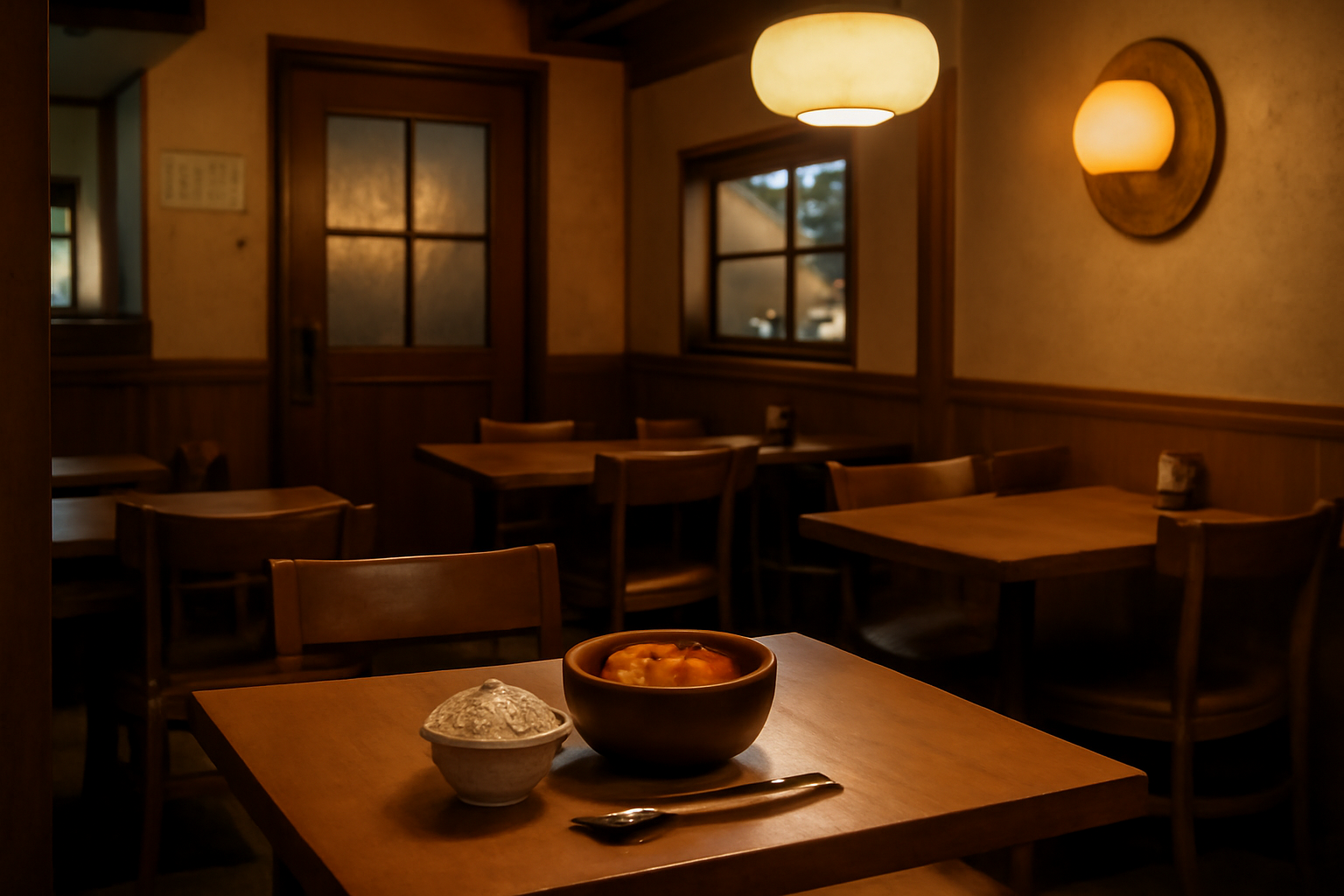
    A quiet restaurant table set for one person, with a bowl of stew and a small side dish, in a warmly lit interior
    A table for one no longer draws a second glance in most Korean cities.

    What Actually Changed

    The shift didn’t happen because attitudes softened first and infrastructure followed. If anything it went the other way — the infrastructure showed up because the demand was already there, and the attitudes caught up once eating alone became something people could physically do without friction.

    A few things converged. Household composition changed a lot over the past fifteen or twenty years — a much larger share of people in Korean cities now live alone than used to be the case, whether that’s students, young professionals, or older people whose kids have moved out. That alone creates enormous daily demand for solo-friendly meals that has nothing to do with anyone’s philosophy about independence; it’s just what happens when you live by yourself and need to eat dinner on a Wednesday.

    Restaurants responded. You now see a real category of places built specifically around single-portion service — soup-and-rice counters, noodle shops, gimbap places, curry spots — where the entire layout is a row of one-person seats facing a counter, sometimes with partitions between them so you’re not even making eye contact with the stranger next to you. Franchise chains figured this out early because it’s good business: a restaurant that can seat four solo diners at tables built for four singles is more efficient than one that waits for groups of four to show up together.

    Then there’s the technology layer, which I think gets underrated in how much friction it removed. Self-service kiosks are everywhere now — you order and pay at a screen, no need to catch anyone’s attention or explain that it’s just you. Food delivery apps let you get restaurant-quality food to your door without setting foot anywhere. And convenience stores, which were already dense on nearly every block, expanded their fresh food sections aggressively — instant noodles with hot water right there, triangle kimbap, prepared meal boxes, and usually a little counter by the window where you can sit and eat without anyone registering it as unusual at all.

    Naver Map and other apps now let you filter search results specifically for solo-dining-friendly restaurants, which tells you the market considered this common enough to be worth a filter. None of that existed in any organized way even a decade ago.

    Where It’s Still a Little Awkward

    I don’t want to oversell how completely this has flattened out, because it hasn’t, and I think pretending otherwise does a disservice to anyone actually planning a trip or a move here. There are still specific situations where solo dining creates mild friction, mostly tied to food formats that are structurally built around sharing.

    Korean BBQ is the classic example. A lot of barbecue restaurants set minimum orders at two portions, partly because the grill setup and the side dish spread are calibrated for a group, and partly because a table occupied by one person eating slowly is, from the restaurant’s perspective, less profitable than that same table turning over with a group. Some places have adapted — you’ll find dedicated 1인 (one-person) BBQ spots, especially in neighborhoods with a lot of single-person households, with individual mini grills built right into the counter. But it’s still not universal, and if you walk into a random barbecue place and ask for a single portion, you may get turned down, or get an apologetic explanation that it’s not really set up for that.

    Hotpot and stew places built around a shared communal pot have a similar issue, for the same structural reason — the dish itself assumes multiple spoons. Some restaurants have introduced individual-pot versions specifically to capture solo diners, but plenty haven’t bothered.

    There’s also a generational layer that’s less about the restaurant and more about the diner. Younger Koreans, particularly in Seoul and other big cities, treat honbap as completely unremarkable, sometimes even preferable — a chance to eat on your own schedule without managing anyone else’s preferences. Older generations, who came up when communal eating was the default and eating alone really did carry a whiff of “something’s wrong,” are more likely to view it through that older lens, even if they wouldn’t say anything to a stranger’s face about it. That generational gap means the “is this normal” question doesn’t have one universal answer — it depends a bit on where you are, what you’re eating, and who’s around you.

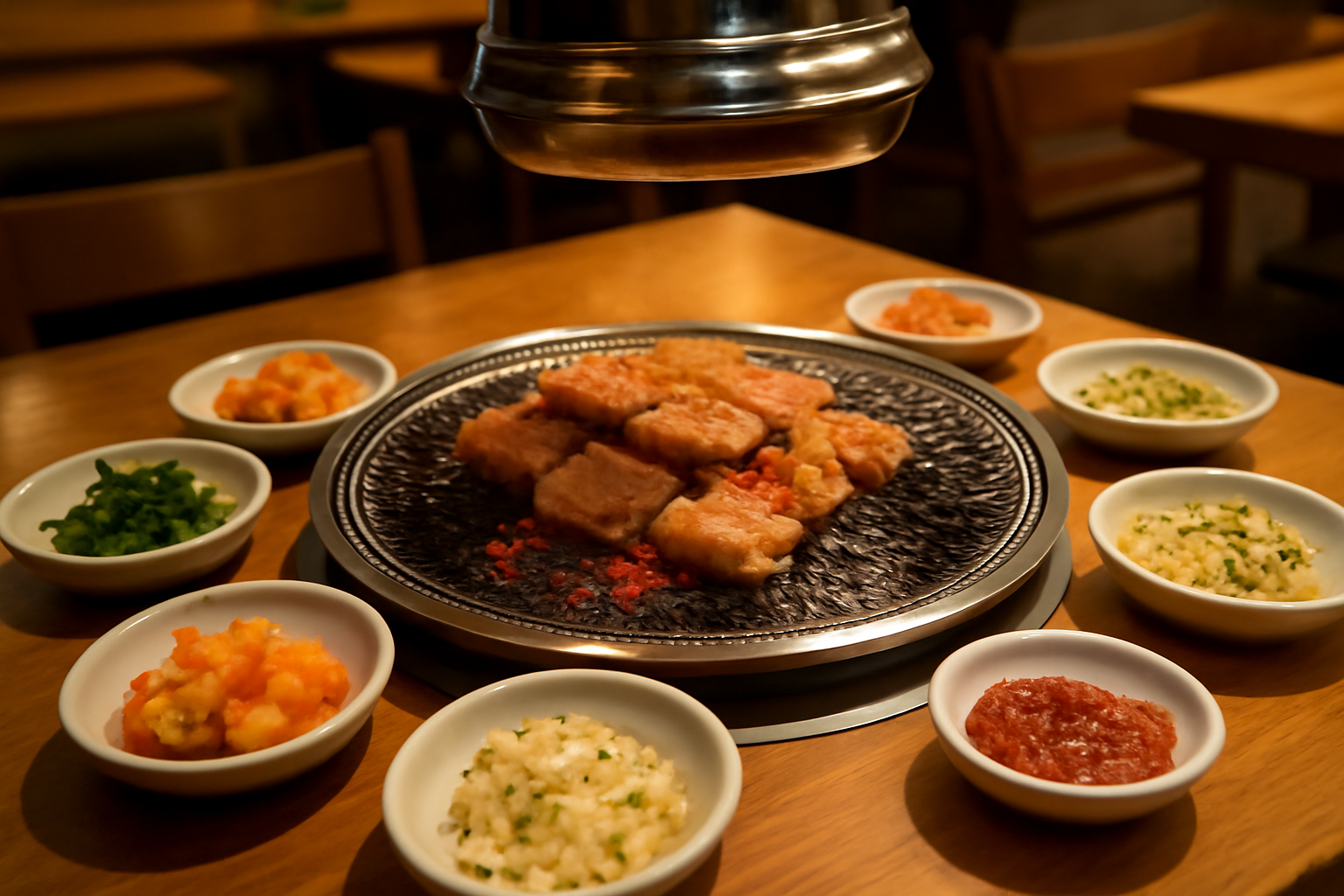
    A Korean barbecue grill loaded with meat surrounded by small side dishes on a wooden table
    Korean BBQ is one of the few formats where solo diners still sometimes hit friction.

    What’s Completely Normal Now

    Outside of those specific formats, solo dining in Korean cities has genuinely become unremarkable, and I want to stress that because I think a lot of English-language writing about honbap still frames it as this fraught, faintly transgressive thing, which hasn’t matched my actual day-to-day experience here.

    Bunsik places — the tteokbokki, sundae, and gimbap shops that are everywhere — have basically always accommodated single diners without a second thought, since a lot of their customer base has traditionally been students grabbing something quick between classes. Noodle shops, curry counters, soup-and-rice restaurants, and the whole category of quick, single-bowl meals are built for exactly this. Cafes are obviously fine — nobody bats an eye at someone sitting alone with a coffee and a laptop, and honestly a huge share of café seating in Korea seems designed with exactly that person in mind. Convenience store meals are a complete non-issue; eating a triangle kimbap and instant noodles alone at the in-store counter is about as socially loaded as buying gum.

    Even sit-down restaurants that aren’t explicitly built for solo diners have generally adjusted their expectations, particularly in cities. Staff might ask “honja seyo?” to confirm the table size, but in my experience that’s a logistical question, not a judgment. Nobody has ever made me feel like I was doing something odd by eating by myself, and my read on it — for whatever an outside observer’s read is worth — is that solo diners have simply become common enough that they stopped registering as a category worth reacting to.

    Practical Notes for Foreigners Eating Alone in Korea

    A few things I’ve picked up that might save you some hesitation at the door:

    Look for the one-person indicators before you commit. A counter-style layout facing the kitchen, individual seats with small partitions, or a sign mentioning 1인 seating are all good signs a place is set up for solo diners without any friction. Bunsik shops, noodle places, and gimbap restaurants are close to universally fine.

    Kiosks are your friend if you’re nervous about ordering. Most self-service kiosks now have an English option, and using one means you never have to have the “just me” conversation at all — you order, pay, and take a number.

    If you want Korean BBQ alone, search first. Look specifically for 1인 BBQ or solo grill restaurants rather than walking into a random spot and hoping. They exist in most cities now, especially near universities and areas with a lot of single-person housing, and they’ve solved the minimum-order problem by building the whole restaurant around individual grills.

    Convenience stores are a legitimate dinner option, not a last resort. This took me a while to fully accept, coming from a food culture where a gas station dinner feels like a small defeat. Korean convenience store food is genuinely good, and eating at the in-store counter is completely normal at any hour.

    Don’t overthink the phrase “honja yo” (it’s just me). Staff hear it constantly, and in my experience it gets a nod and a table, not a reaction. If you’re worried about the exact wording, holding up one finger works fine too.

    And if a restaurant does say no to a solo booking — usually at group-format BBQ or hotpot places — it’s not personal. It’s almost always about the format of the food, not about you.

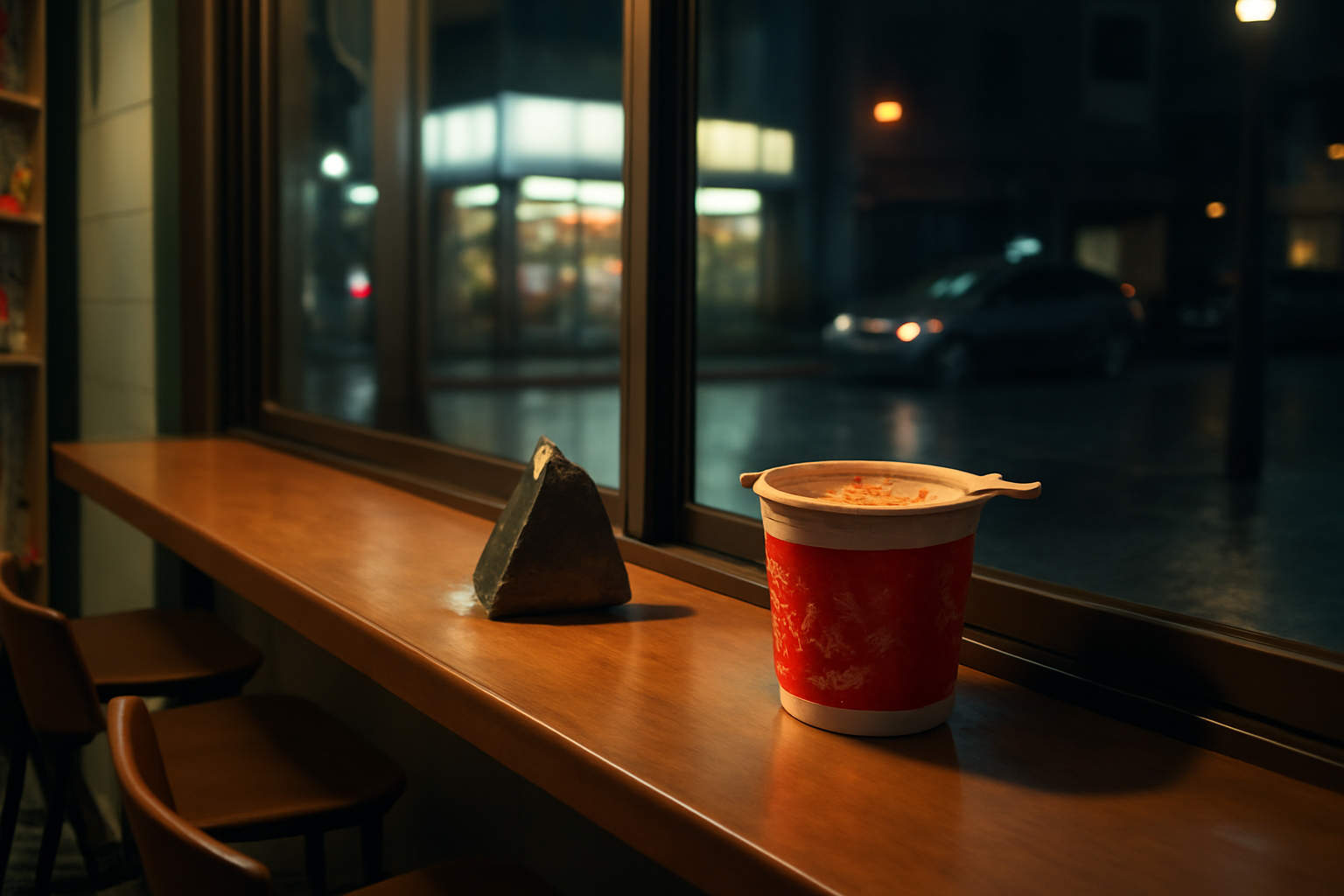
    A convenience store counter at night with a triangle kimbap and a cup of instant noodles, city street visible through the window
    A convenience store window counter has become one of the most common places to eat alone in Korea.

    FAQ

    Can I order Korean BBQ for one?
    Sometimes, but not everywhere. Traditional BBQ restaurants often set a two-portion minimum because the grill and side-dish setup is designed around groups, so a random spot may turn you down or seem uneasy about it. Your best bet is searching for restaurants specifically marketed as 1인 BBQ or solo-grill spots, which have individual grills built into the counter and are increasingly common in university neighborhoods and areas with a lot of single-person households.

    Will people stare if I eat alone?
    In most everyday settings — bunsik shops, noodle places, cafes, convenience stores, casual restaurants — no, and honestly it won’t even register as unusual. Staff may ask if it’s just you to confirm your table size, but that’s practical, not judgmental. You’re more likely to feel self-conscious than to actually be noticed. The exceptions are group-oriented formats like BBQ or hotpot, where the question isn’t really about staring, it’s about whether the restaurant’s setup can accommodate one person at all.

    Is honbap more common among younger or older Koreans?
    It skews younger, especially in big cities, where solo dining is often treated as a genuine preference rather than something to tolerate. Older generations grew up when communal meals were the assumed default, so some of them still view solo dining through that older, slightly more skeptical lens, even if they wouldn’t say anything about it directly. That gap is narrowing as more people across age groups end up living alone, but it hasn’t fully closed.

    What’s the easiest first honbap meal for a foreigner to try?
    Something from the bunsik or noodle category is the lowest-friction starting point — gimbap, tteokbokki, a bowl of kalguksu, or a soup-and-rice combo. These places are built for quick, individual meals already, often have kiosks with English options, and nobody working there will think twice about a single diner. Save the group-format restaurants for when you’ve got company.

  • 오이냉국 만드는 법, 새콤달콤 황금비율 레시피

    오이냉국 만드는 법, 새콤달콤 황금비율 레시피

    에어컨 바람도 지겨워질 만큼 푹푹 찌는 8월 오후, 텃밭에서 막 딴 오이 하나를 찬물에 씻어 한입 베어 물면 그 아삭한 소리만으로도 더위가 반쯤 달아난다. 여기에 새콤달콤한 국물 한 대접을 곁들이면 나머지 반도 순식간에 사라진다. 오이냉국은 재료도 간단하고 손도 적게 가지만, 비율 하나만 어긋나도 밍밍하거나 시큼하기만 한 국물이 되어버리는 예민한 음식이다. 정확한 계량과 순서를 지키면 식당 못지않은 맛을 집에서도 낼 수 있다.

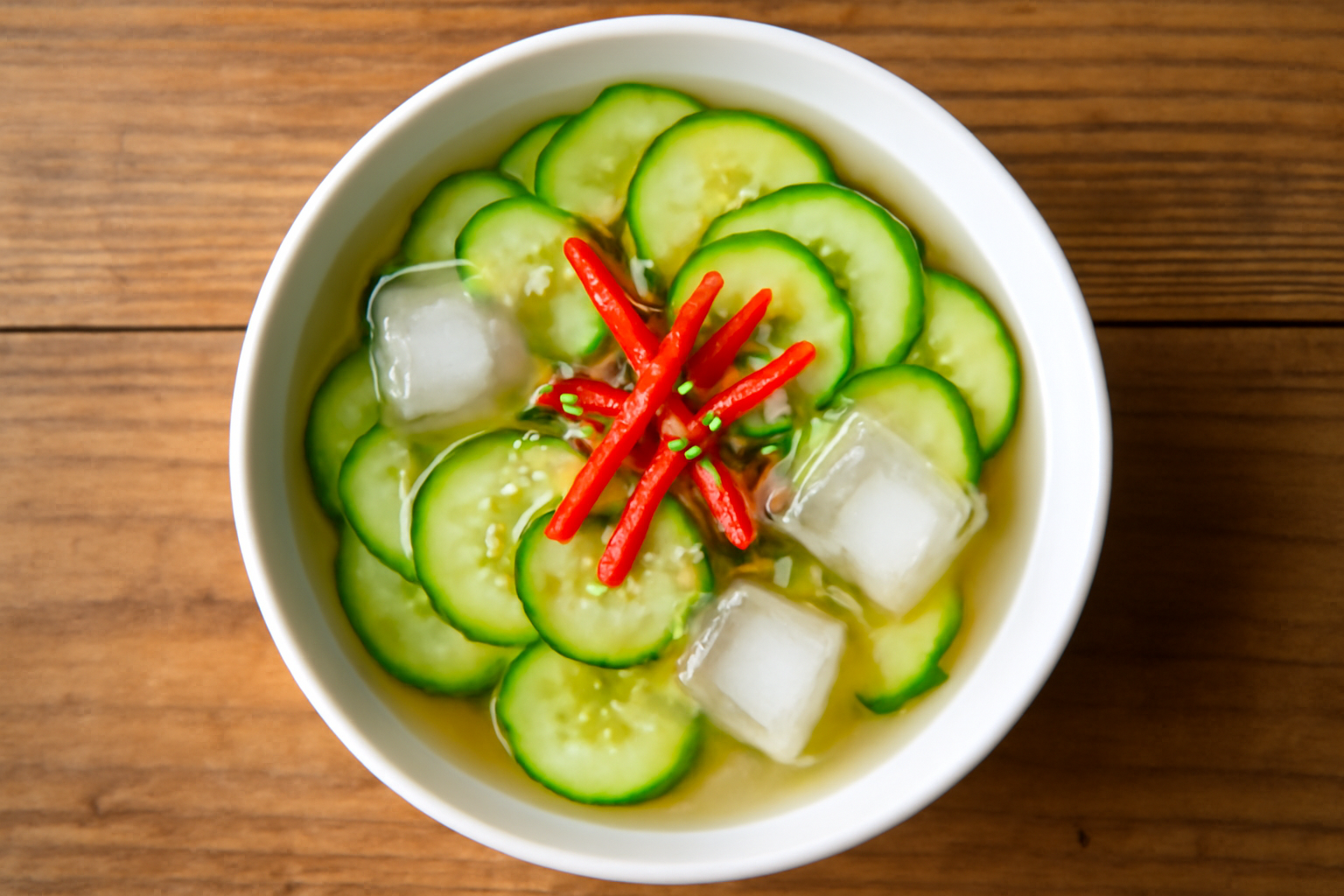
    새콤달콤 오이냉국

    시중에 나온 오이는 크게 백다다기와 취청으로 나뉜다. 껍질이 얇고 씨가 작은 백다다기가 냉국용으로는 훨씬 무난하다. 취청은 아삭함은 좋지만 씨가 굵어 국물이 탁해지기 쉽다.

    재료 (2~3인분 기준)

    • 오이 2개 (약 400g, 굵은소금으로 문질러 씻어 껍질째 사용)
    • 양파 1/4개 (약 50g, 채썰기)
    • 홍고추 1개, 청양고추 1/2개 (매운맛은 기호에 따라 생략 가능)
    • 다진 마늘 1작은술
    • 찬물 또는 생수 600ml
    • 사과식초 또는 양조식초 6큰술
    • 설탕 3~4큰술 (오이 당도에 따라 조절)
    • 소금 1작은술, 국간장 1작은술 (감칠맛과 색을 동시에 잡아준다)
    • 통깨 1큰술, 얼음 8~10개

    새콤달콤 황금비율로 만드는 법

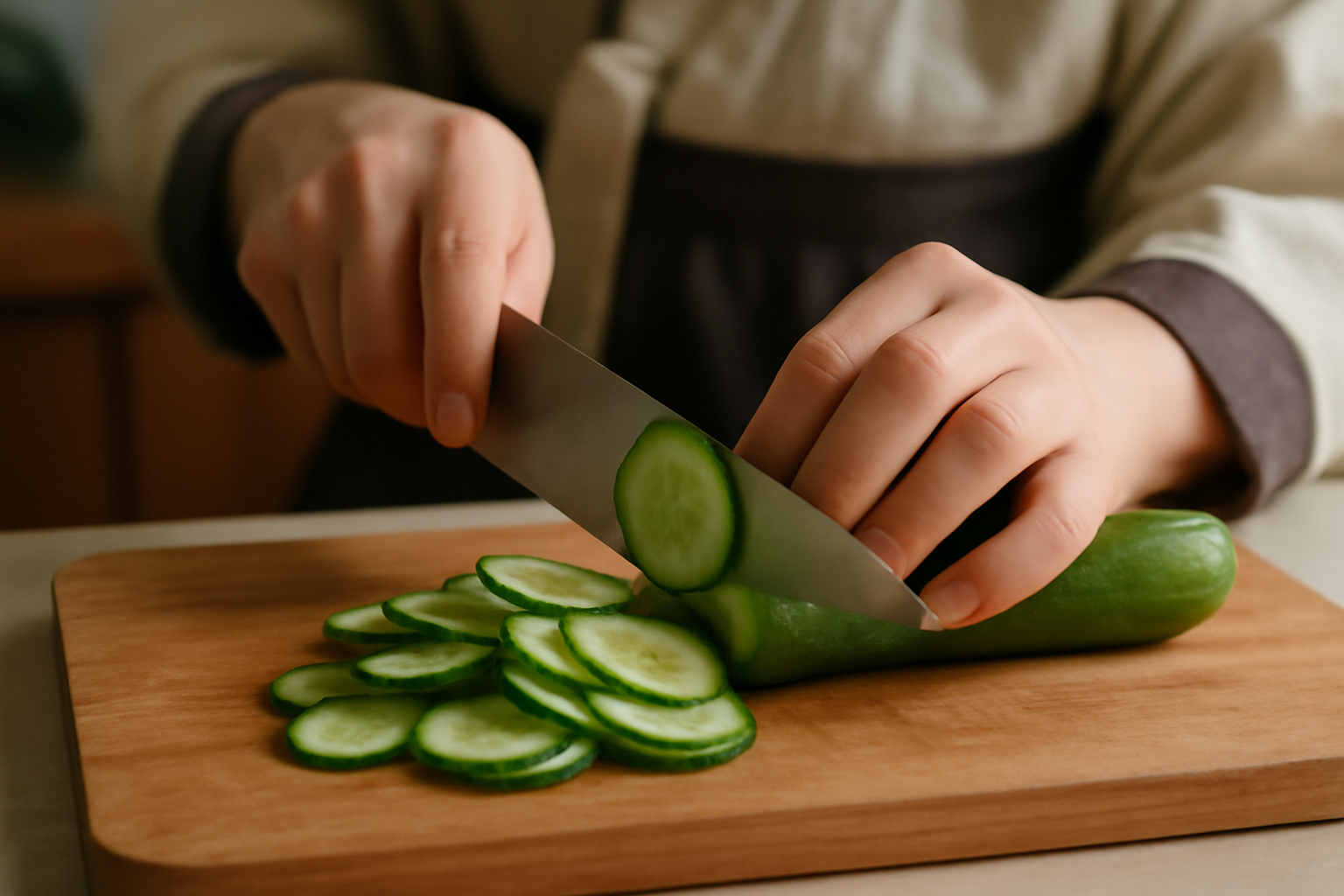
    1. 오이는 채칼이나 칼로 얇게 썬다. 두께 3mm 안팎이 아삭한 식감을 가장 오래 유지한다.
    2. 채 썬 오이에 소금 1작은술을 뿌려 5분만 절인다. 배어 나온 물기는 살짝만 짜낸다. 너무 꽉 짜면 오이 특유의 아삭함이 사라진다.
    3. 찬물 600ml에 식초 6큰술, 설탕 3~4큰술, 국간장 1작은술을 넣고 설탕이 완전히 녹을 때까지 젓는다.
    4. 양념 국물에 다진 마늘, 양파, 홍고추, 청양고추를 넣는다.
    5. 절인 오이를 국물에 넣고 냉장고에서 최소 30분 이상 차게 둔다. 시간이 지날수록 국물 맛이 오이 속까지 스며든다.
    6. 먹기 직전에 얼음 8~10개와 통깨를 올려 마무리한다.
    오이를 얇게 채 썰기

    맛 조절 팁

    식초의 산도는 브랜드마다 조금씩 다르다. 현미식초처럼 산미가 약한 제품을 쓴다면 한 큰술 더 넣어야 균형이 맞는다. 설탕까지 넣었는데 맛이 밍밍하다면 소금이 아니라 식초를 한 큰술씩 추가해보자. 신맛과 단맛이 함께 올라가야 제대로 된 오이냉국 맛이 난다. 국물 색이 흐릿하다면 국간장 대신 진간장을 반 작은술만 넣어도 색이 살아난다.

    보관법

    오이냉국은 오이에서 계속 물이 빠져나오기 때문에 오래 둘수록 국물이 싱거워진다. 밀폐용기에 담아 냉장 보관하면 이틀까지는 맛이 유지되지만, 사흘째부터는 신맛이 강해지고 오이는 물러진다. 여러 번 나눠 먹을 계획이라면 오이와 국물을 따로 담아뒀다가 먹기 직전에 섞는 편이 훨씬 낫다.

    변형 레시피 — 미역 오이냉국

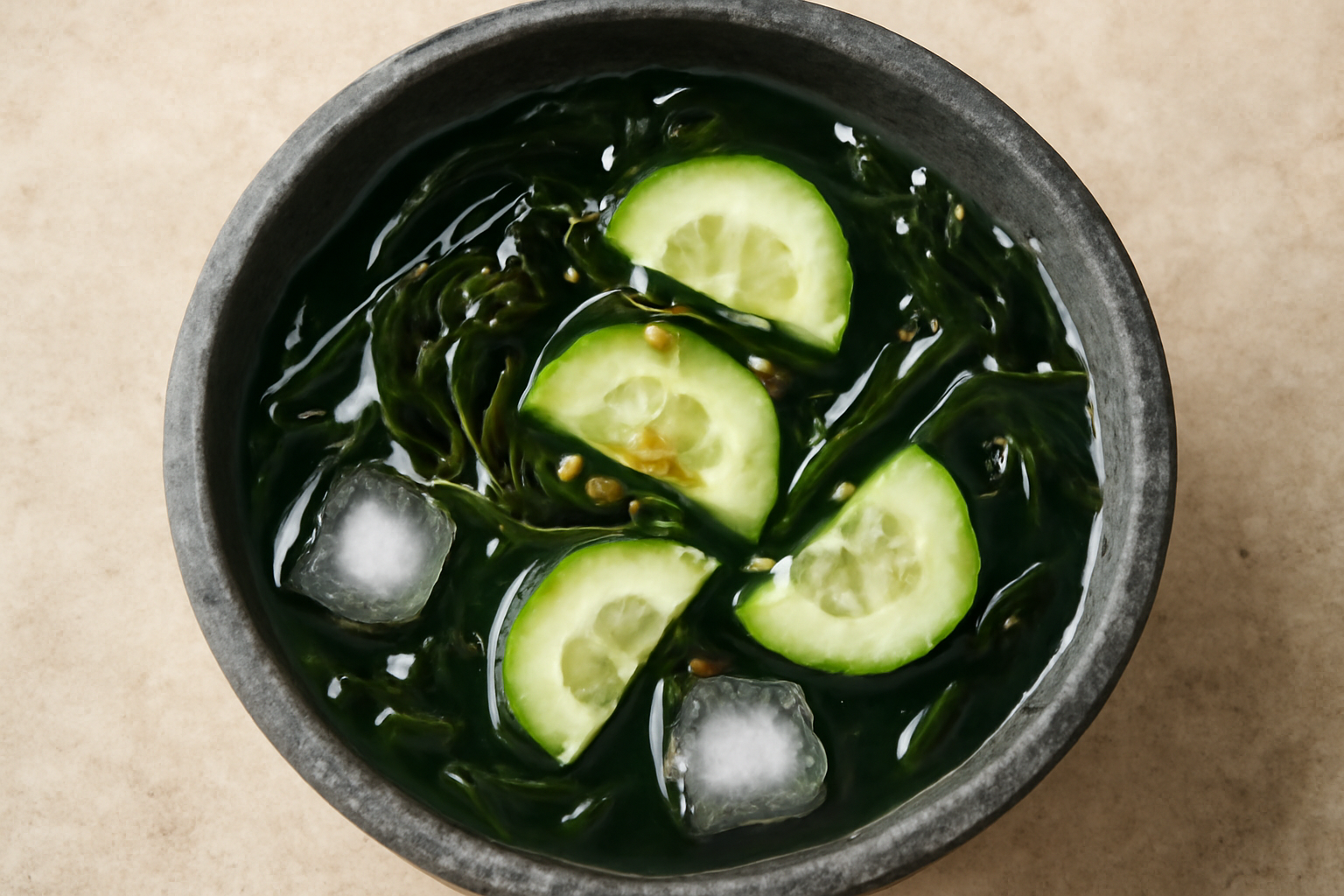
    마른 미역 5g을 찬물에 15분 불려 잘게 썬 뒤 위 레시피에 그대로 넣으면 미역 오이냉국이 된다. 미역이 국물을 흡수하니 물을 100ml 정도 더 넣어 농도를 맞추면 된다. 입맛 없는 여름날, 밥 말아 먹기 좋은 한 그릇으로 변신한다.

    미역 오이냉국

    자주 묻는 질문

    Q. 식초는 어떤 종류를 써야 하나요?

    양조식초는 산미가 깔끔하고, 사과식초는 은은한 단맛이 돌아 오이냉국과 잘 어울린다. 흑초나 발사믹 식초는 색이 진해지고 향이 강해 오이냉국 특유의 맑은 맛을 해칠 수 있으니 피하는 편이 낫다.

    Q. 오이가 씁쓸할 때는 어떻게 하나요?

    꼭지 부분을 1~2cm 잘라내고 자른 단면끼리 문질러 흰 거품을 내면 쓴맛 성분이 상당히 빠진다. 쓴맛은 껍질 쪽에 몰려 있는 경우가 많으니 필러로 얇게 벗겨내는 것도 방법이다.

    Q. 하루 지나도 아삭하게 먹으려면요?

    오이를 절였다가 물기를 짜낸 뒤 국물과 따로 냉장 보관하고, 먹기 직전에 섞으면 다음 날에도 아삭한 식감이 살아있다. 미리 섞어두면 국물의 수분이 오이에 스며들어 금세 흐물흐물해진다.

    Q. 물냉면 육수처럼 진하게 먹고 싶으면요?

    생수 대신 다시마 한 조각과 멸치 몇 마리를 우린 육수를 식혀서 사용하면 감칠맛이 한층 깊어진다. 육수를 쓸 경우 소금은 절반으로 줄여야 짜지지 않는다.

    비율만 외워두면 오이냉국은 실패할 일이 없는 음식이다. 물 600ml, 식초 6큰술, 설탕 3~4큰술, 소금과 국간장 1작은술씩. 이 숫자만 기억하고 오이를 절이는 순서를 지키면 된다. 냉장고에 오이 두 개만 있다면, 오늘 저녁은 이 한 그릇으로 충분하다. 갓 지은 흰쌀밥 한 공기 말아 먹으면 삼계탕 못지않은 여름 보양식이 된다.

  • Korean Honorifics Explained: Jondaetmal vs Banmal, and the Mistake I Kept Making

    Korean Honorifics Explained: Jondaetmal vs Banmal, and the Mistake I Kept Making

    There’s a particular kind of silence that falls over a Korean table when you say the wrong ending on a sentence. Not the whole sentence — just the ending. One syllable, really. I still remember the first time it happened to me, sitting across from my father-in-law at a family dinner not long after I’d moved to Korea, feeling proud of how much Korean I’d picked up in a few months. I dropped a casual “-eo” ending onto something I meant to say politely, and for about two seconds nobody moved. My wife’s eyes went wide. Her father just blinked at me, then laughed it off, but I could feel the temperature of the room change and come back, like a thermostat resetting. That two-second silence taught me more about Korean than any textbook chapter had.

    A multigenerational Korean family sharing a home-cooked dinner together at a low table

    If you’ve spent any real time in Korea, you’ve probably had your own version of that moment. Maybe you called a stranger “you” the wrong way, or answered your boss with the ending you use with your roommate, or — like me — got too comfortable too fast with someone who technically outranked you by age or position. The thing underneath all of these moments has a name: the jondaetmal and banmal system, and once you understand how it actually works, a huge amount of what feels confusing or arbitrary about Korean social life starts to make sense.

    What jondaetmal and banmal actually are

    Jondaetmal (존댓말) is polite, formal Korean. It’s the language of sentence endings like “-yo” and “-seumnida,” and it’s the version of Korean you’ll hear on the news, in customer service, in classrooms, and in pretty much every interaction where the speakers aren’t close or aren’t equals. Banmal (반말), which literally translates to something like “half speech,” is the stripped-down, casual version — shorter endings, more direct phrasing, the Korean you’d use with a childhood friend or a younger sibling.

    It’s tempting for English speakers to think of this as roughly equivalent to the difference between “Would you like to sit down?” and “Sit down,” but that undersells it. In English, formality is mostly a matter of word choice and tone. In Korean, formality is baked into the grammar itself — the verb endings change, certain nouns and even some verbs swap out entirely for more elevated versions, and the whole architecture of the sentence shifts depending on who you’re speaking to and how you’re positioned relative to them. It’s less like choosing a formal outfit and more like the outfit determining which language you’re allowed to speak at all.

    This is why jondaetmal and banmal aren’t really a matter of politeness in the Western sense of “being nice.” They’re a structural feature of the language that encodes a relationship every time you open your mouth. You can’t really speak Korean without implicitly answering the question: who is this person to me?

    When each one shows up

    Jondaetmal is the default. If you’re speaking to a stranger, a store clerk, a coworker you’ve just met, someone noticeably older than you, or basically anyone in a professional or public context, jondaetmal is what you reach for. It’s the safe setting. Korean children are taught from a young age to speak jondaetmal to adults, teachers, and anyone outside their close circle, and that habit doesn’t go away in adulthood — it just gets redirected toward new categories of people: managers, in-laws, senior coworkers, the older regular at the neighborhood café who somehow knows everyone’s business.

    Banmal, on the other hand, is reserved territory. It shows up between close friends who are the same age, among siblings, from parents to children, and from an older person to someone clearly younger once a relationship has been established. But — and this is the part that trips up a lot of foreigners — banmal is not the “casual, relaxed, no big deal” mode that its English description makes it sound like. Using it with the wrong person, or too early, can land as genuinely disrespectful, even if you didn’t mean it that way at all.

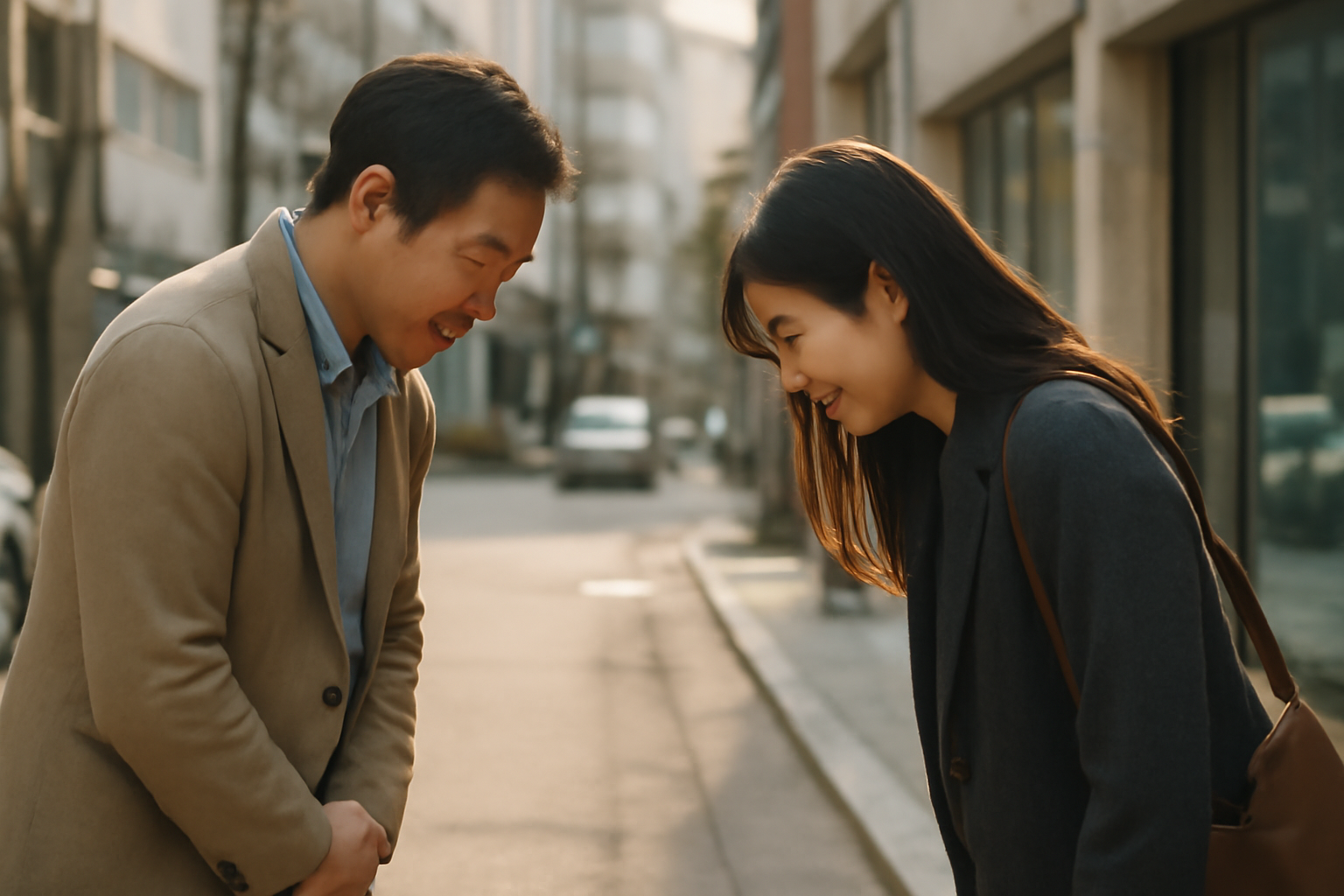
    Two Korean adults greeting each other politely on a city street

    The age factor, and why Koreans ask “how old are you” so fast

    One of the first things a lot of visitors notice is how quickly Koreans ask each other’s age when they meet. It can feel invasive if you’re not used to it, almost rude by the standards of some other cultures. But once you understand the honorific system, the question makes total sense — it’s not idle curiosity, it’s logistics. Age (along with seniority in school or work) is one of the main variables that determines who uses jondaetmal to whom, and whether banmal is even on the table. Without that piece of information, two Korean speakers genuinely don’t know how to grammatically address each other. Asking someone’s age isn’t nosiness; it’s the fastest way to figure out how to speak to them correctly.

    Once the age gap is established, the social script mostly writes itself. The older person may eventually switch to banmal with the younger one, especially as they get closer, while the younger person typically keeps some version of jondaetmal going, sometimes for years, sometimes forever, depending on the relationship. Even a one-year age difference can matter in Korea in a way that feels foreign to people from more age-flattened cultures. It’s not that the younger person is considered lesser — it’s that the language has a built-in way of marking who came first, and Korean social custom generally expects that to be acknowledged.

    The “permission to banmal” moment

    If there’s one part of this system that foreigners find both charming and stressful, it’s the moment when two people who’ve been speaking jondaetmal to each other decide to switch to banmal. It’s rarely announced outright in a formal way, but it is usually negotiated somehow — a slightly awkward “should we just speak comfortably with each other?” or a half-joking “we’re close enough now, right?” It’s a genuine milestone in a friendship, almost like a verbal handshake that says: we’re equals now, or at least equal enough that the ladder between us doesn’t need to be climbed every sentence.

    What makes it stressful for foreigners is that you can’t always tell when that moment is supposed to happen, and getting it wrong in either direction carries a cost. Switch to banmal before it’s offered, and you risk looking presumptuous or even disrespectful, especially with someone older. Stay locked in jondaetmal long after a friendship has clearly become close, and you risk something subtler — a kind of emotional distance that Korean friends sometimes notice and comment on, the sense that you’re keeping them at arm’s length even though you don’t feel that way at all.

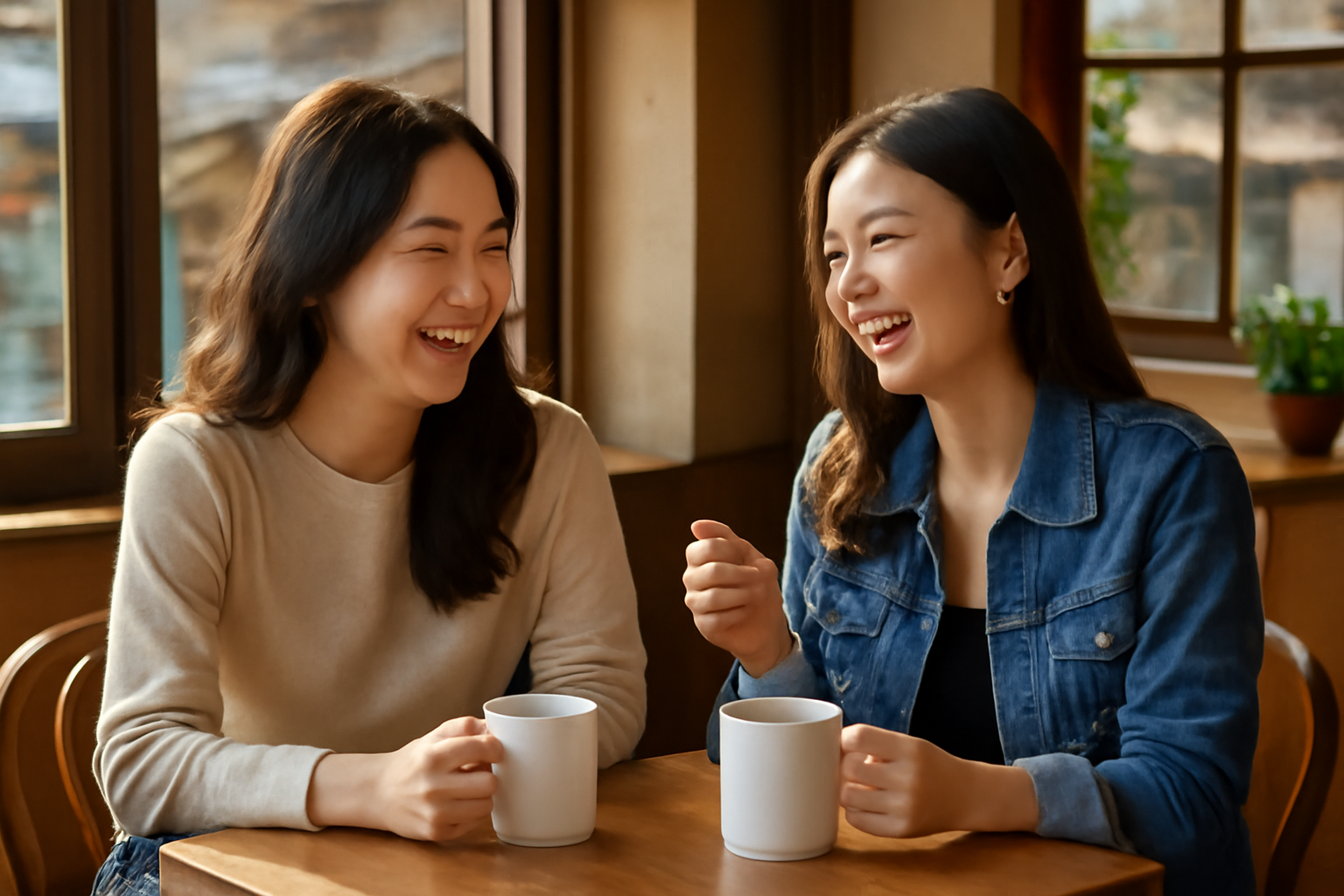
    Two close friends laughing and chatting casually over coffee at a cafe

    The mistake I kept making

    My mistake, for what it’s worth, wasn’t really about disrespect — it was about miscalibrating closeness. Once I got comfortable with a Korean friend or family member, I wanted the language to reflect that comfort immediately, the way it would in English, where warmth and informality tend to move together. I’d slide into banmal endings a beat too early because emotionally I already felt close to the person, even if the relationship hadn’t formally caught up to that yet. In Korean, feeling close and having earned the linguistic right to informality are two separate things, and I kept conflating them.

    The opposite mistake is just as common among long-term foreign residents, maybe more so. Plenty of people get so anxious about accidentally offending someone that they stay in jondaetmal forever, even with friends who’ve been quietly waiting for the switch for months. I’ve heard Korean friends describe this as almost lonelier than the reverse mistake — being endlessly “honored” by someone who never lets the wall down enough to just be normal with you.

    The honest fix, as far as I’ve found one, is to pay attention rather than to guess. Notice how the other person is speaking to you. Notice small openings — a joke about dropping the formality, a friend who starts using banmal with you first and is quietly checking whether you’ll follow. And when in doubt, it’s almost always safer to stay polite a little longer than to jump the gun. Korean culture is generally forgiving of foreigners who are too formal; it’s less forgiving, especially with older people, of foreigners who are too casual too soon.

    Why this connects to something bigger than grammar

    It would be easy to file all of this under “language quirk” and move on, but jondaetmal and banmal are really a window into how Korean social structure works more broadly. Age hierarchy, seniority at work, the deep cultural weight placed on knowing your position relative to the people around you — all of it shows up first, and most concretely, in how people talk to each other. Learn to read the honorific system and you’re not just learning grammar, you’re learning to read the room in a very Korean way: who’s senior here, who’s being deferred to, where the invisible lines are.

    That’s part of why getting it “wrong” as a foreigner is usually met with more grace than you’d expect. Koreans generally know the system is hard, even for Koreans navigating it with each other for the first time. What tends to land well isn’t perfection — it’s effort, and a willingness to adjust once someone gently corrects you. That two-second silence at my father-in-law’s table wasn’t the end of anything. If anything, it was the beginning of actually learning how to talk to him.

    Frequently Asked Questions

    What happens if I accidentally use banmal with someone older or a stranger?
    Most of the time, nothing catastrophic. Koreans tend to extend a lot of patience to foreigners who are clearly still learning, and an honest mistake read as a mistake rather than an insult. That said, with someone notably older, or in a formal setting like a workplace, it can land badly enough that you’ll notice a cooling in tone. The fix is simple and expected: apologize briefly, switch back to jondaetmal, and move on. Nobody expects you to have this mastered on day one.

    Can I ever just ask someone whether it’s okay to use banmal?
    Yes, and honestly, this is one of the more foreigner-friendly moves available. Directly asking something like “is it okay if we speak comfortably?” is a completely normal way to initiate the switch, and Korean speakers often find it endearing rather than awkward when a foreigner asks outright instead of guessing. It sidesteps a lot of the ambiguity that trips up even Korean speakers sometimes.

    Do Koreans use banmal with people younger than them automatically?
    Not automatically, no — it depends heavily on the relationship and context. An older coworker might stay in jondaetmal with a much younger colleague out of professional courtesy, while an older friend might drop into banmal with a younger friend fairly quickly once they’re close. Age gives someone the option to initiate banmal; it doesn’t obligate them to.

    Is it rude for a foreigner to just speak jondaetmal to everyone, all the time, to be safe?
    Not rude at all — it’s actually the recommended default if you’re unsure. The only downside is social rather than etiquette-based: close friends may eventually feel a little distanced if you never loosen up, since banmal often carries real emotional warmth in a friendship. But nobody will fault you for playing it safe, especially early on.

  • 40~50대 콜레스테롤 관리법, 고지혈증 생활습관으로 다스리기

    40~50대 콜레스테롤 관리법, 고지혈증 생활습관으로 다스리기

    건강검진 결과지를 받아 든 순간, 유독 눈에 밟히는 항목이 있다. 총콜레스테롤과 LDL 옆에 작은 화살표가 붙어 있고, “이상지질혈증 의심”이라는 문구가 적혀 있는 경우다. 특별히 아픈 곳도 없는데 왜 이런 결과가 나왔을까 싶어 검사지를 몇 번이고 다시 들여다보게 된다. 40대 중반을 지나며 몸이 예전 같지 않다는 걸 어렴풋이 느끼던 차라 더 신경이 쓰인다.

    40대와 50대는 호르몬 변화와 기초대사량 저하가 겹치면서 혈중 지질 수치가 슬금슬금 올라가기 쉬운 시기로 알려져 있다. 젊을 때와 똑같이 먹고 움직여도 결과지의 숫자는 다르게 나올 수 있다. 오늘은 이 나이대에서 자주 언급되는 콜레스테롤과 고지혈증 관리를, 병원 처방이 아니라 일상 속 생활습관 위주로 정리해본다.

    콜레스테롤 수치, 숫자가 말해주는 것

    건강검진표에 찍히는 숫자들은 저마다 의미가 조금씩 다르다. 총콜레스테롤은 보통 200mg/dL 미만을 정상 범위로 보고, LDL(저밀도지단백) 콜레스테롤은 130mg/dL 미만이 권장되는 수준으로 알려져 있다. 130~159mg/dL 구간은 경계 수준으로 분류되고, 160mg/dL을 넘어서면 주의가 필요한 범위로 언급된다. 중성지방은 150mg/dL 미만이 기준선으로 흔히 제시된다.

    HDL(고밀도지단백) 콜레스테롤은 반대로 높을수록 좋다고 알려져 있다. 남성은 40mg/dL, 여성은 50mg/dL 이상이 바람직하다는 게 일반적인 설명이다. LDL만 낮다고 안심할 게 아니라 HDL, 중성지방까지 함께 봐야 전체 그림이 보인다.

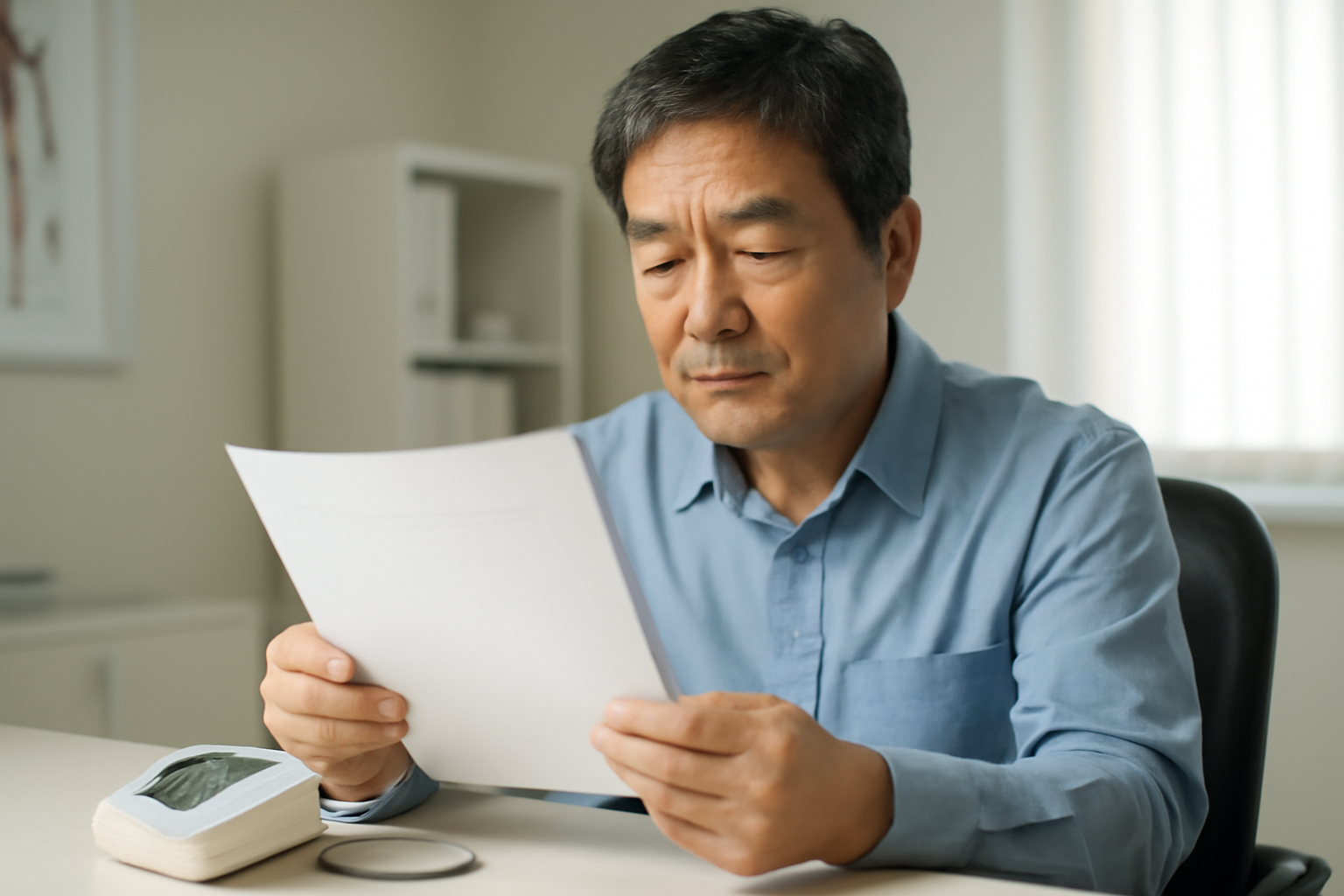
    건강검진 결과지를 살펴보는 중년 남성
    정기 건강검진에서 콜레스테롤 수치를 확인하는 습관이 첫걸음이 된다

    식습관, 작은 대체가 쌓이면 달라진다

    기름진 음식을 완전히 끊어야 하나 고민하는 분들이 많은데, 강조되는 건 금지보다 ‘대체’다. 포화지방을 불포화지방으로 바꾸면 LDL 개선에 도움이 된다고 알려져 있다. 삼겹살 대신 등푸른 생선, 버터 대신 올리브유를 쓰는 식이다.

    • 귀리, 보리, 콩류처럼 수용성 식이섬유가 풍부한 식품은 콜레스테롤 흡수를 줄이는 데 도움이 된다고 알려져 있다
    • 고등어, 연어 같은 등푸른 생선의 오메가3 지방산은 중성지방 관리에 도움이 된다고 알려져 있다
    • 견과류는 소량씩 꾸준히 섭취하면 좋다고 알려져 있으나 칼로리가 높은 편이라 한 줌 정도가 적당하다
    • 가공육, 튀김류, 트랜스지방이 많은 과자류는 되도록 줄이는 것이 권장된다

    매 끼니를 완벽하게 바꾸기는 현실적으로 쉽지 않다. 하루 세 끼 중 한 끼만이라도 흰쌀밥을 잡곡밥으로, 튀김을 구이로 바꾸는 것부터 시작해도 충분하다.

    식이섬유가 풍부한 오트밀과 견과류 아침 식사
    수용성 식이섬유가 풍부한 아침 식사는 콜레스테롤 관리에 도움이 된다고 알려져 있다

    운동, 거창하지 않아도 괜찮다

    헬스장 등록부터 떠올리는 사람들이 많지만 꼭 강도 높은 운동이 필요한 건 아니다. 빠르게 걷기, 자전거, 수영 같은 중강도 유산소 운동을 일주일에 서너 번, 한 번에 30분 정도 하면 몇 달 안에 지질 수치 변화가 나타날 수 있다고 알려져 있다. 엘리베이터 대신 계단, 한 정거장 먼저 내려서 걷기 같은 사소한 습관도 쌓이면 꽤 큰 활동량이 된다.

    운동 강도보다 중요한 건 꾸준함이다. 주말에 몰아서 걷는 것보다 평일에 나눠서 걷는 편이 몸에도 덜 부담스럽다.

    공원에서 함께 걷기 운동을 하는 중년 부부
    규칙적인 유산소 운동은 HDL 콜레스테롤 개선에 도움이 된다고 알려져 있다

    체중과 금연, 눈에 잘 안 띄지만 큰 변수

    체중이 5% 정도만 줄어도 지질 수치에 변화가 나타날 수 있다는 이야기가 자주 언급된다. 극단적인 다이어트보다 식사량을 조금씩 줄이고 활동량을 늘리는 방식이 오래 유지하기엔 낫다고 알려져 있다.

    흡연은 혈관 벽에 부담을 주고 HDL을 낮추는 반면 LDL과 중성지방은 높이는 방향으로 작용한다고 알려져 있다. 금연은 쉽지 않지만 콜레스테롤 관리에서 식단이나 운동 못지않게 비중 있게 다뤄지는 요소다. 잦은 과음도 중성지방을 끌어올리는 요인으로 꼽힌다.

    FAQ

    Q. 콜레스테롤 약을 먹으면 생활습관 관리는 안 해도 되나요?

    약물 치료와 생활습관 관리는 별개가 아니라 함께 가는 관계로 설명된다. 약을 복용하더라도 식습관과 운동을 병행하면 전반적인 건강 관리에 도움이 된다고 알려져 있다. 복용 여부와 방법은 담당 의사와 상의해야 한다.

    Q. 계란 노른자는 콜레스테롤 수치를 올리나요?

    과거엔 계란이 콜레스테롤의 주범처럼 여겨졌지만, 최근엔 음식으로 섭취하는 콜레스테롤보다 포화지방 섭취량이 혈중 수치에 더 크게 관여한다는 설명이 많다. 개인차가 있을 수 있어 본인의 검사 결과를 기준으로 판단하는 게 안전하다.

    Q. 마른 체형인데도 고지혈증일 수 있나요?

    체중과 무관하게 유전적 요인이나 식습관, 나이에 따른 대사 변화로 지질 수치가 높게 나올 수 있다고 알려져 있다. 겉보기 체형만으로 안심하기보다 정기 혈액검사로 확인하는 편이 바람직하다.

    결과지의 숫자 하나에 일희일비할 필요는 없다. 다만 40~50대에 접어들며 몸이 보내는 신호에 조금 더 귀 기울이고, 식탁과 걸음걸이부터 천천히 바꿔가는 것만으로도 의미 있는 변화를 만들 수 있다. 이 글은 정보 제공 목적으로 작성되었으며, 정확한 진단과 치료는 반드시 전문의와 상담하시기 바랍니다.

  • What NOT to Do in Korea as a Foreigner

    What NOT to Do in Korea as a Foreigner

    Last winter I watched a guy in his fifties — clearly a tourist, fresh off a red suitcase and a paper map he was holding upside down — step onto an escalator on the wrong side, plant himself in the middle of the lane, and then look genuinely wounded when a line of Seoul commuters started tutting and shuffling around him like water around a rock. He hadn’t done anything illegal. Nobody yelled. But you could feel forty people silently recalibrating their opinion of foreigners by about two degrees. That’s the thing about living here that took me the longest to absorb: Korea doesn’t really have a rulebook you can read in advance. It has a rhythm, and you either pick it up or you spend your whole trip a half-step behind everyone else, wondering why the room went quiet.

    I’ve been Yijidaddy long enough now — raising a kid here, doing the school runs, standing in line at the pharmacy, getting yelled at by ajummas who are, in retrospect, always right — that I’ve made most of the classic mistakes myself. Some of them more than once. So this isn’t a superior “watch and learn” list. It’s closer to a field report from someone who has personally caused a subway car to go silent, and lived to write about it.

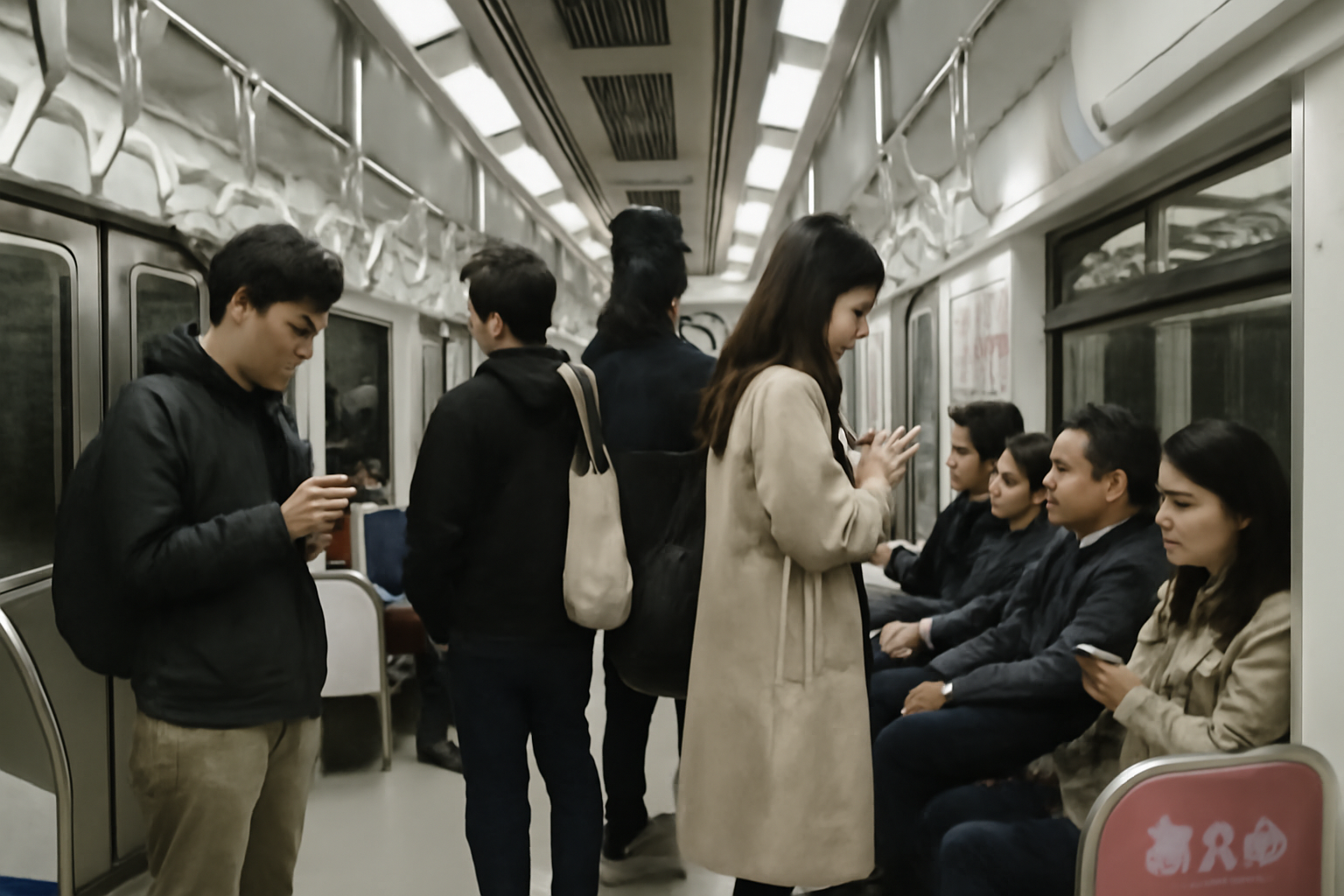
    Commuters standing and sitting quietly in a Seoul subway car

    The small stuff that actually matters

    Every country has unwritten rules, but Korea’s are unusually consistent — you’ll see the same expectation play out in a countryside guesthouse and a Gangnam office building. That consistency is exactly why it’s worth learning the patterns instead of memorizing a checklist. Here’s what trips people up most, and why it lands the way it does.

    1. Walking in with your shoes still on

    This one seems obvious until it isn’t. You know to take your shoes off at someone’s home. What surprises people is how far that expectation extends — to certain restaurants with raised floor seating, to some clinics, to guesthouses, to the entryway of a friend’s apartment where there’s a very deliberate little step down and a shoe rack that is not decorative. The logic isn’t really about cleanliness, or not only. Floors in Korea are lived on. People sit on them, sleep near them, let toddlers crawl across them. Bringing outside shoes onto that surface isn’t just unhygienic, it’s a small violation of a space that’s treated more like a extension of the body than a floor. Watch for the raised step and the shoe rack. If you see both, your shoes come off before you think twice about it.

    2. Sticking your chopsticks upright in a bowl of rice

    I did this once, absentmindedly, at a family gathering, and felt the temperature of the room drop about ten degrees before anyone said a word. Upright chopsticks in rice mimic the incense sticks placed at a memorial altar — it’s a funeral image, and setting your dinner up to look like an offering to the dead is not the vibe you want at a birthday lunch. Lay them flat, or rest them on the little ceramic chopstick holder if the restaurant gives you one. It’s a two-second habit to build and it saves you from a moment that’s genuinely uncomfortable for everyone at the table, not just you.

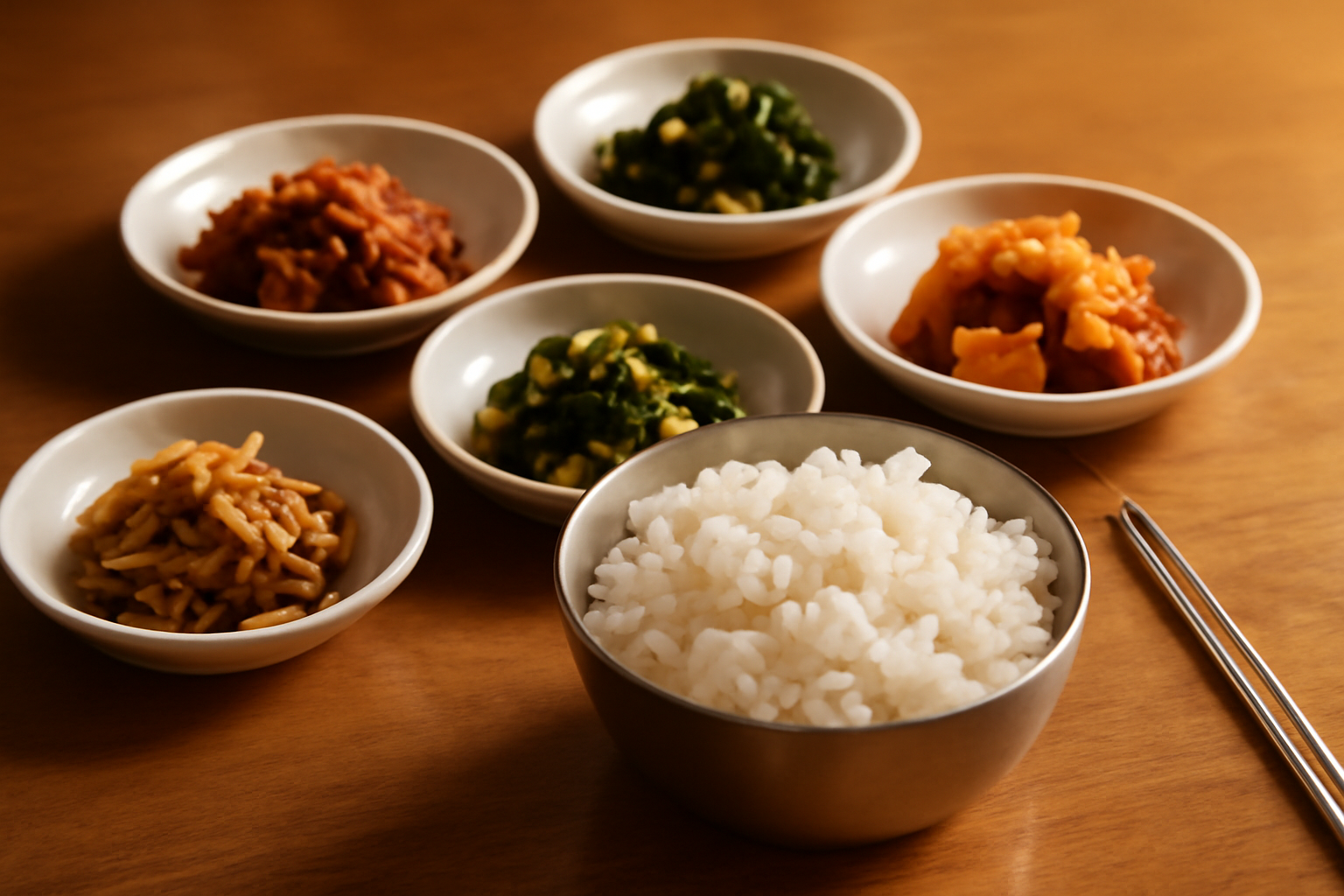
    A Korean meal with rice, side dishes, and chopsticks resting flat on the table

    3. Pouring your own drink

    At a Korean dinner table, especially one with soju involved, drinks are a relationship, not a beverage. You pour for others, they pour for you, and topping off your own glass mid-meal reads as either oblivious or a little standoffish — like you’d rather not deal with anyone. If someone older is pouring for you, receive the glass with both hands, or at least steady it with your off hand at the wrist. It sounds fussy written down. In practice it takes about one dinner to become automatic, and Koreans will visibly relax around you once you’ve shown you know the choreography.

    4. Sitting in the priority seats on the subway

    The pink and blue seats near the subway doors aren’t a polite suggestion — they’re reserved, in practice as much as in principle, for elderly passengers, pregnant women, and people with disabilities, even when the car is nearly empty. I’ve seen foreigners plop down there because the rest of the car is packed and the priority seats are open, not realizing they’ve just claimed a seat an elderly halmeoni is going to expect back the moment she boards. She will let you know. Politely, but unmistakably. Standing for one stop costs you nothing. Learning this the hard way costs you a very long, very pointed stare.

    5. Taking loud phone calls on public transport

    Korean subway cars run on a kind of collective hush — people read, scroll, nap, but they don’t hold conversations at normal volume, and they definitely don’t take calls without stepping toward the door or cupping the phone and half-whispering. A loud phone call, the kind that would barely register on a bus back home, turns heads here. Nobody will confront you about it. They’ll just get quiet in that specific way that means they’ve clocked you as someone who doesn’t know where they are.

    6. Jaywalking like it doesn’t count

    This surprises a lot of visitors, because Seoul otherwise feels like a city that moves fast and doesn’t wait around. But road crossings are one place where Koreans are strict with themselves, especially near schools and with kids around — and cameras plus real fines back that up on plenty of streets. Crossing mid-block against traffic, especially with a stroller or a group of kids nearby, gets you a specific kind of disapproving look, and near a school zone it can genuinely get you stopped. I get why it’s tempting when the street’s empty and the light seems to take forever. I still wait. Partly because I’ve got a kid watching what I do, and partly because I’ve seen what happens to the person who doesn’t.

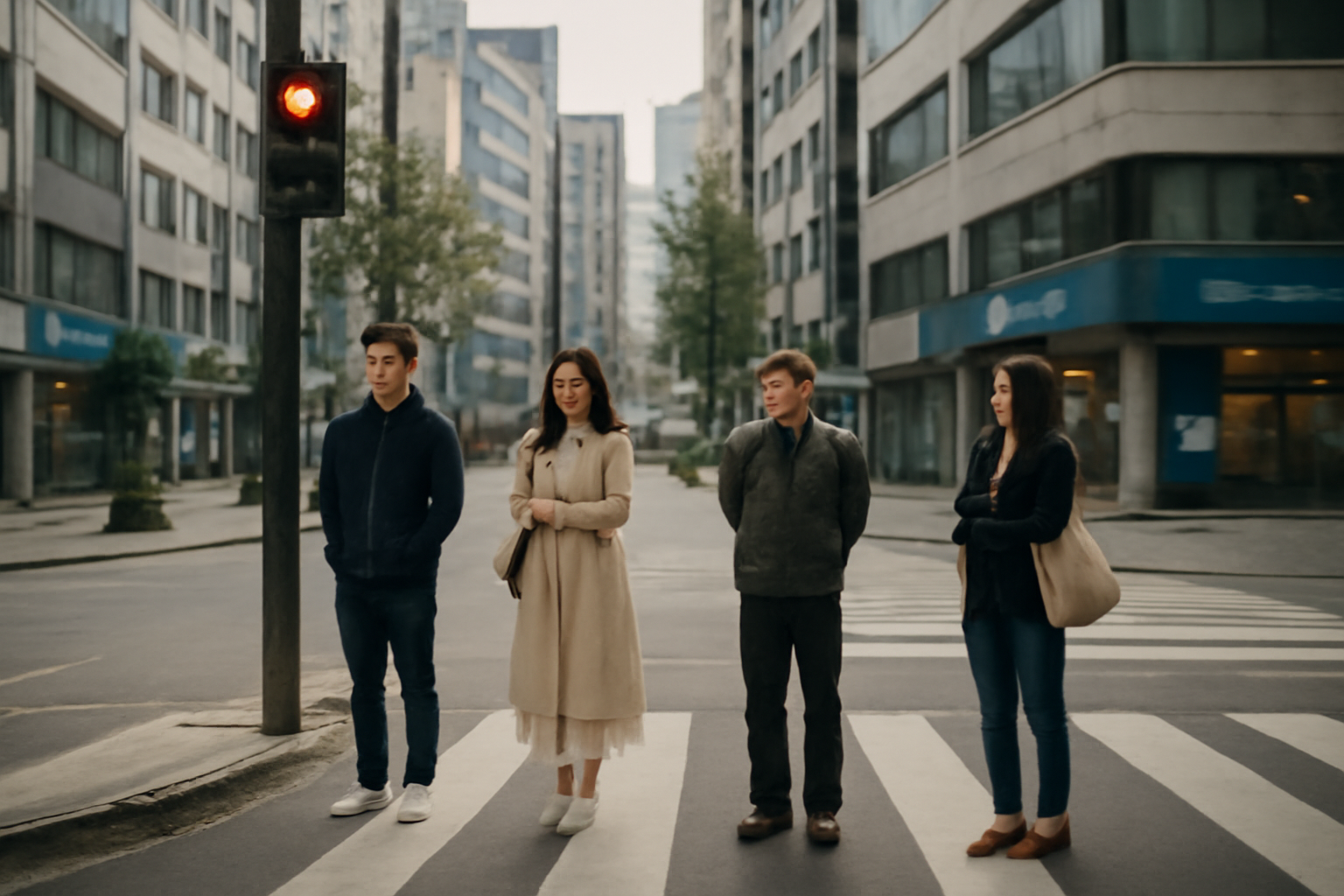
    Pedestrians waiting patiently at a red crosswalk signal in Seoul

    7. The wrong hand gesture, at the wrong person

    Waving someone over palm-up, fingers curling toward you — completely normal in a lot of countries — is how you’d call a dog here. To beckon a person, the polite version is palm down, fingers waving inward. Pointing directly at someone with one finger, especially someone older, reads as confrontational in a way it might not elsewhere. Neither of these will start a fight. But they land as small jolts of rudeness that undercut whatever friendly thing you were actually trying to communicate, and it’s an easy habit to retrain once you notice it.

    8. Trying to leave a tip

    Tipping isn’t part of the system here, and trying to leave one — pressing extra cash into a server’s hand, leaving coins on the table — usually creates more awkwardness than goodwill. Service is already priced in, and offering a tip can come across as implying the staff need the extra help to do their job properly, which is not the message you meant to send. If you want to show appreciation, a sincere “jal meogeosseoyo” (I ate well) on your way out does more work than cash ever could.

    One more thing: names aren’t casual

    It took me longer than I’d like to admit to stop calling people by their first name the way I would back home. In Korea, how you address someone maps directly onto the relationship — a title, a role, or an honorific usually stands in for a first name unless you’re genuinely close in age and status. Calling your father-in-law by his given name, or a coworker several years your senior by theirs, isn’t just informal, it can read as a small refusal to acknowledge the relationship at all. Titles like “teacher,” “president,” “older brother/sister,” or someone’s role at work aren’t stiff formalities — they’re the actual social glue. Default to the title until someone explicitly tells you to drop it.

    Why this stuff actually matters more than it looks like it should

    None of these are laws. Nobody’s getting arrested for pouring their own soju. But Korea runs on a dense, mostly unspoken web of consideration for the people around you — what some people shorthand as nunchi, the skill of reading a room without being told anything out loud. Every item on this list is really the same lesson wearing a different costume: notice the room before you act in it. That instinct is worth more here than memorizing any specific rule, because the specific rules will keep surfacing in situations no article can fully cover.

    And to be clear — Koreans extend foreigners a real amount of grace. Nobody expects a tourist to master honorific speech levels or know the correct pouring angle for soju on day one. What people notice, and appreciate, is the effort. Take your shoes off without being asked twice. Lower your voice on the subway before someone has to raise theirs. Notice the ajumma standing near the priority seat before she has to say anything. That’s really the whole test, and it’s one you can pass by paying attention rather than by studying.

    FAQ

    Is it really that big a deal if I mess up chopstick etiquette?

    Honestly, no — a single slip won’t ruin your trip or offend anyone permanently. Koreans generally understand that visitors don’t know every custom, and a quick correction (“oh, not like that”) is usually delivered kindly. The upright-chopsticks-in-rice one specifically tends to get a stronger reaction because of the funeral association, so that’s the one worth actually remembering. The rest — which hand you hold your spoon in, whether you use chopsticks for rice versus a spoon — nobody’s going to hold against you.

    Will people actually get mad at me, or just judge silently?

    Mostly the latter, and honestly that’s almost harder to read as a foreigner, because you won’t always know it happened. Direct confrontation over etiquette is rare, especially with visitors. What you’ll get instead is a look, a slightly cooler tone, a stranger quietly stepping in to fix the situation for you — like the halmeoni standing pointedly near her priority seat. Once you know to watch for those cues, they’re actually pretty easy to read.

    What’s the one rule that surprises people the most?

    For most visitors it’s the pouring-drinks etiquette — the idea that you don’t serve yourself and that receiving a drink involves both hands if someone senior is pouring. It feels like a lot of choreography for a casual dinner. But once you’ve done it a few times it stops feeling like a rule and starts feeling like what it actually is: a small, repeated way of paying attention to the people at your table.

    None of this is about walking on eggshells. It’s closer to what happens when you move to a new house and start learning where the creaky floorboard is — you don’t think about it forever, you just eventually stop stepping there. Get the basics down, stay observant, and the rest sorts itself out with time. It certainly did for me, mostly.

  • Korean Housewarming Gift Culture Explained: Why Toilet Paper and Laundry Detergent

    Korean Housewarming Gift Culture Explained: Why Toilet Paper and Laundry Detergent

    The first time someone handed me a roll of toilet paper wrapped in a red ribbon, I genuinely didn’t know what to do with my face. I was standing in the doorway of a friend’s brand-new officetel in Seoul, holding a bottle of wine I’d picked up on the way because that’s what you bring to a party where I’m from. Behind me, another guest walked in with a jumbo pack of laundry detergent balanced on one hip like it was the most normal thing in the world. Nobody blinked. Nobody laughed. The host actually looked delighted, took the toilet paper roll like it was a bouquet of flowers, and set it proudly near the entrance where everyone could see it.

    That was my introduction to jibdeuli, and it took me a solid year of living in Korea, married into a Korean family, before I stopped feeling like I was missing an inside joke every time this happened. I wasn’t. I just hadn’t learned the logic yet. Once you do, it stops being weird and starts being kind of lovely — one of those small cultural habits that says a lot about how people here think about luck, effort, and taking care of each other.

    What jibdeuli actually is

    Jibdeuli (집들이) breaks down simply: jip means house, and deuli comes from a verb about entering or moving into something. Put together, it’s the housewarming gathering — the party a person throws not long after settling into a new home, whether that’s a first studio apartment, a bigger place after a promotion, or a house bought after years of saving. Friends, coworkers, extended family, sometimes neighbors, all get invited over within the first few weeks of the move.

    It’s not a quiet, RSVP-three-weeks-in-advance kind of affair either. In my experience it tends to happen fast, almost impulsively, while the new place still smells like fresh paint and the boxes aren’t fully unpacked. There’s an energy to it — the new tenant wants to show off the space, and everyone else wants to see it before the “new apartment” feeling wears off.

    Toilet paper roll and laundry detergent bottle tied together with a red ribbon as a Korean housewarming gift

    Why toilet paper, of all things

    Here’s the part that trips up almost every foreigner I know, myself included: toilet paper is the single most common jibdeuli gift in Korea, and it’s given with total sincerity. The logic, once explained to me by my mother-in-law with the patience of someone repeating something obvious, is about the roll itself. Toilet paper unspools in one long, unbroken, smooth line. Give someone that image as they start a new chapter in a new home, and you’re wishing them a life that unrolls just as smoothly — free of snags, free of sudden stops, everything proceeding at an easy, continuous pace.

    There’s also a more literal, less poetic layer to it. A single roll of toilet paper, if you were to unravel it, stretches out to a genuinely long length. That length gets tied to longevity — a long life, a long and stable stay in the new place, longevity of good fortune. It’s the kind of symbolism that sounds like a stretch until you’ve heard three different people independently explain it to you the exact same way, at which point you realize it’s not folklore dressed up after the fact. People actually mean it when they say it.

    Practically speaking, it also happens to be one of those gifts nobody resents receiving. Everybody uses toilet paper. Nobody has too much of it. Compare that to a candle or a decorative plate that might not match anyone’s taste, and the appeal becomes obvious even before you get to the symbolism.

    And laundry detergent, for the same basic reason

    Detergent runs on a parallel logic, just swapping length for bubbles. When you use laundry detergent, it foams — and in the symbolism, those suds stand in for money and prosperity multiplying, rising, spreading the way foam spreads across a load of laundry. Bringing detergent to someone’s new home is a wish that their wealth will build the same way, generously and visibly, rather than trickling in drop by drop.

    I’ve heard a slightly older version of the story too, one involving a time when both toilet paper and decent detergent were genuine luxuries in Korea rather than something you grab without thinking at the corner mart. A few decades back, before the economy took off the way it did, household basics like these weren’t things every family could take for granted. Giving them as a housewarming present wasn’t just symbolic then — it was a real, useful gift, on par with giving someone groceries. The economic reality changed, but the gesture stuck, and the symbolism eventually became the main reason people keep doing it rather than the practical need.

    Dish soap sometimes stands in for laundry detergent, especially among younger couples setting up a first kitchen together, but the bubbling logic carries over identically either way.

    What else people actually bring

    Toilet paper and detergent get all the attention because they’re the gifts foreigners find funniest, but they’re far from the only options, and honestly not even always the primary gift — more like the reliable, expected baseline that gets paired with something else.

    Cash is extremely common, particularly from close family or older relatives, tucked into a plain envelope rather than handed over loose. Houseplants show up a lot too, especially ones associated with clean air or easy care, since a new home supposedly benefits from a living thing settling in alongside its new owner. Practical household items are popular as well — a nice set of towels, kitchen tools, small appliances like a rice cooker if the recipient doesn’t already have one, or scented candles and diffusers for people who lean a little more toward the aesthetic side of things. Among younger, more design-conscious friend groups, I’ve also seen good bottles of wine or specialty coffee gear show up instead of the traditional items, especially when the host has already made it clear through the group chat that they’d rather not receive three overlapping bags of detergent from three different guests.

    That last point actually matters. Because toilet paper and detergent are such default choices, hosts sometimes end up with a genuinely absurd surplus of both after a jibdeuli. It’s common enough now that some hosts will gently hint in advance — half joking, half not — that they’re already stocked up, so guests should feel free to bring something else instead.

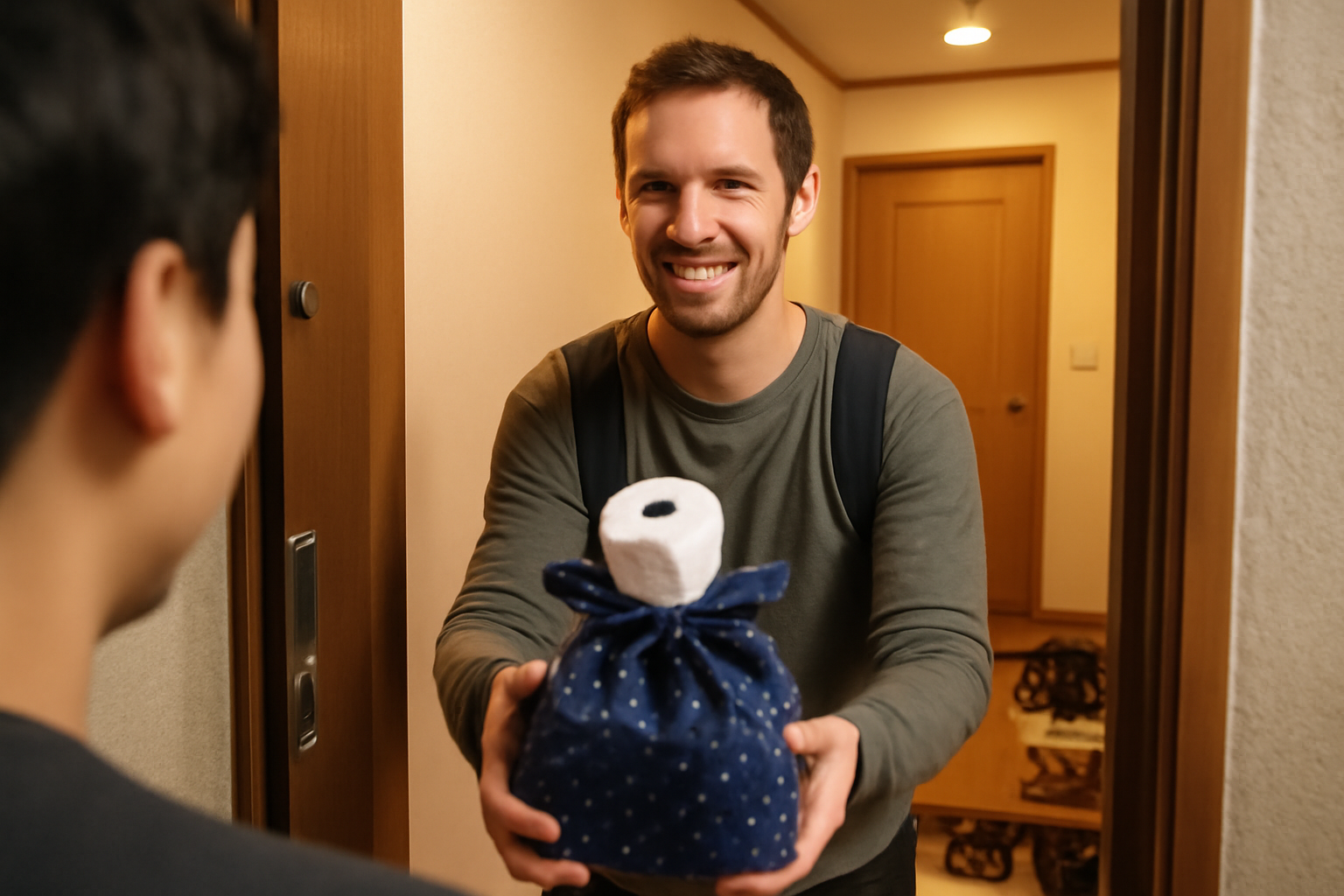
    A guest smiling and handing over a wrapped toilet paper roll gift at the entrance of a Korean apartment

    What you generally avoid bringing

    Sharp objects sit at the top of the avoid list, and this isn’t specific to housewarmings — it applies to Korean gift-giving broadly. Knives, scissors, letter openers, anything with a blade, carry an association with cutting, which in turn gets read as cutting a relationship or cutting off good luck. Even a beautifully designed kitchen knife set, something that would be a completely normal wedding registry item where I’m from, tends to raise eyebrows here if given as a personal gift rather than something explicitly requested.

    Shoes come with their own baggage, more tied to romantic relationships than housewarmings specifically — there’s a superstition that gifting shoes to a partner gives them an easy means to walk away. It’s less of a hard rule for a jibdeuli crowd of mixed friends and coworkers, but I’ve still seen people avoid it just to be safe, opting for slippers instead if footwear is on their mind at all, since slippers don’t carry the same “walking away” connotation.

    Beyond those two, there isn’t a long list of hard taboos specific to housewarmings. The bigger unspoken rule is just about matching the gift to your relationship with the host — close friends and family can go a bit more personal or generous, while more distant acquaintances tend to stick to the safe, expected middle ground of toilet paper, detergent, or a modest cash envelope.

    How the visit itself tends to go

    Jibdeuli etiquette isn’t rigid, but there’s a shape to it that becomes obvious once you’ve been to a handful. You generally don’t show up empty-handed — that part is close to a hard rule even among casual friend groups. You also don’t show up too early; if the invite says a certain time, showing up a little after is more normal than showing up right on the dot or early, since hosts are usually still finishing last-minute prep.

    Once you’re actually there, the visit tends to include a full walkthrough. The host wants to show you the place — the view if there is one, the storage they’re proud of, whatever renovation or furniture choice they spent the most energy on. This isn’t small talk filler; it’s genuinely part of the occasion, and guests are expected to engage with it, ask questions, admire things, maybe gently tease the host about a design choice.

    Food is the other half of the equation, and it’s substantial, not a casual spread of chips and drinks. Japchae, the stir-fried glass noodle dish, shows up constantly at these gatherings, along with bindaetteok, a savory mung bean pancake, and usually a handful of other home-cooked dishes depending on what the host is comfortable making. There’s a kind of reciprocity built into the whole event: guests bring something for the home, and the host feeds everyone properly in return. Showing up and expecting just drinks and snacks would actually be a little unusual — jibdeuli food culture leans toward “full meal,” not “light bites.”

    Conversation tends to circle around the move itself — how the apartment hunt went, what the host is planning to do with the space over time, whether they’re renting or bought outright, how the neighborhood is turning out to be. It’s a genuinely warm occasion in my experience, low on formality despite the structured gift customs, more like a proper get-together than a stiff social obligation.

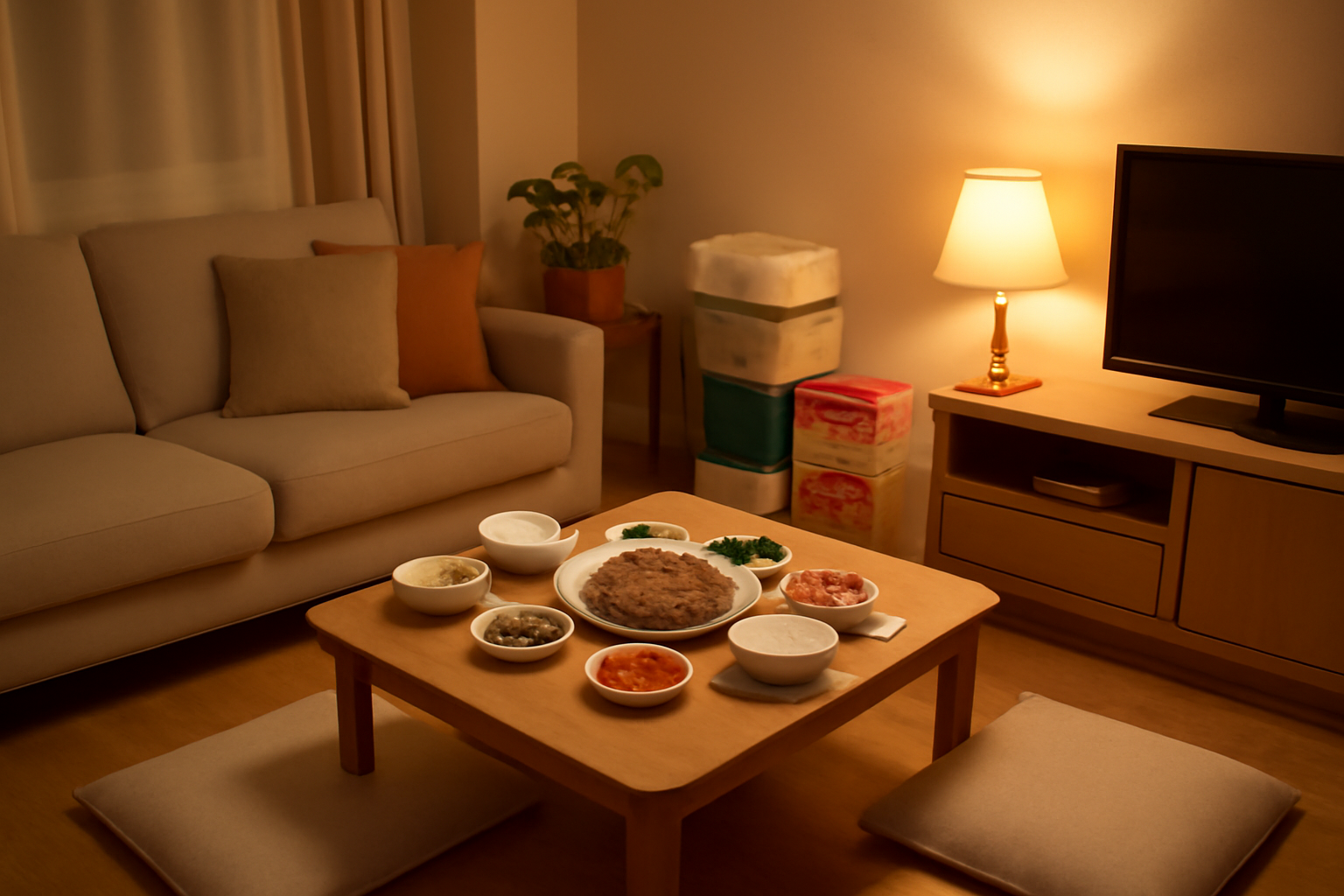
    Cozy Korean living room set up for a housewarming gathering with Korean side dishes and stacked gifts nearby

    FAQ

    Do I need to bring both toilet paper AND detergent, or is one enough?

    One is enough. Bringing both at once isn’t wrong, but it’s not expected either, and given how often multiple guests independently choose the same default gift, hosts frequently end up with more of both than they know what to do with. Picking one — or better yet, checking with other guests beforehand so you’re not all bringing the same thing — is the more considerate move.

    How much money is appropriate if I bring cash instead of a physical gift?

    There’s no fixed number, and it scales heavily with how close you are to the host. Among younger friends and coworkers attending as part of a group, amounts in the range of 30,000 to 50,000 won per person are common and won’t raise eyebrows either way. Closer friends or family members giving individually tend to go higher, sometimes considerably so, especially if the housewarming coincides with a first home purchase rather than a rental move. When in doubt, matching what others in your friend group are planning to give is a safe way to calibrate, and cash should still go into an envelope rather than being handed over loose.

    Is it rude to skip the toilet paper and detergent tradition entirely and just bring a bottle of wine or a houseplant?

    Not rude at all. The symbolic gifts are a strong default, especially among older generations or more traditional social circles, but they’re not a strict requirement, and plenty of Koreans themselves opt for something else entirely, particularly in more design-forward or younger friend groups. What matters more than the specific item is that you bring something and that it’s presented thoughtfully rather than as an afterthought grabbed on the way out the door.

    What if I’m invited to a jibdeuli on short notice and don’t have time to research or find a “proper” gift?

    This is exactly the situation the toilet paper and detergent tradition is built for. Both are sold at literally every convenience store and supermarket in the country, they’re inexpensive, and nobody will think less of you for showing up with a wrapped roll of toilet paper grabbed from the CU on the corner ten minutes before arriving. In a way, it’s one of the more forgiving gift traditions I’ve encountered anywhere — practical, universally understood, and impossible to get embarrassingly wrong.

  • 부산 당일치기 완벽 코스: 자갈치시장부터 해동용궁사, 광안리까지

    부산 당일치기 완벽 코스: 자갈치시장부터 해동용궁사, 광안리까지

    새벽 5시 반, 자갈치시장 경매장에서 고함 소리가 터진다. 방금 배에서 내린 고등어 궤짝이 바닥에 쿵 놓이고, 상인들의 손가락이 빠르게 오간다. 서울에서 KTX로 내려온 여행자라면 이 장면 하나만으로도 새벽 기차표 값은 이미 뽑은 셈이다. 부산을 하루 만에 훑겠다는 계획은 사실 무모해 보일 수 있다. 그런데 동선만 제대로 짜면 자갈치시장의 활기와 해동용궁사의 파도 소리, 광안리의 노을까지 하루 안에 전부 눌러 담을 수 있다.

    오전 8시, 자갈치시장에서 하루를 연다

    지하철 1호선 자갈치역 10번 출구로 나오면 바로 시장 입구다. 부산역에서 자갈치역까지는 두 정거장, 8분이면 도착한다. 요금은 교통카드 기준 1,500원 안팎이다.

    1층 매대에서 원하는 해산물을 산 뒤 2층 초장집으로 올라가는 방식이 자갈치시장의 오랜 룰이다. 상차림비는 1인당 5,000원 선. 대게는 kg당 9만원 정도, 밀치는 3만원, 소라 1kg은 2만원 수준으로 흥정이 붙는 경우도 흔하다. 예산이 빠듯하다면 모둠회 소자 하나에 밥과 매운탕까지 곁들여 3~4만원대로 두 사람이 배불리 먹을 수 있다. 평일은 오전 11시, 주말은 11시 30분부터 문을 여는 가게가 많으니 아침 일찍 도착했다면 건어물 골목과 회센터 구경으로 시간을 채우는 편이 낫다.

    주차가 걱정된다면 차보다 지하철을 권한다. 시장 건물 지하와 인근에 공영주차장이 있긴 하지만 주말 오전엔 금세 찬다.

    부산 자갈치시장 수산물 시장 전경

    오전 11시, 바다 위에 세워진 절 – 해동용궁사

    자갈치에서 해동용궁사까지는 대중교통으로 1시간 남짓 걸린다고 각오하는 게 좋다. 지하철 2호선을 타고 해운대역이나 장산역으로 이동한 뒤, 100번, 139번, 181번 버스 중 하나로 갈아타면 된다. 좌석버스 1001번은 배차 간격이 짧은 편이라 시간이 급할 때 유용하다. 하차 정류장 이름은 ‘용궁사 국립수산과학원’이다.

    일주문을 지나 108계단을 내려가면 절벽 아래로 파도가 부서지는 소리가 들린다. 사찰인데 바다 냄새가 난다는 게 해동용궁사의 묘한 매력이다. 입장료는 없다. 운영 시간은 오전 4시 30분부터 오후 7시까지고 여름철엔 8시까지 늘어나기도 한다. 계단이 많고 주말엔 사람이 몰려서 왕복 40분 정도는 넉넉히 잡아야 한다. 입구 쪽 노점에서 파는 씨앗호떡 하나 들고 걸으면 허기도 어느 정도 달래진다.

    바다 절벽 위에 세워진 해동용궁사

    오후 3시, 광안리로 넘어가 노을을 기다린다

    용궁사에서 광안리까지는 버스와 지하철을 섞어 타면 1시간 안팎이다. 해운대에서 지하철 2호선으로 금련산역까지 간 뒤 걸어 내려가는 경로가 가장 헷갈리지 않는다. 도착하면 우선 백사장을 따라 걸으며 다리부터 풀어주자.

    해 지기 전이라면 BCBL 커피로스터즈처럼 통창으로 광안대교가 정면으로 보이는 카페에 자리를 잡아두는 게 좋다. 오전엔 한산하지만 오후 4~5시가 되면 창가 자리부터 채워진다. 브런치가 당긴다면 다니엘스의 크루아상 샌드위치도 나쁘지 않은 선택이다.

    광안대교 조명이 켜지는 시각은 해 질 무렵부터 밤 10시 전후. 백사장에 앉아 다리 불빛이 하나둘 켜지는 순간을 보고 나면, 하루 종일 걸어 다닌 피로가 조금은 보상받는 기분이 든다. 저녁은 뇨끼로 유명한 광안리 모래나 파스타 전문점 마렌토처럼 바다 방향 좌석이 있는 곳을 미리 찜해두면 줄을 덜 선다.

    광안리 해수욕장과 광안대교 노을 풍경

    동선을 짤 때 기억해둘 것들

    세 곳을 하루에 묶으려면 이동 시간만 3시간 가까이 잡아먹는다. 아침 일찍 시작하지 않으면 광안리 야경까지 보고 숙소로 돌아가는 막차를 놓칠 수 있다. 티머니 같은 교통카드는 편의점 어디서나 충전과 구매가 되니 미리 하나 마련해두면 버스와 지하철을 오갈 때마다 요금을 따로 계산하지 않아도 된다. 걷는 구간이 많은 코스라 운동화는 필수, 여름이라면 생수 한 병 정도는 챙기는 편이 낫다.

    자주 묻는 질문

    Q. 자갈치시장 주차는 어디에 하나요?
    A. 시장 건물 지하 주차장과 인근 공영주차장을 이용할 수 있지만 주말 오전엔 자리가 빨리 차는 편이다. 지하철 1호선 자갈치역이 10번 출구 바로 앞이라 대중교통이 훨씬 마음 편하다.

    Q. 해동용궁사는 어떻게 가나요?
    A. 지하철 2호선 해운대역이나 장산역에서 100번, 139번, 181번, 1001번 버스로 환승해 ‘용궁사 국립수산과학원’ 정류장에 내리면 된다. 입장료는 따로 없다.

    Q. 세 곳을 하루에 다 도는 게 정말 가능한가요?
    A. 가능은 하지만 아침 8시 전에는 움직여야 한다. 자갈치에서 여유를 부리면 광안리 노을 시간대를 놓치기 쉬우니 각 장소에서 머무는 시간을 미리 정해두는 편이 안전하다.

  • What I Wish I Knew Before Moving to Korea

    What I Wish I Knew Before Moving to Korea

    Nobody hands you a manual when you land. You get a suitcase, a residence address you can barely pronounce, and a phone that suddenly can’t do half of what it used to. Everything else — the paperwork, the deposits, the trash bags with a personality of their own — you figure out by getting it wrong first. I did, more than once. A few years into raising a family here, I still think about the week I spent circling the same three problems: no bank account because no phone plan, no phone plan because no bank account, and a landlord who wanted an answer I didn’t have a framework for yet. So here’s the framework, laid out the way I wish someone had laid it out for me.

    Modern Seoul apartment high-rise skyline at golden hour

    The ARC Is the Key That Unlocks Everything Else

    If you’re staying more than 90 days, you’re legally required to register at your local immigration office and get what’s officially called the Residence Card now, though almost everyone — immigration staff included — still calls it the ARC (Alien Registration Card) out of habit. It’s not optional and it’s not a formality. It’s the single document that every other piece of adult life in Korea quietly assumes you already have.

    The application itself is straightforward: passport, visa documentation, the application form, a passport photo, and a fee that’s usually somewhere around 30,000 won. What catches people off guard is the timeline. You submit within your 90-day window, but the card itself can take a few weeks to actually print and arrive — sometimes closer to a month or more depending on how busy your local office is. Book your appointment the moment you’re eligible, not the week before the deadline. I didn’t fully appreciate this until I was staring down a countdown with nothing to show for it but a receipt.

    Once the card exists, use it for everything. Banks want to see it. Phone carriers want to see it. Even some delivery apps and loyalty programs quietly ask for it during verification. Your ARC number functions almost like a national ID would back home — it’s the anchor everything else attaches to.

    The Phone-Bank Chicken-and-Egg Problem

    Here’s the thing nobody explains clearly before you arrive: opening a full Korean bank account usually requires a Korean phone number, and getting a standard postpaid phone plan usually requires a Korean bank account for the monthly auto-debit. Two systems, each waiting on the other. It’s not a bug, it’s just how the infrastructure was built, and it trips up almost every new arrival at least once.

    There are a few ways around it. Prepaid SIMs need nothing but a passport, so that’s usually the first move — get a working Korean number before you worry about anything else. A handful of banks, Woori and Hana among them, have historically been more willing to open a limited, passport-only account for newcomers who don’t have an ARC yet, though the account comes with restrictions until you can upgrade it later. Some newer mobile carriers aimed specifically at foreign residents will also issue a number that banks accept for SMS verification without requiring a bank account first. None of these are secret hacks — they’re just the workaround paths that longtime expats pass along to each other, because the official process doesn’t mention them.

    My advice: solve the phone number first, in whatever prepaid or foreigner-friendly form you can get, and treat the “real” postpaid plan and full bank account as the second step once your ARC is in hand.

    Jeonse, Wolse, and the Deposit That Might Make Your Eyes Widen

    Korean housing runs on a system that has no real equivalent where I’m from, and understanding the vocabulary before you start apartment hunting will save you a lot of confused conversations with agents.

    • Jeonse (전세) — you pay a very large lump-sum deposit up front, often somewhere between 50 and 80 percent of the property’s value, and then live rent-free for the lease term, usually two years. The landlord invests that deposit while you live there, and returns the full amount when you move out. It’s a system built for a different interest-rate era, and it requires serious capital most newcomers simply don’t have.
    • Wolse (월세) — this is the one that will feel familiar. A smaller deposit, called bojeunggeum, plus fixed monthly rent. For a studio this deposit might run somewhere in the low millions of won rather than the hundreds of millions jeonse requires. It’s the practical entry point for most foreign renters.
    • Ban-jeonse (반전세) — a hybrid: a mid-sized deposit combined with reduced monthly rent, sitting between the two extremes.

    For someone just arriving, wolse is almost always the realistic choice, both financially and because the paperwork is closer to what you’re probably used to. Whatever you sign, get the lease reviewed and make sure the deposit-return terms are explicit and in writing. This is one area where I’d rather over-ask questions through an agent than assume anything translates the way it sounds.

    Moving boxes stacked inside a small Korean apartment near a sunny window

    Health Insurance Isn’t a Choice You Get to Make

    This one surprises people who come from countries where health coverage is opt-in. In Korea, foreign residents staying six months or longer are automatically enrolled in the National Health Insurance Service — you can’t decline it, and it doesn’t matter whether you already carry private insurance from home. Certain visa categories, including long-term work and student visas, get enrolled the moment their ARC is issued rather than waiting for the six-month mark.

    The premium for locally enrolled foreign residents is calculated using an average benchmark rate when income information isn’t yet on file, and it arrives as a monthly bill rather than something deducted quietly from a paycheck the way employer-sponsored coverage often works. Skipping payments doesn’t just accumulate late fees — it can also complicate visa renewals down the road, so it’s worth treating as a fixed monthly obligation from day one rather than something to sort out later.

    I’m not going to get into which clinics to choose or what coverage levels make sense for your situation — that’s a conversation for a professional who knows your specifics. But knowing the enrollment is mandatory and automatic, rather than something you’ll be asked to sign up for, saves you from being blindsided by the first bill.

    Two Addresses for Every Building

    Korea quietly runs two address systems in parallel. There’s the road-name address (도로명주소), which is the modern, standardized system introduced years ago and is what most delivery apps, government forms, and shipping labels expect. And there’s the older lot-number address (지번주소), which plenty of people — especially older residents and small business owners — still use in everyday conversation and on some signage.

    When you’re filling out anything official, or setting up delivery apps, default to the road-name version. If you ever get confused about which one you’re looking at, most map apps and this Jusoen-type address-lookup tools will show you both formats side by side. It sounds like a minor quirk until your package goes to the wrong entrance of a building complex because the lot number and the road name pointed to two different doors.

    Delivery Culture Will Spoil You, Then Confuse You

    Coupang and Baemin (and Coupang Eats) turn grocery runs and dinner into a few taps, and the speed is genuinely one of the best quality-of-life upgrades about living here. But the apps assume a level of local fluency that takes a minute to build. Address entry works best with the road-name format. Building entrance codes, floor, and unit number often need to go into a separate delivery-instructions field rather than the main address line, or your food ends up waiting at the wrong door. And guest checkout with international cards is more available now than it used to be, but account verification steps still sometimes expect a Korean phone number tied to your ARC.

    The learning curve is short — maybe your first two or three orders feel like guesswork — and after that it becomes second nature.

    Recycling Is Not a Suggestion

    This is the one that genuinely surprises newcomers the most. Korea doesn’t have a casual, everything-in-one-bin trash system. General waste has to go into official, color-coded, prepaid bags — called jongnyangje bongtu (종량제 봉투) — that you buy at convenience stores, and the bags are specific to your district. A bag bought in one neighborhood usually won’t be accepted in another.

    Beyond that, waste gets split into three real categories: general trash, recyclables (paper, plastic, glass, and metal, ideally rinsed and separated by material), and food waste, which in many apartment complexes goes into RFID-tagged bins that weigh what you throw away and charge accordingly. Collection also runs on a schedule — specific days, sometimes specific evening hours — and putting bags out at the wrong time is the kind of thing that gets you a pointed note from a neighbor or a building manager faster than almost anything else.

    It felt like a lot to absorb at first. It becomes muscle memory faster than you’d expect, and once it clicks, you’ll find yourself judging other countries’ recycling habits a little.

    A Korean residential neighborhood street with shops, a delivery scooter, and recycling bins

    Frequently Asked Questions

    I just landed and don’t have an ARC yet. Can I still get a phone number and start setting up my life?

    Yes. Start with a prepaid SIM using just your passport — it gets you a working Korean number immediately, which unlocks app verifications and, in some cases, a limited passport-only bank account at certain banks. Treat your ARC application as the priority task running in parallel, since the postpaid plan and full banking access are realistically waiting on it.

    My landlord is offering jeonse instead of wolse — should I consider it as a newcomer?

    For most people arriving without deep local savings or financing already arranged, wolse is the more realistic and lower-risk option, since the upfront deposit is a fraction of what jeonse requires. Jeonse can make sense later once you understand the market and have the capital, but as a first apartment in a country you’re still learning, the smaller commitment tends to be the wiser one.

    I keep getting my delivery sent to the wrong entrance of my building. What am I doing wrong?

    Almost always it’s an address-format mismatch. Double-check that you entered the road-name address rather than the lot-number one, and make sure your unit number, floor, and any entrance code are typed into the delivery-instructions field rather than folded into the main address line. It’s a small formatting habit, but it’s the single most common fix.

    The Short Version

    Get your ARC application moving the moment you’re eligible. Solve your phone number before you worry about your bank account. Understand wolse before anyone tries to talk you into jeonse. Register for health insurance mentally as mandatory, not optional. Learn your road-name address. Buy the right trash bags for your district. None of it is complicated on its own — it’s just a lot of small systems that assume you already know they exist. Now you do.

  • Chuseok Explained for Foreigners: Korea’s Harvest Holiday

    Chuseok Explained for Foreigners: Korea’s Harvest Holiday

    The first sign that Chuseok is coming isn’t a calendar notification. It’s the produce section. Sometime in early September, the neighborhood mart starts stacking gift boxes near the entrance — glossy sets of Korean pears the size of softballs, tinned ham arranged like jewelry, hairtail fish wrapped so carefully it looks like it’s going to a wedding rather than a kitchen. If you’ve never lived through a Korean autumn before, that’s usually the moment a foreigner turns to a coworker or a neighbor and asks, “wait, what exactly is this holiday?”

    So here’s the answer, laid out the way I wish someone had laid it out for me: what Chuseok actually is, when it happens in 2026, what your family will eat, why the ancestral rite matters, why the highways turn into parking lots, what’s going to be locked up tight, and what you should put in a gift bag if a Korean friend or coworker is expecting one from you.

    So what is Chuseok, exactly?

    Chuseok (추석) is Korea’s harvest festival, and it lands on the 15th day of the 8th month of the lunar calendar — the full moon closest to the autumn equinox. English-language guides love to call it “Korean Thanksgiving,” and that’s not wrong, but it undersells it a little. Thanksgiving in North America is mostly about one meal. Chuseok is a multi-day event built around three overlapping ideas: giving thanks for the harvest, honoring ancestors, and getting the whole family back under one roof, usually the grandparents’ roof.

    It’s one of the two biggest holidays on the Korean calendar, the other being Seollal (Lunar New Year) in winter. If you want a rough Western comparison, imagine Thanksgiving, a family reunion, and a solemn memorial service all scheduled for the same weekend, and you’re most of the way there.

    The 2026 dates — mark these down

    Because Chuseok follows the lunar calendar, the date shifts every year on the solar calendar we’re used to. For 2026, Chuseok itself falls on Friday, September 25. The official public holiday period runs three days, Thursday, September 24 through Saturday, September 26, 2026. Because none of those three days lands on a Sunday, there’s no substitute holiday tacked on this year — what you see is what you get.

    Plenty of families stretch it further by taking the Wednesday or the following Monday off as personal leave, so don’t be surprised if offices, schools, and even some hagwons feel thinner than usual on the days bracketing the official break. If you’re an employee, ask your HR contact well before September what the company’s actual observed schedule looks like, because “the holiday” and “the days everyone actually disappears” aren’t always identical.

    The food: songpyeon, jeon, and a table full of history

    Ask any Korean grandmother what Chuseok tastes like and the answer will start with songpyeon (송편) — small, half-moon-shaped rice cakes made from glutinous rice flour, filled with sweetened sesame seeds, red beans, chestnuts, or honey, then steamed over a bed of pine needles. The pine needles aren’t decorative; they perfume the rice cake and, depending on who you ask, keep the cakes from sticking together. There’s an old bit of folk wisdom that says whoever shapes a beautifully formed songpyeon will have a beautiful daughter or a good spouse — take that with the same seriousness you’d take a fortune cookie, but don’t be shocked if an aunt says it to you with a completely straight face while pinching rice dough.

    Traditional Korean songpyeon rice cakes for Chuseok

    Then there’s jeon (전), the umbrella term for Korea’s savory pancakes — thin batter fried around vegetables, fish fillets, or meat. Making jeon is usually a group project, and it’s often the loudest, most chaotic part of the whole holiday: someone’s frying at the stove, someone’s slicing zucchini, someone’s complaining about the smoke alarm. Round it out with japchae (glass noodles with vegetables), fresh fruit — Korean pears and persimmons are in peak season right around Chuseok — and rice wine, and you’ve got the core of the holiday spread.

    Charye: the ancestral rite at the center of it all

    Before anyone eats, there’s usually a ceremony. Charye (차례) is a memorial rite performed for deceased ancestors, typically held on the morning of Chuseok itself in front of a specially arranged table of food — the songpyeon, the jeon, fruit, rice, and soup, set out in a fairly specific order that varies slightly by region and by family. Family members bow in turn, and the ritual is understood as a way of inviting ancestors to share in the harvest with the living family.

    It’s not a somber funeral. It’s closer to a formal family greeting — respectful, a little rehearsed, and over within twenty or thirty minutes, after which everyone sits down to eat the same food that was just on the ceremonial table. If you’re a foreign spouse or partner being folded into a Korean family’s Chuseok, this is usually the part that feels most unfamiliar, and also the part your Korean family will most appreciate you taking seriously, even if you’re just standing quietly to the side.

    Minjok daeidong: the mass migration nobody warns you about

    Koreans have a name for what happens on the roads before Chuseok: minjok daeidong (민족대이동), roughly “the great migration of the people.” Because so much of the country’s population moved to Seoul and other big cities for work over the past few decades, but ancestral hometowns and family gravesites are often somewhere else entirely, Chuseok triggers one of the largest simultaneous domestic travel events anywhere in the world. A drive that normally takes three hours can stretch past eight or nine. Train tickets for the KTX and other intercity lines sell out within minutes of going on sale, sometimes weeks in advance.

    If you’re a foreigner in Korea and you’re not personally headed to a hometown for the holiday, my honest advice is: don’t fight the traffic just to see it. Let the country migrate around you.

    Highway traffic during the Chuseok holiday travel rush in Korea

    What actually closes — and what doesn’t

    This is the part that catches new arrivals off guard every single year. Government offices, banks, most hospitals (aside from emergency rooms), and a huge share of small, family-run restaurants and shops close for at least part of the three-day holiday — sometimes longer, since the owners themselves are traveling to see their own families. Traditional markets in particular can feel like ghost towns.

    What stays open: convenience stores, which run 24 hours regardless of the calendar and become a genuine lifeline for hot food, instant rice, and basic groceries when the restaurant next door has its shutters down. Large department stores, big chain restaurants, cafes in major franchises, and most tourist attractions and palaces generally continue operating on some kind of holiday schedule, though hours can shift, so it’s worth checking ahead rather than assuming. Convenience stores and franchise coffee shops are, in my experience, the two things you can count on no matter how quiet the neighborhood gets.

    Gift-giving culture: what’s actually in those boxes

    Chuseok gift sets (추석 선물세트) are a genuine institution in Korea, and the retail displays start going up weeks in advance. The classic, almost cliché example is the SPAM gift set — boxed cans of tinned ham, sometimes bundled with cooking oil, that trace back to the postwar decades when canned meat was a genuine luxury and has since become an oddly beloved holiday staple. From there, gift sets range widely: premium fruit boxes of pears or apples, sets of high-grade Korean beef (hanwoo), traditional rice cakes and sweets, ginseng, cooking oil sets, or even household goods like toiletries and detergent for lower-key relationships.

    The general logic is that the gift should be practical and shareable rather than sentimental or overly personal — you’re giving something the recipient’s whole household can use or eat, not a one-off personal treasure.

    Korean family gathering for a Chuseok ancestral memorial rite

    Frequently asked questions

    Will restaurants be open during Chuseok if I’m stuck in Seoul with nowhere to go?

    You won’t go hungry, but you will need to lower your expectations for the little neighborhood spots. Small, independently owned restaurants close more often than not during the three-day stretch, especially in residential areas, because the owners are traveling too. Convenience stores stay open around the clock and are a legitimate meal option — hot food counters, instant noodles, gimbap, and pre-packaged rice dishes. Larger franchise restaurants, chain cafes, and eateries inside department stores and hotels tend to keep something close to normal hours, and tourist-oriented areas generally stay lively. If you’re planning to eat out on the holiday itself, it’s worth checking a specific restaurant’s hours in advance rather than just showing up.

    What should I gift a Korean coworker or landlord for Chuseok?

    You don’t need to overthink it, and you definitely don’t need to go with SPAM unless you want to be a little playful about it. A modest, practical gift is the safest and most appreciated choice — a boxed set of Korean pears or apples, a set of nice teas, or a small assortment of traditional sweets all read as thoughtful without being extravagant. For a landlord or a more senior coworker, a mid-range fruit or ginseng set is a common, low-risk choice. Present it with both hands if you’re handing it over in person; that small gesture goes a long way regardless of how imperfect the rest of your Korean might be.

    Is Chuseok a good time to travel around Korea as a tourist, or should I avoid it entirely?

    It depends entirely on what kind of trip you want. If your plan involves intercity trains, highway driving between cities, or visiting places locals also flock to on their days off, expect serious crowds and inflated travel times — this is genuinely one of the most congested travel periods of the year. On the other hand, Seoul itself gets noticeably quieter as residents leave for their hometowns, and some palaces and folk villages run special Chuseok programming — traditional games, hanbok events, ceremony demonstrations — specifically aimed at people spending the holiday in the city. If you’re not trying to cross the country, staying local during Chuseok can actually be a pretty pleasant way to experience it.

    A holiday worth paying attention to

    You don’t have to have Korean ancestors of your own to feel the pull of Chuseok once you’ve lived here a while. It shows up in small ways before it shows up in big ones — a coworker mentioning she’s driving nine hours to see her parents, a shuttered noodle shop with a handwritten sign taped to the door, a gift box of pears sitting a little too formally on your desk. However you end up spending it — folded into a Korean family’s charye, wandering a suddenly quiet Seoul neighborhood, or just watching the holiday unfold from the outside — Chuseok is one of those pieces of life here that rewards paying attention to, rather than just working around.