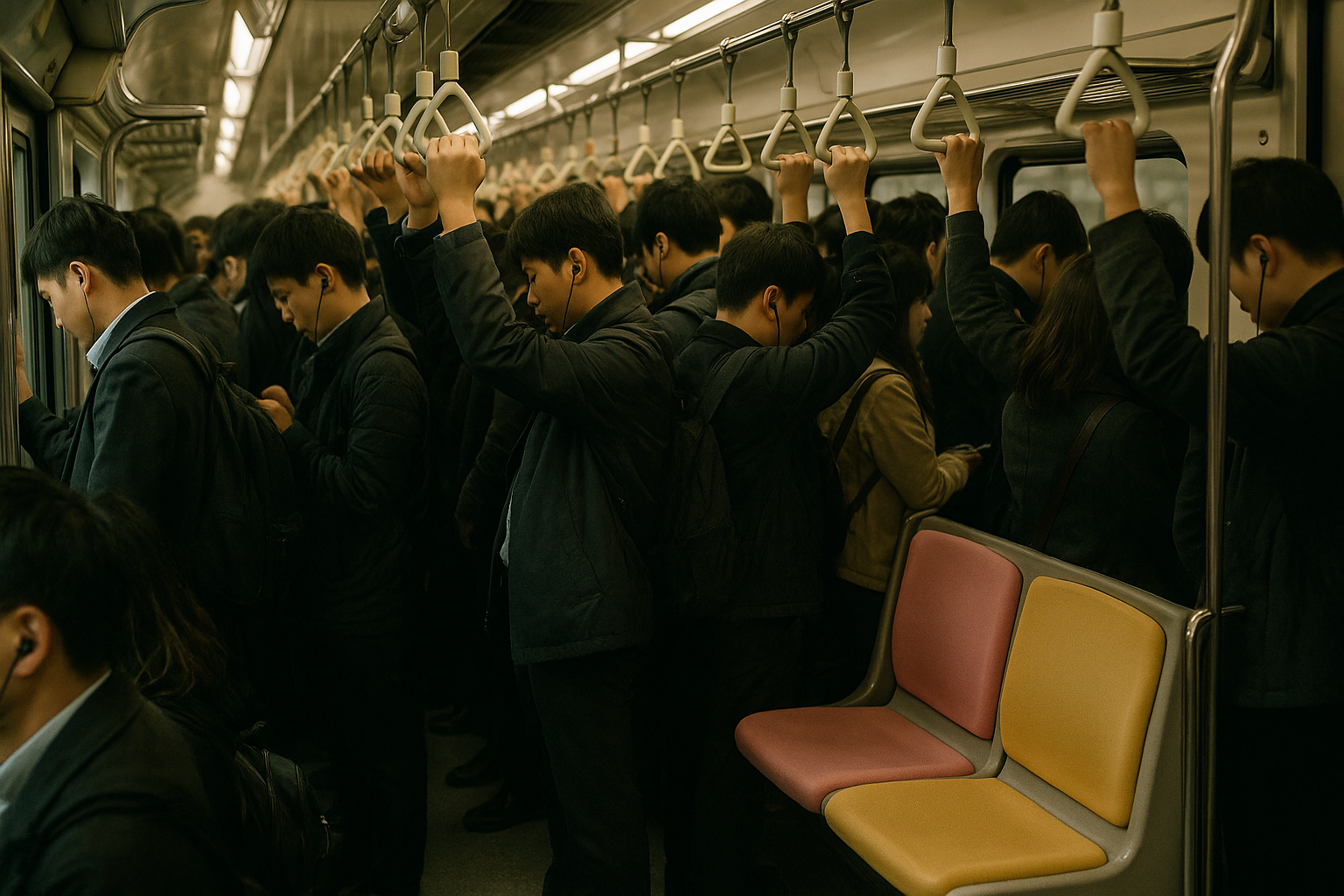
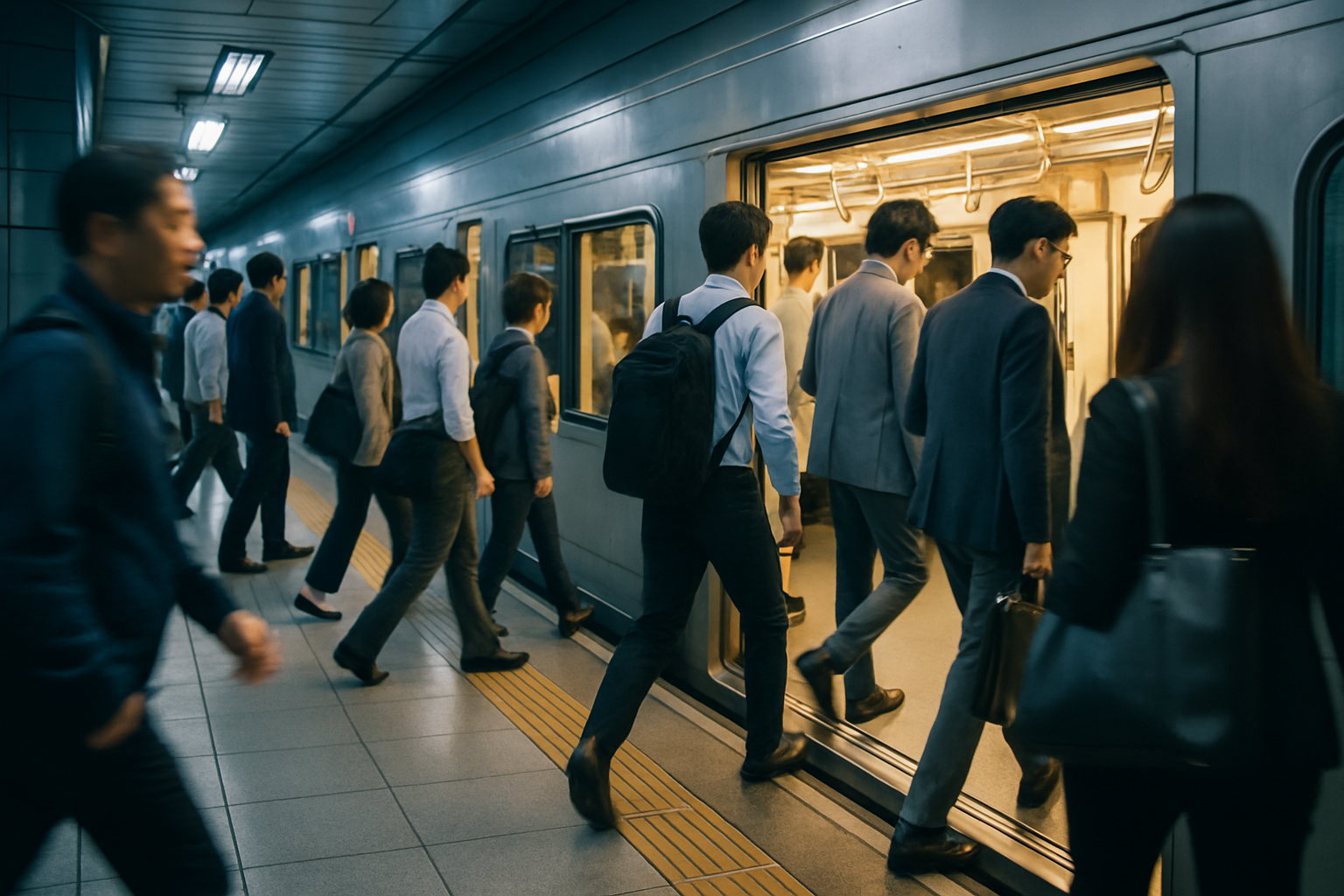
It was a Tuesday, the kind of gray, half-raining Seoul morning where everyone’s umbrella drips onto everyone else’s shoes. My daughter had a fever the night before, so we were headed to the pediatric clinic near Konkuk University Station instead of daycare, and I was carrying her — floppy, warm, half-asleep on my shoulder — through the 8:40 crush on Line 2. The green line at that hour doesn’t so much move people as compress them. And there, two seats from the door, sat two empty seats: one pink, one pale yellow, untouched, while forty-some students and office workers stood packed around them like the seats were radioactive.
The Seat Nobody Touches
I’ll be honest — for about four seconds, I thought about sitting. My kid was sick and heavy and I hadn’t slept much either. Nobody would have said anything. Nobody says anything, that’s actually the whole point of this essay. But I didn’t sit, and not because I suddenly remembered a rule. I sat because I’ve lived in Korea long enough now to feel the seat as occupied even when it’s empty. That’s a strange sentence to write, but anyone who’s ridden the Seoul subway for more than a few months knows exactly what I mean.
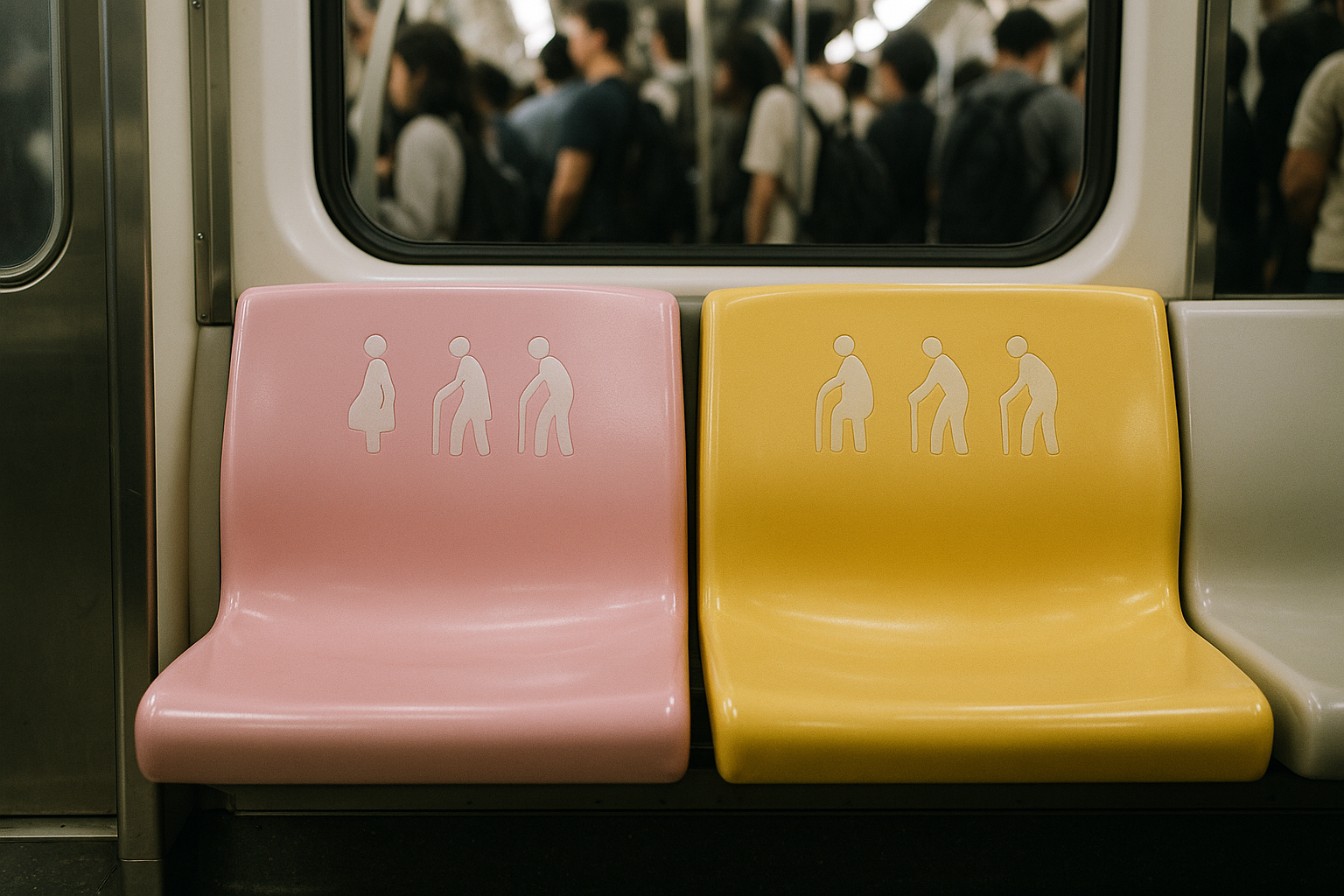
The yellow seats are 노약자석 — literally “seats for the old and weak,” a blunt, almost old-fashioned phrase that’s been on Korean trains since the 1980s. The pink ones are newer, added around 2013 after pregnant riders kept getting into standoffs with elderly passengers over the same handful of yellow seats. Now there’s a lane for each. Roughly a third of the seats in a typical car fall into one priority category or another, clustered at the ends near the doors.
It’s Not a Rule. It’s a Feeling.
There’s no posted fine. No conductor walks through checking IDs. A tourist who sits in a pink seat for one stop isn’t going to get yelled at — I’ve watched it happen, and mostly people just look, then look away. What keeps a college student standing for forty-five minutes on a packed Line 2 train while a pink seat sits open beside her isn’t law. It’s something closer to muscle memory, taught the way you learn to take your shoes off at the door — nobody explains it twice.
My wife’s father put it to me plainly once, on a much emptier train out toward Gimpo: “Even if no one needs it right now, someone might need it at the very next station.” That’s the actual logic. You’re not avoiding a seat that’s empty. You’re keeping it ready.
The Halmoni at Sadang Station
The moment that really taught me this wasn’t on Line 2 at all — it was a few weeks earlier, transferring at Sadang, that chaotic junction where Line 2 meets Line 4 and half of Seoul seems to change trains at once. An older woman, maybe seventies, boarded with two heavy shopping bags of what looked like produce from Sadang Market. She wasn’t near a priority seat. She was near ordinary seats, one occupied by a guy who looked about twenty, earbuds in, eyes closed.
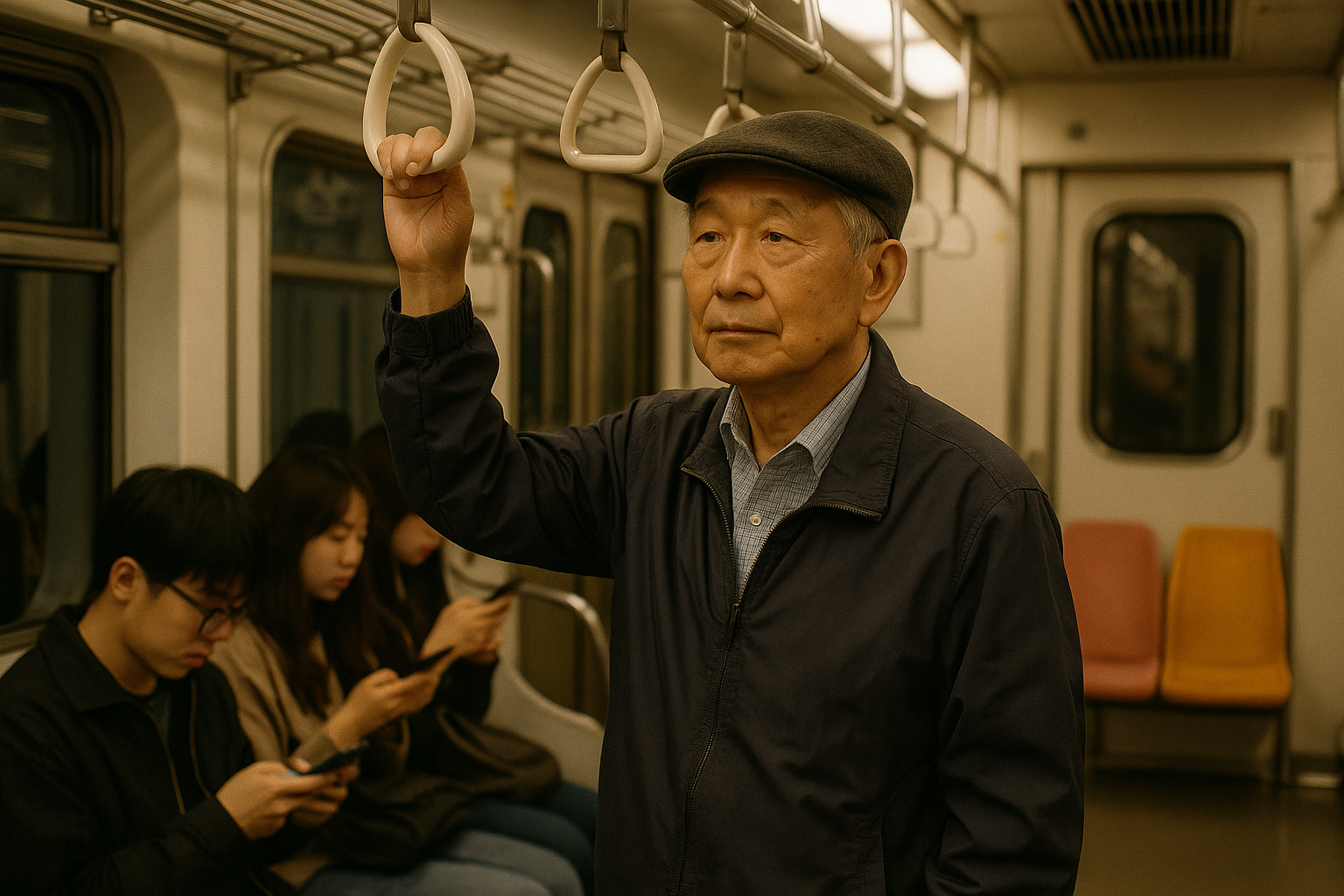
He didn’t even fully open his eyes. He just stood, wordlessly, bags-be-damned, and shifted toward the pole. She sat without thanking him, he didn’t wait for thanks, and the whole exchange took maybe two seconds. Nobody around them so much as glanced over. I was the only one who found it remarkable, which is sort of the point — for everyone else on that train, it was Tuesday.
What This Is Teaching My Daughter
My daughter is three now, too young to sit still through a full subway ride let alone parse social etiquette, but she watches everything. Last month she pointed at a pink seat and said “no sit” before I’d said a word, mimicking something she’d absorbed from a hundred rides where I steered her away from it without explanation. I didn’t teach her the rule. She caught it, the way kids catch an accent. That’s the part of raising a family here that still catches me off guard — how much of what matters in this culture isn’t spoken, it’s just modeled, over and over, until it stops being a rule and becomes a reflex.
I grew up somewhere seats were first-come, first-served and nobody thought twice about it. I’m not saying one way is better. I’m saying it took me actually almost sitting down, tired kid in my arms, fully justified by any Western standard, to understand that the empty seat was never really empty. It was just waiting.
FAQ: Priority Seats on the Korean Subway
Will I get fined or in trouble for sitting in a priority seat as a foreigner?
No — there’s no legal penalty or fine for sitting in 노약자석 or the pink pregnancy seats in Seoul or on any Korean subway line. It’s a social norm, not a regulation. If you sit in an empty one and give it up quickly when someone who needs it boards, most Koreans won’t say a word. What draws real disapproval is staying seated while an elderly, disabled, or visibly pregnant passenger stands right in front of you.
What if the whole car is packed and the priority seats are the only ones open?
You’ll see this constantly during rush hour on lines like 2, 4, and 9. Plenty of locals do sit down in that specific situation, especially students or workers doing a short one- or two-stop hop, but they tend to get up fast — often before the doors even open at the next station — and Koreans over roughly 40 will frequently choose to stand rather than take the seat at all, even when exhausted.
How do I know if a woman needs the pink seat if she doesn’t look pregnant?
Seoul’s transit authority hands out a small pink badge — 임산부 배려 엠블럼 — free at subway info counters and community health centers, meant specifically for early pregnancy, when there’s no visible bump yet. If you see the badge clipped to a bag, treat it exactly like a visible pregnancy. It’s a quiet system, built so nobody has to explain themselves out loud on a crowded train.
Leave a Reply