Around the second week of September, a question starts making the rounds at my office that I’ve never quite figured out how to answer casually: “So, what are you doing for Chuseok?” Korean coworkers ask it the way Americans ask about weekend plans, expecting a quick, obvious reply. Mine used to be a shrug. I didn’t have hometown rice paddies to return to, no grandmother’s table waiting three provinces away, and for my first couple of years here that question just sat there awkwardly until someone changed the subject. Eventually I realized the shrug wasn’t good enough — Chuseok isn’t a holiday you can wing, and depending on which category you fall into, “doing nothing” is either a great plan or a genuine mistake.
This year the dates are locked in: Chuseok Day falls on Friday, September 25, 2026, with the official holiday running Thursday, September 24 through Saturday, September 26. Because that stretch doesn’t happen to bump into a Sunday, Korea’s substitute-holiday rule doesn’t automatically hand out an extra Monday off, a detail that trips up a lot of newcomers every single year. So before you book anything, here’s what this piece actually covers: not another rundown of what Chuseok commemorates — I’ve already written that deep dive if you want the history — but the part nobody hands you on arrival, which is what a foreigner in Korea is actually supposed to do with these three days, depending on which version of Chuseok you’ve landed in.
Quick Refresher, For Context
Chuseok is a lunar harvest festival, built around ancestral memorial rites called charye, a mass migration back to family hometowns, and food — specifically songpyeon, the half-moon rice cakes steamed over pine needles that fill every grocery store aisle by mid-September. Calling it “Korean Thanksgiving” isn’t wrong, exactly, the same way calling a typhoon “a windy day” isn’t technically wrong. It’s just wildly understated. Thanksgiving is one dinner with extended relatives. Chuseok is closer to a three-day operation with a religious core, a logistics nightmare wrapped around it, and an entire retail season built on top — gift-set aisles start appearing in marts by early September, weeks before anyone touches a single rice cake. If you want the full deep dive into charye and where the holiday comes from, I covered that separately. Here, I want to skip straight to the decision tree: what do you actually do with yourself this week?
There are basically three positions a foreigner in Korea can find themselves in going into Chuseok, and each one calls for a completely different game plan. You might have an invitation — from a partner’s family, in-laws, or close Korean friends who’ve decided you’re basically adopted at this point. You might have nothing, no plans, an empty apartment and a city that’s about to go strangely quiet. Or you might be trying to travel somewhere, in which case you’re about to learn just how seriously this country takes a family reunion.
Scenario One: You’ve Been Invited
If a Korean family has invited you into their Chuseok — and this happens more than you’d expect once you’ve dated someone Korean, worked alongside Korean colleagues for a couple of years, or simply been adopted by a landlady who’s decided you look too thin — congratulations, you’ve been handed the real version of the holiday, not the tourist-facing one. Take it seriously. This is not the moment for a bottle of wine grabbed from the CU on your way there.
The gift matters more than you’d think, and it needs to land in a fairly specific range: not cheap enough to look like an afterthought, not so extravagant that it embarrasses the host. Skip the convenience store entirely — walking in with a CU snack box reads as genuinely unprepared. Head to a Lotte Mart, Homeplus, or Emart instead, where entire sections are staged with nothing but Chuseok sets weeks ahead of time. Fruit gift sets — boxed Asian pears or apples — are the safest default, usually somewhere around 30,000 to 50,000 won. Spam gift sets sound like a punchline if you’re not from here, but they’re a genuinely respected present, the kind of thing that shows up wrapped like jewelry in a presentation box you’d expect to hold something far fancier. Step up to a hanwoo beef set or a ginseng box and you’re easily looking at six figures in won, so know your family’s usual bracket before you splurge — showing up with the most expensive box in the store can read as showing off rather than generous. Cash in a clean envelope is acceptable in some families and slightly off in others, so if you’re unsure, ask whoever invited you rather than guessing.
Then there’s the charye ceremony itself, and this is where a lot of foreigners freeze up, unsure whether they’re supposed to participate or just watch from the doorway. Picture the scene before you even get to the etiquette question: a low table crowded with dishes arranged in a specific order that took someone hours to get right, dried fish and fruit stacked in careful little towers, a bowl of rice with chopsticks set upright in it, the room quiet in a way Korean family gatherings almost never are otherwise. It’s genuinely disorienting the first time, standing in a doorway in socks not knowing where your hands are supposed to go. Here’s the honest answer on what happens next: it depends entirely on the family, and you genuinely won’t know until you’re standing there. Some households will hand you incense and walk you through the bow, treating your presence as a small honor to the ancestors being remembered. Others keep charye as an immediate-family-only ritual and will quietly steer you toward the kitchen, or just have you wait in another room until it’s done — and that’s not a snub, it’s just how that particular family runs things. Follow whoever’s next to you, keep your voice down, and don’t take a photo unless someone specifically tells you it’s fine. If bowing is involved, it’s the full standing bow — hands folded, bend from the waist, not a casual head nod — and nobody expects you to get the choreography perfect on your first try. They just don’t expect you to treat it like a joke.
Clothing-wise, you don’t need a hanbok unless someone specifically tells you to wear one, which does happen in a handful of families that still dress up for the day. Smart-casual is the safe zone — think what you’d wear to a slightly formal dinner with your own extended family, nothing more costume-like than that. And budget real time for it. A Chuseok visit isn’t a two-hour drop-in; it typically stretches across a full afternoon of food, chores, and conversation, and leaving early without a good reason reads as strange in a way it might not back home.
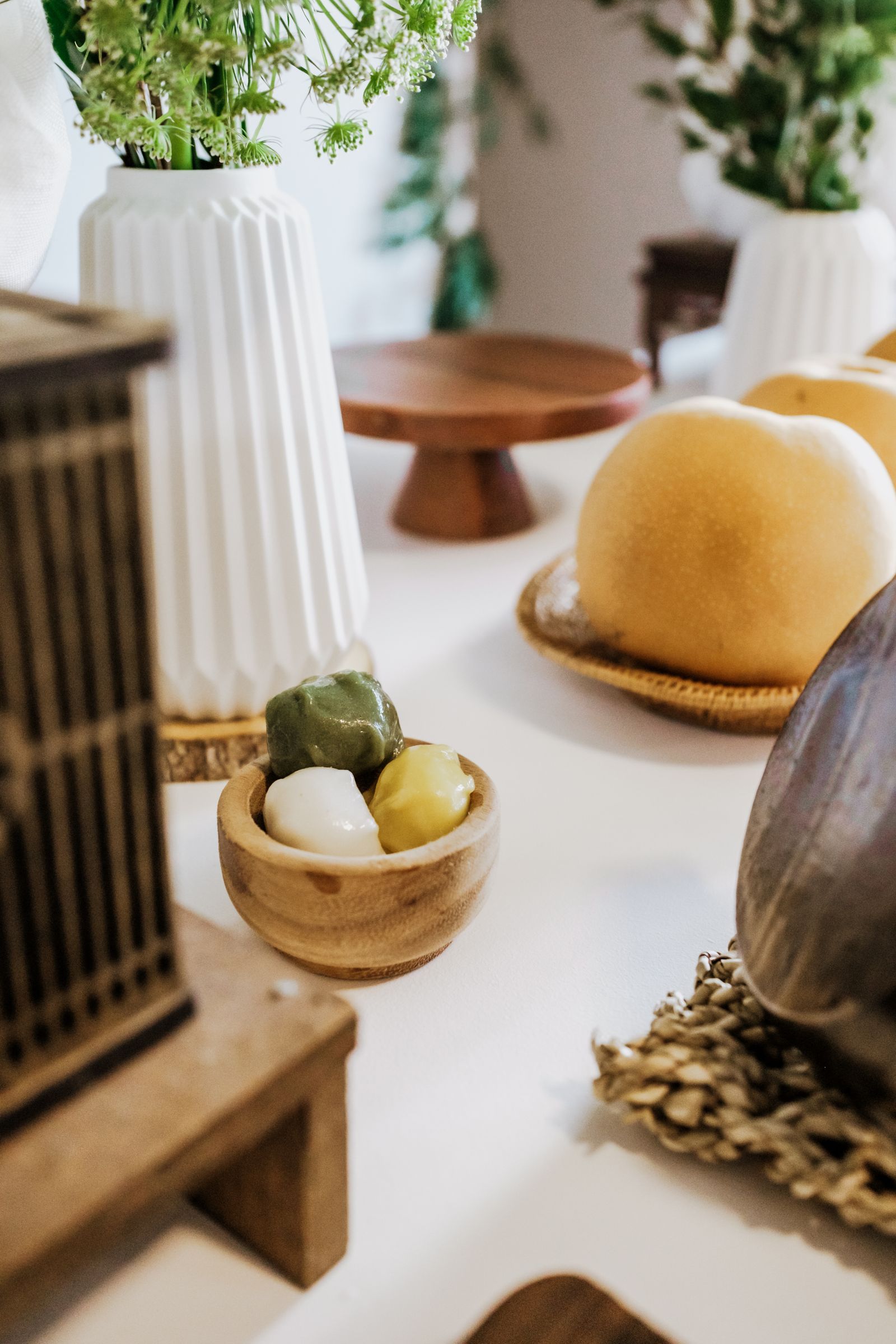
You’ll probably be asked to help make songpyeon at some point, usually the evening before, with everyone gathered around a table shaping little half-moons of rice dough around sesame or sweet bean filling. There’s a saying that whoever makes a beautifully shaped songpyeon will have a beautiful daughter, which sounds like exactly the kind of thing an aunt says to tease a nervous foreign son-in-law, and — surprisingly — it usually is. Your first ones will look lopsided. Everyone’s first ones look lopsided. Nobody is grading you on it, though your father-in-law might grade you on it anyway, just for fun.
Scenario Two: You’re On Your Own in Seoul
If you don’t have an invitation, don’t treat that as a problem to solve — Chuseok in an emptied-out Seoul is genuinely one of the better weekends the city offers, and a lot of longtime expats will tell you the same thing once they’ve been through one. Roughly a fifth of the country’s population lives in the greater Seoul area on a normal day, and a huge share of them leave for their hometowns during Chuseok. The result is a capital city that suddenly runs at maybe sixty percent capacity: subway cars you can actually sit in during rush hour, restaurant lines that don’t exist, and a version of Gangnam or Hongdae that feels almost sleepy by comparison.
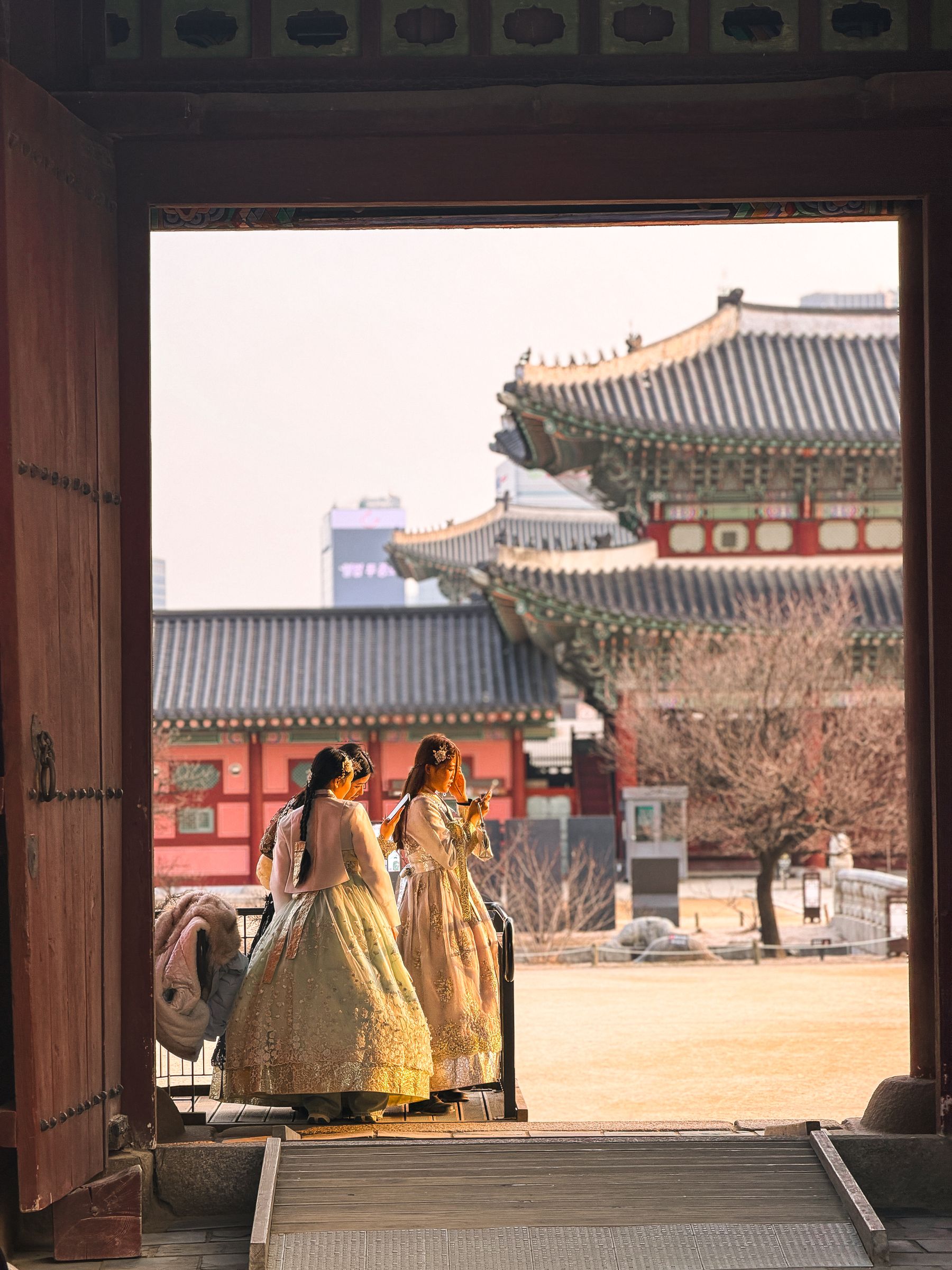
This is, somewhat counterintuitively, the best week of the year to see the palaces. Gyeongbokgung, Changdeokgung, Changgyeonggung, and Deoksugung all switch to free admission for the full three-day holiday, no hanbok rental required to skip the entry fee the way you normally would. Jongmyo Shrine drops its usual guided-tour-only rule and lets you wander freely, which it does maybe a handful of times a year. At Gyeongbokgung specifically, the royal guard-changing ceremony still runs at 10 a.m. and 2 p.m., with a guard patrol at 3 p.m., and none of it requires a reservation. If you’ve been putting off the “go see a palace” item on your Korea bucket list because the crowds looked exhausting in photos, this is the window.
You’d assume the whole city just shuts its doors, and parts of it genuinely do — most banks close completely from the 24th through the 27th, department stores follow suit, and small restaurants in traditional markets go dark for the full stretch, their metal shutters down with handwritten Chuseok notices taped to the front. Government offices turn into actual ghost towns; if you’re sitting on an alien registration card renewal or anything requiring a stamped form from an actual office, that errand needs to happen before the 24th or after the 27th, full stop, because nobody is answering that phone. Convenience stores, at least, are a reliable constant — CU, GS25, 7-Eleven, and Emart24 keep running 24 hours the way they always do — but don’t lean on that fact too hard. Large marts are hit or miss branch by branch, and a lot of neighborhood restaurants simply close, so the smart move is stocking your fridge on the 23rd rather than discovering on Chuseok Day itself that your only dinner option within walking distance is a triangle kimbap.
Scenario Three: You’re Trying to Travel
If your plan involves leaving Seoul during Chuseok, book everything now, not next week, because the panic starts online before it ever reaches the road. I once watched a friend try to grab a same-day KTX ticket from Seoul to Busan on a whim during Chuseok — sold out, every train, every class, for four straight days. That’s not an exaggeration for effect; it’s just what happens when a significant chunk of the country’s population tries to move across it at the same time. Train tickets for Chuseok routinely open for reservation weeks in advance and sell out within hours of going live, the app essentially seizing up under the load, so if Busan, Jeonju, or anywhere outside the capital is on your itinerary, that booking needs to happen the moment tickets are released, not the week before you travel.
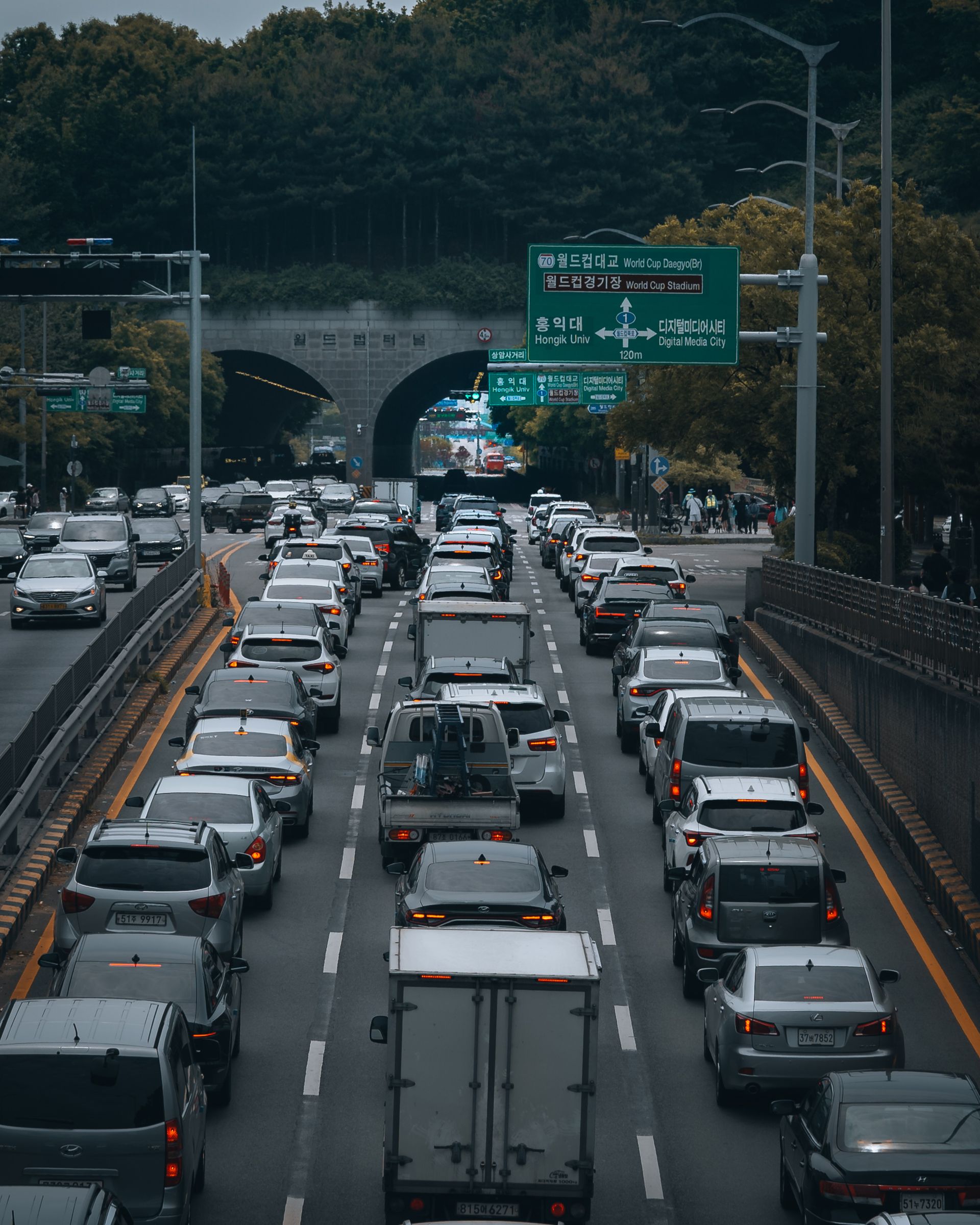
Miss that window, or decide to drive instead, and you graduate from digital panic to physical panic. The highways are, frankly, a spectacle. What’s normally a three-and-a-half-hour drive from Seoul to Busan can stretch to eight or nine hours during peak Chuseok travel windows, and Korean news broadcasts will actually show live traffic maps with color-coded expressways glowing solid red for hundreds of kilometers. It becomes a kind of national talking point every year — reporters standing on overpasses, drone shots of unmoving traffic stretching to the horizon. If you’re renting a car thinking you’ll beat the crowds by leaving early or late, you probably won’t; departure times get staggered across the entire holiday specifically because everyone else had the same idea. Intercity buses fill up just as fast as trains, so the honest advice is: pick your travel dates around the edges of the holiday rather than its center, or accept that you’re going to spend a chunk of your Chuseok sitting in a car, watching brake lights stretch toward the horizon.
How This Actually Differs From Western Thanksgiving
It’s tempting to file Chuseok under “basically Thanksgiving” and move on, and for a casual explanation to a friend back home, that’s fine shorthand. But live through one and the differences start to matter. Thanksgiving in the U.S. is fundamentally a single meal — a Thursday dinner, maybe a long weekend around it, built loosely around gratitude with no strict ritual attached. Chuseok is built around charye, an actual ancestral rite with specific steps, specific food placement on the table, and a religious-adjacent weight to it that a turkey dinner just doesn’t carry. Thanksgiving doesn’t shut down a country’s banking system for four days. It doesn’t turn the nation’s expressways into a televised traffic event. And it definitely doesn’t come with a retail season attached to it the way Chuseok does — the gift-set aisles, the Spam boxes, the fruit sets stacked into pyramids at Emart, all of it building for weeks beforehand in a way that has more in common with the run-up to Christmas than to a Thursday dinner in late November.
The other real difference is scale of movement. Thanksgiving travel is busy, sure, airports get crowded, but it doesn’t functionally halt a country. Chuseok does. When a fifth of your national population tries to return to the same handful of provincial hometowns inside a 72-hour window, you get exactly the kind of gridlock Korean news loves to broadcast every single year. It’s less “a big family dinner” and more “an entire nation performing the same ritual migration at once,” and once you’ve watched it happen from inside an empty Seoul apartment or a stalled highway, the Thanksgiving comparison starts to feel like it’s doing a lot of the real thing a disservice.
Frequently Asked Questions
I just moved to Korea and my Korean girlfriend’s family invited me to Chuseok next week. I don’t speak much Korean — is that going to be a problem?
Less than you’d think. Family gatherings like this run mostly on food, gesture, and whoever’s willing to translate the awkward gaps, usually a bilingual cousin or your girlfriend herself. Learn a handful of phrases beforehand — a polite greeting, “thank you for having me,” “it’s delicious” — and lean on effort over fluency. Families tend to notice and appreciate the attempt far more than they’d ever expect actual conversational Korean from someone who just arrived.
I’m an English teacher with no Korean family connections and three days off with nothing planned. Is it worth staying in Seoul or should I try to travel?
Unless you already booked transportation before this week, stay. Trying to book a train or grab a rental car this close to the holiday puts you in competition with the entire country, and you’ll likely lose. Staying in Seoul during Chuseok is a legitimately good trade: free palace entry, thin crowds, and a city that finally feels walkable. Save the travel plans for a normal weekend.
My company gave us Thursday through Saturday off for Chuseok 2026 — does that mean Monday is also a holiday?
Not automatically. Korea’s substitute-holiday rule only kicks in when the holiday overlaps a Sunday, and this year’s Chuseok stretch (September 24–26) doesn’t. So Monday, September 28 stays a normal working day unless your specific employer grants it separately or the government makes a one-off announcement, which does happen some years but shouldn’t be assumed. Check with HR directly before you book anything assuming a four-day weekend.
Leave a Reply