새벽 6시 40분, 서울역 플랫폼에 서서 안동행 KTX 전광판을 올려다보다가 문득 이런 생각이 들었다. 하회탈 사진 몇 장 찍으려고 왕복 5시간 넘게 기차를 타는 게 맞는 걸까. 결론부터 말하자면, 그날 밤 월영교 위에서 빨갛게 물든 강물을 내려다보는 순간 새벽부터 품고 있던 그 뾰족한 의구심은 스르르 풀렸다. 안동은 어중간하게 준비하면 이동 시간에 하루를 다 뺏기는 동네지만, 동선만 제대로 짜면 하회마을의 낮과 월영교의 밤을 하루 안에 다 담을 수 있다. 이번 글에는 실제로 걸어본 거리, 기다려본 버스 시간, 줄 서서 낸 입장료까지 숫자 그대로 적어둔다.
서울에서 안동까지, 기차로 갈까 버스로 갈까
가장 무난한 방법은 KTX다. 서울역에서 중앙선 KTX-이음을 타면 청량리, 양평, 원주, 제천, 단양, 풍기를 거쳐 안동역(신)까지 대략 2시간 10분에서 2시간 30분 정도 걸린다. 평일 기준 요금은 일반실 성인 편도 약 2만 9천 원 선인데, 시간대에 따라 살짝 차이가 난다. 하루 왕복 배차가 5회 안팎이라 생각보다 선택지가 넉넉하지 않으니, 아침 일찍 도착하는 열차와 저녁 늦게 서울로 돌아오는 열차 시간을 먼저 확인하고 나머지 일정을 거꾸로 짜는 게 편하다. 버스로 갈 경우엔 동서울종합터미널에서 안동터미널까지 3시간 안팎이 걸리는데, 배차 간격이 더 촘촘하다는 장점은 있지만 막상 가보니 시내버스 환승까지 더하면 총 이동 시간은 기차와 큰 차이가 없었다. 새마을호나 무궁화호를 타면 요금은 저렴해지지만 4시간 가까이 걸리니 당일치기에는 추천하지 않는다.
안동역(신)에 내리면 역 자체가 시내에서 꽤 떨어져 있다는 걸 실감하게 된다. 하회마을까지는 시내버스 246번이나 210번을 타면 되는데, 배차 간격이 40분에서 1시간으로 넓은 편이라 놓치면 다음 일정이 통째로 밀린다. 소요 시간은 대략 50분. 시간이 애매하거나 일행이 두 명 이상이면 안동역 앞 택시로 이동하는 것도 나쁘지 않은 선택이다. 요금은 2만 원 중반대가 나오는데, 버스 기다리는 시간을 아낀다고 생각하면 아깝지 않았다.
뚜벅이 vs 택시 환산 팁 — 버스는 무료에 가깝지만 배차 간격이 40분~1시간이라 잘못 놓치면 기다리는 시간만 30분이 훌쩍 넘어간다. 반면 택시는 2만~3만 원대로 비싸 보여도 일행이 세 명 이상이면 1인당 만 원 이하로 갈리고, 그만큼 아낀 시간을 하회마을이나 병산서원에서 더 쓸 수 있다. 혼자 여행이면 버스, 두 명 이상이면 택시 쪽이 실속 있었다.
하회마을, 유네스코 세계유산 골목을 두 시간에 걷는 법
하회마을은 2010년 경주 양동마을과 함께 유네스코 세계문화유산으로 등재된 곳이다. 낙동강이 마을을 S자로 휘감아 도는 지형 때문에 ‘물돌이동’이라는 별명이 붙었는데, 사진으로 볼 때보다 실제로 마을 안쪽 언덕에 올라서서 보면 그 구부러진 물길이 훨씬 선명하게 눈에 들어온다. 입장료는 성인 기준 5천 원, 청소년 2천 5백 원, 어린이 1천 5백 원 수준이고 만 65세 이상 내국인은 무료다. 매표소에서 마을 입구까지는 무료 셔틀버스가 5분 간격으로 다니니 굳이 걸어 들어갈 필요는 없다.
마을 안에는 실제로 사람이 거주하는 한옥이 많아서, 담장 너머로 빨래가 널려 있거나 마당에 장독대가 늘어선 모습을 그대로 볼 수 있다. 셔틀버스 정류장에서 내려 양진당까지는 도보로 10분 남짓, 거기서 충효당까지 다시 5분 정도라 이 두 종택만 돌면 한 시간 반이면 충분하다. 부용대까지 넘어가려면 나룻배를 타야 하는데, 배에서 내린 뒤 정상까지 오르는 흙길이 짧지만 경사가 꽤 가팔라서 슬리퍼나 굽 있는 신발로는 고생한다. 왕복 배삯은 1인 3천 원 정도이고, 날씨와 강 수위에 따라 운항이 갑자기 중단되기도 하니 장마철 직후라면 미리 확인하는 게 좋다. 종택 관람에 나룻배까지 더하면 두 시간 반 정도 잡아야 한다. 개인적으로는 오전 10시쯤 도착해서 사람이 몰리기 전에 골목 사진부터 찍고, 점심시간 직전에 부용대로 넘어가는 순서를 추천한다.
병산서원이냐 도산서원이냐, 갈림길에서 고민한 이유
부용대에서 내려와 다음 행선지를 정할 때 잠깐 갈등했다. 퇴계 이황의 흔적이 짙게 남은 도산서원으로 갈지, 아니면 하회마을 코앞에 있는 병산서원으로 갈지. 결국 도산서원은 다음 방문으로 미뤄두고, 당일치기 동선에 훨씬 매끄럽게 들어맞는 병산서원 쪽으로 발걸음을 돌렸다. 하회마을에서 차로 15분, 비포장에 가까운 좁은 강변길을 따라가야 해서 대중교통보다는 택시나 자차가 편하다. 병산서원은 입장료가 없고, 만대루라는 누각에 걸터앉아 낙동강과 병풍처럼 둘러선 산을 바라보는 그 십여 분이 이 여행에서 가장 오래 기억에 남았다. 유생들이 강 건너 절벽을 매일 보며 공부했다는 게 그제야 납득이 됐다.
반면 도산서원은 퇴계 이황 선생의 학문적 무게감이 훨씬 크고 전시관도 잘 갖춰져 있지만, 안동 시내에서 30분 이상 떨어져 있어 하회마을과 함께 묶으면 동선이 크게 어긋난다. 역사와 인물 스토리에 관심이 많다면 도산서원 쪽을 택하고 하회마을·월영교는 다음 방문으로 미루는 편이 낫고, 반나절 안에 하회마을부터 야경까지 다 보고 싶다면 병산서원을 붙이는 쪽을 권한다. 둘 다 욕심내다가 시간에 쫓겨 어느 쪽도 제대로 못 본 여행자를 현지에서 실제로 몇 명 봤다.
안동 구시장 찜닭골목, 배고픈 김에 줄 서기
병산서원 만대루에서 한참 앉아 있다가 시계를 보니 오후 2시가 다 됐다. 여기서 바로 저녁을 먹기엔 이르니, 시내로 돌아와 한 시간 반 정도 여유를 두는 게 좋다. 나는 안동댐 근처를 걸어보거나, 시내에서 유명하다는 맘모스제과에 들러 크림치즈빵을 하나 사서 먹으며 다리를 쉬게 했다. 고택을 개조한 카페에 앉아 커피 한 잔 하는 것도 나쁘지 않은 선택이다. 이렇게 시간을 보내다 5시쯤 구시장 찜닭골목으로 향하면 딱 맞는다. 구시장 안에 찜닭 전문점이 서른 곳 가까이 몰려 있어서 어디를 가야 할지 고민되지만, 30년 넘게 자리를 지킨 노포들이 여전히 현지인 손님으로 북적이는 걸 보면 대충 골라도 크게 실패하진 않는다. 가격은 소자 기준 2만 7천 원에서 3만 원대, 중자는 3만 2천 원 안팎이고 2~3인이 먹기엔 소자로도 넉넉했다. 간장 양념에 청양고추의 매운맛, 당면과 감자가 듬뿍 들어가는 조합인데, 서울에서 먹던 찜닭 특유의 걸쭉하고 텁텁한 간장 맛과는 결이 달랐다. 끝맛에 청양고추의 알싸함이 훅 치고 올라오면서 국물이 짜장 소스처럼 무겁지 않고 맑게 넘어가서, 밥 한 그릇을 국물에 비벼 먹어도 물리지 않았다.
평일 저녁이라도 오후 6시가 넘어가면 대기가 생기는 가게가 많으니, 5시쯤 들어가서 여유 있게 먹고 나오는 걸 권한다. 찜닭 한 마리 다 못 먹으면 포장도 잘해주니 기차 안에서 먹을 간식 삼아 남은 걸 싸달라고 해도 된다.
월영교, 저녁 7시가 지나야 진짜 얼굴이 나온다
찜닭으로 배를 채운 뒤엔 월영교로 이동한다. 시내에서 3번이나 3-1번 버스를 타면 되고, 저녁 시간대엔 교보생명 앞 정류장에서 오후 6시부터 10시까지 매시 정각에 월영교행 버스가 따로 다닌다는 걸 이번에 알았다. 월영교는 우리나라에서 가장 긴 목조 인도교로, 길이가 387미터에 달한다. 조선시대 이응태 무덤에서 발굴된 원이엄마 편지 이야기를 모티프로 만든 다리라, 다리 중간 월영정에서 야경을 보고 있으면 그 절절한 사연이 새삼 다르게 다가온다.
낮에 봐도 나쁘지 않지만 이 다리는 확실히 해가 떨어진 뒤가 진짜다. 저녁 6시 무렵부터 조명이 하나둘 켜지기 시작해서 완전히 어두워지는 7시 이후엔 빨강, 파랑, 초록으로 색이 10초 안팎의 간격을 두고 서서히 바뀌는 조명쇼가 다리 전체를 감싼다. 잔잔한 낙동강 수면 위로 그 빛이 그대로 떨어져서, 다리와 그림자가 마치 거울처럼 위아래로 맞붙어 흔들리는 걸 보고 있으면 시간 가는 줄 모른다. 다리를 다 건넜다가 반대편에서 돌아오는 왕복 코스로 잡으면 30분에서 40분 정도 걸리는데, 안동역으로 돌아갈 시간을 고려해서 8시쯤엔 다리를 나서는 게 안전하다. 입장료는 없고 연중무휴로 개방한다.
하루 동선 한눈에 정리
07:00
서울역 KTX 출발
09:20
안동역(신) 도착, 버스 또는 택시로 하회마을 이동
10:15~12:30
하회마을 관람 (부용대 포함)
12:30~13:00
이동(차량 15분) 및 병산서원 도착
13:00~14:00
병산서원 관람, 만대루에서 휴식
14:00~15:30
시내 복귀 및 자유 이동(안동댐, 카페 등)
17:00~18:30
구시장 찜닭골목 저녁식사
19:00~20:00
월영교 야경 감상
20:30
안동역 이동, KTX로 서울 복귀
이 표대로 움직이면 중간에 카페 들를 여유까지 30분 정도는 남는다. 지난번 강릉 당일치기 코스를 짤 때도 야경으로 하루를 마무리하는 동선이 훨씬 여운이 길다는 걸 느꼈는데, 안동도 마찬가지였다. 유적지 위주로 낮 일정을 채우고 밤에는 조명이 예쁜 곳에서 마무리하는 패턴이 당일치기엔 잘 맞는 것 같다. 역사 마을이라는 공통점 때문에 경주 당일치기 코스와 비교해서 다녀오는 사람도 꽤 있던데, 경주가 왕릉과 절 중심이라면 안동은 실제 사람이 사는 반가와 서원 중심이라 분위기가 사뭇 다르다.
자주 묻는 질문
Q. 하회마을과 병산서원을 대중교통만으로 이동할 수 있나요? 가능은 하지만 배차가 워낙 뜨문뜨문해서 당일치기엔 부담스럽다. 하회마을 매표소 근처에서 병산서원행 버스를 기다리느니 택시를 부르는 편이 시간을 아낀다. 왕복 택시비가 3만 원 안팎인데, 일행이 서너 명이면 나눠 내기에 부담 없는 수준이다.
Q. 비 오는 날에도 하회마을 관람이 가능한가요? 가능하지만 부용대로 건너가는 나룻배는 강 수위가 높아지면 운항이 중단된다. 우산을 써도 골목 자체는 흙길이라 신발이 많이 젖으니 방수 신발을 챙기는 걸 권한다.
Q. 차가 없어도 이 코스를 하루에 다 돌 수 있나요? 무리는 아니지만 넉넉하진 않다. 병산서원 구간만 택시로 해결하면 나머지는 시내버스로 충분히 커버된다. 다만 버스 배차 시간을 미리 캡처해두고 움직이는 걸 추천한다.
돌아오는 KTX 안에서 문득 느낀 건, 안동은 화려하게 꾸며놓은 관광지가 아니라 여전히 사람이 살고 있는 동네를 빌려 구경하는 여행이라는 점이었다. 스마트폰 앨범에 담긴 풍경 사진보다, 하회마을 담장 안쪽에서 풍기던 된장찌개 냄새나 병산서원 댓돌 위에 가지런히 놓여 있던 낡은 고무신 한 켤레가 더 또렷하게 남았다. 다음에 안동을 다시 간다면 이번엔 도산서원 쪽으로 방향을 틀어볼 생각이다.
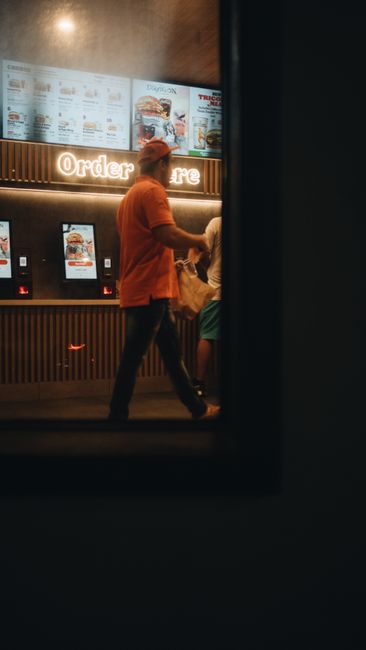
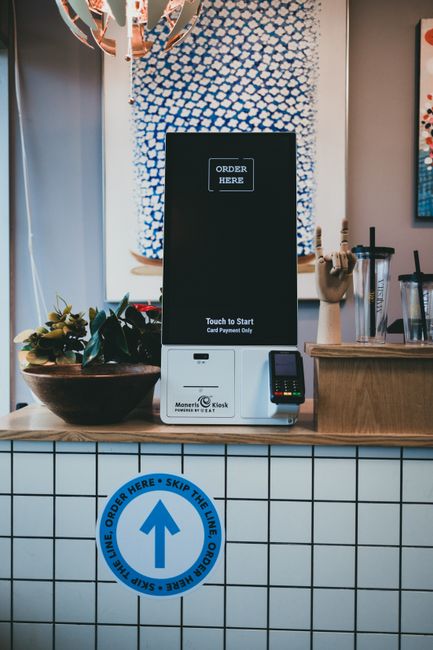
The first time a kiosk beat me, it wasn’t even a complicated order. I wanted a bulgogi burger, no onions, a coke, and I wanted to pay with cash because that’s what was in my pocket. Three of those four things turned out to be negotiable with a touchscreen and one of them, the cash, was not negotiable at all. The machine simply didn’t have a slot for it. I stood there for a solid ten seconds doing the math on whether I should just leave, and behind me a Korean high schooler was already sighing in that specific way that means “move.”
That sigh, more than the screen itself, is what actually terrifies people about kiosk culture here. Everyone talks about the technology like it’s the obstacle, but the real pressure is social. You’re not just trying to order a sandwich. You’re trying to order a sandwich fast enough that the line behind you doesn’t silently judge you for it. Koreans call this feeling nearly universal now, and I’ve watched grandmothers, teenagers, and other foreigners all freeze at the same screen for the same reason.
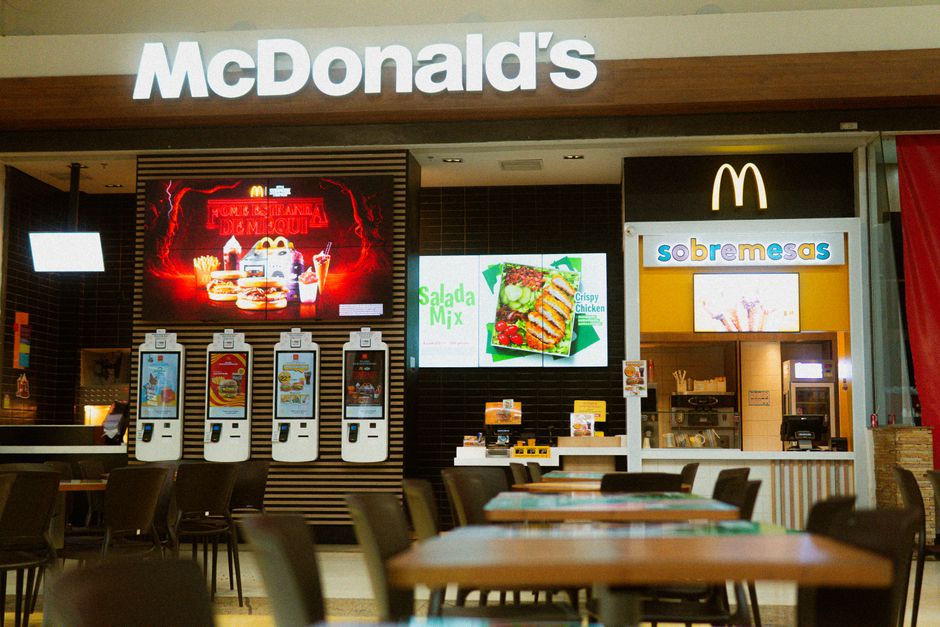
If you haven’t spent time in Korea recently, it’s worth explaining just how fast this shift happened. A decade ago, kiosks were mostly a big-chain thing, something you’d see at a McDonald’s near a subway station and nowhere else. Now they’re in cafes, in bakeries, in some barbecue restaurants, in hospital cafeterias, even in a few small noodle shops where the owner used to take your order standing right in front of you. Government data on this tracked a jump from roughly 8,500 kiosks in the private sector in 2019 to well over 26,000 just two years later, and anyone who’s been here that whole stretch can feel that number in their bones without needing to see it written down.
Why did it happen so fast? Partly it’s labor costs. Korea’s minimum wage climbed steadily through the late 2010s, and for a franchise owner running thin margins on a fried chicken shop, a kiosk that never calls in sick and never needs a second staff member on a Friday night starts to look less like a luxury and more like a spreadsheet decision. Partly it’s efficiency in a country that already runs on speed — order throughput at a busy lunch spot goes up when four kiosks are taking orders simultaneously instead of one cashier working a line. And partly, honestly, it’s generational. Younger Koreans grew up with a smartphone practically acting as an extra appendage, so tapping through a touchscreen menu isn’t friction for them, it’s just Tuesday. The chains built the interface for the customers they expect to keep, and older customers and outsiders became something closer to an afterthought.
You’d think a touchscreen menu with pictures would be the easy part, and for choosing food, it mostly is. The photos are usually clear, the set-menu combos are laid out logically, and you can build an order without reading a single word of Korean if you’re patient. Where it gets genuinely rough is everything wrapped around that core decision. The language toggle, when one exists, is rarely on the home screen. It’s tucked into a small globe icon in a corner, or buried one layer deep after you’ve already started building your order, so you either notice it too late or you never notice it at all and just muscle through in Korean, guessing at buttons.
Payment is its own maze. Some kiosks accept only card, no exceptions, which quietly excludes anyone who still carries cash, tourists included, since foreign cards without the right chip standard sometimes get rejected outright. Some ask you to choose between paying now or paying at pickup, a distinction that matters more than it should because picking wrong can mean waiting at the wrong counter for ten minutes wondering why your number never gets called. Membership numbers, coupon codes, and mobile app QR scans get folded into the same flow, so what should be a thirty-second transaction turns into a five-screen negotiation, and that’s before you’ve hit the payment terminal that beeps at you in a tone somehow both robotic and impatient.
Even after years here, I still get tripped up by kiosks that use restaurant-specific logic instead of anything standardized. One burger chain wants you to pick your protein first, then your bun, then your sides, in that exact order, and backing up a step sometimes resets the whole cart. Another cafe chain lets you customize milk, ice, and syrup only after you’ve already confirmed the order, which feels backwards if you’re used to saying everything up front to a human. There’s no shared design language across brands the way there kind of is with, say, ATMs. Every kiosk assumes you’ve used that specific kiosk before, and if you haven’t, you’re improvising in front of an audience.
That same lack of a shared design language shows up just as sharply at cafes, which somehow get less attention in this conversation than fast food even though they hit daily life just as often. A basic coffee order used to be a thirty-second exchange with a barista who might remember your usual after a few visits. Now, at a lot of chains, that same order runs through a kiosk that asks you to choose hot or iced, size, whether you want it decaf, any syrup, any extra shots, and whether you’re a member, before it even shows you a total. None of those questions are unreasonable on their own, but stacked together on a small screen with a countdown-timer feeling baked into the whole interaction, they add up to something that feels less like customizing a drink and more like filling out a short tax form while someone taps their foot behind you. I’ve seen regulars who clearly know exactly what they want still pause mid-order because a kiosk phrased a familiar choice in unfamiliar wording.
And that audience behind you is not imaginary. This is maybe the part that surprises visitors most: the frustration with kiosks in Korea isn’t a foreigner problem, it’s everyone’s problem, and older Koreans often have it worse than tourists do. There have been widely reported cases of elderly customers giving up on ordering altogether — one account that circulated a few years back described a man in his late seventies unable to get past the first screen of a burger kiosk, asking a nearby employee for help, and being told to just try the machine again. Multiply that story by however many similar ones never make the news, and you get a sense of why local welfare centers started running kiosk practice sessions for seniors, complete with a mock touchscreen so people could rehearse ordering a virtual meal without a real line judging them in real time. Researchers studying this describe a real emotional toll — embarrassment, a feeling of being pushed out of public spaces that used to welcome everyone regardless of tech comfort. Somehow a machine meant to make ordering food more efficient has, for a meaningful slice of the population, made it something to dread.
The response to that has been uneven but not absent. Beyond the practice sessions, a few franchises have added voice-guided modes or larger text options, and a handful of locations kept exactly one staffed register specifically for people who ask for it. None of this is universal, and it’s easy to find a kiosk today that offers none of these accommodations, but the fact that the conversation exists publicly, in newspapers and on social media, tells you the discomfort isn’t just anecdotal grumbling. It’s recognized as a real gap.
For what it’s worth, my own relationship with kiosks has software-updated itself over time, the same way the machines occasionally do overnight without warning. The old bug used to be hitting “pay now” when I meant “pay at pickup” and then standing at the wrong counter wondering why nothing happened. The patch, such as it is, was learning to read that one screen twice before tapping anything. I’ve also learned to scan for the language icon before I do anything else, to expect a card-only policy unless a place visibly advertises cash, and to treat the first thirty seconds at any new kiosk as reconnaissance rather than commitment. I’ve also learned that the line behind me is rarely actually annoyed — it just feels that way because I’m the one standing exposed at the front of it, which might be the most universal kiosk lesson of all.
Zooming out from my own small glitches, what’s changed most in the past few years isn’t the anxiety, it’s the baseline. New arrivals to Korea now expect kiosks the way earlier waves of expats expected to memorize a few polite phrases for ordering with a person. The panic has shifted from “how do I even use this thing” to “which specific quirk is this particular kiosk going to throw at me,” which honestly feels like progress, even if it’s a modest kind. The machines aren’t going away — if anything, more restaurant types keep adopting them every year — so the more realistic goal isn’t mastering kiosks in general but getting comfortable with not mastering them, ordering imperfectly, and moving on.
FAQ
Do all kiosks in Korea have an English option? Most kiosks at major fast food and cafe chains do, usually accessible through a small language or globe icon, but plenty of smaller restaurants and some cafes run Korean-only interfaces, so it’s worth having a translation app ready as a backup.
Can I pay with cash at a Korean kiosk? Some can, but a growing number are card-only, especially at busier locations where the owner has decided cash handling isn’t worth the extra staff time. If carrying cash matters to you, it’s safer to check or have a card ready as a fallback rather than assume.
Why do Korean restaurants use kiosks so much compared to other countries? A combination of rising labor costs, a tech-comfortable younger customer base, and a broader cultural push toward speed and efficiency in service industries has made kiosks spread faster and wider here than in many other places, even reaching smaller independent restaurants that once relied entirely on staff taking orders.
김치냉장고 맨 아래 칸에서 진공포장이 빵빵하게 부풀어 오른, 개봉하기도 살짝 무서운 묵은지 한 봉지를 꺼낸 적이 있다. 두 달 넘게 방치해둔 신김치였다. 그날 저녁 큰맘 먹고 김치찌개를 끓였는데 결과는 시고 짠 국물에 물컹한 두부만 둥둥 떠 있는, 도저히 먹을 수 없는 찌개였다. 문제는 레시피가 아니라 내가 쓴 김치였다. 두 달 묵은 신김치인데 겉절이 끓이는 방식 그대로 물을 붓고 뚜껑 닫고 20분을 끓였으니 신맛만 더 도드라진 거였다. 그날 이후로 김치찌개는 김치의 나이부터 확인하고 시작하는 버릇이 생겼다.
신김치와 안 신 김치, 이 둘은 사실상 다른 재료라고 봐도 무방하다. 유산균 발효가 충분히 진행된 신김치는 산도가 높고 조직이 물러져 있어서 오래 끓일수록 감칠맛이 살아난다. 반면 담근 지 얼마 안 된, 배추 아삭함이 살아있는 겉절이에 가까운 김치는 오래 끓이면 신맛이 아니라 밍밍한 배추맛만 남고 조직도 흐물흐물해진다. 이 차이를 모르고 같은 레시피로 끓이니 누구는 성공하고 누구는 실패하는 거다.
내 김치, 신 김치일까 안 신 김치일까
간단하게 구분하는 법이 있다. 김치를 한 젓가락 집어 씹어봤을 때 마치 식초 원액을 살짝 찍은 듯 신맛이 혀끝을 톡 쏘고 뒷맛이 알싸하면 신김치, 매콤달콤한 양념 맛이 먼저 느껴지고 배추의 아삭한 식감이 살아있으면 안 신 김치다. 담근 지 2주 이내면 대체로 안 신 김치, 김치냉장고에서 한 달 반에서 서너 달 묵혔다면 신김치로 분류하면 크게 틀리지 않는다. 참고로 6개월 이상 묵힌 진짜 묵은지는 또 다르게 다뤄야 하는데, 이건 나중에 따로 다뤄볼 만한 주제다.
신김치로 끓일 때 — 볶는 시간이 승부처
신김치 300g 기준으로 설명하면, 먼저 냄비에 참기름 대신 식용유 1큰술을 두르고 김치를 넣어 중불(가스레인지 기준 불꽃이 냄비 바닥에 살짝 닿는 정도, 인덕션이면 6단 안팎)에서 4~5분은 충분히 볶아야 한다. 여기서 시간을 아끼려고 1~2분만 볶고 물을 부으면 신맛이 그대로 살아있어서 국물이 날카롭게 시어진다. 볶는 동안 김치 색이 붉은 갈색으로 살짝 어두워지고 기름이 김치에 배어드는 느낌이 들면 제대로 된 거다. 이 단계에서 설탕 반 큰술을 넣어주면 혀끝을 찌르던 뾰족한 신맛이 둥글게 감싸 안기는 느낌으로 바뀌는데, 이건 개인적으로 실패를 몇 번 겪고 나서 터득한 요령이다.
볶은 김치에 쌀뜨물이나 육수 500ml를 붓고 뚜껑을 덮은 채 중강불로 10분, 그다음 약불로 낮춰 15분 정도 더 끓인다. 신김치는 오래 끓일수록 신맛이 부드럽게 풀리면서 감칠맛으로 바뀌기 때문에 총 조리시간이 최소 25분은 되어야 한다. 급하게 끓이고 싶은 마음은 이해하지만, 여기서 시간을 줄이면 딱 그만큼 맛이 얕아진다.
안 신 김치로 끓일 때 — 짧고 굵게
반대로 안 신 김치는 오래 끓일수록 손해다. 이 경우엔 김치를 1~2분만 살짝 볶아서 기름 코팅만 입히고 바로 물을 붓는 게 낫다. 그리고 신김치와 결정적으로 다른 점이 하나 있는데, 안 신 김치에는 반드시 고춧가루 1큰술과 다진 마늘 1작은술을 추가로 넣어야 한다는 거다. 신김치는 자체 발효로 깊은 맛이 이미 있지만 안 신 김치는 그 맛이 부족해서 양념으로 보충해줘야 한다. 이걸 모르고 그냥 끓이면 심심하고 밍밍한, 마치 배춧국에 고춧가루 뿌린 듯한 찌개가 된다. 전체 조리시간은 15분 안팎으로 짧게 잡아서 배추의 아삭함이 살짝 남아있는 상태에서 불을 꺼야 한다.
국물 농도, 물이 아니라 김치양으로 조절한다
국물이 너무 묽거나 너무 걸쭉해서 실패했다는 얘기를 종종 듣는데, 물의 양보다 김치와 국물의 비율을 먼저 봐야 한다. 4인분 기준 신김치 400g에 물 700ml 정도가 적당한 비율이다. 여기서 국물을 더 진하게 만들고 싶으면 물을 줄이지 말고 김치 국물, 그러니까 김치통에 남은 양념 국물을 2~3큰술 더 넣는 게 훨씬 효과적이다. 반대로 국물이 너무 짜거나 걸쭉하면 물이 아니라 육수를 더 부어서 농도와 간을 동시에 맞추는 게 낫다. 맹물을 부으면 간은 흐려지는데 텁텁함은 그대로 남는 애매한 상황이 생긴다.
돼지고기, 목살이냐 삼겹살이냐
개인적으로는 신김치 찌개에는 목살, 안 신 김치 찌개에는 삼겹살을 추천한다. 목살은 지방이 적당히 섞여 있으면서도 담백해서 오래 끓여도 퍽퍽해지지 않고, 신김치의 진한 국물과 균형을 이룬다. 반면 삼겹살은 기름기가 많아서 짧게 끓이는 안 신 김치 찌개에 고소함을 더해주는 역할을 한다. 200g 기준으로 도톰하게 썰어 넣으면 씹는 맛이 좋다.
고기는 언제 넣어야 하나
여기서 중요한 팁 하나. 고기를 김치와 같이 처음부터 볶으면 육질이 질겨진다. 김치만 먼저 볶다가 물을 붓고, 국물이 바글바글 끓어오르기 시작하고 나서 2~3분 뒤에 고기를 넣어야 부드럽게 익는다. 나도 예전에는 습관처럼 고기부터 볶았는데, 그렇게 하면 겉은 딱딱하고 속은 안 익은 애매한 고기가 되기 십상이다. 고기를 넣은 뒤에는 중강불로 5분 정도 더 끓여서 완전히 익히고, 그다음에 불을 약하게 줄여서 나머지 재료를 넣는 순서로 진행하면 된다.
두부와 대파, 넣는 타이밍이 전부다
이건 정말 많이들 실수하는 부분인데, 두부를 처음부터 넣고 오래 끓이는 사람이 의외로 많다. 두부는 마지막에, 불 끄기 3~5분 전에 넣어야 한다. 일찍 넣으면 두부 표면이 부서지고 스펀지처럼 국물만 잔뜩 머금어서 물컹해진다. 두부 한 모(300g)를 도톰하게 썰어 넣고 딱 3~4분만 더 끓인 다음 대파를 어슷썰기로 썰어 올리고 30초 정도만 더 끓이다가 불을 끈다. 대파를 너무 일찍 넣으면 파의 아삭한 향이 날아가고 흐물흐물한 채소로 변해버리니 이 순서는 꼭 지키는 게 좋다.
실패담 하나 더 — 두 번째 실수
사실 처음 실패 이후로도 한 번 더 삽질을 했다. 신김치인 걸 알고 제대로 볶았는데 이번엔 국물을 낼 욕심에 멸치육수 대신 사골국물을 부었더니 김치의 산미와 사골의 진한 맛이 서로 부딪혀서 이상한 텁텁한 맛이 나버렸다. 신김치 찌개는 담백한 육수나 쌀뜨물, 혹은 그냥 맹물에 다시마 한 조각 우린 정도가 오히려 잘 어울린다. 진한 육수는 삼겹살 넣은 안 신 김치 찌개, 혹은 부대찌개 계열에나 어울리는 조합이었다. 재료 하나 바꿨다고 전체 밸런스가 무너지는 걸 그때 제대로 체감했다.
한눈에 보는 정리
신김치 찌개 — 김치 4~5분 충분히 볶기 · 조리시간 25분 이상 · 목살 추천 · 담백한 육수나 쌀뜨물 · 설탕 반 큰술로 신맛 조절.
안 신 김치 찌개 — 김치 1~2분만 살짝 볶기 · 조리시간 15분 안팎 · 삼겹살 추천 · 고춧가루와 다진 마늘 추가 필수 · 배추 아삭함 남기고 불 끄기.
공통 원칙은 이렇다. 고기는 물이 끓어오르고 2~3분 뒤에, 두부는 불 끄기 3~5분 전에, 대파는 맨 마지막 30초에 넣는다. 이 순서만 지켜도 실패 확률이 확 줄어든다. 오늘 저녁, 냉장고 김치 통의 나이부터 먼저 확인해보는 건 어떨까.
자주 묻는 질문
Q. 신김치가 너무 셔서 못 먹겠는데 어떻게 하나요? 설탕이나 매실청을 반 큰술 정도 넣으면 신맛의 날카로움이 완화된다. 다만 너무 많이 넣으면 단맛이 튀니 반 큰술씩 나눠 넣으면서 간을 보는 게 안전하다. 국물을 오래 끓이는 것 자체도 신맛을 누그러뜨리는 방법 중 하나다.
Q. 안 신 김치인데 신김치처럼 오래 끓여도 되나요? 가능은 하지만 추천하지 않는다. 배추의 수분이 다 빠져나오면서 국물이 밍밍해지고 식감도 흐물흐물해진다. 굳이 오래 끓이고 싶다면 고춧가루와 국간장을 중간에 한 번 더 보충해서 맛이 옅어지지 않게 조절해야 한다.
Q. 돼지고기 대신 참치나 스팸을 넣어도 되나요? 물론 가능하다. 다만 참치는 기름을 따라내지 않고 그대로 넣어야 감칠맛이 살고, 스팸은 짠맛이 강하니 소금이나 국간장 양을 절반 이하로 줄여야 짜지 않다. 이 경우엔 고기를 나중에 넣는 원칙과 달리 처음부터 김치와 같이 볶아도 무방하다.
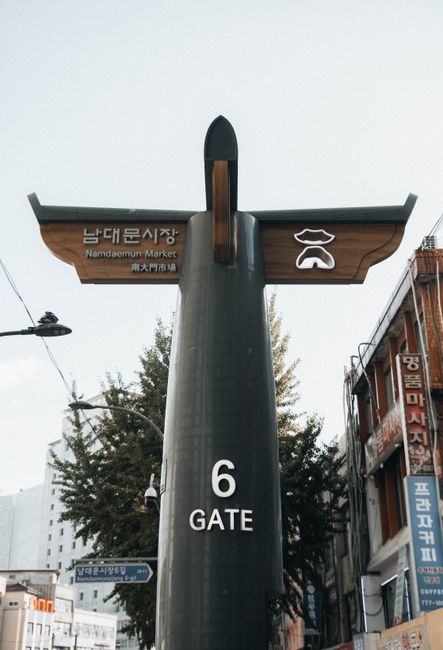
I went to Namdaemun the way most first-time visitors do — during the day, weaving through wholesale stalls stacked with kitchenware and dried anchovies, figuring that was the market. Bulk buyers, grandmothers restocking side-dish ingredients, that whole daytime economy. It took a Seoul-based friend mentioning, almost as an aside, that the place has a second life starting around dusk before I understood I’d only seen half of it.
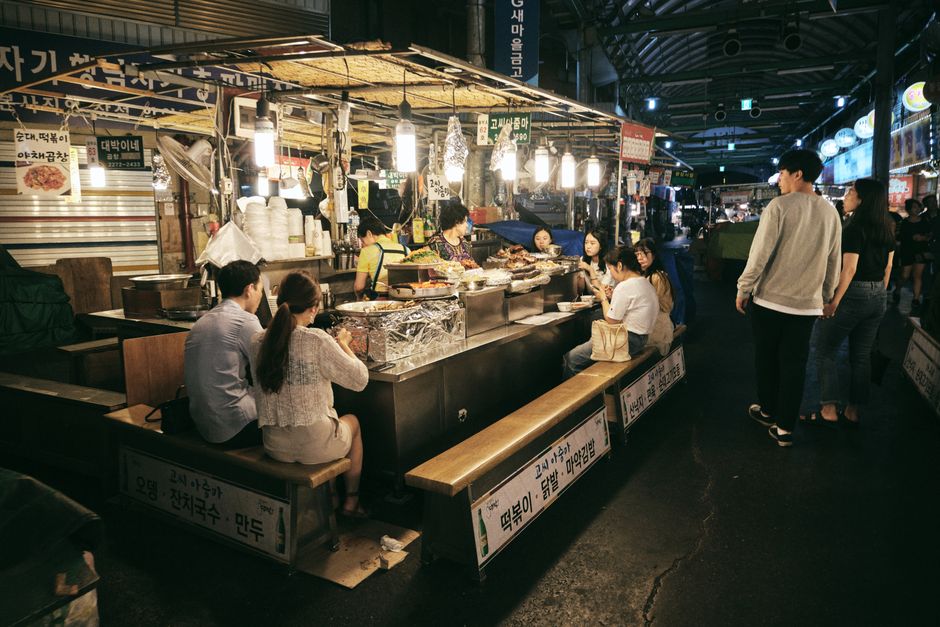
You’d think a wholesale market built around bulk textiles and imported goods would go quiet once the metal shutters start rattling down, and for an hour or so around 7 or 8pm, it genuinely does look that way — storefronts dark, delivery carts stacked and abandoned for the night. But somewhere in that window, usually once the sky has gone from orange to that flat Seoul grey-blue, a different crowd starts filtering in through the same gates the wholesale buyers used that morning. The food alleys light up first, one griddle at a time, until entire lanes that were dead ten minutes earlier are suddenly thick with steam and noise.
The Shift From Daytime Wholesale to Nighttime Food Alley
What’s strange about Namdaemun, compared to somewhere like Gwangjang Market, is that it doesn’t have one clean identity. By day it functions like a working commercial district — dishware wholesalers, fabric shops, camera gear, ginseng, kids’ clothing sold by the dozen, all part of what’s usually described as Korea’s oldest and largest traditional market, dating back to the 1400s. Come back after dark, though, and the emphasis quietly shifts toward the alleys built around cooked food rather than goods you’d carry home in bulk. It’s less that the market physically transforms and more that an entirely different cast of stalls takes the stage once the first one clears off.
Namdaemun is divided into these named alleys, which sounds almost too tidy to be real until you’re standing in one, disoriented, following a smell rather than a map. There’s Galchi Jorim Alley, tucked into the northern section not far southeast of Gate 2, where a run of small restaurants all serve some version of the same dish — braised hairtail, or beltfish, simmered down in a red pepper broth until it’s fall-apart tender. There’s also Kalguksu Alley, sometimes just called the noodle alley, where hand-cut wheat noodles get ladled into broth alongside dumplings behind entrances so narrow and plastic-sheeted you’d walk right past without knowing to look. Kalguksu Alley actually runs more on a daytime schedule — open roughly 5am to 9pm, busiest at lunch — so it functions less as a nighttime destination and more as a landmark for getting your bearings before the after-dark food-stall crowd fully takes over.
What the Air Smells Like Before You See Anything
Smell gets you before sight does, especially near the entrance around Hoehyeon Station. There’s a layered mix of hot oil, scorched brown sugar, and the faint brine of seafood that seems to hang in the alley air rather than drift off, less like one clean scent and more like walking through several kitchens running at once — which, functionally, you are.
Hotteok is usually the first thing people notice, partly because vendors tend to work right at the edge of foot traffic, flattening the dough with a metal press that hisses against the hot griddle. A stall owner might call out something like “hotteok deuseyo” — come get your hotteok — as much to the alley in general as to any one customer. The filling, a mix of brown sugar, cinnamon, and crushed peanuts, turns molten the instant the pancake gets pressed flat, so the first bite is genuinely dangerous if you’re impatient; I’ve burned my tongue on hotteok more times than I’d like to admit and I still don’t slow down. A single hotteok tends to run around 1,500 won, sometimes a little more when a savory, vegetable-stuffed version is on offer alongside the sweet kind, which some stalls do. That price is low enough that trying two or three different vendors back to back, just to compare, barely registers as a decision.
The sound is its own layer on top of all this, and it’s worth pausing on, because it’s not just background noise — it’s what tells you where to walk next. Metal tongs click against woks. Galchi jorim pots roll at a low, steady boil, lids rattling slightly with the steam pressure underneath. Plastic stools scrape against gritty concrete every time someone squeezes onto a bench that already looked full, and somewhere close by a vendor is quoting a price in quick, clipped Korean to someone who clearly wasn’t expecting an answer that fast. None of it is loud in an aggressive way. It’s closer to ambient noise that happens to be edible, and it’s usually what pulls you deeper into the alley rather than any sign.
From Grazing to Sitting Down: Galchi Jorim
Eventually the standing-and-snacking phase gives way to wanting an actual seat, and that’s where Galchi Jorim Alley earns its reputation. If there’s one dish that feels distinctly tied to this particular market, this is it. The alley itself is a short row of small, plainly decorated restaurants that all essentially serve the same core dish with slight variations — some lean spicier, some pile on more radish, a few add a steamed egg custard on the side almost as a palate reset between bites. The fish is silvery, blade-thin hairtail, braised until the flesh practically falls off the bone in the gravy. It arrives with rice, a handful of banchan, and usually more red broth than seems reasonable, which is honestly the best part, since spooning that broth over rice at the end of the meal often beats the fish itself.
Pricing varies more than you’d expect between stalls that look nearly identical from the outside — I’ve seen it listed as low as 7,000 won per person at some no-frills spots, and closer to 14,000 won at places that include grilled fish and a steamed egg alongside the rice and side dishes. Nobody seems bothered comparing prices out loud, either; groups will stand at the mouth of the alley debating which storefront to duck into, sometimes deciding based on nothing more than which one currently has an open seat.
Who’s Actually There
The crowd at night is a real mix, and that mix is a big part of what makes the whole scene work. Tourists are there, some clutching phones with translated menu photos pulled up, trying to figure out if what they’re pointing at is spicy. But there are also off-duty market workers grabbing a quick, cheap dinner before heading home, taxi drivers on a break parked just outside the alley mouth, and coworkers who’ve clearly wandered over from a nearby office for something that isn’t a sit-down restaurant meal. During business hours everyone at Namdaemun has a defined role — buyer or seller — but at night that line dissolves into just people eating standing up, shoulder to shoulder, under strings of bare bulbs.
Above all of it, a lot of the daytime signage stays lit even though the shops themselves are shuttered — a faded lightbox for a wholesale button supplier, say, casting a cool blue-white glow directly over a steaming pot of red galchi jorim broth two doors down. It’s not designed, exactly, but it ends up looking almost intentional, like someone went for maximalist contrast on purpose: commerce advertising itself in a language that has nothing to do with what’s actually being sold underneath it.
Traditional Markets Competing With Convenience Stores and Delivery Apps
It’s worth being honest about the pressure a place like this is under. Convenience stores in Korea are absurdly good — heated food counters, decent instant noodles, coffee machines, all open 24 hours — and delivery apps mean almost anything can show up at your door in under half an hour. Against that backdrop, a market that requires you to physically walk somewhere, squeeze onto a plastic stool, and eat in the open air has to be offering something those alternatives genuinely can’t replicate, or it won’t survive the comparison for long.
And yet, that same mix of people I just described — office workers, taxi drivers, locals doing an evening errand — might be exactly what’s keeping it afloat. Namdaemun’s night alleys don’t feel like they’re clinging on out of nostalgia. If anything, the food-stall side of the market has leaned harder into what convenience stores structurally can’t offer: cooked-to-order food with a bit of theater to it, eaten in a setting with actual atmosphere instead of fluorescent lighting and a microwave. Younger visitors especially seem to treat it as something worth documenting rather than a chore — you’ll spot people filming a hotteok press mid-flip for a few seconds of video before finally eating the thing. Whether that’s enough to sustain a centuries-old market indefinitely is a bigger structural question than one visit can answer, and I don’t want to pretend otherwise. But on the nights I’ve walked through, it didn’t feel like a market winding down. It felt busy, a little chaotic, and unmistakably in use.
Practical Notes for Going Yourself
Getting there is straightforward: Hoehyeon Station on Line 4, Exit 5, puts you close to several food alleys, including the entrance near the well-known vegetable hotteok stall by the IBK bank building. You can also walk down from Sungnyemun Gate along Namdaemun-ro and cut into the market from there. As for timing, the night-market energy tends to build from around 9 or 10pm onward, once the wholesale sections have mostly closed for the evening — and worth flagging, the market is generally closed on Sundays, so a Sunday-night visit will mostly disappoint you. Cash matters here more than you might expect walking around a country this digitally cashless; plenty of the smaller stalls either prefer it or don’t take cards at all, and while a few will scan a KakaoPay QR code taped to the counter, it’s safer to assume you’ll need actual won on hand rather than find out mid-order that you don’t.
Budget-wise, this is not an expensive night out by any measure. A hotteok or two, a bowl of something warm, maybe a skewer from a stall on the way back to the station — you can eat well for somewhere in the 10,000 to 20,000 won range per person, less if you’re mostly grazing. It’s the kind of place where a loose plan is really all you need: follow whichever smell seems most convincing, and you’ll end up full without having made a single reservation.
Frequently Asked Questions
Is Namdaemun Market open at night? The wholesale shops run daytime hours and mostly close by early evening, but the food alleys pick up from around 9 or 10pm and stay lively later into the night — except Sundays, when the market is generally closed.
What’s the one dish worth planning a visit around? Galchi jorim, if you only try one thing — the braised hairtail alley is specific to Namdaemun in a way hotteok and kalguksu, both found elsewhere in Seoul, aren’t.
Do I need cash? Yes, mostly. Some stalls accept KakaoPay, but plenty are cash-only, so carry small won bills rather than counting on cards.
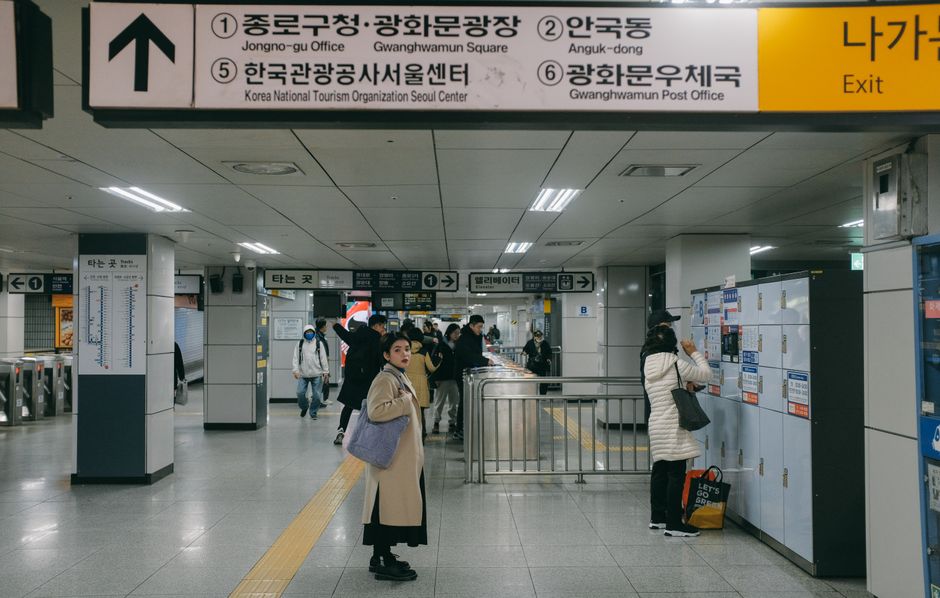
There is a specific sound that means you belong in Seoul, even a little bit. It is not the subway chime or the automated “doors closing” announcement. It is the flat little beep-boop a card reader makes when you tap through a turnstile without breaking stride, without digging through your bag, without a second of hesitation. I have watched a visitor at Euljiro-3(sam)-ga fumble with a paper ticket machine, missing his train while a wall of commuters flowed past him tapping plastic cards against yellow sensors like it was nothing. That gap, between the fumbler and the flow, is basically the entire story of T-money.
T-money is Korea’s rechargeable transit card, and it was built to remove exactly that kind of friction — the fumbling, the wasted train, the standing there while a line grows behind you. It mostly succeeds. But “mostly” is doing some work in that sentence, and foreigners tend to hit the exact spots where the friction didn’t quite get removed. So let’s actually walk through how the thing works, not just the tourist-brochure version.
Getting Your Hands on One
You can buy a basic T-money card at almost any convenience store — GS25, CU, 7-Eleven, Ministop, Emart24 — for somewhere between 2,500 and 4,000 won depending on the design and the store. You just ask the clerk for a “T-money card,” hand over cash, and they pull one out from behind the counter like it’s a pack of gum. No registration, no ID, no app. It’s about as close to a frictionless purchase as retail gets.
You can also get one from the machines at subway stations, the touchscreen kiosks near the ticket gates that also sell single-ride tickets. These machines are a little more involved to navigate on your first try — there’s usually an English-language button tucked in a corner of the screen, and once you find it, buying a card and loading it in the same transaction is pretty painless. What nobody tells you upfront is that the machine only takes cash for the card itself in most stations, though newer kiosks in busier stations have started accepting foreign credit cards directly, which is a real quality-of-life upgrade for anyone who lands in Korea without won in hand.
Topping Up: The Part That Trips People Up
Loading money onto the card — “charging” it, in the local phrasing — works in units of 1,000 won, with a minimum charge of 1,000 won and a cap of 90,000 won per single transaction. The overall balance on the card can’t exceed 500,000 won, which sounds like an oddly specific ceiling until you remember these are meant to be transit cards, not bank accounts. Charging happens at the same convenience stores and subway kiosks where you bought the card, and at most of them, it’s cash-only. Sounds simple enough, but this is where a surprising number of visitors get stuck: your foreign credit card, the one that’s worked everywhere else in Korea, often will not reload a T-money card. You need actual Korean won bills fed into the machine or handed to a cashier. Some of the newest subway kiosks have started accepting card payment for top-ups, but treat that as a pleasant surprise rather than something to plan around, because coverage is inconsistent from station to station.
Even now, after years of this being second nature, I still keep a mental note of my balance before heading somewhere unfamiliar late at night, because there is nothing quite like tapping a card at a reader and hearing the low, sad double-beep of insufficient funds while a line forms behind you.
The Transfer Discount, Explained Properly
This is the feature that actually makes T-money worth using over single-ride paper tickets, and it’s the part most explainers gloss over. When you tap a T-money card, the system doesn’t just charge you for one trip — it tracks your journey across transfers. If you get off a bus and tap onto the subway, or switch from one bus line to another, within about 30 minutes of your last tap, the transfer is either free or discounted, depending on the fare difference between the two legs. Think of it less like buying a new ticket and more like a hidden stopwatch that starts the second you tap out — as long as you tap back in before it runs down, the system still treats you as mid-journey rather than starting over. That window stretches to a full hour for transfers made between 9 p.m. and 7 a.m., presumably because bus schedules thin out at night and nobody should be punished for a longer wait. You get up to four transfers counted this way per day, which covers basically any commute short of a genuine odyssey across the city.
Paper single-ride tickets don’t get any of this. Each one is a standalone fare, full price, no memory of where you’ve been. So if your day involves a bus to the subway to another bus — which, in a city built the way Seoul is, happens more often than you’d expect — the savings from a T-money card add up fast, and not in some marginal, theoretical way. It’s the difference between paying for three separate rides and paying for basically one and a half.
Not Just Transit: The Quiet Second Life of T-money
Here’s the part that genuinely surprises first-time visitors: T-money works as a small stored-value payment method well outside the transit system. Convenience stores across all the major chains accept it at the register for snacks, drinks, whatever you’re grabbing — you just tap the same card you use on the bus. A lot of vending machines, especially inside subway stations and near universities, take it too. And most taxis in Seoul have a T-money reader mounted near the meter, so you can pay your fare the same way you paid to get on the subway an hour earlier.
What nobody tells you is how easy it is to forget the card even is a transit card once you get used to using it this way. I’ve watched people tap it to buy a canned coffee at a GS25 with the same unthinking motion they use at a turnstile, and it genuinely does start to feel less like “the subway card” and more like a general-purpose wallet with a train pass attached. It’s not a full-blown payment platform — you won’t be tapping it at a department store or a restaurant — but for small, everyday purchases, it covers more ground than the name suggests.
The Character Cards (Yes, People Collect These)
Beyond the plain, utilitarian blue-and-white default design, T-money has an entire side industry of character-branded cards. Kakao Friends characters — Ryan the lion, Apeach — show up on cards regularly. Line Friends has its own lineup. Sanrio has released T-money cards featuring Hello Kitty, My Melody, and Kuromi, sold at specific convenience store chains with slightly different character selections depending on where you go. Pororo, the little penguin who is basically a national mascot for Korean children’s media, has had his own T-money design for years. These character cards typically run a bit more than the plain version, sometimes four to five thousand won instead of two-thousand-something, and they occasionally sell out or become limited editions tied to a particular collaboration.
It’s a small thing, but it says something about how deeply T-money has been absorbed into daily life here — it’s not just infrastructure, it’s become a minor collectible, a thing you can express a preference about. I know people who own three or four different character cards and rotate which one they carry based on mood.
Mobile T-money, Apple Pay, and Where Zeropay Fits In
A plastic card with a penguin on it is fun, but it’s still a physical object you can leave in a jacket pocket, and the ecosystem has quietly been moving past that. The physical card isn’t the only way to tap through a gate anymore, and this is where things get a little tangled if you’re trying to sort out what’s what. Mobile T-money lets you load a virtual version of the card onto your phone, and on Android it typically runs through Samsung Pay — though signing up usually wants a Korean phone number, and in a lot of cases a Korean-issued card or bank account, which shuts most short-term visitors out of that particular route. iPhone users got a real upgrade more recently: holders of an eligible Mastercard can register it directly in Apple Pay’s Wallet app and tap straight through Seoul’s subway gates, no physical card needed at all — though it’s worth checking with your specific card issuer before you fly, since not every Mastercard-branded card is automatically compatible. There’s also a “Foreigner” option inside the official T-money iOS app that lets international visitors issue a virtual card and add it to Apple Wallet, which is about as close as the ecosystem currently gets to a true no-hassle option for someone visiting from abroad.
Zeropay, despite getting mentioned in the same breath sometimes, works on a completely separate rail. It’s a QR-code-based mobile payment system, originally pushed as a low-fee alternative to card payments for small merchants, and it isn’t a transit fare product at all — you won’t be tapping it at a subway gate. If you see both names floating around in the same conversation about “how to pay in Korea,” just keep them mentally filed apart: T-money and its mobile versions are about tapping physical or virtual cards for transit and small purchases, while Zeropay is a separate QR-based system tied to bank transfers, mostly for retail and restaurant payments. They solve adjacent but distinct problems, and conflating them is an easy mistake to make from the outside.
The Friction Foreigners Actually Hit
The basic version of T-money — buy, load, tap — is close to frictionless. But there are two spots where visitors reliably get stuck, and neither one is advertised clearly anywhere you’d naturally look.
The first is discounted fares. Students, teenagers, and children can get reduced transit fares in Korea, but only through a registered T-money card tied to their identity — a system that generally requires a Korean resident registration number or alien registration card to set up. A tourist’s basic card, bought off the convenience store shelf with cash, will always be charged at the standard adult rate. There’s no workaround for a short-term visitor here; it’s simply built around residents, and that’s worth knowing so you don’t spend twenty minutes at a kiosk trying to find a discount option that isn’t available to you.
The second is getting your money back before you fly home. The remaining balance on a T-money card is refundable, but the card’s original purchase price is not, and refund limits vary by where you go. Say you’ve got 25,000 won left on your card on your last night in Seoul. Walk into a GS25 and they may cap your refund below that amount, so you’d get turned away or only partially refunded depending on the chain’s threshold; walk the same balance into a subway station’s customer service counter instead, and 25,000 won is comfortably inside the roughly 50,000 won ceiling they can handle directly, cash in hand, minus a small processing fee of around 500 won. Anything larger than that needs a dedicated T-money Town location, of which there are only a handful, mostly in central Seoul. None of this is disastrous, but if you’ve been topping up in big chunks all trip and you’re standing at the airport with 80,000 won stranded on a plastic card, it’s a genuinely annoying discovery to make with twenty minutes before boarding — plan your last top-up with the departure gate already in mind.
A Few Quick Answers
Is Cashbee the same thing as T-money? Not quite, but close enough that it rarely matters day to day. Cashbee is a competing rechargeable transit card brand, sold and topped up in much the same way, and the two systems are largely interoperable — a Cashbee card taps on the same subway and bus readers as a T-money card. You don’t need to seek one out specifically, but don’t panic if a convenience store hands you Cashbee instead of T-money; functionally, you’ll barely notice the difference.
Can I use one T-money card across different cities in Korea? Yes, for the most part — T-money works on transit systems in Seoul, Busan, and most other major cities, along with most intercity and express buses that accept card payment. Coverage is broad enough that a single card genuinely can follow you around the country.
What happens if I lose my card? A basic, unregistered card bought with cash generally can’t be tracked back to you, so a lost card usually means a lost balance — there’s no simple way to freeze or recover it the way you might with a bank card. It’s a good reason to avoid loading enormous sums onto a card you’re carrying loosely in a coat pocket.
In the end, T-money is one of those systems that works so well it becomes invisible, which is probably the highest compliment you can pay a piece of city infrastructure. You stop noticing the beep after a while. You stop thinking about the balance, mostly, until you don’t. And somewhere in that transition — from carefully checking your card at every gate to tapping it on total autopilot — you’ve quietly become someone who belongs here, at least for the length of a subway ride.
There’s a specific kind of stillness you learn to recognize in Seoul cafes if you sit in them long enough. Two strangers walk in about ninety seconds apart, both slightly overdressed for a Tuesday afternoon, both pretending to check their phones instead of the door. Neither one orders first. I used to think it was just shyness. It took me embarrassingly long to realize I was watching a sogaeting (소개팅) unfold in real time — and once you learn to spot the telltale signs, the whole quiet ritual clicks into focus every time you walk past it.
Sogaeting is a compound of 소개 (sogae, “introduction”) and the English word “meeting,” and if you want the flattest possible translation, “blind date” will do. But flattening it that way loses almost everything that makes it interesting. A sogaeting isn’t two people matching on an app because an algorithm decided their photos and bios were compatible. It’s a human being — a friend, a coworker, an aunt, occasionally a professional matchmaker — putting their own judgment and, frankly, their own reputation on the line to say: I think these two might work. That vouching is the entire engine of the thing, and it’s why sogaeting still carries a kind of social weight that a swipe simply doesn’t.
The arranging itself happens on a few different tracks, and Koreans move between them pretty fluidly. The classic version is a friend-of-a-friend setup — someone from your social circle knows someone from their social circle, and the two connectors quietly float the idea to each side separately before anyone commits. Nobody wants to be the person who said yes to a setup the other party turned down, so there’s a whole layer of face-saving diplomacy that happens before either single person even knows a name. Family-arranged versions exist too, especially once you’re past your late twenties, when relatives start treating your love life as a shared community project whether you asked for input or not. And then there’s the more formal end of the spectrum: matchmaking agencies, sometimes called 결혼정보회사 (marriage information companies), that charge real money to screen members by income, education, and family background and produce a curated shortlist of candidates. It sounds almost transactional written out like that, and in a sense it is — memberships can run anywhere from a few hundred to well over a thousand dollars a year depending on the tier, and the intake questionnaires are notoriously thorough, asking for everything from parents’ occupations to apartment ownership status. But plenty of busy professionals in their thirties will tell you they’d rather pay that fee and skip the guesswork than keep getting set up by well-meaning aunts with questionable taste.
Before the date even happens, there’s a quiet exchange of basic facts — birth year, university or workplace, sometimes a photo, occasionally a KakaoTalk ID for a short round of small talk beforehand. Notice what’s on that list. Age and school and job aren’t rude icebreaker questions in this context, because they were already shared as vetting information before the two people ever sat down. Which is a very different starting point from a dating app, where you’re piecing together a stranger’s entire personality from six photos and a bio that says they “love traveling and dogs.” A dating app profile is a curated highlight reel you build for yourself; a sogaeting file is closer to a redacted resume somebody you trust already vetted on your behalf, which changes the whole emotional posture you walk in with.
The actual meeting has a format that’s almost suspiciously consistent, and this is the part that surprises a lot of visitors. It happens at a coffee shop. Not a bar, not dinner, not some elaborately planned activity date — a cafe, usually somewhere quiet enough to talk but public enough to feel safe. Given how central cafe culture is to daily life here, this makes sense; there’s a coffee shop on basically every block, and it’s the default low-stakes venue for anything from a business meeting to a study session to, apparently, assessing whether you want to date someone. The logic is refreshingly practical: if it’s going badly, you’re only committed to the time it takes to finish one drink. If it’s going well, you can suggest moving somewhere else — dinner, a walk, a second coffee at a nicer place — and that transition itself becomes a small, wordless signal that things are working. That move to a second stop, though, drags along its own small ritual — the question of who pays — which sounds like a minor logistical detail but is actually loaded with unspoken meaning. The traditional expectation leaned toward the man covering the first round — the coffee — with the understanding that if there’s a second stop that evening, like a meal afterward, the woman picks that one up. It was never really about the money; a cafe drink and a casual dinner aren’t wildly different in price. It was a soft, symbolic gesture — you paid for this part, I’ll take care of the next part, and if there is no next part, that’s the answer too. That said, I’d be lying if I said this convention hasn’t been wobbling for a while. Younger Koreans, especially in cities, increasingly default to 더치페이 (dutch pay) as the more comfortable option, less because of ideology and more because splitting things evenly just removes an awkward calculation from a situation that already has plenty of those.
Now, the conversation itself. If you’ve ever sat through a sogaeting, or watched one happen two tables over, you know the questions arrive in a fairly predictable order: what do you do for work, how old are you, where are you from, do you have siblings. To an outside ear this can sound almost like a job interview, and I understand why — Western dating culture tends to treat those questions as things you save for date three or four, once there’s some rapport built up. Here, they come first, on purpose, because the whole point of the format is efficient compatibility-checking rather than slow-burn mystery. You’re not supposed to fall into it; you’re supposed to evaluate it, at least a little, even while you’re hoping to feel something real. It’s a strange tension to sit inside — trying to be genuine and also quietly doing math — but most people I’ve talked to say you stop noticing the math part after the first few dates and it starts to feel more like normal conversation. That upfront, interview-flavored efficiency is exactly what separates sogaeting from the culture a lot of readers already know — “dating app culture” — and the contrast is worth sitting with for a second. Swiping is built around abundance — an endless, low-commitment stream of options where the cost of ghosting someone is basically zero because there are fifty more profiles behind them. Sogaeting is built around scarcity and accountability. There’s one date, arranged by someone you actually know, and how you behave reflects on the person who vouched for you. You can’t really ghost your way out of a sogaeting without it circling back to whoever set it up, which tends to keep people a little more polite, a little more punctual, and a little more willing to sit through an awkward hour rather than bail after ten minutes. It’s not that Koreans don’t use dating apps — plenty do, and their usage has climbed steadily — but sogaeting occupies a different emotional register: less casual browsing, more introduction with training wheels.
What happens after the date is its own small institution. The date ends, you say your goodbyes, and then comes the waiting period for the 애프터 (aepeuteo, “after”) — the follow-up message, usually sent through the same friend or matchmaker who arranged things, signaling whether you’d like to meet again. In practice it’s almost anticlimactic in its plainness: the go-between fires off something like “so, how’d it go, does he want to see you again?” to one side and a version of the same line to the other, then relays the verdict back in a single Kakao message — “she said yes, she thought you were easy to talk to.” This is a genuinely elegant piece of social engineering, if you think about it. Instead of the very online Western anxiety spiral of “did they text back, are they just busy, should I text again,” the go-between checks with both sides and reports back a simple yes or no. It absorbs the rejection so neither person has to deliver it, or receive it, directly. You’d think that would remove all the tension, and it mostly does — except now the tension just relocates to checking your phone for a message from your friend instead of the date itself, which honestly might be worse.
Even the etiquette around the aepeuteo has its own quiet rules. A same-day yes reads as enthusiastic, which some people intentionally avoid to not seem overeager. A no that arrives too slowly can feel crueler than a fast one, because it stretches out the hoping. And there’s a specific kind of social embarrassment reserved for saying yes to a second date and then acting distant once you’re actually on it — because unlike an app match, the person who introduced you will hear about that too.
So is sogaeting dying out, the way some headlines like to frame it? I’d push back on that a bit. What’s actually happening looks more like a slow remix than a disappearance. Younger Koreans, particularly in their twenties, lean more toward apps and organic meetups through hobby groups or shared interests — the kind of “we met naturally” story that feels more romantic to tell later. But sogaeting hasn’t gone anywhere; if anything it’s diversified. The friend-arranged version still happens constantly, the family-pressured version still shows up around the holidays when relatives gather and someone’s unmarried status becomes a topic, and the paid-agency version has actually grown as more professionals decide they’d rather outsource the search than keep fielding awkward setups from coworkers. What has shifted is the emotional stance people bring to it. There’s less of the old assumption that a sogaeting is basically a fast-track toward marriage, and more room to treat it as just one date among several ways of meeting someone — not a verdict on your entire dating life if it doesn’t go anywhere. Ultimately, sogaeting reveals a lot about what Korean dating culture values in general, watching it from the outside-turned-mostly-inside the way I have: vouching over algorithms, structure over improvisation, and a strange comfort in letting a third party absorb the risky parts — the rejection, the awkward silence, the “so, do you like them?” conversation — so the two people at the center of it can just focus on finding out if they actually get along. It’s not more romantic than a dating app match, and it’s not less romantic either. It’s just a different machine built to solve the same very old, very human problem: two strangers, one table, trying to figure out if there’s something there.
A few quick answers to the questions people usually ask me about this next.
Is sogaeting only for people looking to get married? Not anymore, though it used to lean that way, especially the agency-run versions. Plenty of people, especially in their twenties, treat a sogaeting the same way they’d treat any other first date — a chance to see if there’s a connection, with no assumption that it has to lead anywhere specific.
Do foreigners in Korea ever get set up on a sogaeting? It happens, particularly if you have a solid friend group here or work somewhere with a lot of cross-cultural mixing, but it’s less common simply because the whole system runs on a mutual social network vouching for both sides, and that takes time to build.
What if you don’t want a second date after the aepeuteo check-in? You just say so, honestly, through whoever set it up. It might feel awkward for a moment, but the entire point of routing it through a third party is to make that “no” softer to give and softer to receive than it would be face-to-face.
지난주 화요일 저녁, 서울 노원구에 사는 40대 직장인 김모 씨는 아침 최저기온이 9도까지 떨어졌다는 뉴스를 보고 반년 만에 보일러 전원을 켰다. 그런데 리모컨에 “온도 상승 중”이라는 표시만 뜨고 방바닥은 30분이 지나도 미지근하지도 않았다. 결국 기사를 불렀고, 출장비 3만 원에 “에어만 빼면 됐을 일”이라는 말을 들었다고 한다. 이런 일, 사실 이 계절에 흔하다.
여름 내내 꺼둔 보일러는 겨울잠에서 막 깬 동물과 비슷하다고 보면 된다. 배관 안에는 공기가 차 있고, 순환펌프는 먼지를 뒤집어쓴 채 몇 달을 멈춰 있었고, 필터에는 여름철 습기가 만든 물때가 살짝 앉아 있을 수도 있다. 이 상태 그대로 그냥 스위치만 켠다고 바로 정상 작동하는 게 아니라는 이야기다. 귀찮다고 넘어가면 꼭 날씨가 제일 추운 날, 하필 주말 저녁에 고장이 터진다. 겨울철 보일러 기사 출장은 성수기라 예약도 밀리고 대기 시간도 길어지니, 가을 초입 아직 여유 있을 때 딱 세 가지만 미리 확인해두자.
왜 하필 지금, 가을에 미리 봐둬야 할까
“어차피 겨울 되면 계속 틀 텐데 지금부터 신경 써야 하나” 싶을 수 있다. 그런데 보일러는 자주 켜고 끄는 환절기, 그러니까 밤에는 쌀쌀하고 낮에는 아직 따뜻한 9월 말에서 10월 사이에 오히려 잔고장이 몰린다. 한겨울처럼 계속 돌아가는 게 아니라 껐다 켰다를 반복하다 보니 배관 안 공기와 압력 변화가 잦아지기 때문이다. 실제로 한 보일러 제조사의 서비스센터 통계를 보면 출장 접수 건수가 12월 한파보다 오히려 10월 하순에서 11월 초순 사이에 더 몰린다고 한다. 다들 “아직 본격적인 겨울도 아닌데” 하며 방심하다가 당하는 셈이다.
점검이라고 해서 거창한 걸 상상할 필요는 없다. 공구 세트를 사거나 기사를 부를 필요 없이, 리모컨과 손으로 배관을 만져보는 정도로 절반은 해결된다. 나머지는 습관 하나 들이는 문제다. 아래 세 가지만 순서대로 짚어보면 된다.
1. 에어부터 빼야 한다 — 안 그러면 아무리 틀어도 안 따뜻하다
보일러를 오래 꺼두면 배관 속 물이 조금씩 증발하면서 그 자리에 공기가 들어찬다. 이 공기가 순환을 막아서 온수는 잘 나오는데 난방수만 안 도는 상황이 생긴다. 리모컨에는 정상 작동 중이라고 뜨는데 막상 바닥은 차갑다면 열에 아홉은 이게 원인이다. 처음 겪으면 “고장인가” 싶어 덜컥 겁부터 나는데, 의외로 해결은 간단하다.
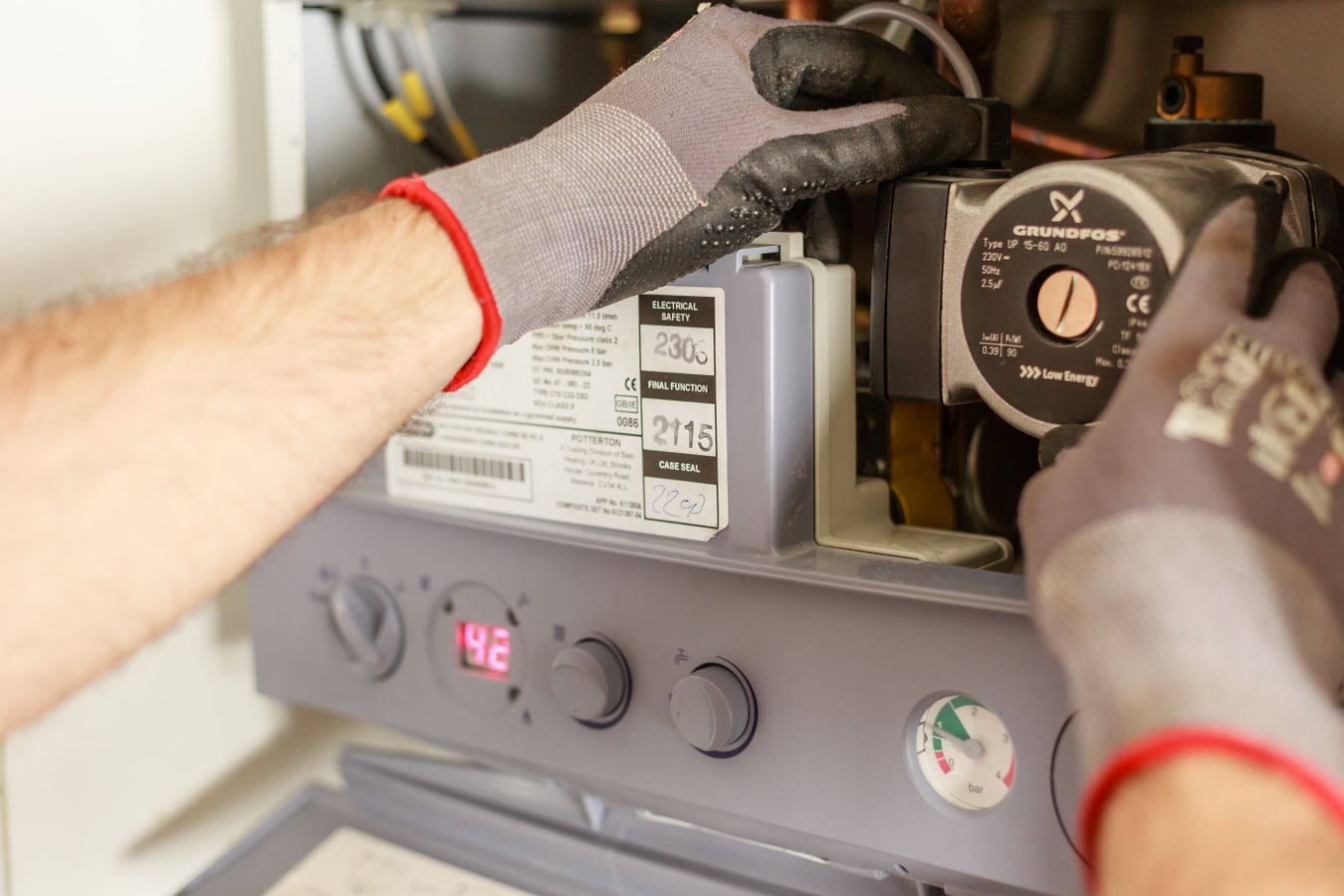
보일러 본체를 열어 보면 두꺼운 배관 여러 개가 모여드는 지점 옆에, 일자 드라이버나 몽키스패너로 돌릴 수 있는 작은 나사못 모양의 밸브가 하나 보인다. 이게 에어벤트, 흔히 공기빼기 밸브라 부르는 부품이다. 여기에 드라이버를 살짝 대고 반 바퀴 정도만 돌리면 “치익” 하는 바람 빠지는 소리가 나다가, 몇 초 뒤 물이 새어 나온다. 그 물이 뿜어져 나오기 시작하면 공기가 다 빠졌다는 신호니 바로 잠그면 된다. 처음 해보는 사람은 물이 튈까 봐 걸레나 대야부터 준비해두는 게 낫다. 실제로 해보면 채 1분도 안 걸리는데, 안 해본 상태에서는 괜히 겁먹게 되는 작업이다.
“에어를 뺐는데도 여전히 미지근하면 어쩌지” 하는 걱정도 있을 텐데, 그럴 땐 순환펌프 자체가 오래돼서 힘이 약해졌거나 배관 어딘가가 막혔을 가능성이 크다. 이 단계부터는 직접 손대기보다 기사를 부르는 편이 낫다. 다만 에어 빼기조차 안 해보고 바로 기사를 부르면 열에 아홉은 “에어 때문이었네요”라는 말과 함께 5분 만에 끝나는 출장이 되니, 순서상 이건 꼭 먼저 해보길 권한다. 자, 배관 안쪽 사정은 이 정도로 정리됐으니, 이제 집 밖으로 노출된 배관 쪽으로 시선을 돌려볼 차례다.
2. 배관 동파, 겨울 되고 나서 걱정하면 늦다
“동파는 1월 한파 때 걱정하면 되는 거 아니냐”고 생각하기 쉬운데, 정작 단열재를 사서 감고 틈새를 메우는 작업은 날이 따뜻할 때 해야 손이 덜 시리고 작업도 편하다. 막상 영하 10도 아래로 떨어진 날 베란다에 나가서 배관을 만지려면 손끝부터 아려서 대충 하고 들어오게 된다. 그러니 지금, 아직 낮 기온이 20도 안팎인 이 시기에 끝내두는 게 결과적으로 훨씬 수월하다.
특히 베란다나 다용도실처럼 외부와 가까운 곳을 지나는 배관, 그리고 옥상이나 옥외에 노출된 배관은 보온재 감싸기가 필수다. 시중에 파는 배관 보온 테이프나 스티로폼 커버는 개당 몇천 원 수준이고, 배관 한 줄 감는 데 10분이면 충분하다. 반면 실제로 배관이 얼어서 터지면 이야기가 달라진다. 터진 부분만 잘라 다시 잇는 간단한 수리로 끝나면 그나마 다행이고, 벽 안에 매립된 배관까지 손상됐다면 바닥이나 벽을 뜯어야 해서 수리비가 20만 원에서 많게는 50만 원 이상까지 뛰기도 한다. 몇천 원과 10분을 아끼려다 이런 비용을 떠안는 셈이니, 계산해보면 답은 뻔하다. 그런데도 매년 이걸 안 하고 넘어가는 집이 의외로 많다. “작년에도 별일 없었으니까”라는 이유로.
그리고 요즘 보일러는 외출 모드로 두면 실내 온도를 8도 안팎으로 자동 유지해주는 기능이 대부분 들어 있다. 장기간 집을 비울 때 아예 전원을 끄기보다는 외출 모드로 켜두는 편이 동파 예방에도, 난방비 절약에도 낫다. 완전히 끄면 배관 속 물이 그대로 얼 수 있는데, 외출 모드는 온도가 일정 이하로 떨어질 때마다 짧게라도 순환을 돌려주기 때문이다. “어차피 안 쓰는데 꺼두는 게 절약 아니냐”고 묻는 분들이 많은데, 겨울철만큼은 얘기가 다르다.
3. 첫 점화 때 소리와 냄새, 그냥 넘기지 말 것
여름 내내 안 쓰던 걸 처음 켜면 타는 냄새가 살짝 나는 경우가 있다. 대부분은 연소실 안에 쌓여 있던 먼지가 첫 점화 때 함께 타면서 나는 냄새고, 1분 정도 지나면 사라진다. 이 정도는 자연스러운 현상이니 놀랄 필요 없다. 문제는 냄새가 계속되거나, 가스 특유의 냄새가 섞여 있다고 느껴질 때다. 이럴 땐 망설이지 말고 바로 전원을 끄고 환기부터 시킨 다음 서비스센터에 연락하는 게 맞다. “괜찮겠지” 하고 넘기는 순간이 제일 위험하다.
소리도 마찬가지다. 점화 순간 “펑” 하는 둔탁한 소리가 한 번 나는 정도는 크게 걱정할 일이 아니지만, 이후에도 계속 “웅~” 하는 진동음이나 “끼익” 거리는 마찰음이 반복된다면 순환펌프에 문제가 있거나 배관 안에 아직 공기가 남아있다는 신호일 수 있다. 실제로 겨울철 서비스센터 접수 사유 중 상당수가 이런 소음 문제인데, 막상 점검해보면 별것 아닌 경우도 많고 부품 교체가 필요한 경우도 섞여 있다. 그러니 처음 켤 때부터 5분 정도는 옆에서 소리를 들어보는 습관을 들이는 게 좋다. 이상하다 싶으면 바로 메모해뒀다가 점검 요청할 때 정확히 설명할 수 있으니까.
덧붙이자면, 실외기나 배기구 주변에 낙엽이나 이물질이 쌓여 있는지도 이참에 한번 봐두면 좋다. 가을이라 낙엽이 배기구를 막는 경우가 생각보다 흔한데, 배기가 원활하지 않으면 불완전 연소로 이어질 수 있어서 사소해 보여도 넘길 부분은 아니다.
가스비까지 생각한다면, 초기 설정 하나만 더
세 가지 점검을 마쳤다면 온도 설정도 한 번 손봐두는 게 좋다. 처음부터 26도, 27도로 확 올리기보다 18도에서 20도 사이로 맞춰두고 며칠 지켜보는 편이 가스비 면에서 유리하다. 보일러는 설정 온도와 실내 온도 차이가 클수록 더 세게, 더 오래 가동하는 구조라서 처음부터 무리하게 온도를 올리면 그만큼 가스 사용량도 확 뛴다. 매년 겨울 첫 관리비 고지서를 보고 놀라는 이유 중 하나가 바로 이거다.
외출할 때는 완전히 끄기보다 앞서 말한 외출 모드를 활용하고, 잘 때는 실내 온도를 2도 정도만 낮춰도 체감은 크게 다르지 않으면서 가스 사용량은 확실히 줄어든다. 별거 아닌 것 같아도 한 시즌 지나고 나면 관리비 차이가 꽤 크게 느껴진다.
자주 묻는 질문
Q. 에어를 뺐는데도 특정 방만 안 따뜻해요. 왜 그런가요?
전체 배관의 에어는 빠졌는데 유독 한 방만 차갑다면, 그 방으로 가는 분배기 밸브가 살짝 잠겨 있거나 그 구간에만 공기가 남아 있는 경우가 많다. 거실이나 주방 쪽 분배기함을 열어보면 방마다 연결된 밸브가 보이는데, 해당 방 밸브가 완전히 열려 있는지부터 확인해보자. 그래도 안 풀리면 그 방 배관에만 부분적으로 에어가 찬 것일 수 있어 기사 점검이 필요할 수 있다.
Q. 보일러를 새로 산 지 1년밖에 안 됐는데도 이런 점검이 필요한가요?
새 제품이라고 안심할 건 아니다. 여름 내내 안 쓰고 방치된 건 신제품이든 10년 된 제품이든 똑같은 조건이라서, 에어가 차는 것도 배관에 이물질이 쌓이는 것도 제품 연식과는 크게 상관이 없다. 다만 새 제품이라면 소음이나 냄새 같은 이상 신호가 나타났을 때 원인이 노후화보다는 설치 불량이나 초기 불량일 가능성이 있으니, 이상하다 싶으면 무상 A/S 기간부터 확인해보는 게 순서다.
Q. 동파 방지 테이프를 감았는데도 배관이 얼 수 있나요?
가능하다. 보온재는 온도가 떨어지는 속도를 늦춰주는 역할이지 절대 얼지 않게 막아주는 마법은 아니다. 영하 15도 아래로 오래 지속되는 강추위에는 보온재를 감았어도 물의 흐름 자체가 없으면 얼 수 있다. 그래서 아무리 감쌌더라도 외출 모드나 미세한 물 흘려보내기 같은 기본적인 예방 조치는 별개로 함께 해두는 게 안전하다.
보일러는 켜고 나서 문제가 생기면 그제야 부랴부랴 기사를 부르게 되는 물건이다. 그런데 딱 세 가지, 에어 빼기와 배관 단열, 첫 점화 때 소리·냄새 확인만 미리 해두면 겨울 내내 속 편하게 지낼 수 있다. 10분이면 끝나는 일을 미루다가 제일 추운 날 고생하는 것보다는, 지금 이 여유로운 가을에 끝내두는 편이 여러모로 낫다. 창문 틈에서 슬슬 찬 바람이 새어 들어오고 벽지 모서리에 물기가 맺히기 시작했다면, 보일러뿐 아니라 집 전체의 가을 채비를 같이 점검해볼 때다. 가을철 결로·곰팡이 막는 법도 같이 봐두면 이번 시즌 집 관리가 한결 수월해진다.
There’s a specific two-second window at every Seoul crosswalk where you can watch a small war get fought without a single word spoken. The countdown hits zero, the walk signal flips red, and at least three people are already three steps into the intersection, weaving around the cars that haven’t quite stopped yet. I used to think this was recklessness. After four years here, I’ve come around to a different theory: it’s not that people don’t see the red light. It’s that waiting for it feels, on some cellular level, like a personal failure. That’s pali pali (빨리빨리) — “hurry, hurry” — and once you start noticing it, you cannot stop.
It’s Not a Phrase, It’s a Setting
Foreigners usually meet pali pali culture through elevators. You’ve probably heard this one already — I’m not going to relitigate the whole elevator-etiquette situation here, since a post on this very blog already covered those unwritten rules in detail. But it’s worth naming as the entry point, because the doors-closing-before-you’re-fully-in thing isn’t really about elevators. It’s a single visible symptom of something much bigger: a near-universal cultural allergy to unclaimed seconds.
You see it in how people order. At a kiosk in a Lotteria or a Gimbap Cheonguk, there’s an unspoken tempo — tap, tap, tap, pay, done — and if you pause too long deciding between the bulgogi burger and the shrimp burger, you can feel the line behind you developing opinions about your character. You’d think a kiosk removes the human pressure entirely, since there’s no cashier tapping their foot. Oddly enough, it doesn’t. The pressure just migrates into the screen’s own pacing — the menu defaults auto-scroll, the “결제” (pay) button pulses, and somehow that’s more stressful than a person would have been.
Where You Actually Feel It Day to Day
Walking speed is the one that took me longest to adjust to, honestly. I’m not a slow walker by American standards, but on Gangnam-daero during a weekday lunch rush, I have been passed — briskly, without malice, like I was a parked car — by a woman in heels carrying an iced americano and scrolling her phone with the other hand. You’d expect someone doing two things at once to slow down. She sped up. I’ve clocked myself doing the same thing now on Seoul’s escalators, standing on the right, half-jogging up the left side even when I have nowhere urgent to be, because standing still on an escalator here starts to feel almost transgressive.
It’s worth saying, though, that this isn’t uniform across the whole country, and I don’t want to make it sound like all fifty-one million people are sprinting in formation. I’ve spent long weekends in Gyeongju and in smaller towns along the southern coast, and the pace there genuinely drops — cafes where nobody hovers, market vendors who chat instead of rushing the transaction. Seoul and Busan, as the two biggest, most commercially saturated cities, run hottest on this particular setting; step outside that orbit and the temperature comes down fast.
Then there’s the internet. South Korea has ranked among the top handful of countries globally for average fixed broadband speed for years running — Ookla’s Speedtest data has repeatedly put it near the top of the world rankings, often north of 180 Mbps average download. And still, I have watched a Korean coworker groan audibly at a YouTube video that took four seconds to buffer. Four seconds. In the U.S. I’d have called that instant. Here, it registers as a small personal insult from the universe. That gap between “objectively fast” and “still not fast enough” is basically the whole culture in miniature.
Delivery drives the same feeling home in a way that still catches me off guard. It’s not just that Baemin or Coupang’s dawn delivery (새벽배송) system gets a box of diapers to your door before 7 a.m. if you order the night before — this blog has already walked through how that twenty-minute machine actually works, so I won’t retread it here. What’s worth adding is the emotional layer underneath the mechanics: when an order takes forty minutes instead of twenty, my Korean friends apologize to me, the customer, as if the delay were their personal failing. Nobody trained them to do that. The culture did.
Even instant noodles feel like an argument for speed as a value in themselves. Ramyeon markets itself on the three-to-four-minute cook time practically as a headline feature, and convenience stores sell the little plastic-lidded cups specifically so you can eat standing at the in-store counter in under five minutes flat, chopsticks in one hand, phone in the other. I’ve done this more times than I’d like to admit, standing at a GS25 at 11 p.m. eating Jin Ramyeon out of the cup because sitting down to cook felt, in the moment, like an unreasonable ask of my evening.
Where the Hurry Actually Came From
Here’s where I have to be careful, because the real story is messier than a single clean origin point. The most common explanation you’ll hear is tied to what’s often called the Miracle on the Han River — the roughly three-decade stretch from the early 1960s through the late 1980s when South Korea’s economy transformed from one of the poorest in the world into an industrial and export powerhouse, GDP per capita climbing from under $100 to well over $6,000 by the end of the 1980s. Speed, in that era, wasn’t a personality quirk. It was survival math — build the roads, the ports, the factories, the apartment blocks, and build them fast, because the alternative was staying poor.
That’s the story, and there’s real truth in it. But I’d push back a little on treating pali pali as purely a postwar invention, since Korean historians will note that urgency shows up in the language and in agricultural rhythms going back much further — rice farming on a tight seasonal clock doesn’t exactly reward dawdling either. What I think is fair to say, without overclaiming a straight line from 1962 to a kiosk screen in 2026, is that decades of compressed, high-speed development took whatever cultural tendency toward urgency already existed and turned it into an operating default that outlived the construction boom that produced it.
When Speed Actually Works
I want to be fair to this, because it’s easy for an outsider to write pali pali off as pure stress and miss what it actually buys you. You’d think a culture built around speed would feel chaotic to live inside, but in practice a huge amount of daily friction just evaporates. I still remember my first visit to an immigration office branch to sort out a phone plan tied to my alien registration card — I’d braced for a lost afternoon, the way I would have back home, and instead heard my number called over the intercom before I’d even finished reading the notice board. Twenty-five minutes, ticket to done. Same-day alterations at the dry cleaner. Same-day glasses at some optical shops if you walk in before lunch.
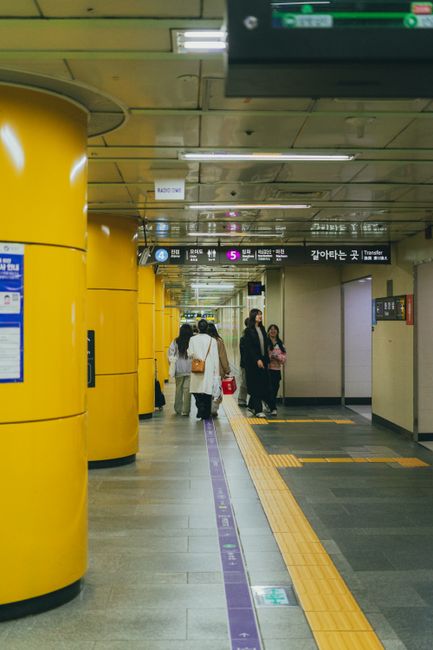
The subway takes this further than almost anything else I’ve experienced. At a transfer hub like Express Bus Terminal Station, where three lines cross, the floor is painted with colored footprints and arrows funneling you toward the exact car door that will line up with your next platform, and overhead signs count down the literal seconds until the next train. Stand on that platform for five minutes and you’ll watch hundreds of strangers self-sort into loose queues without a single announcement telling them to, everyone already knowing which few meters of platform gets them the shortest walk to their transfer. None of that is an accident, and none of it is free. It’s the direct output of a culture that treats waiting as a design flaw to be engineered out wherever possible.
Once you’ve lived somewhere that runs on this setting, going back to a system that shrugs at delay — a six-week wait for a routine appointment, a delivery window described only as “sometime this week” — starts to feel almost insulting in the opposite direction. So yes, the convenience is real, and I don’t think it’s an exaggeration to say it changes what “normal” even means to your nervous system.
The Exhaustion and the Edges
Still, all that engineered speed has to come from somewhere, and increasingly I think it comes out of people rather than out of thin air. Burnout is the obvious cost — South Korea has consistently posted some of the longer average working hours among OECD countries, and a culture that treats speed as a virtue doesn’t build in a lot of room to say “this is taking me longer than expected” without it reading as a personal shortcoming. I’ve sat in meetings where a colleague visibly panicked over a two-day delay on a task that, by any reasonable standard, wasn’t actually urgent. The panic wasn’t about the task. It was about what the delay implied about them as an employee, and I’ve come to think that quiet, chronic low-grade panic is where a lot of the country’s exhaustion actually lives — not in any single crisis, but in the accumulated weight of never being allowed to just be on schedule.
That same pressure, taken to its worst extreme, has a documented safety cost. The collapse of the Sampoong Department Store in Seoul on June 29, 1995 — which killed 502 people — is still cited in Korean engineering and safety curricula as a textbook case of corners cut in the name of speed and cost, with structural changes rushed through during construction against engineers’ objections. I’m not saying that disaster was single-handedly caused by a cultural catchphrase; that would be a lazy and honestly kind of insulting oversimplification of a genuine tragedy with specific, documented causes. But Korean commentators themselves have long connected the broader pattern — rushed construction timelines, corners cut under schedule pressure — to the same pali pali impulse that gets you your noodles in three minutes. The same instinct that shaves seconds off a subway transfer can, in the wrong context and the wrong industry, shave safety margins off a building.
On a much smaller, more everyday scale, it also just makes people short-tempered in ways that took me a while to stop taking personally. Impatience at a slow-walking tourist group. A sharp exhale when a card reader takes an extra beat to process. None of it is really about you — it’s a reflex, not a judgment — but it took me longer than I’d like to admit to actually believe that.
Living Inside It as an Outsider
What’s changed for me, four years in, isn’t that I’ve become a naturally faster person. It’s that I’ve started to feel the itch myself — the low-grade impatience with a loading screen, the instinct to jaywalk on an empty street at 11 p.m. because standing there felt like wasting something. I don’t think that’s necessarily a good development, but I understand it better now than I did on my first week here, when I nearly got my arm taken off by a closing elevator door in a Mapo apartment building and thought, genuinely, that it was personal.
It isn’t personal. Somewhere in the scramble of the last sixty-odd years, this country learned to treat every idle second like inventory that couldn’t be allowed to just sit there unused — and it never quite got around to unlearning that habit, even now that the original emergency that built it has long since passed.
Frequently Asked Questions
Is pali pali culture considered rude by Koreans themselves, or is it just how foreigners experience it?
Plenty of Koreans will openly complain about it — you’ll hear “빨리빨리 때문에 피곤해” (I’m exhausted because of pali pali) as a genuine, common gripe, not just something visitors notice. It’s less that it reads as “rude” internally and more that it’s treated as an exhausting but normal weather pattern, the way someone might complain about humidity in July without expecting it to change.
Does pali pali culture ease up at all, or is it constant everywhere in Korea?
It’s not constant. As I mentioned above, Seoul and Busan run hottest simply because of density and commercial pressure, while smaller cities and rural areas run on something closer to normal human speed. It also eases inside certain spaces even in Seoul — a jjimjilbang, a temple stay, a quiet neighborhood cafe after 9 p.m. — where slowness is basically the whole point and nobody’s going to rush you out.
How should a visitor handle it without getting overwhelmed?
Practically: have your order or your subway card ready before you reach the front of the line, don’t linger at a kiosk screen if there’s a queue building, and don’t take a sharp exhale or a quick step around you personally — it’s almost never aimed at you specifically. If you need to slow down and think, step to the side first. That one habit alone will save you a surprising number of awkward moments.
번개장터에서 “미개봉 새제품, 정가보다 만원 싸게 드려요”라는 글을 보고 바로 입금했는데, 콘서트 당일 전원 버튼을 눌러도 불이 들어오지 않는다면 어떨까. 실제로 팬 커뮤니티에 심심찮게 올라오는 이야기다. 겉모습은 사진과 완벽하게 똑같은데 막상 켜보면 색이 탁하거나, 블루투스 연동 자체가 안 되는 경우. 응원봉 하나 사는 게 뭐 대수냐 싶겠지만, 막상 사보면 가격표부터 정품 확인까지 은근히 손이 많이 가는 물건이다.
그룹마다 가격이 이렇게 다른 이유
일단 가격표부터 보면 다들 놀란다. 응원봉이라고 다 비슷한 가격일 거라 생각하기 쉬운데, 실제로는 소속사와 제품 세대에 따라 격차가 꽤 크다. JYP 계열 그룹들이 쓰는 캔디봉 시리즈는 정가 3만 5천 원 선에서 형성돼 있고, 하이브 산하 아티스트들의 공식 응원봉은 대체로 4만 원대에서 5만 원대 중반 사이를 오간다. 예전에는 건전지 넣고 색 하나만 내는 단순한 구조라 3만 원 안팎이면 살 수 있었는데, 블루투스 모듈에 충전식 배터리까지 들어가면서 가격대 자체가 한 단계씩 올라간 셈이다. 팬들 사이에서 “요즘 응원봉 값이 왜 이렇게 올랐냐”는 볼멘소리가 나오는 것도 이런 배경 때문이다.
정가가 이렇다 보니 조금이라도 아끼려고 해외 직구를 기웃거리게 되는 것도 자연스러운 흐름이다. 그런데 표시 가격만 보고 결제 버튼을 누르면 낭패를 보기 쉽다. 국제 배송비, 관부가세, 결제 수수료가 차례로 붙으면서 최종 금액이 국내 정가와 비슷해지거나 오히려 더 비싸지는 경우가 흔하기 때문이다. 콘서트 시즌마다 현장 굿즈 판매 부스 앞에 긴 줄이 늘어서는 것도 결국 같은 이유다. 줄 서는 시간이 아깝더라도 정가에 안전하게, 확실하게 사려는 팬들이 그만큼 많다는 뜻이다.
정품과 ‘에어팟’을 가르는 디테일
이쯤에서 궁금해지는 게 있다. 사진만 보고 정품인지 아닌지 구별할 수 있을까. 답은 거의 불가능에 가깝다는 것이다. 팬들 사이에서 짝퉁을 부르는 은어인 ‘에어팟’은 겉면 프린팅이나 로고 위치까지 정교하게 베낀 경우가 많아서, 판매 게시글 사진 몇 장만으로는 진위를 가리기 어렵다. 대신 실물을 손에 쥐면 이야기가 달라진다. 정품은 버튼을 눌렀을 때 “딸깍” 하고 한 번에 눌리는 반면, 짝퉁은 버튼이 두 번 눌리듯 헐렁하거나 눌러도 반응이 반 박자 늦게 온다는 게 경험자들의 공통된 증언이다. 플라스틱 이음새 부분에 미세한 접착제 자국이 남아 있거나, 케이스 도색이 조명 아래서 살짝 다른 톤으로 비치는 것도 의심해볼 만한 신호다.
가장 확실한 방법은 역시 정품 인증이다. 공식 응원봉 상당수는 박스나 본체에 QR코드나 홀로그램 스티커가 붙어 있고, 이걸 스캔하면 소속사 서버로 연결돼 진위를 확인할 수 있게 되어 있다. 앱을 켰을 때 블루투스 연동 자체가 안 되거나 색상 종류가 정품보다 눈에 띄게 적다면 그것도 의심해볼 만한 신호다. 시세보다 눈에 띄게 싼 가격, 유독 흐릿하거나 각도가 제한적인 판매 사진은 일단 한 번 더 의심하고 넘어가는 편이 낫다.
중고 거래, 이 정도는 확인하고 가자
정품 구별법을 알아도 실전은 또 다른 문제다. 당근마켓이나 번개장터, SNS 팬 계정을 통한 직거래는 콘서트 시즌마다 유독 활발해진다. 이미 응원봉을 갖고 있는데 최애가 바뀌었다거나, 급하게 티켓을 구해서 응원봉만 필요한 경우처럼 사정은 다양하다. 그런데 콘서트 날짜가 임박할수록 이상하게 가격이 오히려 올라가는 웃지 못할 상황이 벌어지곤 한다. 수요는 몰리는데 물량은 한정돼 있으니, 당연하다면 당연한 흐름이다.
사기 패턴도 어느 정도 정형화되어 있다. 입금부터 요구하고 잠수를 타거나, 실물 사진 대신 공식 홈페이지 이미지를 그대로 가져다 쓰는 경우가 대표적이다. 그래서 실제 거래 전에 아래 몇 가지만 체크해도 사고 확률이 눈에 띄게 줄어든다.
가능하면 직접 만나서 전원을 켜보고 블루투스 페어링까지 확인한 뒤 거래한다
택배 거래라면 안전결제(에스크로)를 이용하고, 판매자 계정의 거래 후기와 활동 기간을 먼저 살펴본다
배터리 상태를 반드시 물어본다 — 오래 방치된 제품은 충전 자체가 안 되는 경우가 있다
실사용 영상이나 최근 촬영한 사진을 요청해 공식 이미지 도용 여부를 가려낸다
블루투스로 연동되는 스마트 응원봉, 뭐가 다를까
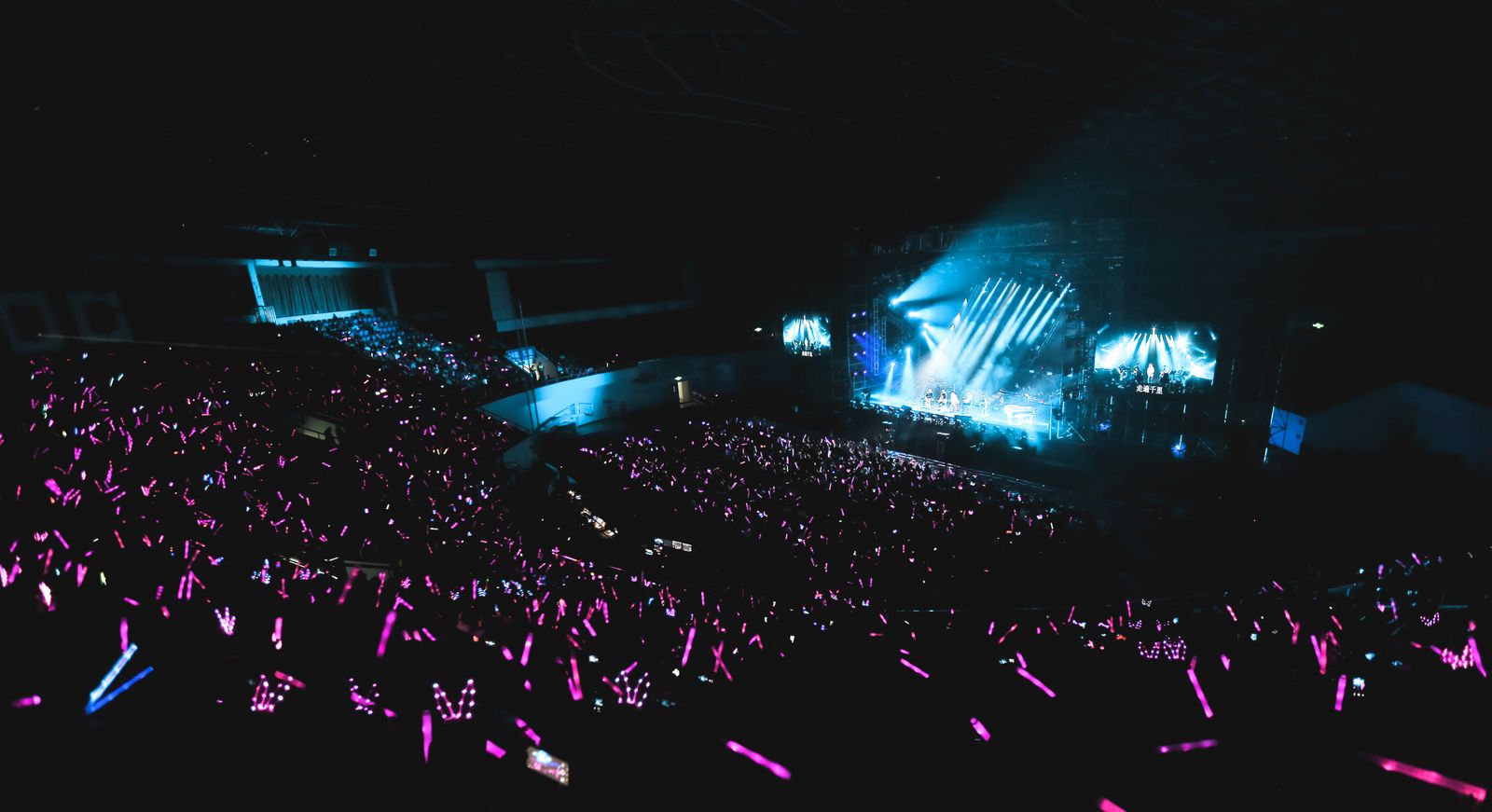
그냥 불 들어오는 막대기 아니냐고 물으면, 요즘 응원봉을 안 써본 사람일 확률이 높다. 스마트폰에 전용 앱을 깔고 블루투스로 페어링하면 응원봉 하나로 30가지 안팎의 색을 낼 수 있는 제품들이 이미 대세로 자리 잡았다. 기본 상태에서는 흰색 계열의 무난한 빛을 내다가, 앱을 켜면 그룹 컬러나 그날 무대 콘셉트에 맞춰 색을 바꿀 수 있는 식이다.
더 놀라운 기능은 따로 있다. 최신 세대 제품 중에는 공연장 현장에서 무대 감독 쪽 신호를 받아 객석 응원봉 색이 자동으로 동시에 바뀌는 기능이 들어간 것도 있다. 팬이 손으로 조작하지 않아도 노래가 바뀌는 타이밍에 맞춰 객석 전체가 파도처럼 색을 바꾸는 장면, 콘서트 영상에서 한 번쯤 봤을 그 광경이 이 기술 덕분이다. 다만 이 자동 연동 기능은 공연장의 별도 송신 장비와 응원봉이 통신해야 작동하는 것이라, 집에서 앱만 켠다고 재현되는 게 아니라는 점은 헷갈리기 쉬운 부분이다. 그리고 이 편리한 기능에는 함정이 하나 있다. 배터리가 생각보다 훨씬 빨리 닳는다는 점이다. 3~4시간짜리 콘서트를 뛰다 보면 앙코르 두 곡을 남겨두고 갑자기 불이 꺼지는 대참사가 벌어지기도 하는데, 그래서 경험 많은 팬들은 여분 건전지나 소형 보조 배터리를 가방 안쪽 주머니에 꼭 챙겨 넣는다.
콘서트장 반입, 생각보다 규정이 세세하다
응원봉이니까 당연히 다 들고 들어갈 수 있겠지 싶지만, 공연장마다 세부 규정이 조금씩 다르다는 걸 처음 가보는 사람들은 잘 모른다. 보조 배터리는 화재 위험 때문에 용량 제한을 두는 공연장이 있고, 일부 대형 스타디움 공연은 안전 검색 과정에서 배터리를 아예 별도로 분리해 확인하기도 한다. 응원봉 자체의 크기나 무게에 대한 공식 제한은 흔치 않지만, 삼각대나 확장형 손잡이처럼 개조된 형태는 시야를 가린다는 이유로 제지당하는 사례가 종종 보고된다.
다른 그룹 응원봉을 들고 가면 안 되냐고 묻는 사람도 있는데, 공식적으로 이를 금지하는 공연은 거의 없다. 다만 팬덤 문화상 그날의 주인공이 아닌 응원봉을 대놓고 흔드는 건 눈치가 보이는 게 사실이라, 굳이 들고 가더라도 조용히 가방에 넣어두는 경우가 많다. 콘서트 시작 전에 완충해서 가는 건 기본이고, 여분 건전지나 소형 보조 배터리를 챙기되 공연장 홈페이지 공지사항에서 반입 가능 여부를 한 번 확인하고 출발하는 습관을 들여두면 현장에서 당황할 일이 줄어든다. 팬덤 안에서 쓰이는 은어나 문화가 궁금하다면 K팝 팬덤 용어 총정리 글에서 조금 더 풀어둔 적이 있다.
FAQ
Q. 응원봉을 안 챙겨 가면 콘서트장 입구에서 살 수 있나요?
현장 판매 부스가 운영되는 공연이 많긴 하지만, 재고가 넉넉하다고 장담하기는 어렵다. 특히 첫날 공연이나 인기 많은 그룹의 스탠딩석 라인은 개장 전부터 줄이 길게 늘어서고, 인기 색상이나 특정 에디션은 공연 중반쯤 품절되는 일도 드물지 않다. 확실하게 쓰고 싶다면 사전 온라인 판매 기간에 미리 구매해두는 편이 마음 편하다.
Q. 스마트 응원봉인데 앱 연동이 안 될 땐 뭐부터 확인해야 하나요?
가장 흔한 원인은 블루투스가 꺼져 있거나 스마트폰 위치 권한이 막혀 있는 경우다. 응원봉 배터리가 부족하면 페어링 신호 자체가 약해지는 제품도 있으니 완충 상태에서 다시 시도해보는 게 우선이다. 그래도 안 된다면 앱을 최신 버전으로 업데이트하거나, 정품 인증부터 다시 확인해보는 걸 권한다. 짝퉁 제품은 애초에 정식 앱과 통신 규격 자체가 달라서 아무리 시도해도 연동되지 않는 경우가 많다.
Q. 중고로 산 응원봉, 정품인지 아닌지 애매할 땐 어떻게 하나요?
일단 시리얼 번호나 QR코드가 본체 또는 박스에 남아 있다면 소속사 공식 채널을 통해 진위 확인을 요청해볼 수 있다. 판매자에게 구매 당시 영수증이나 정품 스티커 사진을 요청하는 것도 방법이다. 확인이 끝내 어렵다면 다음 콘서트 전에 정품으로 새로 구매해두는 게 마음은 편하다. 현장에서 작동 불량으로 당황하는 것보다는 미리 확인하는 쪽이 훨씬 낫다.
The first winter I lived in Korea, I did something that still embarrasses me a little: I bought a space heater. A big plastic one, the kind you’d find in a garage back home, and I dragged it into my one-room in Sinchon convinced it was going to save me. My landlord, an older man named Mr. Oh who ran the building himself, saw it sitting by my door during a rent visit and just laughed. Not unkindly — more like he’d seen this exact mistake a hundred times. He crouched down, put his palm flat on my floor, and said, “Why you need this? Floor is already warm.” He was right, and I was an idiot, and that space heater sat unplugged in a corner for the rest of the year gathering dust.
That was my introduction to ondol (온돌), and once you understand what it actually is, half of what seems strange about Korean domestic life stops being strange at all. Ondol isn’t a heater you turn on in a room. It’s the floor itself, heated from below, radiating warmth upward into everything sitting on it — you, your blanket, your dinner table, your dog. It sounds like a small architectural detail. It is not. It’s arguably the single biggest reason Korean homes look, feel, and function the way they do, and almost nobody explains it to foreigners before they arrive.
Warm Stones, Literally
The word ondol means, roughly, “warm stone,” and archaeologists have traced early versions of underfloor heating in the region back to sites now in North Korea, with some estimates reaching into the Bronze Age — well over two thousand years before anyone was discussing thermostats. The traditional hanok version, though, the one most people picture, worked through a firebox called an agungi, usually built into the kitchen, where wood was burned for cooking. The same fire heating your rice also heated your house, which is the part that always struck me as elegant rather than accidental.
The actual mechanism is worth slowing down for, because it’s cleverer than “burn wood, floor gets warm” makes it sound. Smoke and hot air were pulled sideways from the agungi through a network of low stone channels called gudeul, laid out under the floor in a deliberate slope so the heat traveled the length of the room before escaping out a chimney on the far side, rather than just scorching the spot nearest the fire. On top of the gudeul sat a thick sealing layer of clay and mud, tamped down hard, with flat stone slabs set into it — and that sealing layer wasn’t just there to hold heat in. It kept the smoke itself, carbon monoxide and all, from seeping up into the room where people were sleeping. Getting that seal wrong wasn’t a comfort problem, it was a safety one, and hanok builders clearly understood that even without the chemistry to explain why. By the time you were ready to sleep, the floor had been slowly soaking up heat for hours and would keep radiating it long after the fire had died down.
From Wood Smoke to Gas Boilers
The core idea of ondol survived Korea’s rapid shift into apartment living after the Korean War, but the mechanism changed almost completely. In my actual building, the evidence of that shift lives in a narrow utility closet by my kitchen, barely wider than the door itself, where a small wall-mounted gas boiler hums quietly and occasionally clicks on with a soft whoosh you learn to tune out. Instead of smoke moving through stone channels, hot water now runs through a grid of pipes embedded in the concrete floor slab — coiled in loops under a layer called the wet screed, poured a few centimeters thick before the finished flooring goes on top — and that boiler in the closet is what keeps the loop circulating.
Here’s the part that actually surprised me: the same boiler usually does double duty. It’s not just running your floor heating — it’s also the thing making your shower hot. That’s why, in a lot of Korean apartments, if you crank the floor heating way up on a freezing January night, you might notice your hot water pressure or temperature shift slightly, because the unit is juggling both jobs at once out of that same closet. It’s not really a flaw, just a quirk worth knowing about before you’re standing in a suddenly lukewarm shower wondering what happened.
And it isn’t instant, which tripped me up for weeks after I first moved in. You don’t turn ondol on and feel warmth in five minutes the way you might with a space heater or a radiator. Concrete holds heat well, but it also takes its time absorbing it — turn the floor heating on from cold and you’re often waiting thirty minutes to an hour before the room feels noticeably different. The flip side is just as true: turn it off and the floor stays warm for a good while afterward, coasting on stored heat like a stone that’s been sitting in the sun. Koreans who grew up with this build it into their rhythm without thinking about it, flipping the panel on before they even leave for work so the place is warm by the time they’re home. Foreigners tend to learn the lag the hard way, sitting in a cold apartment wondering why nothing’s happening yet.
Why Everyone’s on the Floor
This is where ondol stops being a heating footnote and starts explaining actual Korean culture. If the warmest, coziest part of your house is the floor rather than the air around a radiator, then sitting, eating, and sleeping close to that floor just makes sense — it’s not some abstract aesthetic choice about minimalism, it’s thermodynamics. Low tables, floor cushions, meals eaten cross-legged on a warm ondol floor in winter: these aren’t quirky customs invented for their own sake. They’re the logical outcome of building your whole domestic life around a heat source that lives beneath you rather than beside you. I’ve written elsewhere on this blog about how Koreans treat the floor itself almost like furniture and take shoes off before stepping onto it, and ondol is really the root cause underneath that whole habit — you don’t want to track outside grime onto the one surface in the house that’s actually doing work for you.
The floor-bed situation follows the same logic, and it’s probably the single biggest adjustment for newcomers. Plenty of Korean households, especially older generations and a fair number of younger ones too, sleep on a yo (요) — a thick, quilted mat rolled out directly onto the warm floor at night and folded away into a closet each morning — rather than a Western-style bed frame with a box spring lifting the mattress up into cooler air. At first this sounds almost punishing, like camping indoors. But think about the physics: a raised bed puts you a meter or so above the heat source, into air that’s noticeably cooler, while a yo puts your entire body in direct contact with the warmest surface in the room.
I remember the first time I actually tried it, at a friend’s family home outside Daejeon, half-convinced I’d wake up with a sore back. Instead I woke up warm from shoulder to heel in a way no duvet had ever managed, with the cold night air sitting a foot above my face and never touching me at all. Once you’ve slept on a yo on a properly heated ondol floor at minus ten degrees Celsius outside, a bed frame starts to feel like the strange choice, not the normal one.
Hot Spots, Zones, and the Boiler Panel
Not every square inch of an ondol floor heats evenly, and this is something almost nobody warns you about before you move in. Pipe loops in the floor tend to be denser and closer to the surface near where they connect back to the boiler manifold — the inlet — and that spot, sometimes called the bool area (불, meaning fire, a holdover from the wood-burning days), can run noticeably hotter than the far side of the same room. My first apartment had its bool spot right by the wall where I’d pushed my desk, and I didn’t figure out for almost two months why that one corner of carpet always felt uncomfortably warm underfoot while six feet away it was merely pleasant.
Older Koreans actually plan around this on purpose. At a family gathering at my in-laws’ place, I watched my mother-in-law quietly steer her own mother toward the spot nearest the boiler wall without a word being exchanged about it — everyone in the room already knew that was where the honored guest sat, the warmest patch of floor reserved almost automatically for whoever was oldest or most senior. It’s such a normal, unspoken piece of etiquette that nobody even seemed to notice they were doing it, which says something about how deeply this heat asymmetry has been absorbed into daily manners rather than just tolerated as a quirk of plumbing.
Modern apartments also split the floor into separate heating zones — living room, each bedroom, sometimes the bathroom too — each controllable from a wall panel, usually mounted near the front door or in the main living area. You can crank the kids’ room up while keeping the guest room off entirely, a level of room-by-room efficiency that a lot of Western central-heating systems, pushing one uniform temperature through ducts, simply can’t match. That said, the panel itself can be a genuine obstacle for a foreigner. Mine was labeled entirely in Korean: a button marked 난방 for general heating, a separate 온돌 setting specifically for floor mode versus air mode in homes with both, and — the one that confused me most — 외출, meaning “going out,” a low-power holding mode meant to keep pipes from freezing while you’re away rather than heating the place properly. I avoided touching any of it for three straight months out of sheer fear of breaking something, which, in hindsight, was a bit paranoid. Most panels now actually have an English toggle buried in a long-press menu, something I discovered embarrassingly late.
The Bill, and Why Radiators Feel Wrong Now
Money is the part that actually matters here more than any of the cultural trivia. Ondol runs on gas in most apartments, and gas prices in Korea fluctuate with the season and with global supply, so a heavily-used floor heating bill in the depths of January can genuinely surprise a first-year expat used to keeping a thermostat at one flat setting year-round. For a small studio run moderately through a cold month, gas bills somewhere in the range of 50,000 to 150,000 won aren’t unusual; a larger family apartment kept comfortable all day climbs well past that. The single biggest lever you actually control is consistency, precisely because of that slow concrete lag mentioned earlier — constantly cranking the system on and off costs more than holding a steady moderate setting, since you keep re-heating a mass of concrete from scratch instead of maintaining it. I learned this the expensive way during my second winter, when one particularly cold month’s gas bill nearly doubled what I’d budgeted, and a Korean coworker just shrugged and said, essentially, that’s what happens when you turn it off during the day to save money and blast it back on at night — you’re fighting the concrete every single time.
And here’s the part I didn’t expect: once you’ve lived with ondol for a year or two, radiator heating anywhere else starts to feel wrong. Radiators heat the air, which rises, meaning the warmest part of a radiator-heated room sits up near the ceiling while your feet stay cold on the ground — precisely backwards from what your body actually wants. Ondol does the opposite by design, warming from the ground up, so your feet, the part of you actually touching the floor most of the day, are the warmest part of the equation. Visiting family back home now, in a house with old cast-iron radiators, I catch myself instinctively wanting to sit on the floor near a heating vent out of pure habit, then getting mildly annoyed that the floor itself is just cold tile doing nothing for me. It’s a strange kind of reverse culture shock nobody warns you about: missing a floor.
Frequently Asked Questions
Do all Korean apartments have ondol, or is it only in older or traditional buildings?
Virtually all of them, which surprises a lot of newcomers who assume floor heating is some rustic hanok-only feature. From high-rise apartments in Gangnam to small officetels near a university, to goshiwon rooms barely bigger than a closet, underfloor hot-water heating is essentially the default across the country now, not a premium feature you pay extra for. What actually varies is quality and age — a newer building tends to have better-insulated pipe loops and more even heat distribution, while an older building from, say, the 1990s might have a stronger, more noticeable bool spot and a slower, patchier warm-up across the room.
Can you use thick rugs or carpets on top of an ondol floor?
You can, but it’s a real trade-off, and it’s one of those classic expat dilemmas nobody mentions until you’ve already bought the rug. A thick rug or a rubber-backed carpet acts as insulation between the heated floor and the room, which means the room takes even longer to warm up and never gets quite as warm as it should, while the floor underneath the rug can end up hotter than intended because the heat has nowhere to escape but sideways. Most Koreans stick to thin, breathable mats rather than plush Western-style rugs specifically because of this, and if you do bring a favorite rug from home, it’s worth checking the label for heat resistance before your first real cold snap.
How much should I actually expect to pay for ondol heating in a Seoul winter?
It depends heavily on apartment size, insulation, and how the system gets used, but for a small one-room or studio run moderately through a cold month, gas bills in the range of roughly 50,000 to 150,000 won are typical, climbing higher for a larger family apartment run at a comfortable temperature all day. The single biggest thing you actually control is consistency: holding a steady moderate setting rather than switching the whole system off and on repeatedly tends to save real money over a winter, since you’re not re-heating a cold slab of concrete from zero every single evening.