The first time I watched a grandmother at a cramped neighborhood kalguksu joint point at a foreign tourist’s feet like she’d spotted a fire, I understood something about Korea that no guidebook had managed to explain. It wasn’t anger. It wasn’t even really annoyance. It was closer to the reflex you’d have if someone tracked mud across a floor you’d just mopped — automatic, a little panicked, and completely unbothered by whether the offender meant any harm. He’d missed the hyeon-gwan, the sunken entry step every Korean building has, and walked straight past it in his sneakers. That reaction, multiplied across millions of households and restaurants, is the exact blueprint for why Koreans don’t wear shoes indoors. It’s not a rule written down anywhere. Nobody teaches it in a classroom. It’s just absorbed, the way you absorb which side of the escalator to stand on.

Why the floor is actually furniture
Most explanations of this custom jump straight to hygiene, and hygiene is real, but it’s actually the second reason, not the first. The first reason is architectural, and it goes back further than most people assume. Korean homes have been heated from below for roughly two thousand years, through a system now called ondol — literally “warm stone,” though the older, more native word is gudeul. Archaeologists have traced heated-floor structures on the Korean peninsula back to the Bronze Age, with clear examples from around 1000 BCE in what’s now North Korea. The system that eventually heated an entire room, rather than just a corner, spread widely during the Goryeo dynasty in the 13th century and became standard across the peninsula by the early Joseon period.
The mechanism itself was simple and, frankly, clever for its time. A wood or straw fire burning in a kitchen hearth called an agungi sent smoke and heat through a network of stone channels, or gorae, running underneath the floor slabs before venting out a chimney on the far side of the house. The floor itself became the radiator. Picture the warmth of a heated car seat on a cold morning, except it’s under your entire body, all night, radiating up through a stone slab instead of foam and wiring. There was no separate heating system to install or maintain — the same fire that cooked dinner also warmed the room you’d eventually sleep in.
Here’s the part that surprises people: this wasn’t a supplementary comfort, like a rug or a space heater. It restructured how Koreans used their bodies inside a house. If your floor is the warmest surface in the room, you don’t put a bed up on legs above it — you sleep on the floor, on a folded mattress called a yo, moved and stored during the day so the room can serve other purposes. You don’t sit in chairs around a raised table — you sit cross-legged around a low one. Furniture in traditional Korean homes stayed low and light precisely because the real infrastructure, the heating itself, was underfoot. So when you ask why Koreans take their shoes off, the honest answer starts with: because the floor isn’t just something you walk on here. It’s something you sit on, eat on, and lie down on, often within the same hour.
You might wonder whether any of this still matters in 2026, when most Koreans live in high-rise apartments with hot-water pipes running under the concrete instead of smoke channels under stone. It does, actually — that’s the part that still trips up expats who’ve lived in Seoul for three years and never quite thought about why their apartment feels different from a place back home. Modern apartment heating, still called ondol out of habit, works on the same basic principle: heat the floor, not the air. Walk into almost any Korean apartment in winter and the first thing you’ll notice is warm feet before warm air. The old logic never left. It just got quieter and more efficient.
The spatial logic of inside versus outside
Once you understand the floor-centered lifestyle, the hygiene reasoning stops sounding like an overreaction and starts sounding almost inevitable. If you’re going to sit where you walk, and sleep where you sit, then whatever your shoes picked up on the sidewalk — and city sidewalks pick up a lot — is going to end up against your skin, your food, your child’s face. This isn’t really about germophobia in the Western, hand-sanitizer sense. It’s closer to a spatial rule: outside is outside, and it stays there. Korean apartments and traditional hanok houses both formalize this with that recessed entryway, the hyeon-gwan, usually sunk a step below the main floor level. You stand in that lower zone with your shoes still on, take them off there, and only then step up onto the raised, heated floor in socks or bare feet. The step itself is doing conceptual work — it’s a small, physical line between “outside world” and “inside world,” and crossing it with shoes on breaks the logic of the whole house.
And this is where the etiquette gets genuinely specific, not just “take your shoes off.” The polished move — the one that signals someone grew up doing this rather than learning it as an adult — is to step out of your shoes facing into the house, then turn around and nudge the shoes so they point back toward the door, heels lined up neatly. It sounds almost absurdly minor. But think about what it solves: the next person leaving that house, maybe in a hurry, can step straight into their shoes and walk out without twisting around or fumbling. It’s a tiny act of consideration aimed at a future version of yourself, or at whoever leaves after you. I’ve watched Korean guests do this on total autopilot, mid-conversation, without even glancing down at their feet. It’s muscle memory, not manners performed for an audience.
Where the rule follows you, and where it doesn’t
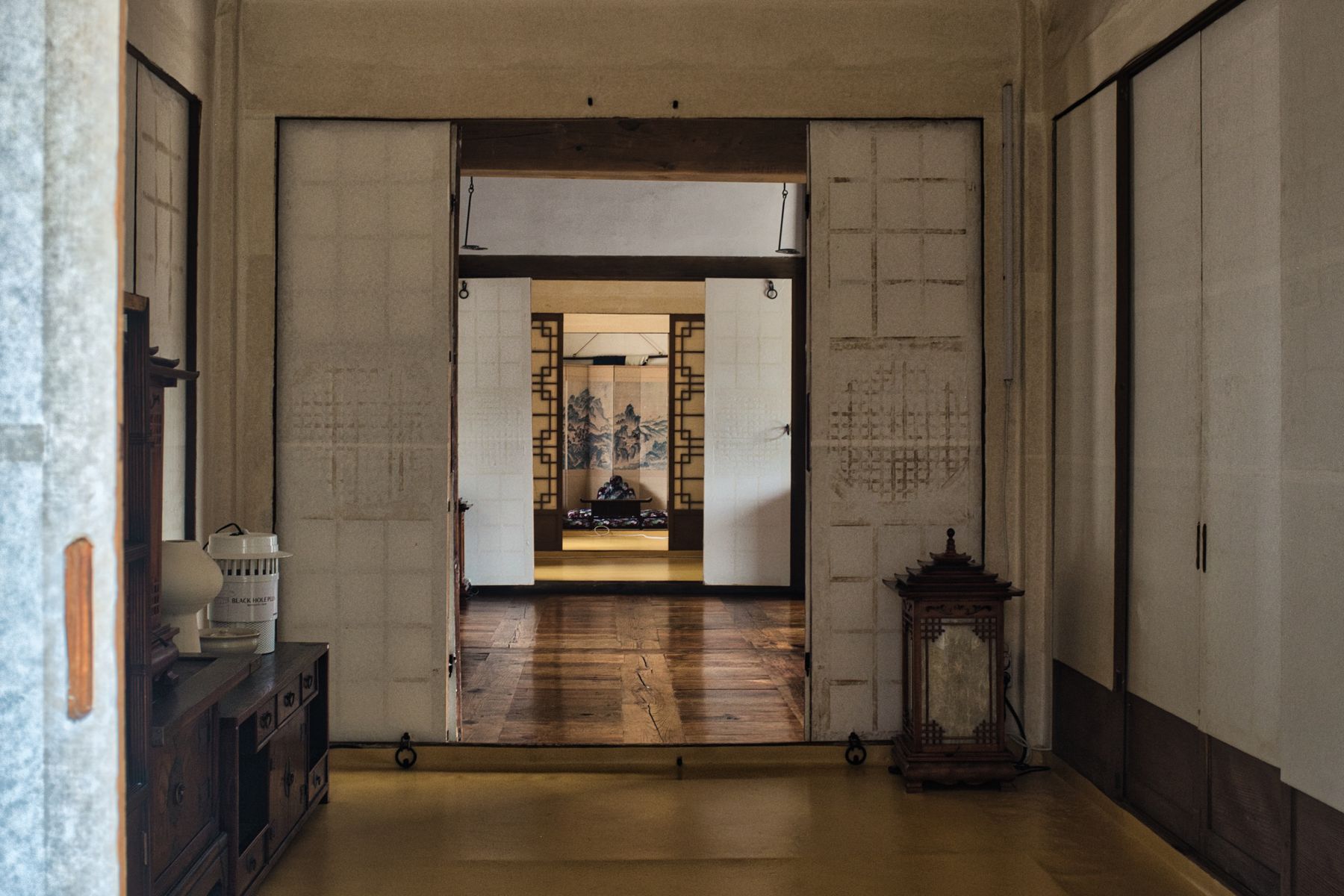
This is the part that trips up a lot of visitors, because they brace for the shoes-off rule at someone’s house and then get blindsided by it showing up at a restaurant. Plenty of traditional Korean restaurants still use ondol-style floor seating — low tables, cushions instead of chairs, sometimes a sunken well under the table so your legs can hang down comfortably. Walk into one of those and shoes come off at the entrance exactly the way they would at a home, sometimes into open cubbies, sometimes into small lockers if the place is nicer. Temple stay programs and hanok guesthouses extend the logic even further, since you’ll often be on wooden floors and thin floor cushions for hours at a stretch, and jjimjilbang saunas go past even that.
Now picture walking a single block in downtown Seoul. Step into a glass-fronted office tower or a chain coffee shop with hard tile and chairs, and nobody expects you to touch your laces — that space reads as an extension of the street. Duck down a side alley into a tiny hanok-style restaurant with low tables and floor cushions, and shoes come off at the door exactly the way they would at someone’s grandmother’s house. Same street, same ten minutes, two completely different rules, and Koreans switch between them without a second thought. The rule isn’t really “shoes off indoors” as a blanket law — it’s “shoes off wherever the floor itself is functional furniture.” Once that distinction clicks, the whole system stops feeling arbitrary.
What it’s like adjusting to it from the outside
Foreigners tend to have a complicated, not entirely negative relationship with this custom, and it’s worth being honest about both sides of it. There’s a real adjustment period — lacing and unlacing boots several times a day turns into a small daily workout in a cramped entryway, especially in a Seoul winter when you’re layered up and running late. There’s also the mild social anxiety of not knowing, the first few times, whether a given restaurant or office expects shoes off or not, and the slight dread of standing at someone’s door doing mental math about whether your socks have holes in them.
That sock anxiety is not exaggerated, by the way — it’s one of the more universally reported small stresses among people newly living in Korea, precisely because bare feet or socks become visible here in a way they never are in shoe-wearing cultures. It’s common enough that plenty of long-term expats keep a spare, unworn pair of socks tucked in a bag just in case they end up at a traditional restaurant or someone’s home unannounced, and the subway underpass sock stalls that seem to exist in every Seoul station start to make a lot more sense once you’ve had that particular panic once or twice.
But most people who stick around long enough end up genuinely converted, and not just out of politeness. There’s something to be said for a home where the floor is reliably clean enough to sit on without thinking twice, where a toddler can crawl across it without picking up whatever was on the street that day. Once you’ve lived in an ondol-heated room in January, with warmth radiating up through your feet while the air outside sits at minus ten, forced-air heating in shoes-on countries can start to feel almost primitive by comparison — the kind of thing you don’t fully appreciate until the first time you’re back home, barefoot on a cold hardwood floor, missing the warm stone under your feet.
FAQ
Do Koreans really point their shoes toward the door, or is that just internet trivia?
It’s real, though not everyone does it with the same precision. It’s considered thoughtful, above-average etiquette rather than a strict rule — nobody scolds a guest for skipping it, but hosts notice.
Is it rude to ask a Korean host whether you should take your shoes off?
No — it shows you’re paying attention. In practice you rarely need to ask: a sunken hyeon-gwan, a shoe rack, or slippers by the entrance is usually a clear enough signal on its own.
What if my socks have holes or I’m not wearing any?
Nobody will say anything to your face, but it’s noticed, especially somewhere formal like a temple stay. Keeping a spare pair in your bag before visiting a home or a traditional restaurant isn’t overkill.