The first time I noticed the little wastebasket parked next to a toilet in Korea, I genuinely thought it was for something else — feminine products, maybe, or just a stray trash can that had wandered into a weird spot. I stood there a beat too long, toilet paper in hand, running through possibilities, until my father-in-law called through the cracked door, “just put it in there,” like it was the most obvious thing in the world. For him it was. For me, it took a solid year before I stopped double-checking myself every single time.
If you’re new to Korea, this is one of those small daily-life details nobody warns you about, and it trips people up more than jet lag ever does. So let’s actually talk about it — why the habit exists, where it’s changing, and how to handle a Korean bathroom without a minor identity crisis every time you need to pee.
Why the Bin Exists in the First Place
This isn’t some deep cultural mystery. It’s plumbing. A lot of Korea’s older buildings, especially in older neighborhoods, were built with narrower pipes than you’d find in a newly constructed high-rise elsewhere, and older domestic toilet paper didn’t break down in water as easily as what you’re probably used to. Put those together and you get pipes that clog — often enough that binning the paper became the practical workaround, and it stuck around as a habit long after it started as a necessity.
Once a habit settles into a culture, it doesn’t evaporate the moment the original reason fades. My wife’s grandmother still does it in her apartment with brand-new plumbing, purely out of muscle memory. It’s less a rule and more a grooved-in default.
Here’s the part that matters for you: this is changing, and fairly fast. Newer apartment complexes, most hotels, airports, and modern office buildings now have plumbing that handles flushed paper fine, same as anywhere else. My rule as a newcomer: look before you sit. Small covered bin next to the toilet? Use it. No bin, or a little sign showing paper going into the bowl? You’re almost certainly fine to flush. When genuinely unsure, I still default to the bin — nobody has ever been annoyed at me for using a trash can correctly, but plenty of building managers get annoyed about clogged pipes.
The Bidet Situation
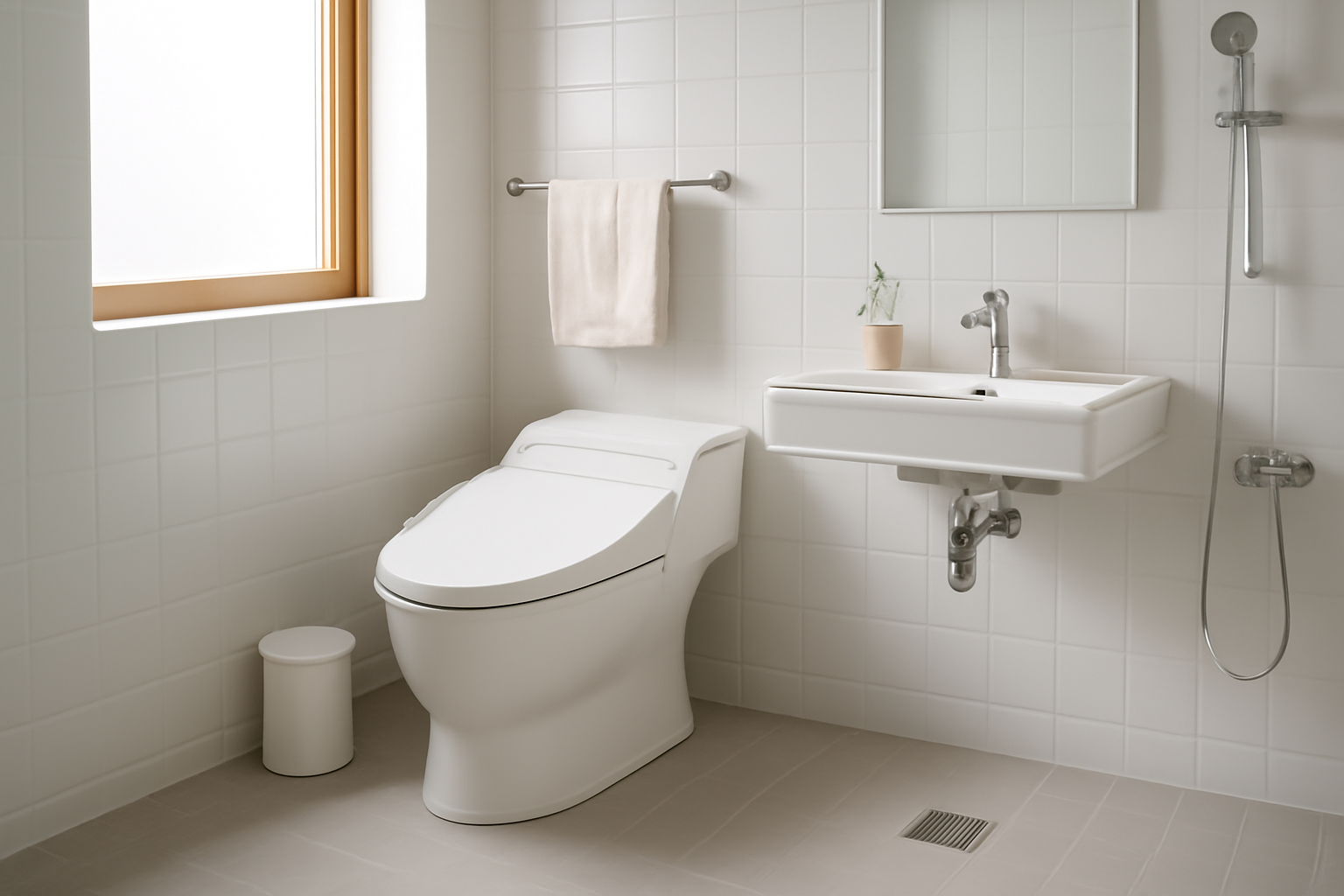
Related, but its own universe: Korean toilets, especially in homes and nicer public buildings, are frequently bidets — 비데 (bidae) — with a control panel that looks like it belongs on a small aircraft. Heated seat, adjustable water pressure, a drying function, sometimes a deodorizer. My first winter here, I sat down on a heated seat at a friend’s place and nearly said something out loud I shouldn’t repeat. It felt like witchcraft, in the best way.
The icons aren’t hard once you know them — a water-spray symbol is the bidet function, a fan icon is usually the dryer, and there’s typically a big, easy-to-find stop button, a design choice I appreciate as a slightly nervous foreigner in a hurry. The bidet doesn’t fully replace toilet paper for most people; think rinse-and-dab rather than paper-free living. But plenty of Koreans do use it as their main method at home.
Slippers Are Not Optional
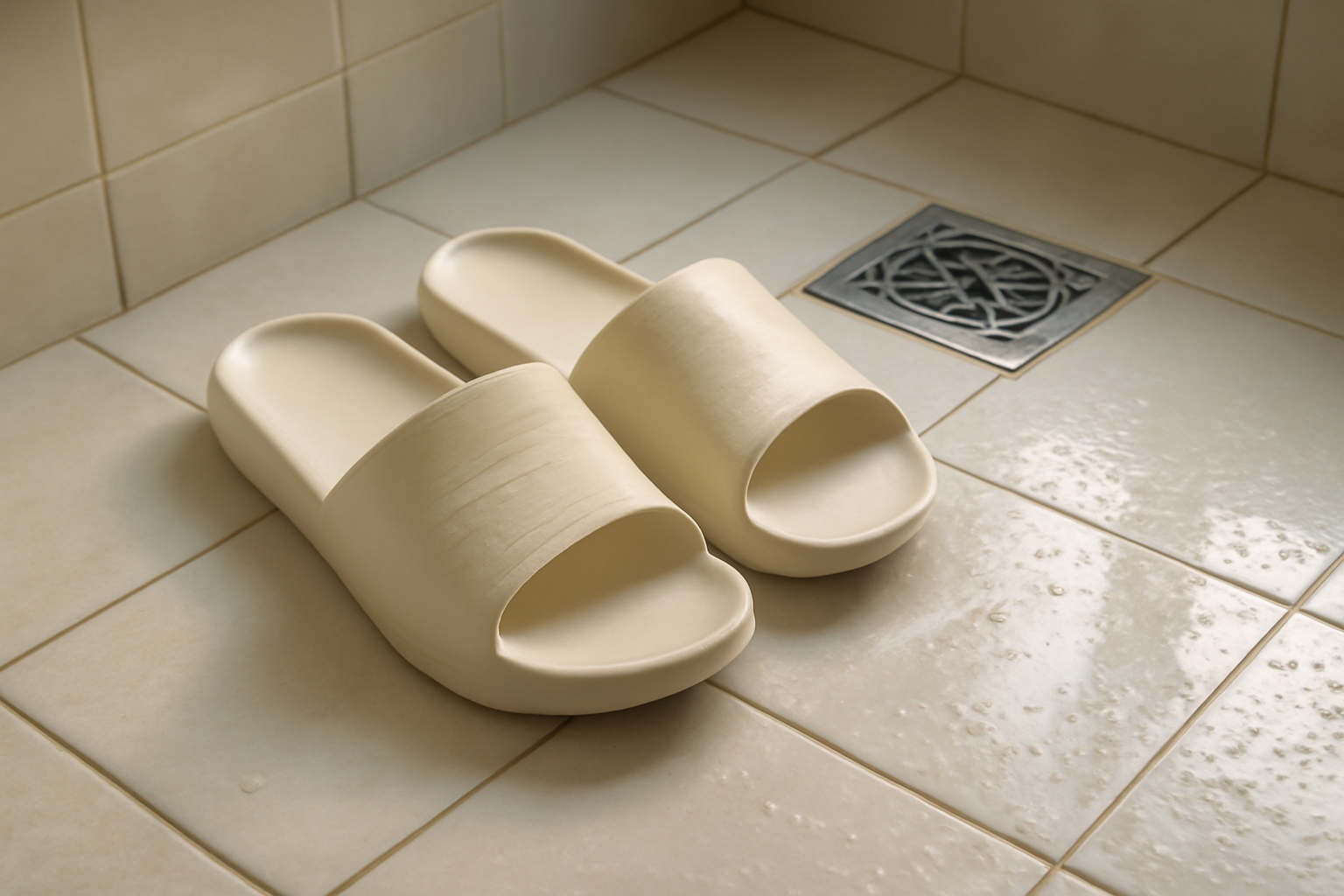
Korean bathrooms, particularly in homes and older buildings, are often full wet-rooms — the shower drains straight into the bathroom floor, no separate stall or curtain sealing anything off. The whole floor gets wet regularly, and walking it in socks is asking for a fall.
The fix is a dedicated pair of bathroom slippers kept just inside the door, that never leave the room. You step out of your house slippers at the threshold, into the bathroom ones, and back out when you’re done. It’s the same logic as taking your shoes off at the front door — keeping “outside wet” separate from “inside dry,” one room more specific. If you’re staying with a Korean family and see a slightly damp pair of plastic sandals sitting right at the bathroom entrance, that’s not clutter. That’s the system working.
Public Restrooms Play by Different Rules
Public restrooms deserve their own note because the etiquette shifts slightly. Most public restrooms in Korea — subway stations, parks, department stores — are cleaner and more plentiful than a lot of visitors expect. But a real number of them, especially older subway stations, simply don’t stock paper in the stalls.
That’s not neglect. It’s partly a cost and theft issue — dispensers get emptied fast — and partly a hygiene push, since bins have been steadily removed from public stalls to cut smell. Some stations solved it with one shared dispenser near the entrance, so you grab what you need on the way in.
My advice, learned the mildly unpleasant way: carry a small pack of tissues. Convenience stores sell travel packs for next to nothing, and there’s one roughly every fifty meters here, so restocking is never the problem. Treat it like carrying hand sanitizer — a small habit that saves you from a genuinely bad ten minutes.
The Squat Toilets You’ll Occasionally Still Meet
Mostly in older buildings, rural areas, and a handful of traditional rest stops, you’ll still run into a squat toilet — a fixture set into the floor rather than a raised bowl. They’re increasingly rare in cities as buildings renovate, but not extinct. If you meet one, face the raised hood, not the flat end, and yes, the same paper etiquette from earlier still applies.
FAQ
Do all bathrooms in Korea still require binning the paper?
No, and it’s getting less common every year. Newer buildings and modern apartments generally handle flushed paper fine. When you’re not sure, check for a bin or a sign — and if there’s truly no clue either way, bin it and move on.
Is it rude to just ask a Korean friend which to do?
Not at all. People usually seem relieved you asked instead of guessing. I’ve never had it treated as awkward — it reads as considerate, not clueless.
Should I carry my own toilet paper when I go out?
A small tissue pack, yes. Most places have it, but public restrooms occasionally run out or never stocked it stall-side to begin with, and carrying your own is a five-minute fix.
None of this is complicated once you’ve done it a few times — it just takes that first confused encounter to file it away for good. A while in, I don’t even think about the bin anymore. It’s just what my hand does. Which, now that I say it out loud, might be the most accurate definition of settling into a new country there is.
Leave a Reply