새벽 6시 40분, 통영여객선터미널 주차장에 차를 대는데 벌써 줄이 길었다. 미륵산 케이블카는 느긋하게 가도 될 줄 알았는데 완전 오해였다 — 성수기엔 매표소가 9시에 열고, 8월 주말엔 30분 만에 대기표 200장이 나간다. 준비 없이 가면 대기줄에서 오전을 다 날리는 도시고, 순서만 잘 짜면 케이블카·동피랑·강구안을 하루 안에 끝낼 수 있는 도시가 통영이다.
미륵산 케이블카, 매표소 오픈 직후가 진짜다
통영 케이블카는 상부정류장까지 편도 약 1,975m, 9분 남짓 걸려 해발 461m 전망대까지 데려다준다. 성인 왕복 요금은 15,000원. 정상에서 5분만 더 올라가면 시야가 트인 산복도로 쉼터가 나오는데, 거기서 보는 한려수도 다도해가 진짜배기다. 맑은 날엔 대마도까지 보인다고 매표소 직원이 알려줬는데, 그날은 구름이 껴서 확인은 못 했다. 대기 포함 넉넉히 2시간은 잡아야 한다.
동피랑 벽화마을, 계단은 각오해야 한다
케이블카에서 내려와 차로 15분이면 중앙시장 뒤편 동피랑이다. 2007년 철거 예정이던 낡은 동네를 벽화로 살려낸 곳이라 골목마다 그림이 다르다. 꼭대기 동포루까지 계단은 못해도 150개는 넘는데, 여름 한낮엔 땀이 비 오듯 한다. 오전 11시 전이나 해질 무렵이 낫다 — 나는 하필 오후 2시에 올라갔다가 그늘 찾아 헤맸다.
강구안과 충무김밥, 한 끼는 여기서
동피랑 계단을 내려오면 바로 강구안 바다다. 거북선 모형이 떠 있는 작은 항구를 빙 둘러 충무김밥집이 몰려 있다. 원조 논쟁이 있는 뚱보할매김밥과 오동동 충무김밥거리 어느 쪽이든 큰 차이는 없다 — 김밥에 무김치, 쭈꾸미무침까지 한 접시 8,000원 안팎이면 충분하다. 저녁이 되면 강구안에 조명이 들어와 낮과 다른 얼굴이 되니, 시간이 맞으면 밤에 한 번 더 가볼 가치가 있다.
시간이 남으면 한산도까지
강구안여객선터미널에서 배로 30분이면 한산도다. 왕복 뱃삯은 15,000원 선. 제승당까지 걸어서 20분, 소나무숲이 조용해서 인파에 지쳤을 때 쉬어가기 좋다. 배편 시간표가 계절마다 갈리니 통영관광안내소(055-650-4681)에 미리 전화해보는 게 낫다.
당일치기 vs 1박2일
케이블카·동피랑·강구안만 본다면 당일치기로 충분하다. 서울에서 아침 일찍 출발해도 KTX와 버스를 이으면 오후 1시쯤 통영 도착이 가능하다. 한산도까지 넣거나 소매물도를 더하고 싶다면 1박은 해야 여유가 생긴다. 숙소는 강구안 근처보다 무전동 쪽이 주차와 가격 면에서 낫다는 게 내 경험상 결론이다. 비슷하게 하루 만에 알차게 도는 남해안 코스를 찾는다면 여수 밤바다 여행 코스도 참고할 만하다.
자주 묻는 질문
Q. 케이블카 대신 도보로 미륵산 정상까지 갈 수 있나요?
A. 가능하다. 편도 등산로 기준 1시간 40분~2시간 걸리고, 용화사 코스가 비교적 완만하다. 8월 한낮엔 그늘이 적어 케이블카로 올라가고 하산길만 걷는 방법도 있다.
Q. 동피랑 주차는 어디에 하나요?
A. 마을 안쪽엔 주차 공간이 거의 없다. 중앙시장 공영주차장(1시간 1,000원 안팎)에 대고 걸어 올라가는 게 무난하다. 주말엔 만차가 잦아 오전 10시 전 도착이 안전하다.
Q. 아이와 함께 가도 괜찮은 코스인가요?
A. 케이블카는 유아도 탑승 가능하지만 동피랑 계단은 유모차로 오르기 무리다. 초등 저학년 이하라면 강구안 산책과 충무김밥, 케이블카 정도로 코스를 좁히고 동피랑은 다음 방문으로 미루는 걸 권한다.
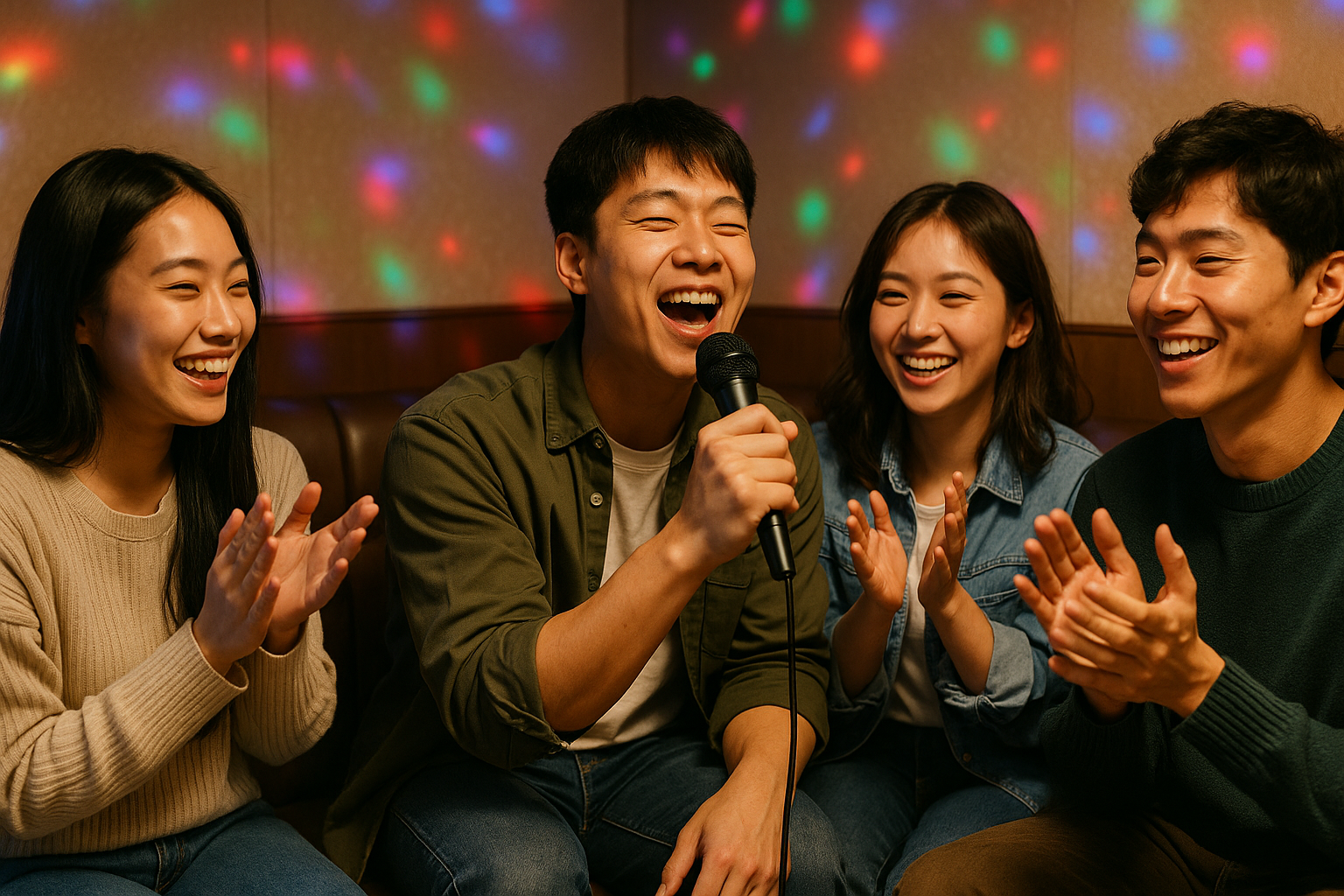
The first time a coworker handed me a tambourine instead of a microphone, I honestly felt a little insulted. Back home, tambourines were for toddlers and church bands, not grown adults in blazers who’d just spent nine hours in meetings. Then everyone started singing, the lights dimmed to a purple-and-green disco wash, and I understood: the tambourine wasn’t a consolation prize. It was a job. In a Korean norebang, everyone has a job.
Norebang — literally “song room” — looks, from the outside, like a straightforward karaoke bar. It is not. If you’ve done karaoke in Japan or at a Western karaoke night, you probably picture a stage, strangers watching, some pressure to be good. Korean norebang flips that: you rent a small windowless room by the hour, just your group, a screen, two mics, a remote, and a battered tambourine that has survived a thousand office dinners. Nobody outside the room hears you, and that privacy changes everything about how people behave inside it.
The Room Changes the Rules
With no audience beyond your own group, norebang strips away performance anxiety and replaces it with something closer to communal noise-making. The colleague who was stiff at dinner an hour earlier might now be belting out a 1990s trot song with his tie loosened, while the newest hire quietly figures out the remote. I’ve come to think this is the real function of norebang in Korean social life — less about vocal talent, more a controlled release valve after a stiff company dinner, or hoesik, as it’s called here.
The Book, the App, and the Sacred Song Number
Every room has a songbook, a thick, dog-eared binder organized by artist and genre, each title paired with a five-digit code you punch into the remote. Newer places have touchscreen tablets, and most people I know just search the title on their phone and let Naver spit out the number, skipping the binder entirely. I still default to the physical book out of habit, flipping past pages of trot and ballads to reach the English section, which is thinner than you’d expect and heavier on early-2000s pop than anything current.
The Tambourine Is Not Optional
Somebody always ends up as the designated tambourine shaker, rarely the person singing. It’s a support role, closer to hype man than musician, and I’ve watched people take it more seriously than their own turn at the mic. The unspoken rule: shake along with the beat, not against it, and cheer loudly for whoever’s singing — even, maybe especially, when they’re bad.
From what older coworkers tell me, it wasn’t always this elaborate. In the early days of norebang culture, there were really just two roles: people who could sing, and people who clapped along. Somewhere along the way, the tambourine split off into its own specialty, almost its own genre of performance — and I’m not exaggerating when I say Korean YouTube has entire videos dedicated to teaching norebang tambourine technique. Watch one and you’ll wonder how that much rhythm and precision comes out of a plastic hoop with jingling metal discs; it’s genuinely delicate, almost professional. Go to norebang with someone who’s actually good at it, and no matter the genre — dance track, ballad, rock — they lock into the beat instantly, and it makes the whole room feel more alive. I’ve picked it up myself a few times and, honestly, I still need the practice.
There are people here who reach for the tambourine before the mic, and they split roughly into two camps: the ones who grab it because they’d rather not sing, and the ones who treat it like a genuine mission — tonight, they’re the one responsible for the room’s energy. Either way, watching a good tambourine player work is its own kind of performance, every bit as committed as whoever’s holding the mic.
Snacks, the Service Bell, and Somebody Always Pays
Most rooms have an intercom or bell for ordering anju — dried squid, popcorn, cheap beer, sometimes fried chicken delivered to the door. Someone always takes charge of ordering, and just as inevitably, someone else quietly pays the bill before anyone can argue about it. I’ve stopped fighting that battle; you lose every time, and pushing too hard to pay can read as its own kind of rudeness.
Etiquette Nobody Explains Out Loud
Nobody hands you a rulebook, but the norms are consistent: don’t hog the mic or stack five songs in a row for yourself, don’t switch someone else’s song mid-performance no matter how much you want to, and if a senior colleague picks something painfully slow, you sit through it. The mic gets passed roughly in order, and everyone is expected to sing at least once, even the person who insists they can’t. Refusing entirely reads as standoffish in a way that’s hard to explain until you’ve felt the silence after a flat “no thanks.”
FAQ
Do I have to sing if I go with Korean coworkers? Not literally forced, but declining every turn is noticed and read as a bit cold. One easy, short song is usually enough to satisfy the unwritten expectation.
How is norebang different from Japanese karaoke bars? The private-room format resembles Japan’s karaoke boxes structurally, but Korean norebang leans harder on group ritual — the tambourine, the passed mic, the mandatory cheering — woven tightly into office dinner culture.
Is it rude to pick English songs? Not at all. Most songbooks have a solid English section, and mixing a K-pop or trot pick alongside a Western one is normal and often appreciated.
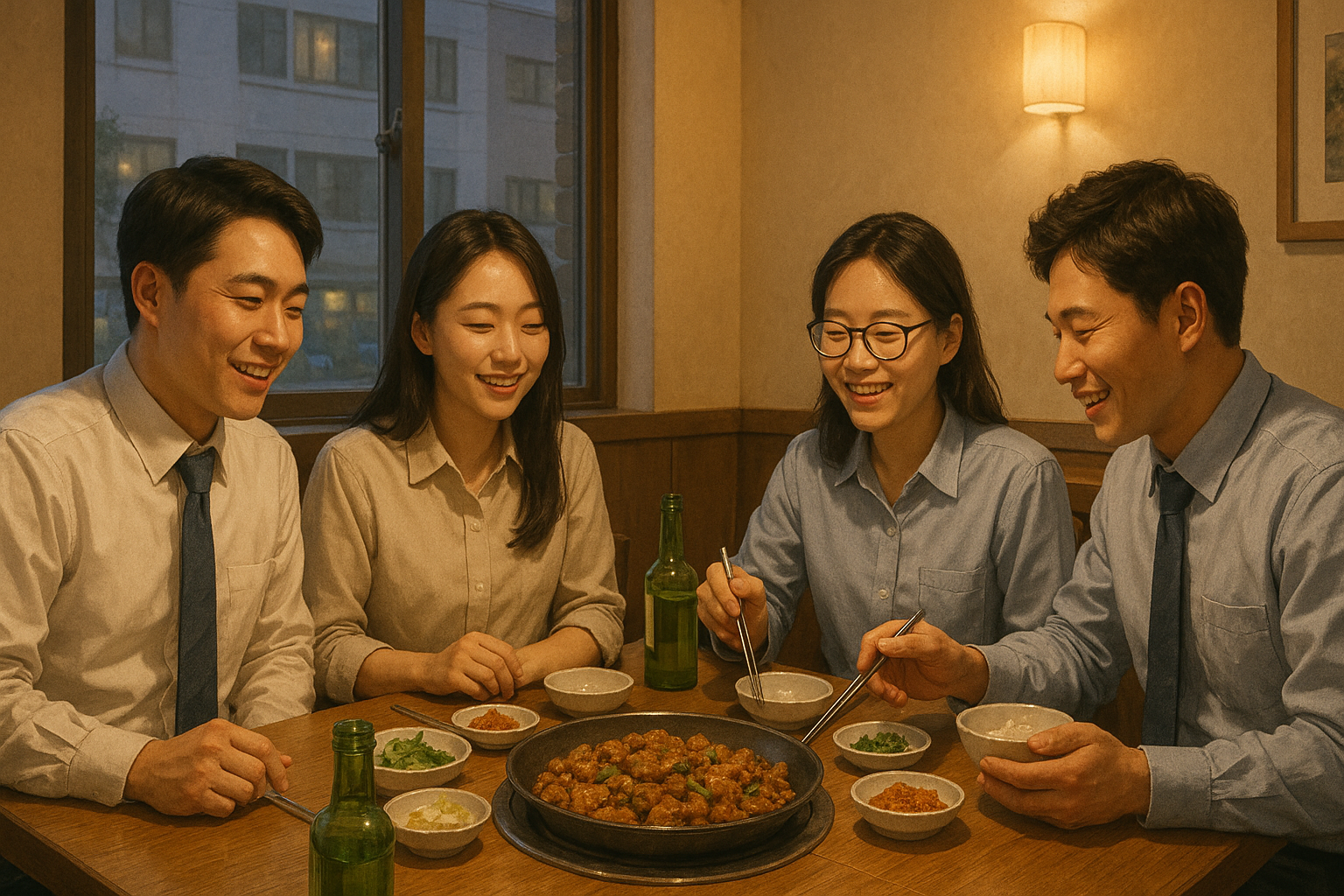
A calendar invite landed on a Thursday afternoon a few weeks back — 회식 8시, no other detail — and I felt my stomach do the small, involuntary drop it still does after all these years. Not dread exactly. More like bracing for a test nobody hands you the syllabus for. Half my coworkers didn’t even glance twice at the notification. For them it was just Thursday. For me, even now, it’s a set of rules I’m still translating in real time, one soju pour at a time.
Hoesik gets rendered in English as “company dinner,” a phrase so flat it hides almost everything that actually happens in the room. It’s part meal, part hierarchy chart acted out over meat and soju, part unofficial performance review nobody would ever call by that name.
The Grill Between Us
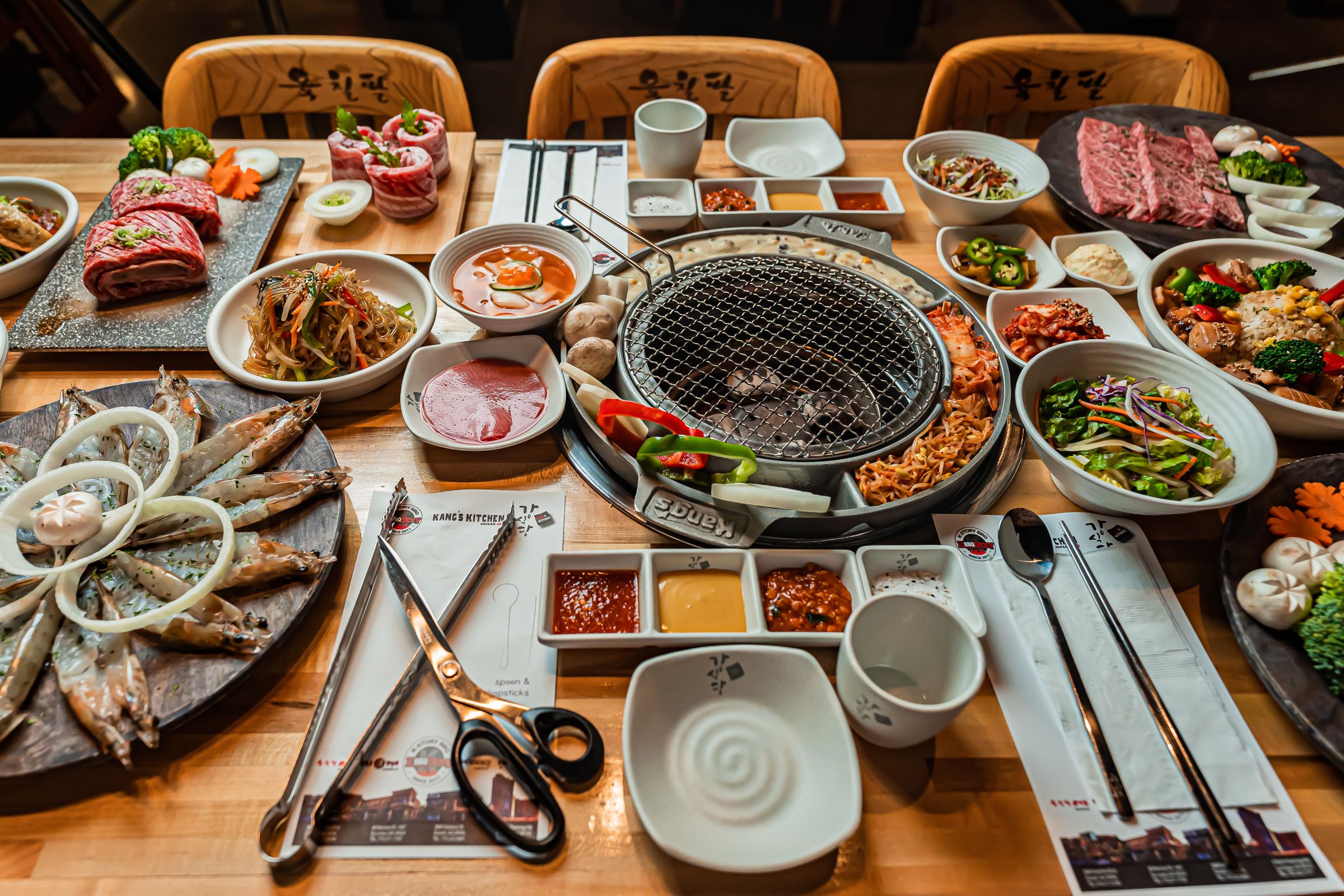
Most hoesik I’ve been to start the same way: a private room, a tabletop grill, and someone junior — often me, in my early years here — quietly taking charge of the meat. Samgyeopsal is the default choice for a reason: affordable enough for a company card to cover a whole team, forgiving to cook, and it forces everyone to lean toward the same fire and wait for the same thing to be ready.
The soju shows up almost immediately, and with it an etiquette I learned by watching, not reading. Pour for others before yourself. Accept a poured glass with two hands if it’s from someone senior. Turn away slightly when you drink in front of them. None of this was written down anywhere I found — you absorb it by getting it wrong once.
Seating Is Never Just Seating
What surprised me more than the drinking customs was the seating. At a round table, the seat facing the door usually goes to the most senior person, and rank fans out from there — the further from the boss, the more relaxed the conversation gets. I’ve watched junior staff quietly rearrange a table before their manager arrived, the way you’d set a chessboard before a game whose rules everyone already knows. Nobody explained this to me; I noticed who kept the good seat and who ended up near the door, refilling side dishes.
2차, 3차, and Knowing When to Leave
The first round, dinner, is usually the “official” part. What happens after — 2차, sometimes 3차 — is where hoesik earned its reputation. A second round might mean beer somewhere quieter; a third could mean noraebang or another bar entirely. The old assumption was that leaving after 1차 signaled you weren’t a team player.
That assumption is fading, and it’s one of the more interesting shifts I’ve watched happen here. Younger colleagues treat hoesik as optional in a way unthinkable to their own bosses a decade ago. Attendance thins noticeably after the first round now, dutch pay is more common, and some teams have swapped the whole format for lunch or coffee — which still counts as hoesik even if nobody’s pouring anything stronger than iced americano.
What I’ve Come to Think About It
I won’t pretend hoesik never wore me out — there were stretches early on where I dreaded the calendar invite, mostly because I hadn’t yet learned that leaving early, done politely, rarely blows up the way I feared. But I’ve also had genuinely good nights at these dinners, ones where a stiff office relationship loosened over shared side dishes in a way no meeting ever managed. What’s changing isn’t that Koreans suddenly dislike eating together — it’s that the obligation is being separated from the bonding, and the bonding is what people actually want to keep.
FAQ
Is it rude to refuse alcohol at a hoesik?
Not anymore, in most workplaces I’ve encountered. Saying you don’t drink, or switching to cola or non-alcoholic beer, is generally accepted without much comment. Skipping the whole dinner with no explanation still raises more eyebrows, though even that is loosening among younger teams.
Do I have to go to 2차 and 3차?
Less than people assume. In many offices today, slipping out after the first round with a short, polite excuse is normal — though it varies by company, and some more traditional teams still read early departures as a lack of effort.
Why does seating at the table matter so much?
Because hoesik mirrors office hierarchy almost exactly. The seat facing the entrance usually goes to the most senior person present, and where you sit relative to them signals rank without anyone saying it aloud.
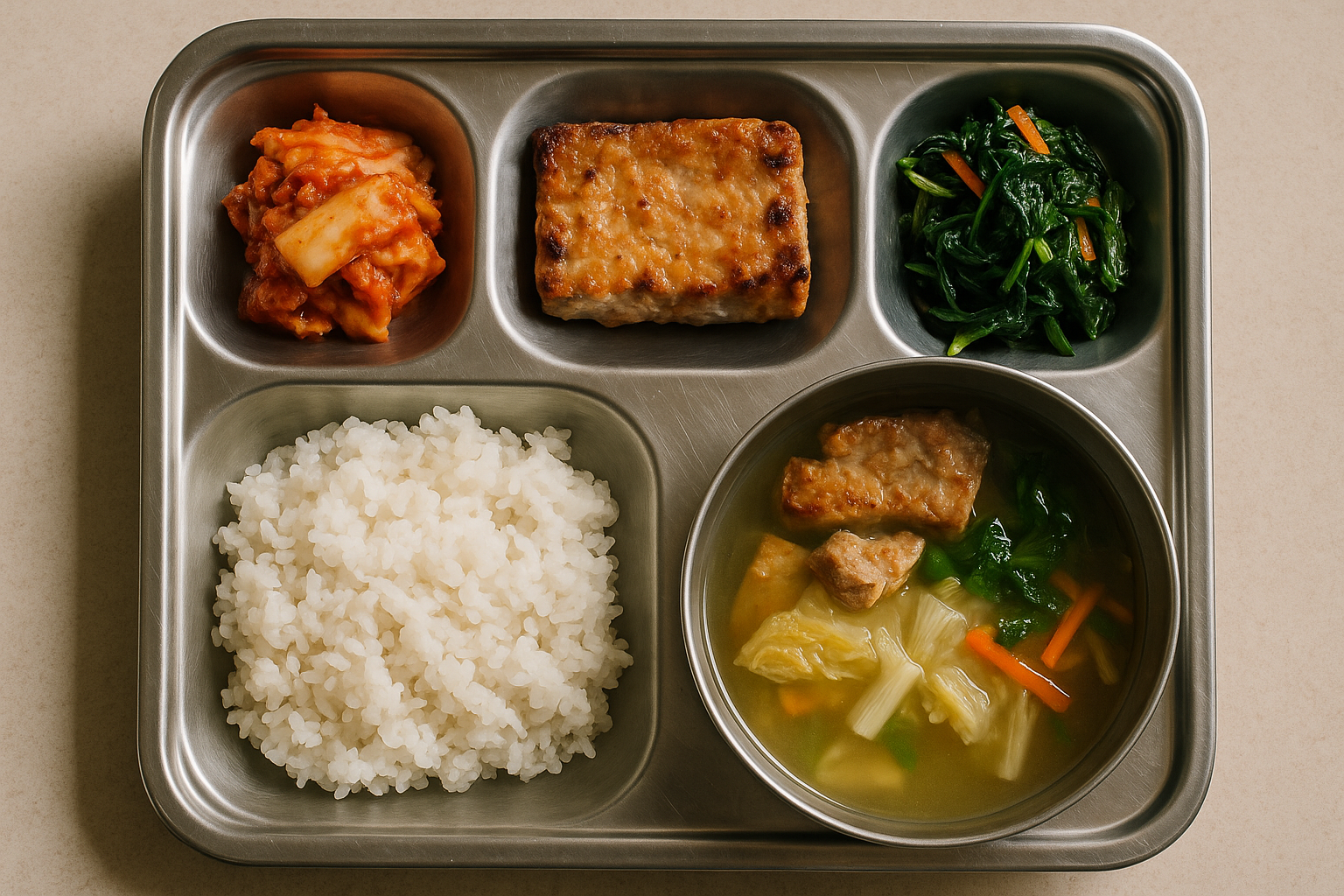
Every month, a single sheet of paper changes the rhythm of our kitchen. It comes home in my daughter’s backpack, slightly creased, sometimes with a juice stain in the corner, and I tape it to the fridge like it’s a piece of art. It is, in its own bureaucratic way — a full month of lunches, day by day, dish by dish, laid out in a grid. Mackerel and radish soup on the 4th. Bulgogi and japchae on the 9th. Tteokguk the day after a holiday. Kimchi, always kimchi, somewhere on the tray.
I grew up packing a lunch that was, generously, a sandwich and whatever fruit didn’t get eaten out of the bowl. So the first time I saw my daughter’s school lunch menu, color-coded by food group, I genuinely didn’t know what to do with it. Was I supposed to approve it? It turns out I was just supposed to read it, the way you’d read a weather forecast — mildly useful, not really up for debate. It’s the same system I first bumped into during daycare drop-off and pick-up, just with a printed monthly grid instead of a phone notification.
A Menu With No Room for Negotiation
What struck me first wasn’t the food itself but the fact that there was no alternative to opt into. No packed lunch, no “just send a little something extra in case.” Every kid eats what’s on the tray: rice, a soup that rotates daily, a main protein, a couple of vegetable sides, and kimchi sitting there like a permanent fixture, whether the kid is four or fourteen. Nobody asks if the four-year-olds want it mild or want to skip it. They just start eating it early, in small amounts, the way you’d start anyone on anything they’re expected to eat for the rest of their life.
I won’t pretend every lunch is eaten with enthusiasm — I’ve heard enough about the “I only had the rice today” days to know better. But the range of what shows up on that tray over a month is genuinely wide: stews, grilled fish, japchae, bibimbap, the occasional curry or spaghetti thrown in as if to remind everyone the menu isn’t rigidly traditional. It rotates and rarely repeats, planned by an actual nutritionist thinking in food groups and seasonal variety, not by a tired parent staring into an open fridge at 7 a.m.
What the Tray Actually Teaches
There’s something almost old-fashioned about kids eating what’s served, together, at the same table, without a parallel economy of snacks and substitutions. I think about this often, because it’s so different from how I was raised to think about food — as a set of individual preferences to be catered to. Here, the tray shows up already balanced, and the expectation is that palates adjust to the food, not the other way around.
I’m not claiming this produces perfectly adventurous eaters overnight. Some days the soup comes home untouched, I’m sure, on trays I never see. But over months and years, the sheer repetition of soup-rice-kimchi-vegetable-protein as the baseline of lunch does something. It sets a template — one that shapes what a kid quietly understands “a meal” is supposed to include, long before they’d ever think to argue about it.
Frequently Asked Questions
Do Korean kids really eat kimchi from daycare age?
Yes, typically in small, mild portions that increase gradually — cut smaller and less spicy than the adult version, but on the tray from early on rather than introduced later as an “acquired taste.”
Is packing a lunch from home even an option?
Generally no, for regular days. Public schools and most daycares run a unified meal program everyone eats from; packed lunches are more of an exception for specific dietary or medical needs than a standard alternative.
How do parents actually use the monthly menu sheet?
Mostly to plan dinner around it — if lunch already had a protein-heavy stew, we’ll lean lighter at dinner. It’s less a tool of control and more a scheduling aid.
Taped to the fridge, that monthly sheet has quietly become one of my favorite pieces of paper in the house — not exciting reading, but proof that someone thought carefully about what my kid eats on a Tuesday in March and wrote it down for me a month in advance. I still don’t fully know what to do with that kind of certainty. I just keep taping the next one up when it arrives.
Nobody hands you a manual for this. There’s no orientation packet, no HR slide deck, no app that tells you what everyone in the room already silently agrees on. You feel your way toward it, usually by getting it wrong a few times first. That, as far as I can tell after years of living here, is the entire point of nunchi.
My wife’s family uses the word almost as a diagnosis — someone “has no nunchi,” the way you might say someone can’t read a map. It’s not really about manners or intelligence. It’s closer to social radar: sensing mood, hierarchy, and unspoken expectation fast enough to adjust before you cause a problem, not after.
What Nunchi Actually Means, Beyond the Dictionary Definition
Translated literally, nunchi is something like “eye-measure.” Most explanations stop at “reading the room,” which is accurate but undersells how physical the skill is. It isn’t just noticing a meeting has gone quiet — it’s clocking who went quiet first, and whether the safer move is to fill the silence or let it sit. Koreans don’t usually say someone has “good” nunchi. They say quick nunchi, as if the value lives almost entirely in the speed.
The workplace is where I’ve watched this operate most visibly, mostly because I keep failing at it in small, low-stakes ways. A senior colleague makes a suggestion phrased as optional. Everyone else understands it isn’t. I have, more than once, treated it as optional anyway. Nobody corrects you loudly — the correction is itself a nunchi exercise, a slightly cooler tone next time, a meeting invite quietly dropped. You’re expected to notice the shift and adjust without being told why.
At the Dinner Table, Everyone Is Reading Everyone
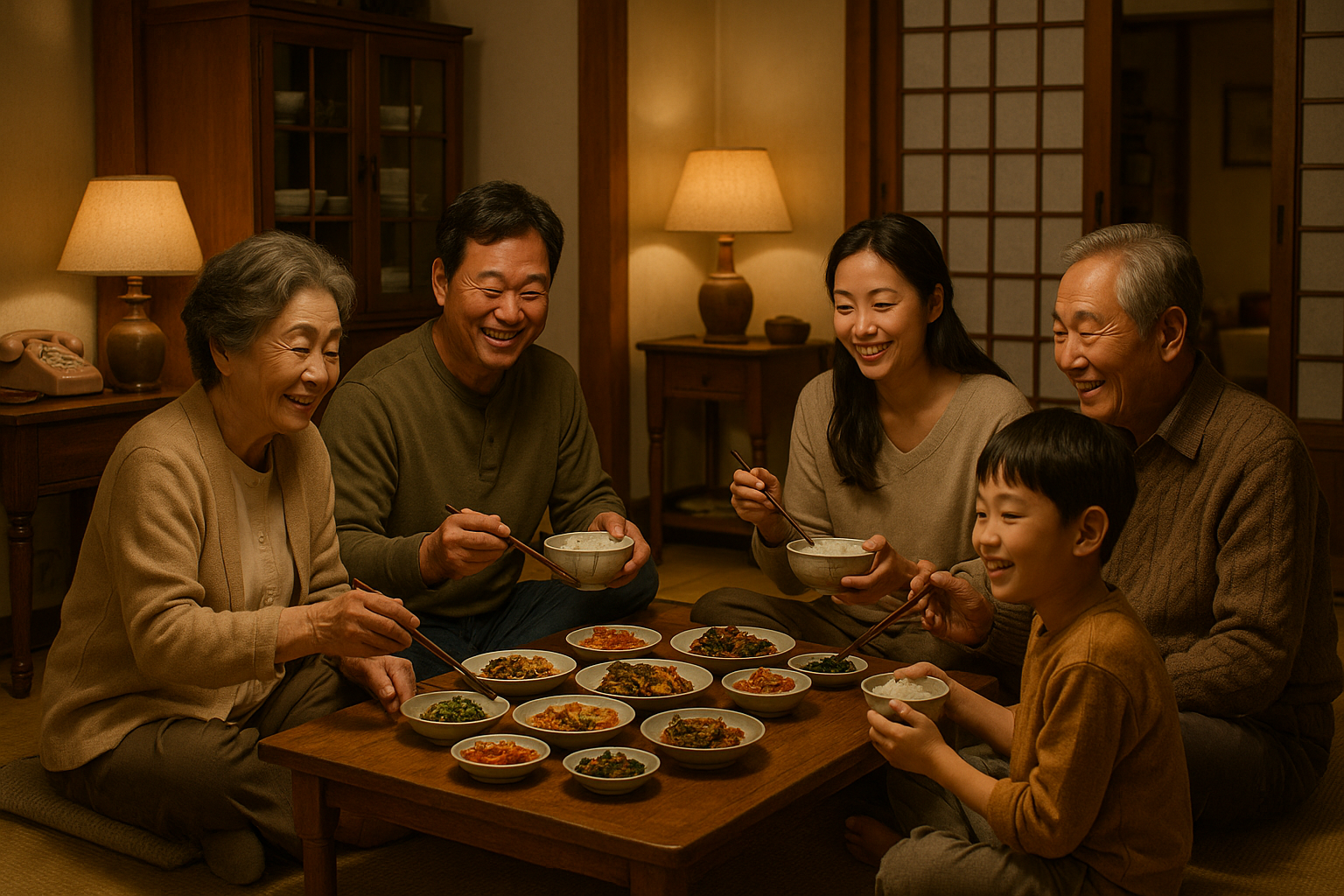
Family gatherings are, if anything, more demanding. There’s a quiet choreography to who serves whom first, who waits for the eldest to lift a spoon, when a joke is safe and when it will land wrong. As a foreigner I get a certain amount of grace — people assume, correctly, that I’m still calibrating. But the grace has a shelf life. Nunchi isn’t only a younger person’s obligation toward elders; it runs in both directions, and everyone at the table is doing it at once without announcing it.
The Restaurant Is a Test You Didn’t Know You Were Taking
Restaurants and cafés are their own small classroom — whether you flag a server or wait for a glance, how long you linger after the meal, whether the group has decided, without a vote, that it’s time to move on. None of this is written down. You absorb it by watching, and by that particular flush of embarrassment that teaches faster than any lesson could. It runs on the same wiring I wrote about in why people on the street here seem to clock you before you clock them — a low-grade social awareness that never fully switches off.
Why Speed Matters More Than Being Technically Right
What surprised me most is that nunchi resists being reduced to a checklist, which is why guidebooks about it always feel a little hollow. It’s closer to a rhythm you either catch or you don’t, adjusted in real time. I don’t think I’ll ever have native-level nunchi, and I’ve made peace with that. What’s changed is that I now notice when I’m missing something, even when I can’t quite name what. That noticing might be the real beginning of the skill, rather than a consolation prize for lacking it.
Frequently Asked Questions
Is nunchi the same thing as emotional intelligence?
They overlap but aren’t identical. Emotional intelligence, as usually described in the West, centers on understanding your own emotions alongside others’. Nunchi is more outward-facing — less about internal awareness, more about reading a specific room at a specific moment and adjusting to preserve group harmony.
Can nunchi be learned as an adult, or do you need to grow up with it?
Koreans generally say it’s cultivated from childhood, through constant correction inside family and school hierarchies. Adults can still improve, but usually the slow way — small missteps, watching reactions instead of words, and resisting the urge to ask directly for rules that were never meant to be spoken aloud.
Does strong nunchi mean always staying quiet and agreeing with everyone?
Not really. Reading a room well sometimes means knowing exactly when a dissenting opinion will be welcomed, or when a joke will cut tension rather than cause it. Good nunchi is closer to well-timed judgment than passivity.
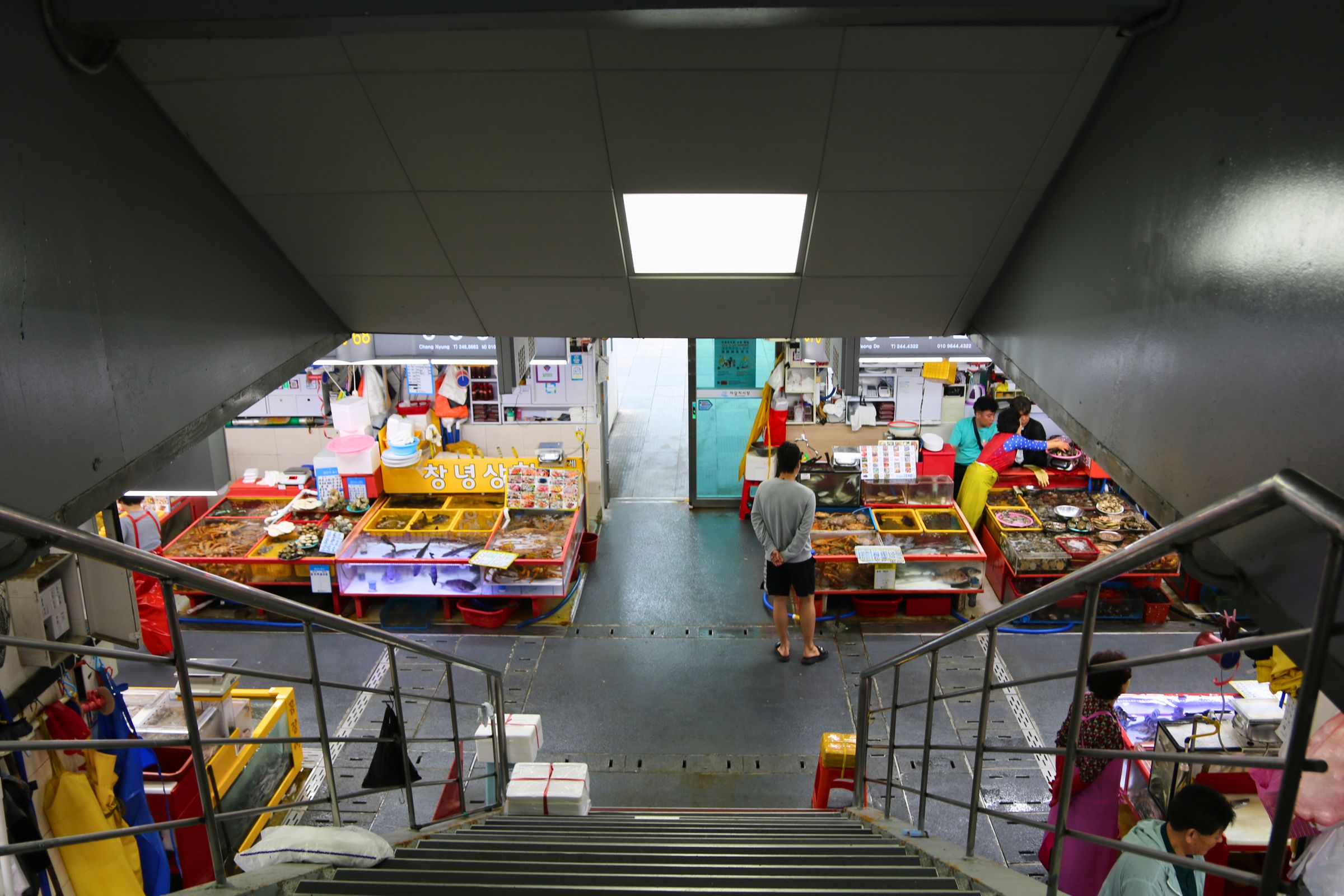
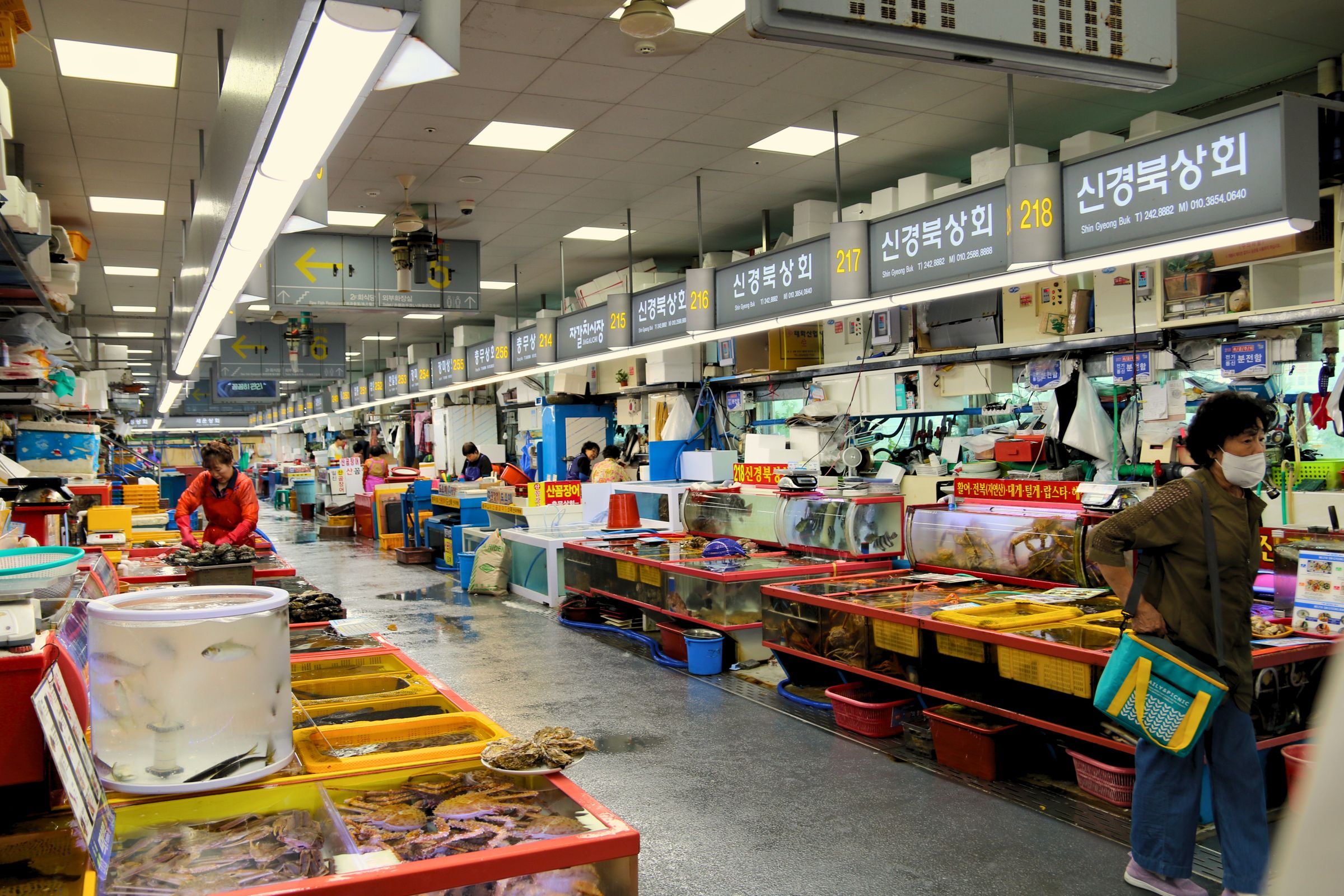
새벽 5시 40분, 충무동 새벽시장 골목 어귀에 있는 국밥집 문을 밀고 들어가자 이미 자리 절반이 차 있었다. 야간 근무를 마치고 소주 한 잔 걸치는 어판장 아저씨들, 첫차를 타기 전 뜨끈한 국물로 속을 채우는 상인들뿐이었다. 관광객은 한 명도 없었다. 자갈치시장이라고 하면 다들 건물 2층 회센터나 근처 씨앗호떡 노점을 떠올리지만, 정작 이 상권을 매일 먹여 살리는 밥집들은 큰길에서 골목 하나만 꺾어도 나오는 좁은 뒷길에 숨어 있다.
충무동 새벽시장길, 해장국 한 그릇의 무게
자갈치역 7번 출구에서 공동어시장 방향으로 3분쯤 걸으면 나오는 이 골목은 지도 앱에 상호가 제대로 뜨지도 않는다. 골목 중간쯤 있는 동남식당은 새벽 4시에 문을 열어 낮 1시면 닫는다. 대표 메뉴는 돼지국밥 8000원과 선지해장국 9000원. 국물은 전날 저녁부터 우려서 다음날 새벽 장사를 준비하는데, 주인 할머니는 회 뜨는 사람들이 새벽에 속을 채워야 손이 안 떨린다고 했다. 테이블이 여섯 개뿐이라 7시가 넘으면 줄을 서야 한다.
건어물골목 지나 왼쪽, 곰장어 포장마차
자갈치시장 본 건물 뒤편, 건어물을 파는 상점들이 늘어선 골목을 지나 왼쪽으로 꺾으면 천막을 친 포장마차 서너 개가 보인다. 그중 희망포차는 오후 6시부터 자정까지만 영업하는데 연탄불에 구운 곰장어 한 접시가 15000원이다. 회센터 쪽 가격표보다 절반 가까이 저렴하다. 사장님은 젊었을 때 자갈치 공판장에서 중매인으로 일했다고 하는데, 그날 들어온 물건 상태에 따라 메뉴판에 없는 조개구이를 그냥 얹어주기도 한다. 카드 단말기가 없어 현금이나 계좌이체만 받는다.
활어회, 시장 상인들이 진짜 가는 집
자갈치시장 2층 회센터에서 회를 뜨고 옆 식당에 자릿세를 내고 먹는 방식은 관광객들에게 익숙하다. 그런데 상인들은 정작 시장 뒤편 골목의 남선횟집을 더 많이 찾는다. 이유는 단순하다. 이 집은 회센터를 거치지 않고 직접 어판장에서 물건을 받아 자릿세를 따로 안 받는 구조다. 광어 한 접시 4만원부터 시작하고 매운탕은 서비스로 나온다. 저녁 7시쯤 가면 자리가 없을 때가 많아서, 개인적으로는 평일 오후 4시쯤 일찍 가는 걸 추천한다. 나도 처음엔 이걸 몰라서 30분 넘게 밖에서 기다린 적이 있다.
남포동 쪽으로 넘어가는 국수 한 그릇
자갈치시장에서 남포동 방향으로 걷다 보면 나오는 좁은 골목에, 간판도 없이 “잔치국수”라고만 써 붙인 가게가 있다. 정식 상호는 순자네인데 다들 그냥 골목 이름을 붙여 부른다. 멸치육수 잔치국수가 4000원, 비빔국수가 4500원이다. 점심시간에는 시장 상인들이 그릇을 들고 서서 먹기도 한다. 회전이 빨라서 낮 12시부터 오후 1시 사이에는 테이블이 두 번은 바뀐다.
개인적으로 이 동네를 처음 알게 된 건 2019년 겨울, 부산 사는 친구를 따라 새벽 배웅을 나갔다가였다. 그때 얻어먹은 국밥 한 그릇 맛이 지금도 생생하다. 관광지에서 파는 음식이 나쁘다는 얘기는 아니다. 다만 시장이 진짜 살아 움직이는 시간대에 가야만 보이는 풍경이 따로 있다는 거다. 다른 지역 로컬 밥집이 궁금하다면 전주 한옥마을 맛집 리스트도 함께 참고할 만하다.
FAQ
Q1. 자갈치시장 뒷골목 맛집들은 몇 시에 가는 게 가장 좋나요? A1. 동남식당은 새벽 5시부터 7시 사이가 가장 붐비니 그 전인 4시 반쯤이 오히려 여유롭다. 회를 조용히 먹고 싶으면 남선횟집은 평일 오후 4시에서 5시 사이가 낫다. 주말 저녁 7시 이후에는 자리가 없어 20분에서 30분은 기다려야 한다.
Q2. 카드 결제가 안 되는 곳도 있나요? A2. 희망포차 같은 포장마차는 카드 단말기가 없어 현금이나 계좌이체만 받는다. 3만원에서 4만원 정도 현금을 미리 챙겨두면 편하다. 동남식당과 순자네는 카드 결제가 가능하다.
Q3. 자갈치역에서 걸어서 다 돌 수 있나요? A3. 가능하다. 자갈치역 7번 출구에서 동남식당까지 도보 3분, 거기서 희망포차와 남선횟집까지 각각 5분 이내다. 순자네까지는 남포동 방향으로 10분쯤 더 걸으면 된다. 저녁 한나절 코스로 묶어도 무리 없는 거리다.
지난달 처갓집 식구들과 여수에 갔을 때, 밤 9시가 다 되어서야 숙소를 잡고 나왔다. 다들 “여수는 낮보다 밤”이라고 입을 모았는데, 막상 돌산대교 앞에 서니 왜 그런 말이 나왔는지 바로 이해가 됐다. 다리 전체가 색을 바꿔가며 빛나고, 그 아래로 유람선이 지나가는 풍경은 사진보다 실물이 훨씬 낫다.
1. 오후 5시, 오동도부터 시작한다
여수 밤바다를 제대로 즐기려면 해 지기 전에 오동도부터 들르는 게 순서다. 방파제를 따라 15분쯤 걸어 들어가면 동백나무 숲이 나오는데, 8월에는 꽃은 없지만 초록이 짙어서 그늘이 시원하다. 입구 근처 카페에서 아이스 아메리카노 한 잔 사서 걸으면 딱 좋다. 오동도 전망대에서 바라보는 노을이 이 코스의 첫 하이라이트다.
2. 돌산공원 케이블카, 해 진 직후가 승부처
돌산공원에서 자산공원까지 이어지는 해상 케이블카는 낮에도 타지만, 진짜는 일몰 직후 30분이다. 이 시간대에 타면 아래로 돌산대교 조명이 켜지는 순간과 겹쳐서 야경이 두 배로 화려하다. 바닥이 유리로 된 케이블카는 대기가 길어서 30분 이상 기다릴 수도 있으니, 일반 케이블카 먼저 타보고 여유가 되면 다시 줄을 서는 편이 낫다.
3. 낭만포차거리에서 저녁
이순신광장 앞 낭만포차거리는 저녁 7시부터 사람이 몰리기 시작한다. 우리는 8시쯤 도착했는데 자리가 거의 없어서 15분을 기다렸다. 서대회무침, 하모샤브샤브 같은 여수 향토 음식을 파는 포차가 많고, 가격은 2인 기준 4만원 안팎이었다. 여러가지 스끼다시와 나오는 음식은 진짜 음식을 먹는건지 바다를 먹는건지 너무너무 맛있었다. 음식점에서 바라보면 케이블카 조명과 돌산대교가 한눈에 들어와 장관마저 맛있게 느껴진다.
이동과 숙소, 현실적인 팁
여수는 버스 배차 간격이 길어서(20~30분) 렌터카가 편하다. 주차는 여수엑스포역 인근 공영주차장이 상대적으로 여유 있는 편이었다.(하지만 주말은 어떨지…) 숙소는 이순신광장이나 낭만포차거리 근처 숙소로 잡으면 밤늦게 이동할 필요가 없어서 좋다. 하룻밤이면 이 코스만으로도 충분하고, 다음 날 오전에 향일암까지 다녀오면 1박 2일이 알차게 채워진다.
자주 묻는 질문
Q. 케이블카는 예약 없이 바로 탈 수 있나요?
성수기 저녁 시간대는 현장 대기가 40분을 넘기기도 한다. 공식 홈페이지에서 시간대별 온라인 예매가 가능하니, 일몰 30분 전 시간대를 미리 잡아두는 게 마음이 편하다.
Q. 아이와 함께 가도 괜찮을까요?
7살 조카와 함께 갔는데 오동도 산책로는 유모차도 다닐 만큼 평탄했다. 다만 낭만포차거리는 저녁 시간대 인파가 많아서 아이 손을 놓치지 않게 주의가 필요했다.
Q. 하루 코스로 충분한가요, 1박이 나을까요?
당일치기도 가능하지만 서울 기준 왕복 이동 시간만 8시간 가까이 걸린다. 아니면 부산까지 비행기로 이동 뒤 여수로 가는 방법인데. 좀더 여수를 즐기려면 1박2일은 좀 짧은 느낌도 있다. 야경까지 보고, 근처 관광지까지 둘러보려면 최소 2박을 추천한다. 좀더 짧은 시간에 가까운 여행지를 찾는다면 반나절이면 충분한 강릉 당일치기 여행 코스도 참고할 만하다.
새벽 3시에 귀 옆에서 “윙—” 소리가 나서 깬 적, 다들 한 번쯤 있을 거다. 나도 지난주에 그랬다. 불을 켜고 15분을 뒤졌지만 못 잡고 다시 누웠더니 팔뚝에 물린 자국이 세 개나 남아 있었다. 그날 이후로 방충 대책을 다시 정리했는데, 효과가 확실했던 것과 별로였던 것이 꽤 갈렸다.
배수구부터 막아야 하는 이유
모기는 고인 물 2주면 알에서 성충까지 자란다. 베란다 배수구, 화분 받침대, 에어컨 실외기 밑 물받이가 대표적인 서식지다. 우리 집은 화분 받침에 물이 고여 있던 걸 몰랐는데, 거기서 장구벌레를 발견하고 나서야 원인을 알았다. 배수구는 트랩을 씌우고, 화분 받침은 매일 비우는 것만으로 실내 유입이 눈에 띄게 줄었다.
방충망 틈, 눈으로 보는 것보다 넓다
방충망은 멀쩡해 보여도 모서리 쪽 실리콘이 뜨는 경우가 많다. 손전등을 방충망 뒤에서 비춰보면 빛이 새는 틈이 의외로 잘 보인다. 우리 집도 베란다 창 하나에서 틈을 발견해서 방충망용 실리콘으로 메웠더니, 그 후로 실내 유입이 확 줄었다. 현관문 열고 닫는 시간도 무시 못 한다. 저녁 7시부터 9시 사이가 모기 활동이 가장 활발한 시간대라 이때 문을 오래 열어두지 않는 게 낫다.
천연 퇴치, 효과 있는 것과 없는 것
구문초나 시트로넬라 화분을 베란다에 두는 건 은은한 보조 효과는 있지만 모기를 완전히 쫓아내진 못했다. 반대로 에센셜 오일(시트로넬라, 유칼립투스)을 희석해 손목이나 발목에 소량 바르는 건 야외 활동 때 확실히 체감됐다. 캠핑장에서 아이 발목에 발라줬더니 옆 텐트 아이보다 물린 자국이 훨씬 적었다.
잠들기 전 15분 루틴
땀 냄새와 이산화탄소는 모기를 끌어들이는 대표적인 요인이다. 자기 전 미지근한 물로 샤워하고, 밝은색 잠옷을 입는 것만으로도 물리는 횟수가 줄었다는 게 개인적인 체감이다. 방충망 없는 방이라면 취침 30분 전에 모기향이나 전기 매트를 틀어두고, 잠들기 직전에 끄는 게 냄새도 덜하고 효과도 오래간다.
자주 묻는 질문
Q. 초음파 모기 퇴치기, 진짜 효과가 있나요?
개인적으로 두 제품을 써봤는데 뚜렷한 차이를 못 느꼈다. 소비자원 시험에서도 초음파 방식은 모기 기피 효과가 입증되지 않았다는 결과가 여러 번 나온 바 있으니, 보조 수단 정도로만 생각하는 게 맞다.
Q. 모기 물린 자리가 유난히 오래 붓는데 괜찮은 건가요?
사람마다 반응이 다르고 붓기가 며칠씩 가는 경우도 흔하다. 다만 붓기가 손바닥만큼 커지거나 열이 동반되면 알레르기 반응일 수 있으니, 이런 경우는 자가 처치로 넘기지 말고 피부과나 가까운 병원에서 전문의 상담을 받아보는 게 안전하다.
Q. 아기 방에도 모기향을 써도 되나요?
연소식 모기향은 아기나 임산부가 있는 방에는 권장하지 않는 경우가 많다. 대신 모기장을 침대에 씌우거나 방충망 상태를 먼저 점검하는 방식이 더 안전하다.
My father-in-law poured me a glass of soju with one hand at a family dinner in Ilsan, and for a second I just stood there frozen, not sure if I’d done something wrong. I hadn’t — he was testing whether I’d catch it. I did, barely, by reaching out with both hands a half-second too late. That half-second is the whole story of how I learned Korean drinking etiquette: not from a book, but from almost getting it wrong in front of the one person I most wanted to impress.
The rule nobody explains until you break it
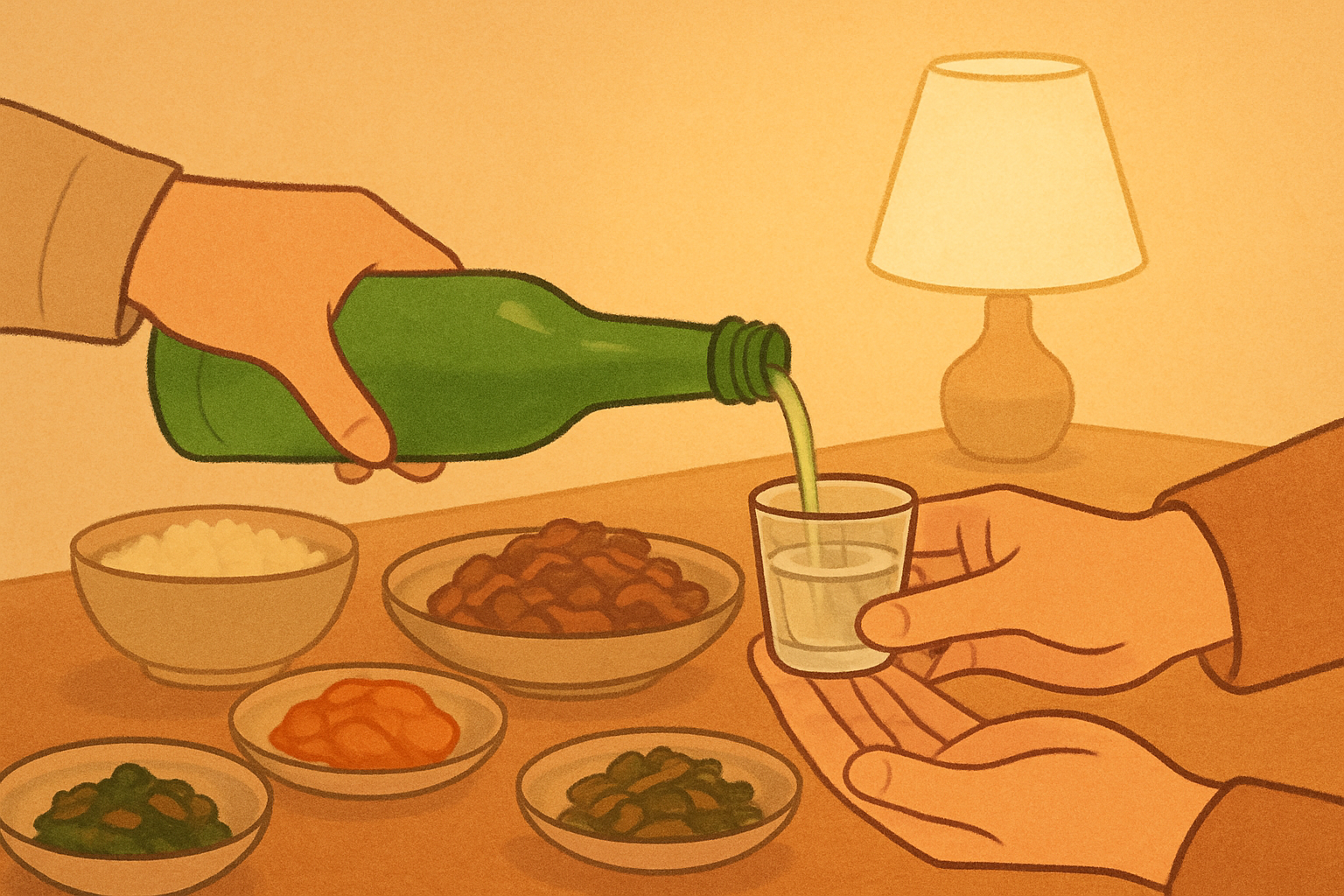
Here’s what I wish someone had told me before that dinner: when you pour for someone older than you, or someone in a position above you, you use two hands. One hand holds the bottle, the other rests lightly on your forearm or the base of the bottle. When you receive a drink from an elder, same thing — both hands on the glass, and you turn your head slightly away before you sip. It sounds like a small gesture. It isn’t. My wife told me later that her father mentioned it to her mother that same night — not that I’d done it right, but that I’d corrected myself without being told.
Where I actually got it right (eventually)
Two years into living in Goyang, I stopped thinking about it as a rule and started doing it without noticing — until my brother-in-law visited from Chicago last spring and I watched him make the exact mistake I’d made. One-handed pour, straight across the table, no hesitation. Nobody said anything. My father-in-law just quietly refilled his own glass and let it go, because a first-timer gets grace that a son-in-law of six years doesn’t. That’s the part that took me the longest to understand — the rule bends depending on who you are to the room.
It’s not just soju
The two-hand rule shows up everywhere once you notice it. Handing someone a business card, passing money at a corner store to an older cashier, giving a gift to a grandparent at Chuseok — all of it gets the same treatment if the other person is meaningfully older or senior to you. I now do it reflexively when I hand my daughter’s daycare teacher anything, which probably looks a little formal for a five-year-old’s snack bag, but old habits from a good scare stick.
What I tell other expats now
When friends visiting from the States ask me for one piece of advice before a dinner with Korean in-laws or coworkers, this is it. You don’t need to master the whole etiquette system in a weekend. Get the two-hand pour right, get the head-turn right, and you’ve covered maybe 80% of what actually gets noticed at the table. The rest people will forgive.
FAQ
Do I need to use two hands with friends my own age too?
Not really. Among close friends and peers, one-handed pouring is completely normal and nobody’s counting. The two-hand rule matters specifically with elders, in-laws, bosses, or anyone clearly senior to you — the more formal or hierarchical the setting, the more it matters.
What if I’m left-handed — does the hand matter?
I asked my father-in-law this directly once. He laughed and said the point isn’t which hand does what, it’s that both hands are visibly engaged and you’re not casually one-handing it like you would with a buddy. Support the bottle or glass with your other hand or forearm, and you’re fine either way.
Is it rude to pour your own drink?
At a formal dinner, yes — it’s considered a little awkward, almost like admitting nobody’s looking out for you. At my father-in-law’s table, I learned to keep an eye on everyone’s glass, especially his, and top it off before he had to reach for the bottle himself.
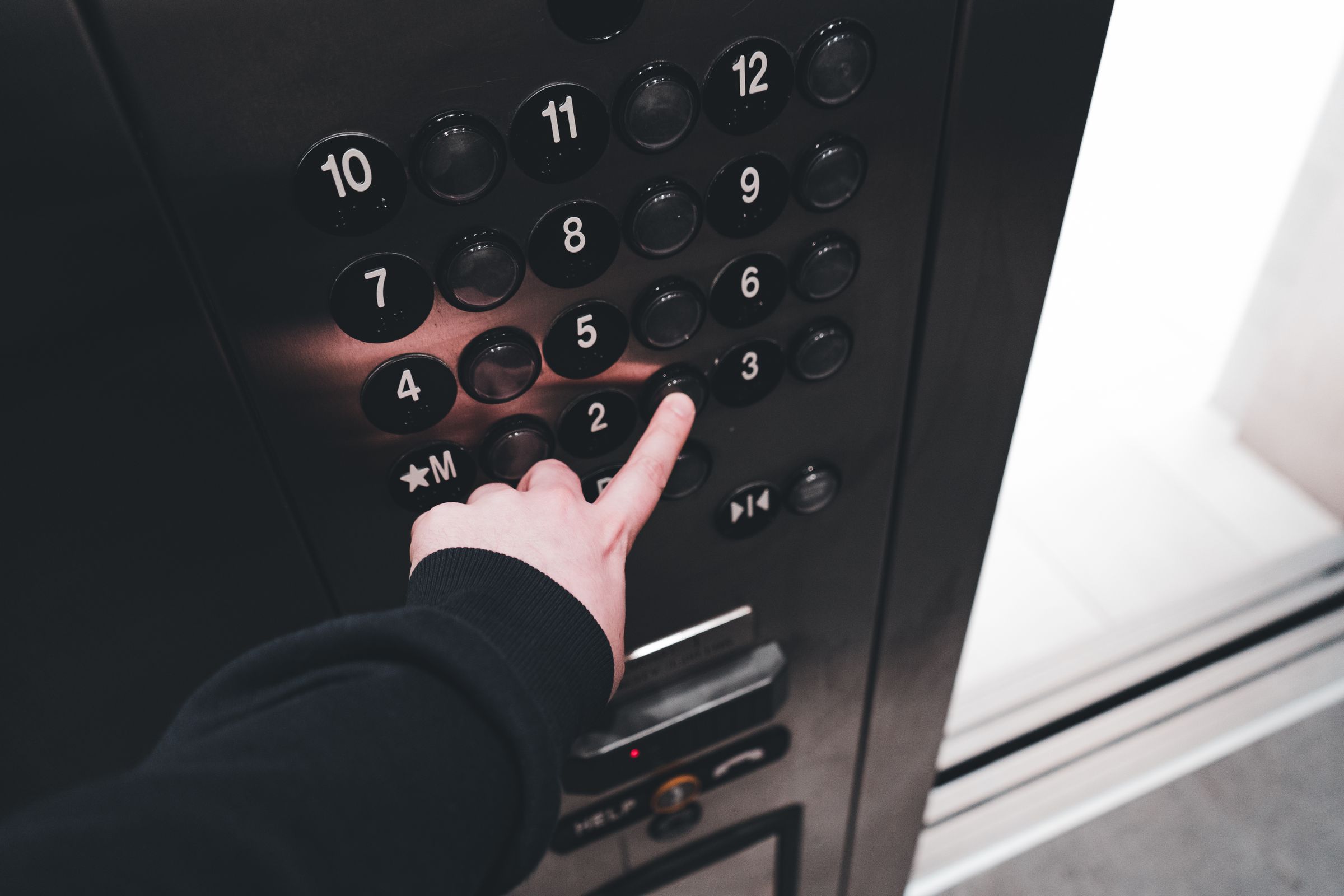
Somewhere around my third month in our Ilsan apartment building, I said “good morning” to a neighbor in the elevator and watched her flinch like I’d shouted. Not rude, just startled — the elevator ride from the 12th floor to the lobby is supposed to be quiet, and I’d broken the unwritten rule without knowing it existed.
The silence isn’t coldness
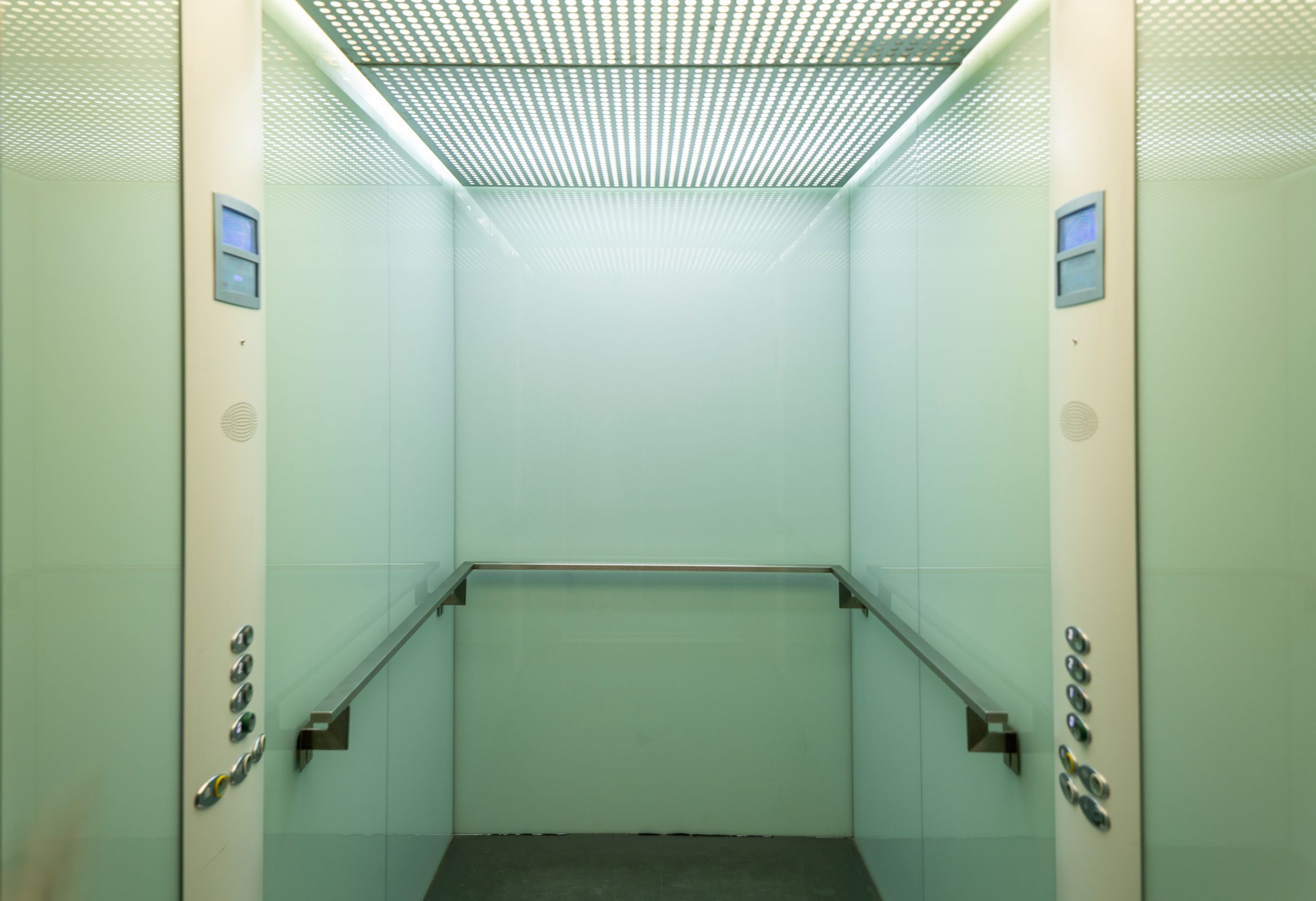
I used to read it as unfriendliness. Back home, a quick “morning” in a shared elevator is just what you do. Here, most people stand facing the doors, phone in hand or eyes on the floor indicator, and nobody expects small talk. My wife explained it to me plainly one night: it’s not that people dislike you, it’s that a packed elevator is already a small, enclosed space, and adding noise to it feels like taking up more room than you’re owed. Once I stopped taking it personally, I actually started to like it — nine floors of not having to perform friendliness before 8 a.m.
Who presses the buttons
This one took me longer to pick up on. Whoever ends up standing closest to the panel just presses floors for everyone getting on after them — nobody asks, nobody assigns it, it just happens. The first time I stood there and pressed six different floor numbers for six strangers without a word exchanged, it felt oddly efficient, almost choreographed. Now when I catch a ride down with my daughter, she reaches for the buttons like it’s her job, and I let her, because somebody near the panel handling it for the group is apparently a rule five-year-olds pick up faster than I did.
The step-out-and-back-in move
My favorite one, because it looked so strange to me at first: if someone behind you needs to get off and you’re not near the door, you step out onto the floor briefly, let them pass, then step back in. I watched a man in a business suit do this for an elderly woman on a crowded elevator in Seoul Station, stepping fully out into the hallway and back in within about two seconds, no words exchanged, no acknowledgment needed. It’s such a small physical courtesy that it took me three or four rides of watching before I even registered what I was seeing.
Where I still get it wrong
Honestly, phone calls. I still occasionally answer a call in the elevator out of habit, and I can feel the temperature of the space change slightly — not hostile, just a little more aware. My neighbor two doors down, an older man who always nods instead of speaking, is the one who taught me this without a single word: he just glances at the phone, then at me, and I hang up by the third floor every time.
FAQ
Is it okay to say hello to neighbors in the elevator at all?
A small nod or slight bow is completely fine and often appreciated, especially with someone you recognize as a neighbor. It’s specifically loud greetings, chatty small talk, or striking up conversation with strangers that feels out of place — a quiet nod reads as polite, not cold.
What if I’m holding the door for someone far away — should I wait?
Generally yes, a few extra seconds is normal courtesy, but Koreans tend not to sprint for it the way people sometimes do elsewhere. I’ve had neighbors wave me on rather than rush, which surprised me the first few times — nobody wants to make a scene over an elevator.
Do these rules apply the same way outside of apartment buildings, like in office buildings?
Mostly yes, though office elevators add a layer of rank — in my wife’s office, junior employees are expected to hold the door and let senior coworkers exit first, which is one more thing layered on top of the quiet-and-step-aside rules everyone already follows.