A coworker once grabbed my wrist mid-signature. I had borrowed the only pen on her desk that actually worked, a red one, and was about to scrawl my name across a delivery slip when she stopped me like I’d reached for a live wire. “Not red,” she said, already swapping it for a black one. I laughed it off at the time, chalked it up to office quirk, and went about my day. It took me another two years in Korea to realize what she’d actually stopped: I’d almost written my own name in the color reserved for the dead.
Superstition here isn’t a costume anyone puts on for a festival, and it isn’t a folk-tale relic trotted out for tourists at a hanok village. It lives in ordinary moments — a pen swap, a hesitation before handing someone a gift, a quick glance at a calendar app before booking a wedding hall. I’m Yijidaddy, an American who has now spent years raising a family in Korea, and what follows isn’t a checklist copied from a textbook. It’s the stuff I’ve actually bumped into, the moments where I said “wait, what?” out loud, and the explanations that followed.
Fan Death: The One That Never Fully Left
Somewhere in my first humid August here, an older relative on my wife’s side walked into our bedroom, saw the electric fan running with the door shut, and turned it off without a word of explanation — just an expression that said I was tempting fate. Fan death, the belief that sleeping in a sealed room with a fan running can kill you through suffocation, hypothermia, or some vague combination of the two, is one of Korea’s most famous superstitions abroad, and honestly one of the hardest for a foreigner to take seriously at first. I didn’t. I ran fans all night for a solid year before I even heard the term.
Here’s what surprised me: this isn’t some ancient shamanistic holdover. It traces back to newspaper reports from the 1920s, decades before window-unit air conditioning was common, warning readers that this strange new appliance could cause facial paralysis or worse. Fans back then even sold with automatic timers built in specifically so people could set them to shut off in the middle of the night. Even now, in 2026, you’ll still find that timer button on nearly every fan sold at Korean electronics stores — a quiet, everyday fossil of a fear that officially nobody admits to believing anymore. My father-in-law will insist he doesn’t buy into fan death, and then, without fail, hits the timer button before he goes to sleep. The belief may have faded; the reflex it trained into three generations clearly hasn’t.
Writing a Name in Red Ink
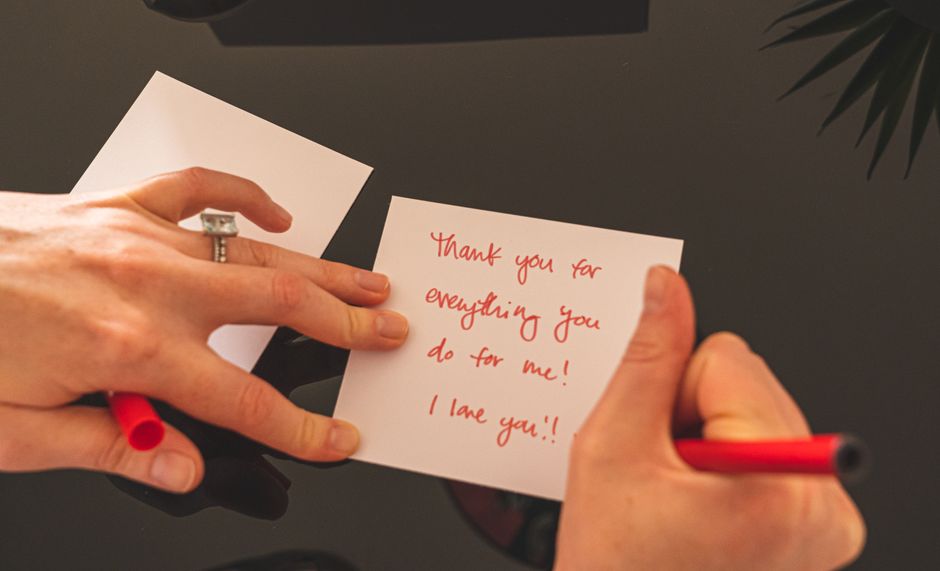
Back to that pen. In the family register system Korea used for generations, the names of the deceased were recorded in red ink, which is why writing a living person’s name in red carries an unmistakable undertone: either you’re marking them for death, or you’re already treating them as gone. I’ve since watched this rule hold firm in places you wouldn’t expect — teachers correcting homework in red are fine because that’s marking mistakes, not names, but a red signature on a contract, a red-inked birthday card, even a red highlighter dragged under someone’s name on a whiteboard can draw an actual wince from people in the room.
What I didn’t expect is how the rule bends depending on context. Grading in red is completely normal. Red seals on official documents (the kind used for stamping instead of signing) are totally fine too, since that’s a different tradition entirely. It’s specifically the handwritten name, in red, that sets people on edge. My daughter came home from elementary school once having used a red gel pen to write her friend’s name on a birthday card, purely because it was the prettiest color in her pencil case, and her teacher gently steered her toward a different pen without making it a whole lesson. No lecture, just a quiet correction — which somehow made me take the superstition more seriously than if she’d explained it outright.
The Number Problem: Four, and the Math of Gift Money
If red ink marks the end of a life on paper, numbers can apparently summon the same ending out loud. You’ve probably already heard that many Korean apartment buildings skip labeling the fourth floor “4,” swapping in an “F” instead, since the number four (사, sa) is a near-homophone for the word for death. I’ve written about that building quirk elsewhere, so I won’t retread it here — but the number-four aversion runs well past elevator buttons, and that’s the part fewer people talk about.
It shows up hardest at weddings, in the little white envelopes everyone hands over at the door. Korean wedding gift money is supposed to come in odd numbers of 10,000-won units — 30,000, 50,000, 70,000, 100,000 — because odd numbers are traditionally read as auspicious, tied to yang energy, while even numbers lean toward yin and, by extension, funerals. It sounds like a tidy rule right up until you’re standing at an ATM doing the math under pressure: 40,000 won is out for the obvious reason (there’s that 4 again), but so is anything landing on an even multiple once you’re past six figures, unless it happens to be a “double” amount like 100,000, which gets a pass because round hundred-thousands are treated as their own category. I showed up to my first Korean wedding with what I thought was a perfectly generous 40,000 won tucked into a card, and the friend who’d invited me pulled me aside at the entrance to fix it before I even got near the guestbook table. Fifty thousand, cash, plain envelope, no note. I’ve never miscounted since — the number stuck the way a burned hand remembers a stove.
Picking a Wedding Date Isn’t Just About the Venue’s Calendar
This is the one that genuinely surprised me, because it runs so counter to how casually a lot of Western couples pick a wedding date — whatever Saturday the venue and the caterer both have open. In Korea, plenty of couples, especially when either family leans traditional, will still take their birth information to a saju reader for something called gunghap (궁합), a compatibility reading that checks how well two people’s “four pillars of destiny” — birth year, month, day, and hour — line up with each other.
If the gunghap reading comes back favorable, the next step is taekil (택일): picking an actual auspicious date for the ceremony itself, sometimes down to the hour, cross-referenced against the lunar calendar and each partner’s chart. I’ve sat in on this process exactly once, for my wife’s cousin, and it was nothing like the mystical Hollywood version I’d half-expected — no incense, no candlelight, no dim back room. It happened in a bright, ordinary-looking office two floors above a dry cleaner, the fortune teller working from a laptop and a well-worn paper ledger side by side, occasionally tapping dates into a calendar app while flipping back to a chart printed in hanja. It looked more like a scheduling meeting with extra math than a séance — the couple sitting there half-amused, half-genuinely invested, waiting to see which Saturday would survive the cross-check. Even couples who describe themselves as “not really believers” often go through with it anyway, treating it less like prophecy and more like a cultural formality you don’t skip, the way you might not skip asking a parent’s blessing even if their answer was never really in doubt. Surprisingly, more than one Korean friend has told me they’d never marry someone their family’s fortune teller flagged as a bad match, even if every other sign pointed to “yes.” That’s not something I expected to hear from people who also, in the same conversation, laughed off horoscopes as nonsense.

What You Should Never Wrap and Hand Someone
That same hyper-attention to auspicious timing doesn’t stop at the altar; it follows the couple straight into the gift-wrapping aisle. Gift-giving here comes with its own quiet minefield, and I found most of it out the hard way, one raised eyebrow at a time.
Footwear and fast exits. Shoes are the big one for couples: give your girlfriend or boyfriend a pair of shoes and, according to the old belief, you’re handing them a fast exit — they’ll literally run away from you in them. I’ve noticed this one softening in real time. Younger couples I know gift sneakers to each other constantly, often as a joke referencing the superstition itself (“don’t run away, okay?” scrawled on the box), which tells you something about how a taboo survives even after most people stop fearing it: it turns into a bit.
Clocks and other linguistic landmines. Clocks are a firmer no, and this one still holds strong across age groups. The issue isn’t the object, it’s the phrase — “to give a clock” in Chinese characters (送鐘, songjong) sounds identical to a phrase meaning “to attend a funeral” or “to see someone off in death.” Picture handing a friend a wristwatch in English and having it come out of your mouth sounding exactly like “here’s to your funeral” — that’s the jolt a Korean grandmother hears when a clock comes out of the wrapping paper. I nearly bought my father-in-law a nice wall clock for his birthday before a Korean friend physically intercepted me in the store. Handkerchiefs made the same “no” list in my research, for a similarly grim reason: they’re associated with wiping away tears, which makes them read less like a gift and more like an omen. Knives and scissors round out the taboo list too, tied to the fear of “cutting” a relationship — though I’ve watched people gift kitchen knife sets anyway, usually taped with a coin so the recipient can technically “buy” the knife for a token amount and dodge the curse on a technicality. Even the workarounds have their own logic.

What You Dream About on New Year’s Actually Matters
The superstition I’ve come to enjoy the most, mostly because it’s the only one that comes with genuine excitement attached rather than dread, is 돼지꿈 — the pig dream. Dream about a pig, especially a fat one, or better yet a whole crowd of them, and you’re supposedly due for a windfall. The connection isn’t random: the Sino-Korean character for pig overlaps conceptually with abundance and wealth, and pigs themselves have long symbolized prosperity in Korean folk tradition, the same way they show up on old wedding chests and in New Year folk paintings.
What genuinely surprised me the first time I heard about it was how literally people act on it. Dream about a pig around New Year’s — Seollal or just the start of the Gregorian calendar year — and it’s completely normal to head straight to a lottery kiosk and buy a ticket before the feeling fades. My wife did exactly this on January 2nd one year, recounting a dream about a pig blocking traffic on the way to her office, and bought five thousand won of instant scratch tickets on her lunch break. She didn’t win anything, for the record, but she wasn’t remotely embarrassed about having tried, and neither was the coworker standing next to her in line doing the exact same thing. It’s treated less like blind faith and more like hedging a bet you already feel good about — low cost, genuine excitement, zero shame if it doesn’t pan out.
Even more than the buying, it’s the trading that got me. A good pig dream is treated almost like a tradable asset — I’ve heard of coworkers half-jokingly offering to “sell” a particularly vivid pig dream to a friend for a few thousand won, on the theory that once you’ve described a dream out loud and someone else “buys” it, the luck transfers with the story. Whether anyone actually collects on that is beside the point; the ritual of it is the fun. And the lottery-line effect is real, not just family folklore — convenience-store lottery counters near office districts in Seoul reliably see longer Monday-morning queues right after New Year’s, filled with people who woke up from the right kind of dream over the holiday and aren’t about to let the feeling go to waste. It’s the one superstition on this list where nobody’s afraid of anything. Everybody’s just hoping.
Believing a Little, On Purpose
What strikes me most, after all these years, isn’t that Koreans “believe” in superstition in some absolute sense — most people I know would tell you, straight-faced, that they don’t put real stock in fan death or red ink. And yet the fan timer still gets pressed. The red pen still gets swapped out. The wedding envelope still gets counted twice. I’ve started doing some of this myself, not because I’ve become a believer exactly, but because the habits carry their own quiet logic once you’ve lived inside them long enough. There’s something almost comforting about a superstition nobody fully believes but everybody still honors — it costs nothing to be careful, and the alternative is being the one person in the room who finds out the hard way that everyone else was taking it more seriously than they let on.
Frequently Asked Questions
Is fan death taken seriously by younger Koreans, or is it mostly an older generation thing? In my experience it splits generationally but not as cleanly as you’d expect. Most people under 40 will tell you it’s not real, medically speaking, but plenty of them still won’t run a fan all night in a sealed room out of pure habit — less belief, more muscle memory passed down from parents and grandparents.
Do foreigners get a pass on these superstitions, or is it considered rude to break the rules by accident? Nobody’s ever gotten angry at me for a slip-up — the red pen moment, the almost-clock — but the correction usually comes fast and a little bit protective, like they’re saving you from bad luck rather than judging you for ignorance. I’d still say learn the shoes-and-clocks list before your first big Korean event; it’s a small thing that goes a long way.
What happens if you can’t avoid an even-numbered amount of wedding gift money, say because that’s all the cash you have on hand? In practice, people just round up. I’ve never seen anyone hand over an awkward even number on principle — you go to an ATM, you round to the nearest odd ten-thousand, and nobody thinks twice about it. The rule bends to convenience far more easily than the shoes-and-clocks rule does.