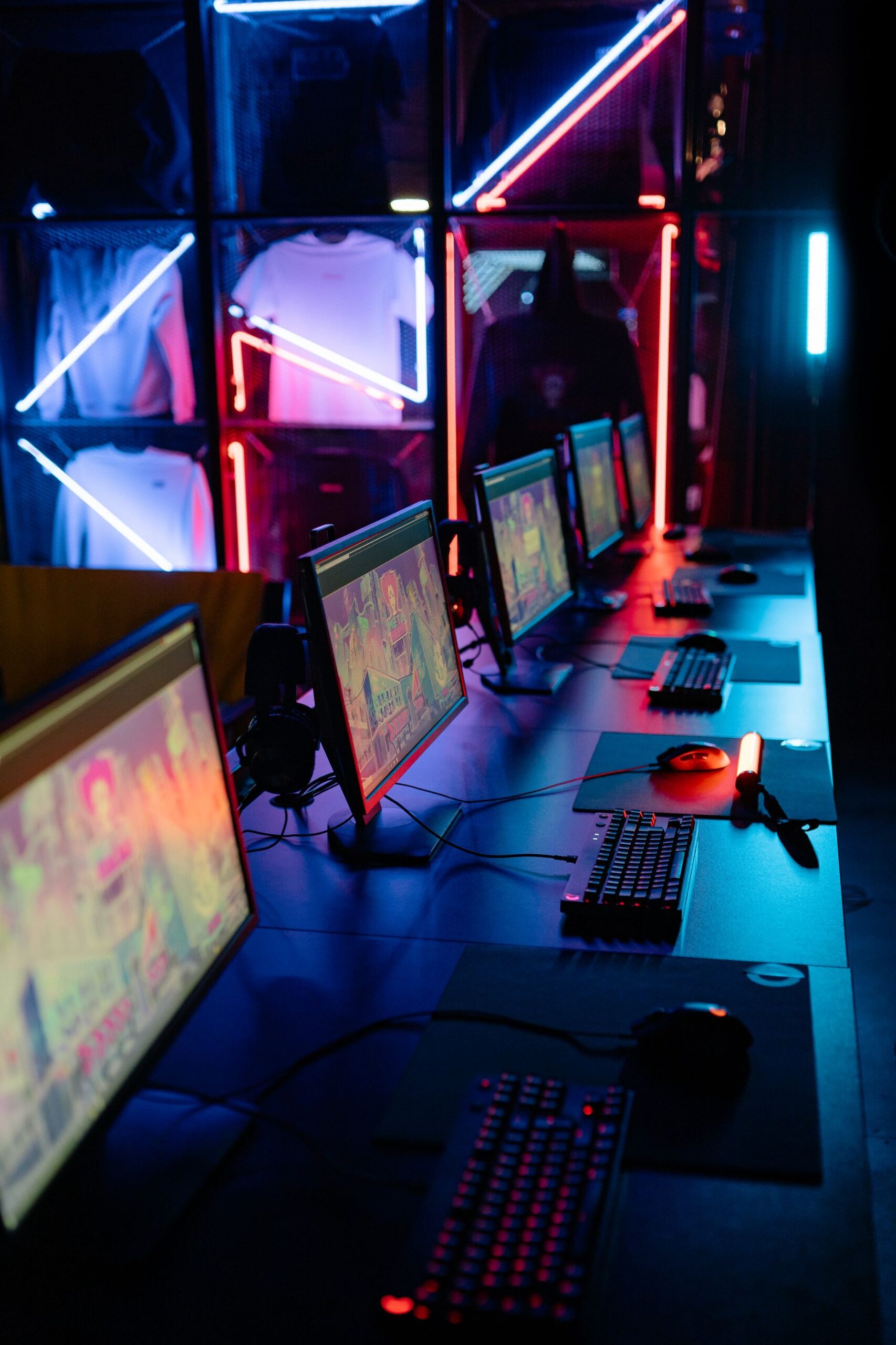
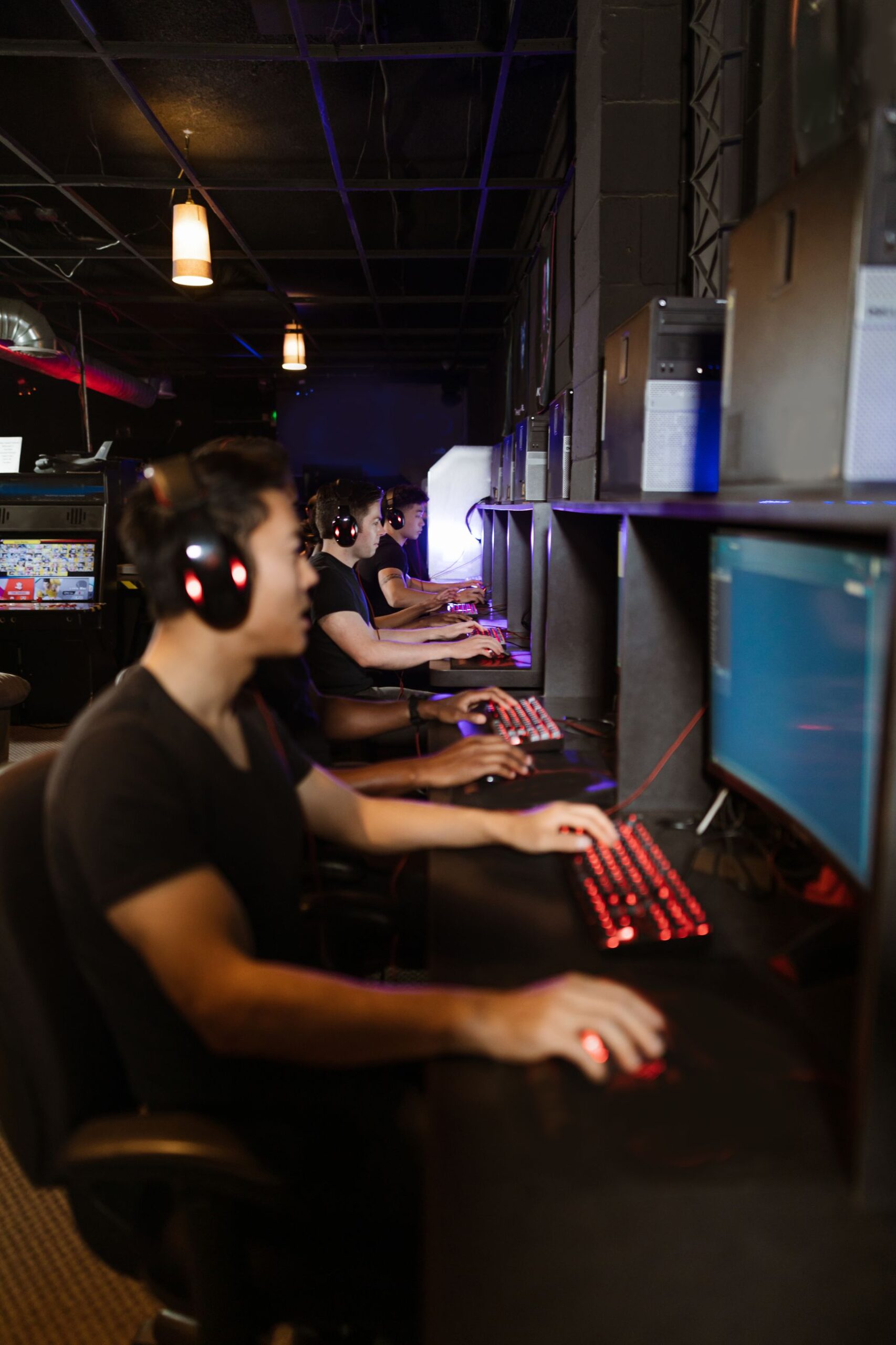
There is a specific kind of confusion that hits every new arrival in Korea the first time they see a sign that just says “PC” in giant neon letters above a stairwell going down into a basement. Not a repair shop. Not an electronics store. You go down the stairs expecting something computer-adjacent and boring, and instead you walk into a dim, humming room lit mostly by monitor glow, dozens of faces lit blue-white and completely absorbed, the click of mechanical keyboards overlapping with the whir of heavy-duty cooling fans, someone’s headset picking up a muffled burst of team chat every few seconds. Forty people, all somehow playing the same game at eleven on a Tuesday morning. Nobody warns you about this. My own first reaction was the one nearly every bewildered new arrival has: is this legal, is this a front for something, and why does it smell like ramyeon and energy drinks in exactly equal measure.
It is, of course, completely legal, extremely normal, and one of the more quietly brilliant pieces of infrastructure this country has built. A PC방, PC bang if you’re transliterating, literally means “PC room,” and it is the closest thing Korea has to a corner pub, except instead of beer you’re paying for bandwidth and a chair that reclines further than most business class seats. You’d think an internet cafe is just an internet cafe wherever you go, but that assumption falls apart within about thirty seconds of sitting down in one of these places. The chair alone tells you something different is happening here, and so does the ordering software glowing in the corner of the screen before you’ve even opened a game.
What a PC Bang Actually Is
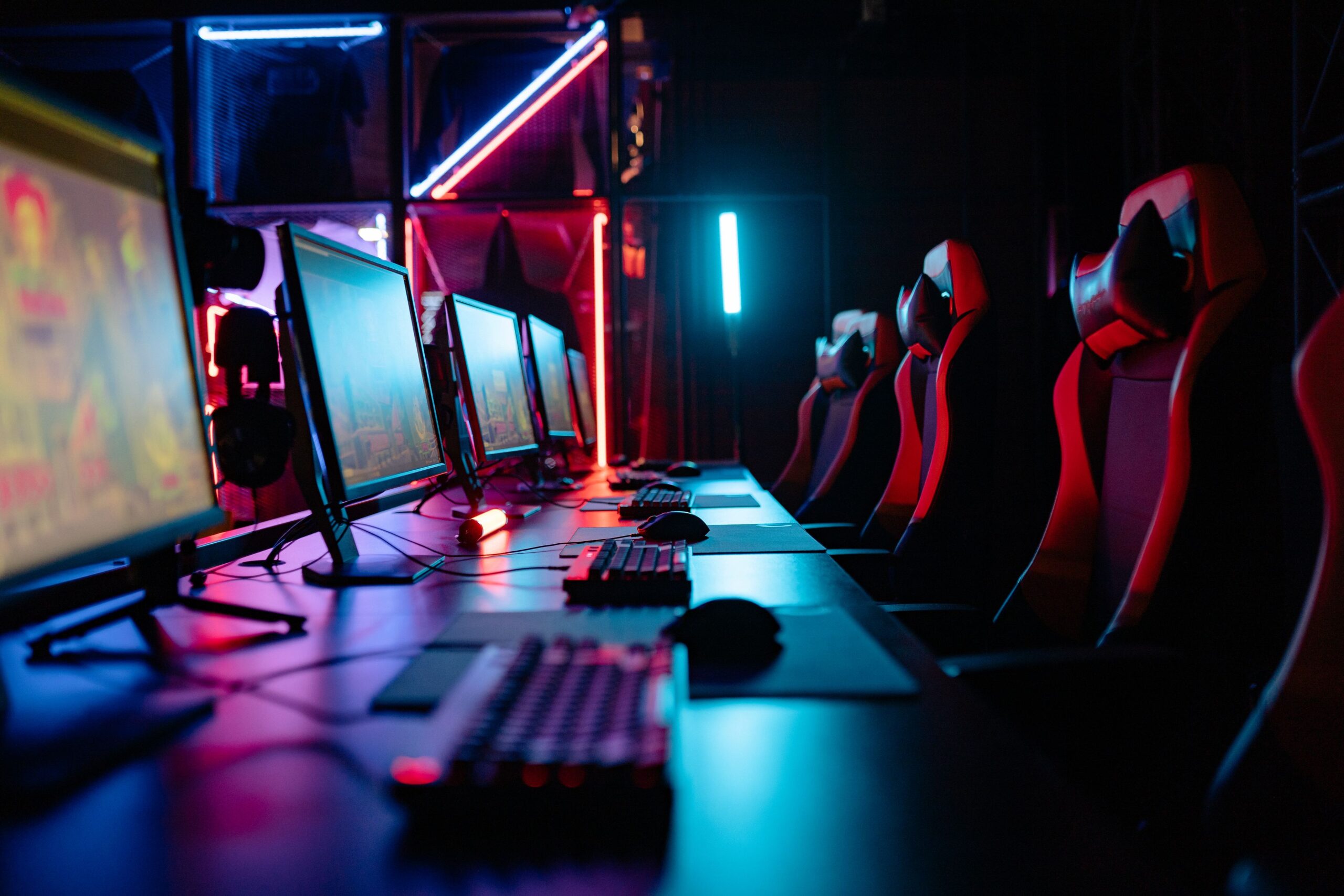
Strip it down and a PC bang is a room full of desktop computers you rent by the hour, usually running the latest games at settings your own laptop could only dream about, on a connection that makes buffering feel like a myth from another decade. That much sounds like the internet cafes some of us remember from the early 2000s in other countries, the kind with sticky keyboards and a vague smell of bleach. The similarity ends almost immediately. Korean PC bangs invested early and kept investing, cycling through top-tier graphics cards, the kind of Nvidia RTX-class hardware you’d expect in a serious home gaming rig rather than a rental terminal, because the entire business model depends on people wanting to sit there for hours, not minutes. A slow machine means a customer who leaves after twenty minutes. A fast one means a customer who orders dinner.
And that difference in incentive, more than anything else, is why the whole experience feels engineered rather than incidental. Nobody stumbled into gaming chairs and seat-side food service by accident. It grew out of a very specific economic logic: charge a small amount per hour, keep people comfortable enough that they stay for four or six hours instead of one, and sell them everything else in between.
The StarCraft Roots
To understand why that logic took hold so completely here, it helps to go back to where PC bangs actually came from, because the density on today’s street corners isn’t a recent trend, it’s closer to sediment built up over three decades. In the late 1990s, after the Asian financial crisis, the Korean government pushed hard on broadband infrastructure as part of a broader economic recovery push, and PC bangs multiplied fast as a cheap, shared way for ordinary people to access that new high-speed internet before most households had it at home. Blizzard’s StarCraft landed right into that moment in 1998 and took off in Korea on a scale that reportedly startled even its own publisher, accounting for a very large share of the game’s total global sales that year. PC bang owners started running informal tournaments among their regulars to keep people coming back, those tournaments grew reputations and rivalries, and what began as a marketing gimmick for gaming cafes eventually scaled into something that filled hotel ballrooms and later stadiums, creating the professional esports industry Korea is still known for today. You don’t have to care about esports at all to still be living inside the infrastructure that history built. The PC bang on your corner is basically a living fossil of that entire arc, still running the same core business model it did before esports was a word anyone used.
The Ordering System, or Why You Never Have to Stand Up
This is the part that genuinely surprised me, and I think it surprises most people who grew up with the Western idea of an internet cafe as a place you check email and leave. In a Korean PC bang, your monitor is also a menu. A small ordering program sits minimized in the corner of the screen, and with a couple of clicks you can order ramyeon, fried chicken, tteokbokki, a pork cutlet, coffee, or one of roughly a dozen energy drinks, and someone brings it directly to your seat, usually within five to ten minutes. You do not stand up. You do not interrupt your game. You do not even have to pause to hand someone cash, since it usually goes straight onto your session tab. A bowl of ramyeon typically runs somewhere around three to four thousand won, a few dollars at most, and most other dishes stay under ten thousand won, so a full meal rarely breaks the price of a movie ticket.
I still find this a little absurd in the best way. There is something almost funny about a business model built entirely around the premise that once you sit down, you shouldn’t have to get back up, and has built an entire kitchen operation around that fact rather than fighting it. Most of the food is inexpensive too, which keeps the math working for both sides: the cafe makes money on food margins as much as screen time, and the customer never has to break concentration on a ranked match to go find dinner.
Pricing, and Why It Never Quite Adds Up the Way You Expect
Base hourly rates tend to sit somewhere in the range of one thousand to two thousand won, roughly one to two dollars, give or take depending on the neighborhood and how new the machines are. That sounds almost silly compared to gaming cafes in a lot of other countries, and it is. But the pricing structure is where the actual cleverness lives. Most places sell bulk time packages, ten hours, twenty hours, sometimes more, at a meaningfully lower per-hour rate than paying as you go, and plenty of regulars keep a running balance loaded onto a membership card the way you might keep money on a subway card. You’d expect that kind of volume discount to be a niche option, but it is often the default way people actually pay, which quietly reframes the PC bang from “occasional treat” into “place you have a running tab at,” not unlike a bar where the owner already knows your order.
Add food, and a few hours can genuinely cost less than a single movie ticket with popcorn. That is not a coincidence. It is the entire point. A PC bang only works as a business if the per-visit cost stays low enough that stopping by after work, or killing time before the last subway train, never feels like a real financial decision. It is priced to be a habit, not an event, and once you’re locked into that cheap, habitual rate, the thing that actually decides how long you stay stops being the price and starts being your body. Which is exactly where the chair comes in.
Gaming Chairs and the Cult of Comfort
You could argue the gaming chair is the actual star of the operation, more than any graphics card. These are not the flimsy office chairs you’d find in a budget internet cafe elsewhere. They recline, they have real lumbar support, some have built-in speakers in the headrest, and after four hours in one you start to understand why people who haven’t sat in an actual barber’s chair in years will happily sink into one of these without a second thought. There is a reason PC bang chairs occasionally show up as a punchline in Korean entertainment, the exaggerated fantasy seat that pampers a person who is, on paper, just sitting at a desk. The joke works because the comfort is real, not because it’s absurd.
Comfort here is not decoration, it’s strategy again. If your back hurts after ninety minutes, you leave after ninety minutes. If the chair genuinely holds you, the four-hour session becomes plausible, and the whole economic model above depends on exactly that. It still gets me every time how much of what looks like indulgence in Korea turns out, on closer inspection, to be quietly load-bearing for something else entirely.
Why There’s One on Every Corner
Walk through almost any residential or university neighborhood in a Korean city and you will pass at least one PC bang sign within a few blocks, often more than one, sometimes two on the same street competing on late-night hours or newer monitors. That density looks excessive until you think about who’s actually using the space. It is not just teenagers skipping class, although that stereotype exists for a reason. It is office workers killing forty minutes before a dinner appointment, university students studying in the library who need a break that isn’t quite home, groups of friends who want to play the same game side by side rather than over a voice call, and, in cities where apartment sizes are famously modest, people who simply do not have room at home for a proper gaming setup and see no reason to buy one when a better rig sits two minutes away for a couple of dollars an hour.
That last point is easy to underestimate if you’re coming from a country where a spare bedroom or a garage makes a home gaming setup unremarkable. Picture a standard one-room studio here, the kind where the bed, the desk, and the kitchen counter are all within arm’s reach of each other. There is simply no square footage left over for a dedicated gaming corner, let alone a second monitor and a proper chair. A PC bang effectively rents you the space you don’t have, along with hardware you’d otherwise have to justify buying outright for an apartment that can’t hold it. Once you look at it that way, the density on every corner stops looking excessive and starts looking like a fairly rational response to how people actually live here.
How This Differs From a Western Internet Cafe
The comparison is worth spelling out plainly, because it’s easy to assume these are the same thing wearing different signage. The old internet cafe model treated the computer as a utility, a tool you used briefly and left, usually billed by the minute for printing or a quick email check. The Korean model treats the seat as a destination in itself, built for hours-long social gaming, complete with food service, membership pricing, and hardware upgraded on a competitive cycle most public libraries would never dream of matching. One is a service you use out of necessity. The other is closer to a hybrid of a sports bar and a co-working space, minus the coffee snobbery and plus a much better chair.
FAQ
Do I need to speak Korean to use a PC bang? Not really. Most ordering software has enough visual menus and icons that you can point and click your way through, and staff are used to foreigners wandering in confused. Bring a bit of cash or a card for the membership deposit some places ask for, and you’ll be fine even with zero Korean.
Are PC bangs only for hardcore gamers? Not at all. Plenty of people use them to browse, do light work on a bigger monitor, or just have somewhere warm and cheap to sit for a couple of hours between appointments. Nobody checks what you’re doing on your screen.
Is it awkward to go alone? Genuinely no, and this ties into something I’ve written about before on this blog regarding eating alone in Korea: PC bangs are one of the most solo-friendly spaces in the country. Half the room is already sitting there by themselves, headphones on, completely unbothered.