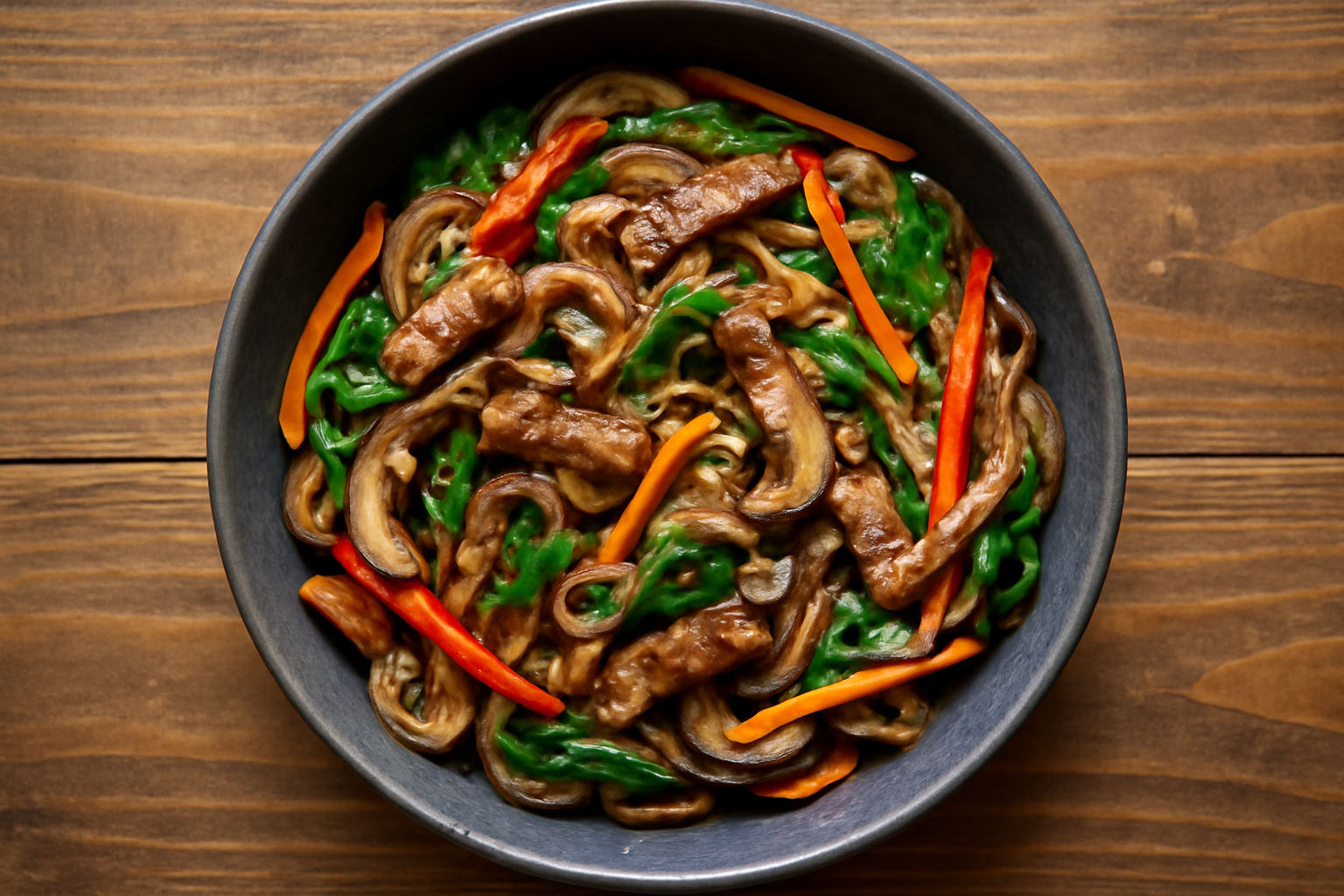
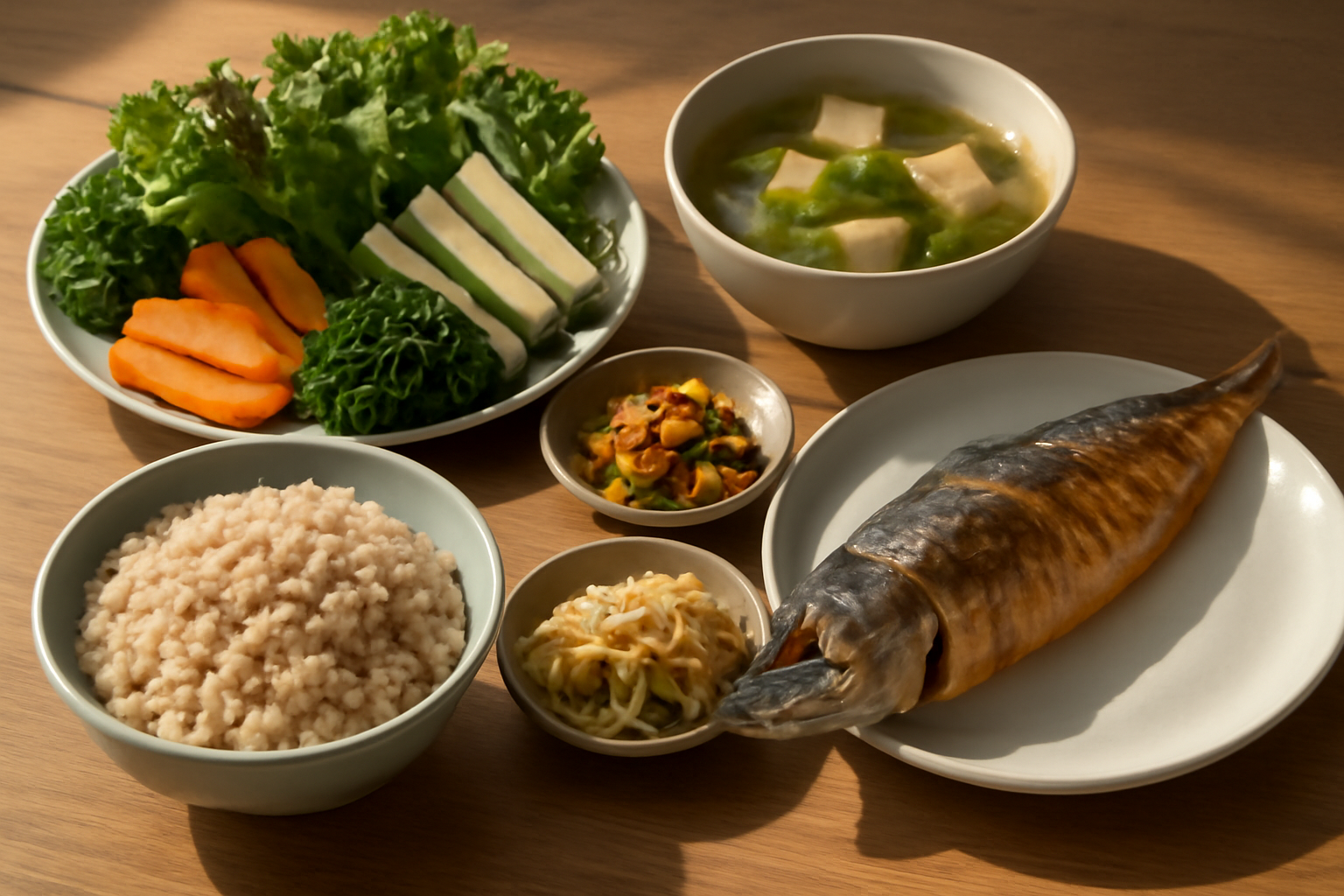
My father-in-law texts me almost every morning. Not “how’s it going” or “sleep well?” — just four words, in Korean, that show up like clockwork: 밥 먹었어요? Did you eat?
The first year I lived in Korea, I answered this question like it was an actual question. I’d type out what I had for breakfast, sometimes with a photo, proud of my toast-and-eggs report. It took an embarrassingly long time for my wife to gently explain that nobody was checking my nutrition. He wasn’t asking what I ate. He was asking if I was okay.
The Question That Isn’t Really a Question
“밥 먹었어요?” (bap meogeosseoyo) translates literally to “have you eaten rice?” — bap being the word for cooked rice, and by extension, a meal in general. In practice, it functions the way “how are you” functions in English: a social reflex, not a request for a status update. You’re supposed to say yes and keep walking. Answering with a detailed rundown of your actual meal is, in its own small way, missing the point — like replying to “how’s it going” with your blood pressure numbers.
I know that now. I did not know that then. And once I understood it, the phrase stopped sounding strange and started sounding, honestly, kind of beautiful.
Where This Comes From
You can’t really understand this greeting without going back to the wreckage after the Korean War. The country was flattened. Farmland was destroyed, infrastructure was gone, and for a long stretch through the 1950s and into the 1960s, hunger wasn’t an abstraction — it was a daily, physical fact for a huge share of the population. Whether someone had actually managed to eat that day was not small talk. It was a real gauge of whether they were surviving.
Asking “did you eat” in that era meant something close to “are you making it.” Neighbors asked each other. Parents asked children the second they walked in the door. It was the most concrete way to check on someone’s wellbeing, because in a country recovering from famine and war, food security and life security were basically the same thing.
Korea’s economy has obviously changed beyond recognition since then. Nobody in Seoul is worrying about where their next bowl of rice is coming from. But the phrase never got the memo. It stuck around, hollowed out its literal meaning, and kept the emotional core — the part where asking about food is really a way of saying I’m thinking about you.
Who Says It, and When
This is where it gets interesting, because the phrase isn’t locked into one kind of relationship. It shows up everywhere, just with different weight attached.
Parents and grandparents
This is the classic version, the one baked into Korean dramas and comedy sketches. A mother greets her adult child at the door with it before “hello.” My mother-in-law asks it before she asks about my daughter’s school day. It’s the opening line of care, deployed before any actual conversation starts.
Bosses and coworkers
In the office, it softens hierarchy. A boss asking a junior employee “did you eat lunch?” on a busy day is a small, low-cost way of acknowledging that the person under them is human and might be buried in work. It doesn’t fix the workload, but it registers that someone noticed.
Friends checking in
Between friends, especially after a rough patch — a breakup, a bad week, news of a layoff — “did you eat?” often stands in for “I heard, and I’m here.” It’s less intrusive than asking directly how someone is coping. It gives the other person an easy, low-stakes way to answer without unpacking their feelings if they’re not ready to.
Strangers and near-strangers, rarely
This one is not a stranger-greeting the way “how’s it going” can be tossed at a cashier. It carries some intimacy. Using it with someone you barely know can land as oddly warm, or oddly forward, depending on the context.
How You’re Supposed to Answer
The correct response, ninety percent of the time, is simply “네, 먹었어요” — yes, I ate — regardless of whether you actually have. It’s a script, and the script exists so both people can move on to whatever they actually wanted to talk about.
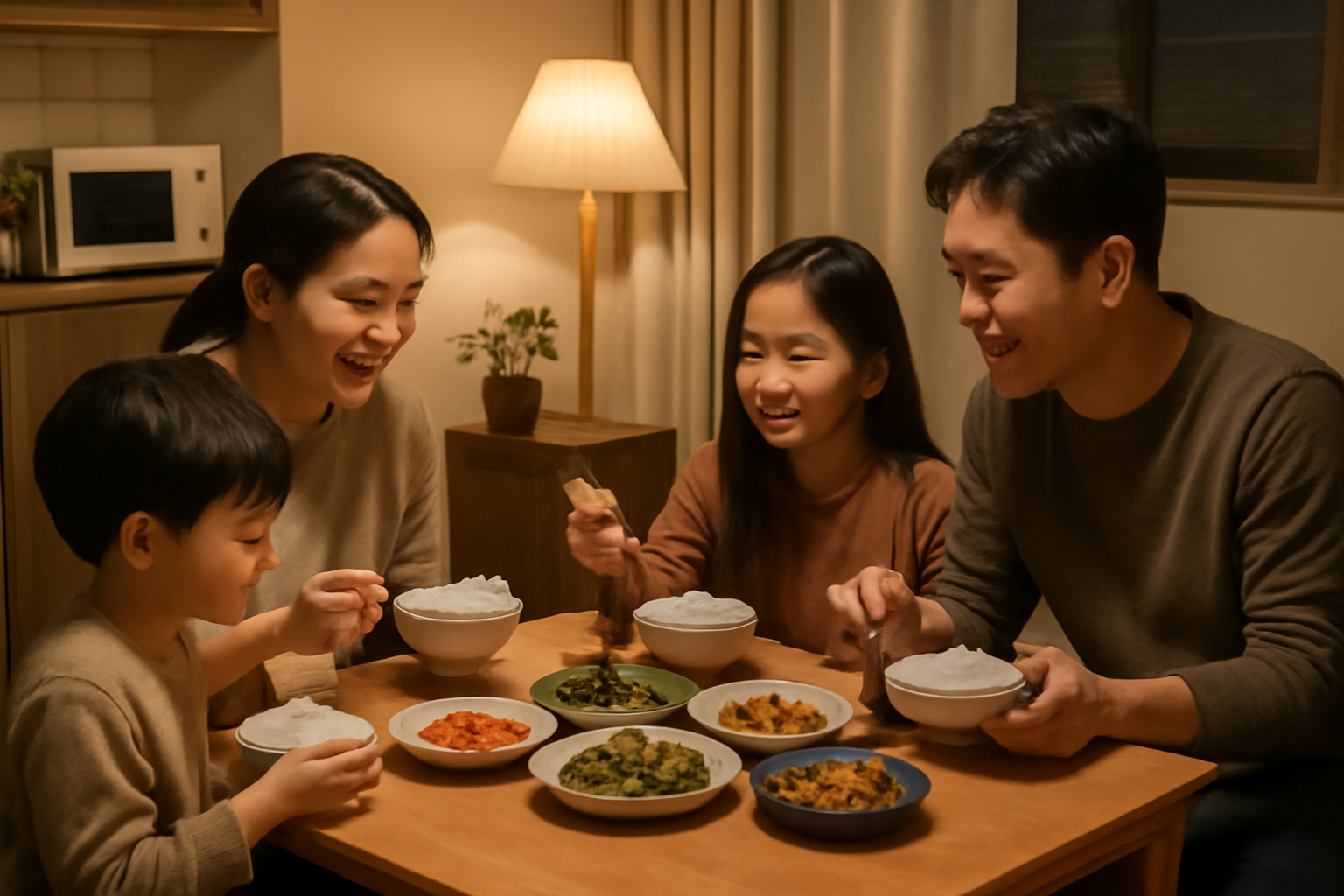
There is a narrow exception. If it genuinely is mealtime, and you genuinely haven’t eaten, and you’re talking to someone who has the power to feed you — your mother-in-law, a close aunt, a host — saying “no, not yet” can trigger an immediate, sometimes alarming mobilization toward the kitchen. I have watched a pot of stew appear in under four minutes flat. If you’re not in the mood to eat right then, it’s safer to say “괜찮아요” (I’m fine) right after, which signals no rescue mission is required.
The Foreigner’s Mistake, Made Once (or Twice)
I’ve made this mistake more than once, actually. Beyond the toast-and-eggs texting incident, there was the time a coworker asked if I’d eaten and I launched into an honest complaint about how the cafeteria was out of my usual dish. He nodded politely and had absolutely no idea what to do with that information, because he hadn’t asked a real question. I’d handed him data he didn’t request, the conversational equivalent of answering “how’s it going” with a full itinerary of your day.
The mistake foreigners make with this phrase almost always runs one direction: taking it literally. We hear “did you eat” and our brains go straight to logistics — what, when, where, was it good. Koreans hear the same words and register something closer to a hand on the shoulder.
Not Unique to Korea
Once you notice this pattern, you start seeing it elsewhere too. Mandarin has “吃饭了吗?” (have you eaten?), rooted in a similar history of famine and postwar scarcity. Filipino culture has “Kumain ka na ba?” as a near-automatic greeting at someone’s door. Older generations in parts of the American South and in immigrant households across the U.S. lean on “are you hungry?” as a default expression of love, because offering food is often easier than naming the feeling directly. What sets the Korean version apart is how thoroughly it’s baked into everyday greeting culture — not just family kitchens, but office hallways and text check-ins, functioning as the default opener rather than an occasional gesture.

Why It Still Gets Me
What changed my relationship to this phrase wasn’t a language lesson. It was watching my father-in-law send that same text on a morning when he clearly had bigger things going on — a doctor’s appointment, a bad night’s sleep, whatever it was that had him quieter than usual at breakfast. He still typed it out. Did you eat? That’s when it landed for me: this is a language built by people who once genuinely didn’t know if the people they loved had enough to eat, and who never fully let go of checking. Every time someone asks me now, I don’t hear a question about rice. I hear an old habit of survival that quietly turned into a habit of love, handed down long after the hunger that created it was gone.
FAQ
Do I need to actually answer with what I ate?
No. The expected reply is a quick “yes, I ate,” even if that’s not strictly true. Treat it like “how are you” — a greeting formula, not a request for details. Giving a literal food report tends to confuse the other person more than it informs them.
Is this only used by older generations?
It skews more common among parents, grandparents, and older coworkers, but it’s not exclusively an older-generation phrase. Younger Koreans use it too, especially with close friends or after hearing someone had a hard day — it’s just one of several ways they express care, alongside more casual phrases.
What if someone asks and I actually haven’t eaten and I am hungry?
Then it’s fine to say so plainly — this is one of the rare cases where the literal meaning and the polite meaning line up. Just know that with close family, especially older relatives, admitting you’re hungry can set off an immediate effort to feed you, so be ready for that if you’re saying it to your Korean mother-in-law and not just a casual acquaintance.
Is there a more formal version I should use with someone senior to me?
Yes — “식사하셨어요?” (siksa hasyeosseoyo) is the polite, respectful version, appropriate for a boss, an elder, or anyone you’d address formally. “밥 먹었어요?” works fine with peers, close coworkers, or family.