My daughter finished the entire bowl of gyeranmari before our galbi even hit the grill. Not a bite left, just a smear of egg on the little metal dish. I was already reaching for my wallet in my head, doing the math on ordering a second rolled egg as a real menu item, when the ajumma walked by, glanced at the empty dish, picked it up without asking, and came back two minutes later with a fresh one. No charge. No comment. She didn’t even blink. My daughter just kept eating like nothing had happened, because to her, nothing had.
That’s when it hit me, maybe four or five years into living here, that I still hadn’t really thought about banchan as its own thing. It was just always there. The little dishes. The refills. The fact that a Korean meal without eight bowls of assorted vegetables and pickles around the main plate feels almost naked to me now. So let’s talk about it properly, because it’s one of those pieces of daily life in Korea that foreigners either love immediately or find mildly overwhelming, and I’ve been on both sides of that.
What Banchan Actually Means
Banchan (반찬) is the umbrella word for the side dishes that show up around your rice and main dish at basically every Korean meal, whether that’s at home, at a work cafeteria, or at a restaurant. It’s not garnish. It’s not an appetizer course you finish before the “real” food comes. Everything arrives at once, or close to it, and you eat from all of it throughout the meal, alongside your rice, in whatever order you like.
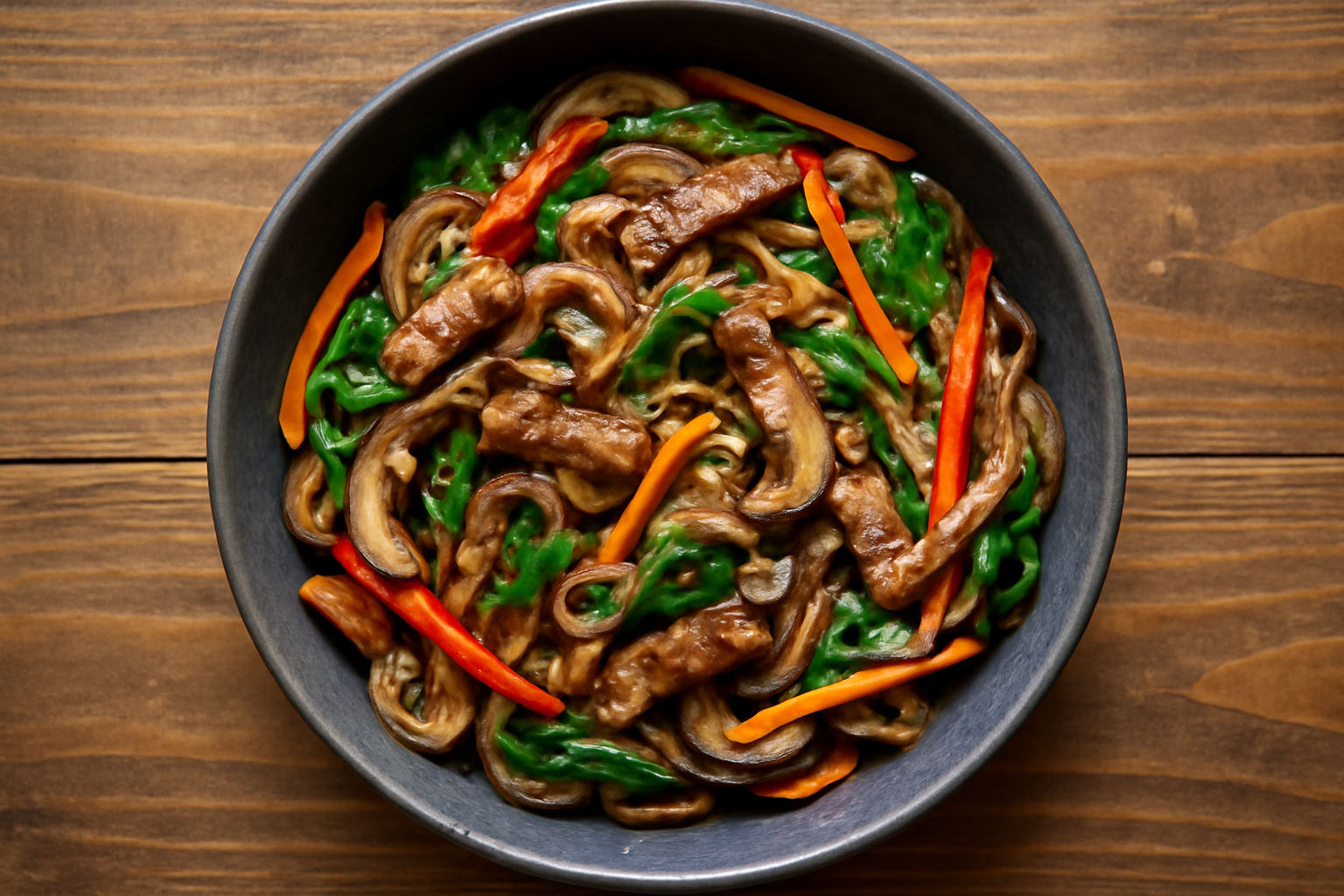
Some banchan you’ll see constantly: kimchi, obviously, in more forms than most foreigners realize exist. Kongnamul (seasoned soybean sprouts). Myeolchi bokkeum, those tiny stir-fried dried anchovies glazed in soy and a little sugar that I genuinely didn’t like the first time and now actively crave. Gyeranmari, the rolled omelette my daughter demolished. Sigeumchi namul, blanched spinach with sesame oil. Jangjorim, soy-braised beef in little dark threads. A dozen more depending on the restaurant, the season, and honestly the mood of whoever’s cooking.

The Refill Thing That Still Gets People
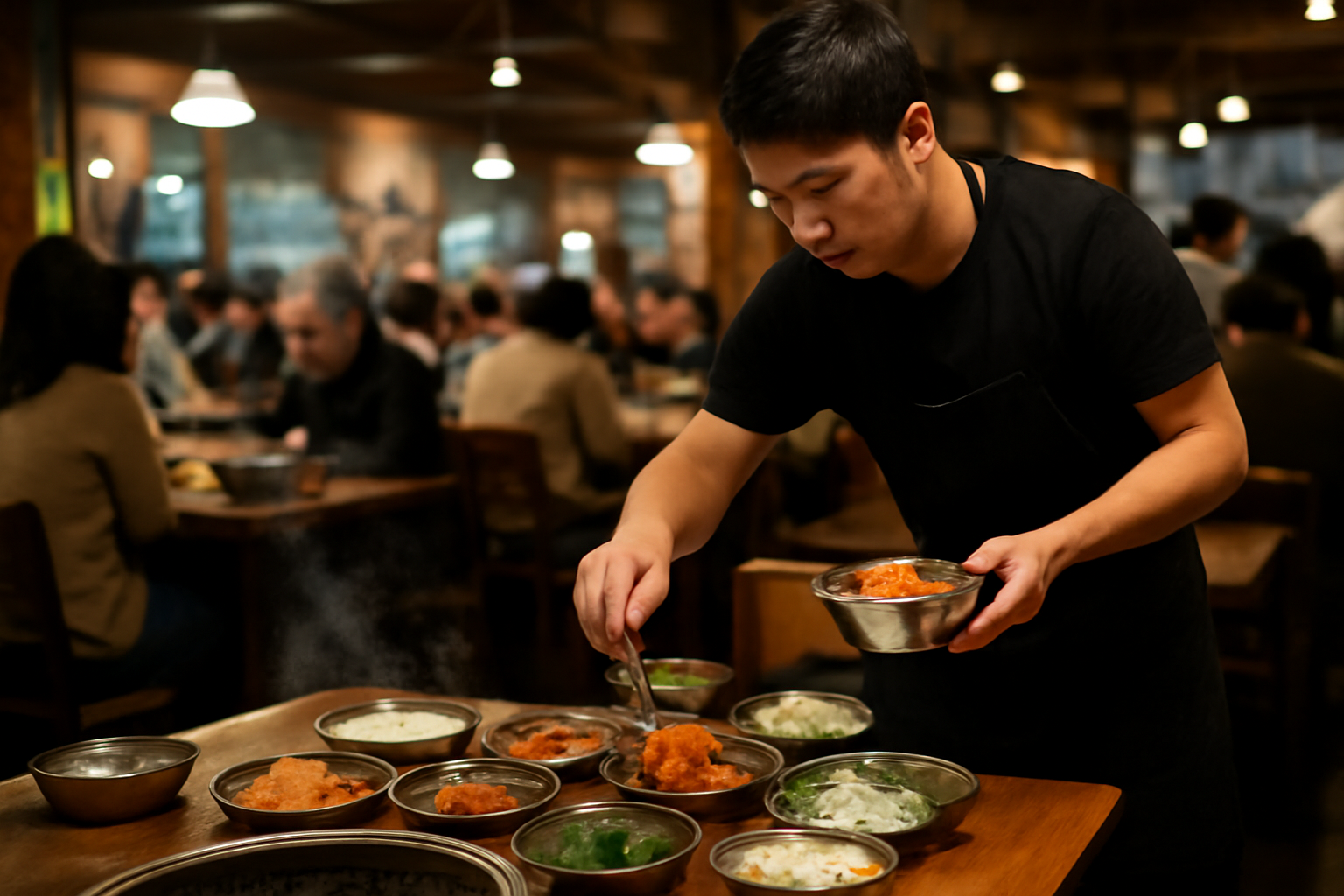
Here’s the part that trips up almost every visitor I’ve brought to a Korean restaurant. You finish the kimchi. You look around for a waiter. Somebody notices, or you flag someone down, and the empty dish just gets swapped for a full one. No extra line on the bill. No awkward negotiation. It happens so smoothly that first-timers usually ask me afterward, quietly, like they’re worried they broke a rule, “wait, was that actually free?”
It is, and it isn’t, if that makes sense. You’re not paying per refill, but the price of your galbi or your bibimbap already has that cost baked in somewhere. Restaurants aren’t running a charity. But the effect at the table is real generosity, and I don’t think that’s an accident. A big part of eating out in Korea is the sense that you won’t leave hungry, that the table will keep giving until you’re actually full, not until you’ve spent enough money to be full. That’s a genuinely different feeling from a lot of the dining culture I grew up with, where every basket of bread or refill has an invisible meter running.
Where I Think This Habit Actually Comes From
My own theory, formed mostly from conversations with my mother-in-law and a lot of meals, is that it traces back to leaner decades when rice itself was the expensive part of a meal and vegetables, pickled and fermented to survive the winter, were the cheap and plentiful part. Filling people up on banchan instead of endless rice refills made economic sense, and somewhere along the way that turned into a point of pride. A restaurant with a stingy banchan spread gets a certain reputation fast. Nobody wants to be that place.
Restaurant Banchan vs. Home Banchan
These are honestly two different worlds, and it took me a while to notice how different. A mid-range restaurant might set out five to eight banchan with a barbecue order, more if it’s a proper hanjeongsik set meal, where I’ve counted well past a dozen small dishes before the main course even lands. Home is a different rhythm entirely. My mother-in-law usually keeps three or four banchan in steady rotation, maybe five if guests are coming, and they’re not trying to impress anyone. They’re just what’s in the fridge that week, cycling based on what vegetables were cheap at the market or what needs to get eaten before it turns.
Restaurant banchan also tends to be a bit more standardized and, I’ll say it, sometimes a bit blander, optimized for consistency across a hundred tables a night. Home banchan has more range, in both directions. My mother-in-law’s kongnamul is better than almost anywhere we eat out. Her doenjang-based dishes have this depth that I’ve never quite gotten from a restaurant version. But some of what she makes is also an acquired taste even for me after all these years, in a way a restaurant chasing repeat customers would probably tone down.
The Banchan Drawer Every Korean Fridge Seems to Have
If you’ve never lived with a Korean family, the fridge situation might surprise you. There’s usually a dedicated shelf, sometimes a whole drawer or a second small fridge just for kimchi, stacked with shallow rectangular containers, each one a different banchan in rotation. Ours currently has kongnamul, a spicy squid-and-radish salad my wife makes when she’s got extra energy, some braised lotus root that’s been in there a suspiciously long time, and at least two kinds of kimchi at different stages of fermentation, because apparently you want some fresh and some sour depending on what you’re cooking.
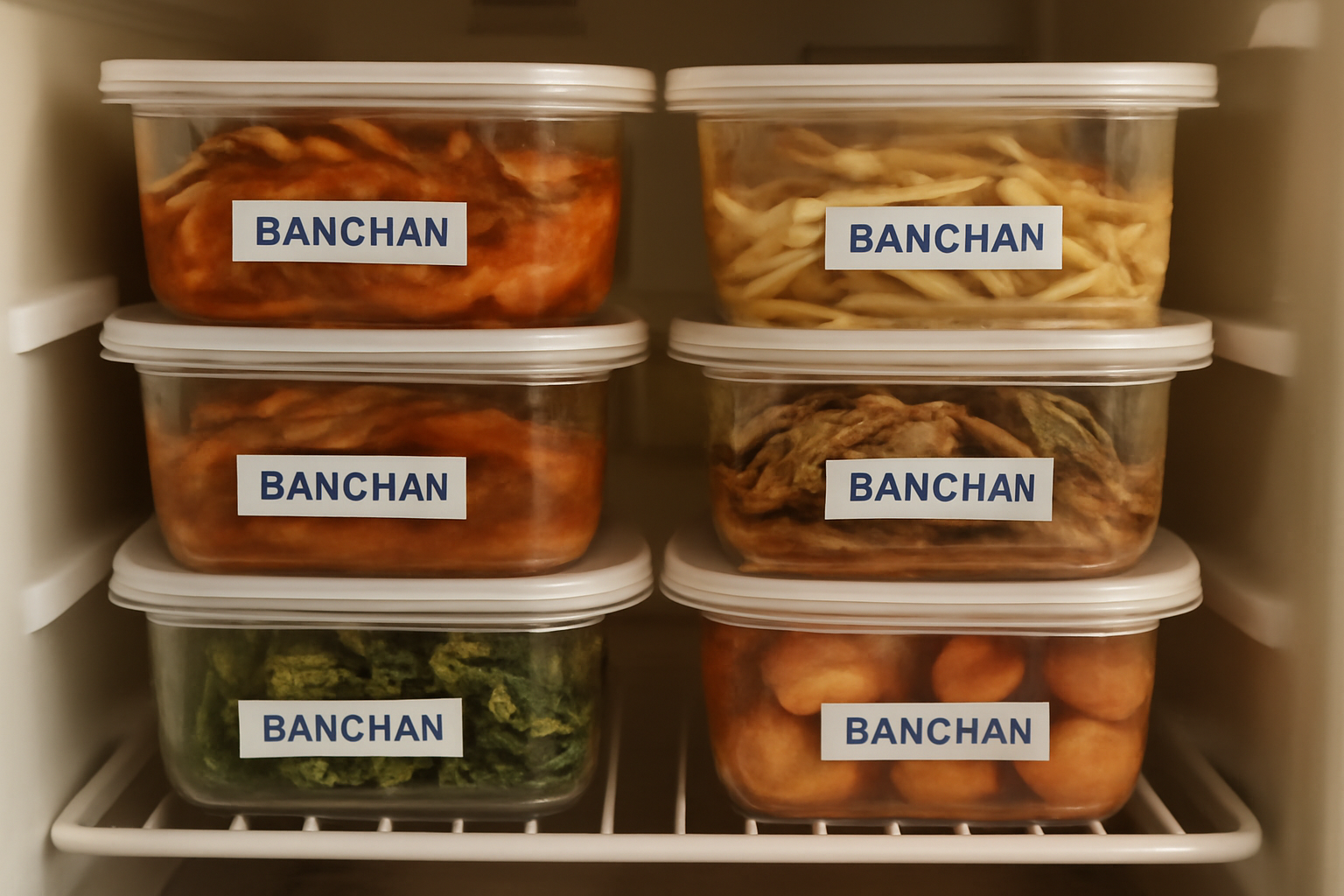
The rule of thumb I’ve picked up, mostly by getting it wrong, is that banchan gets made in batches to last three or four days to a week, not cooked fresh every single meal. A working parent isn’t stir-frying anchovies every night. You make a big batch on Sunday, portion it out, and it becomes the backbone of dinner all week alongside whatever soup or main dish you’re making that day. It’s meal prep, basically, except nobody in Korea calls it that or treats it like a trend. It’s just how the kitchen has always worked.
Etiquette I Had to Learn the Slow Way
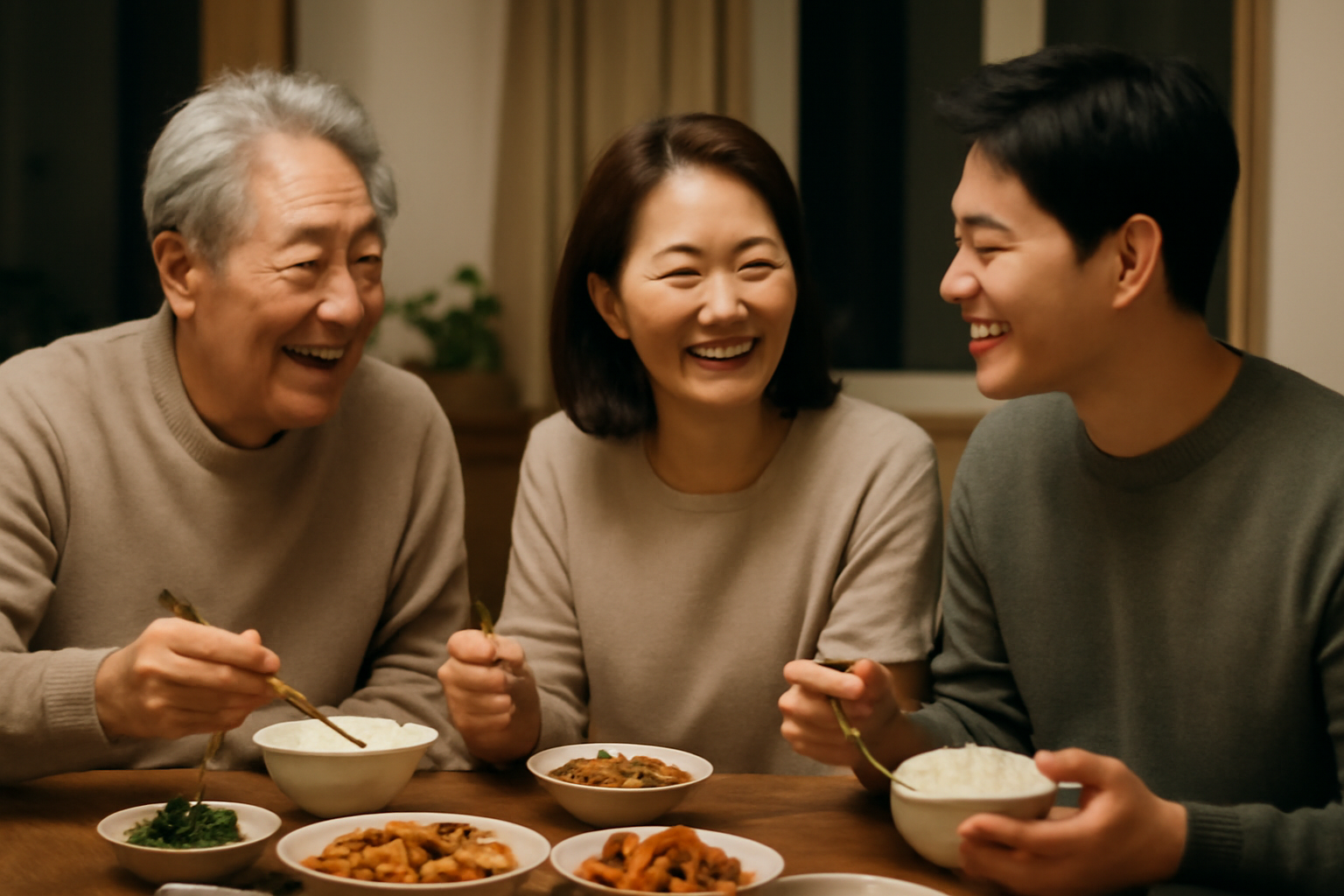
A few things I got wrong early on, for anyone newer to this than me. Banchan dishes on a shared table are communal, meant for everyone, so you take a small portion onto your own plate or rice bowl rather than eating straight out of the shared dish with your own chopsticks going back in every time. It’s not a hard rule everyone enforces, especially among close family, but I got a few polite looks before I caught on. Don’t feel like you have to finish every single banchan either, and don’t feel shy about which ones you go back for again and again. Some dishes at the table are clearly there for one person’s taste more than the group’s, and that’s fine.
If you want to see how this same generosity-and-etiquette dance plays out when you’re eating solo instead of at a shared table, I wrote a bit about that over in my notes on honbap culture, where the banchan still shows up even for a table of one.
Frequently Asked Questions
Is it rude to ask for banchan refills?
No, not at all, and restaurant staff genuinely expect it. If your dish is empty and nobody’s noticed, it’s completely normal to catch a server’s eye, point at the empty bowl, or just say you’d like more. Some places even have a call button at the table for exactly this. The only slightly awkward version is asking for a refill of something unusual or expensive, like extra meat sauce dishes at certain barbecue spots, so if you’re not sure, a quick glance at what other tables are doing usually clears it up.
Do you have to finish all your banchan?
You don’t, and nobody’s counting. Banchan portions are meant to be small and replenishable precisely so you can try a little of everything without pressure to clean every dish. What matters more, especially at a home meal with family or in-laws, is not leaving huge untouched piles that suggest you disliked something specific, which can come across differently than simply not finishing a small taste of six or seven different sides.
Can you take leftover banchan home from a restaurant?
This one varies a lot. Some smaller, family-run places are happy to pack up unfinished banchan for you if you ask, especially with a regular customer they know. Larger or busier restaurants, and definitely most barbecue chains, generally don’t do this for the side dishes even if they’ll box up leftover meat, partly because banchan portions are often replenished from a shared prep batch rather than plated fresh per table. If it matters to you, it never hurts to ask, but don’t be surprised by a polite no.
Why It Still Gets Me, Even Now
What sticks with me isn’t really the food itself, as much as I love the kongnamul and the jangjorim and, yes, even the anchovies now. It’s that quiet, no-fuss generosity built right into how a meal works here, the same instinct that had that ajumma refilling my daughter’s egg dish without a second thought. Nobody made an announcement about hospitality. It’s just the shape the table takes, every single time, and after enough years here, I’d genuinely miss it if it were gone.