Author: luxsman

  • Korean Elevator and Neighbor Greeting Etiquette Explained

    Korean Elevator and Neighbor Greeting Etiquette Explained

    Fourteen floors, no words. That’s how long the ride usually takes in my building — long enough to notice the small crack in the mirror, the faint smell of someone’s dinner from three floors down, and absolutely nothing else, because nobody speaks. I used to think this was coldness. Three years and a few hundred elevator rides later, I know it’s something closer to respect wearing a very quiet coat.

    When I first moved to Korea, I brought my home-country instincts into every elevator car: eye contact, a friendly “hey,” maybe a comment about the weather if the ride was long enough. I got polite nods in return and, occasionally, a look that told me I’d misjudged the room. It took a while — and a patient mother-in-law — to learn that elevators here run on a different social operating system, and once you understand the logic, it stops feeling awkward and starts feeling almost restful.

    Do Koreans Greet Neighbors in the Elevator?

    The honest answer is: not really, and that’s normal. Riding up with someone you don’t know, in a box barely big enough for four people, isn’t treated as a social occasion here — it’s a shared inconvenience to get through with minimal friction. Most adults glance at the numbers overhead, check their phones, or just stare at the door. A small nod is common if eye contact happens by accident. A full “hello, how are you” to a total stranger is not expected, and can actually read as a bit much.

    This isn’t rudeness. Korean social interaction runs heavily on context — who you are to each other, whether you’ve been introduced, whether there’s a reason to talk. Two strangers sharing forty seconds of vertical travel don’t have that context yet, so silence is the default, not a failure to be polite. Once you’ve actually met a neighbor — through the building’s parents’ group, a shared elevator mishap, or just enough repeat encounters — the ice does melt, usually into a quick bow and a first-name-optional “annyeonghaseyo.”
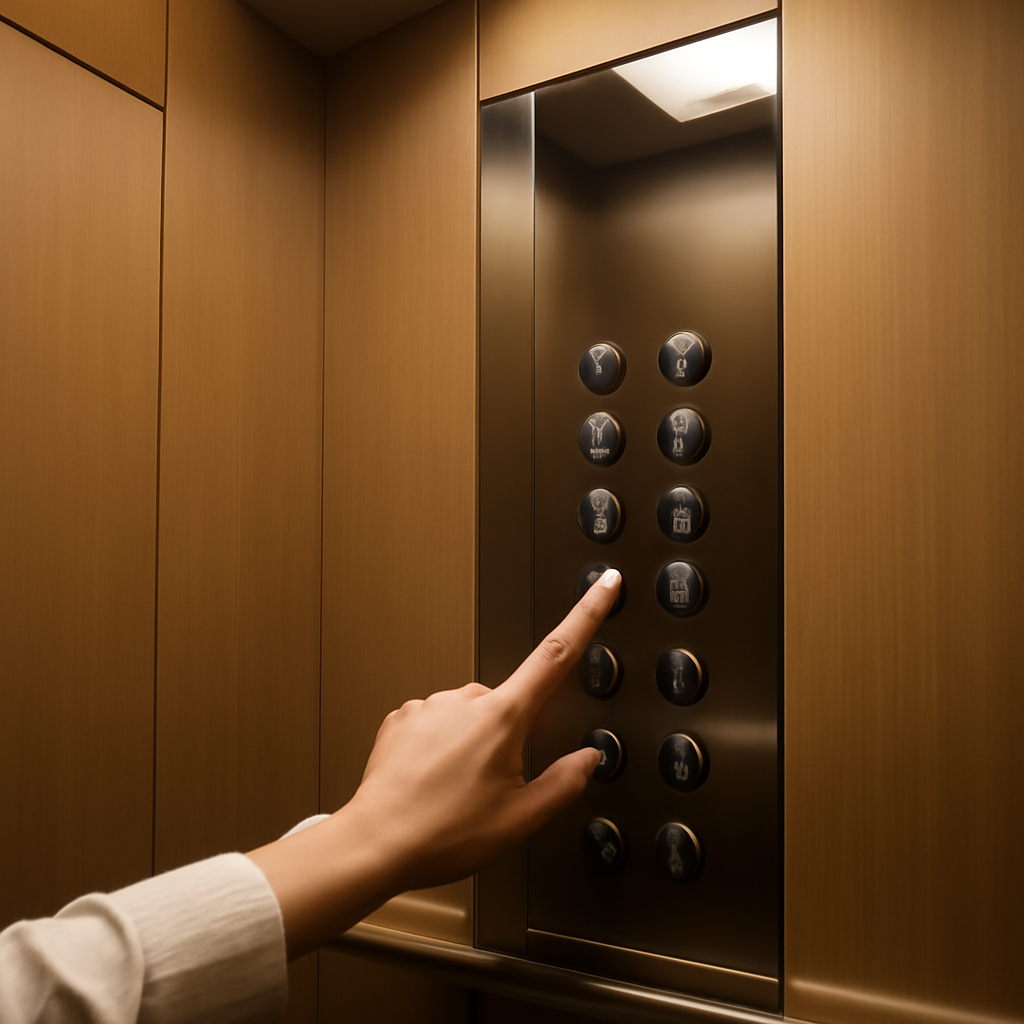
    A hand reaching to press a button on an elevator control panel in a Korean apartment building

    The People You Do Greet

    There’s a clear exception to the silence rule, and it’s the security guard. Almost every Korean apartment complex has a guard station near the entrance or lobby, staffed by older men who track deliveries, manage the parking gate, and generally keep an eye on things. You greet them, every time. A short bow of the head and a quiet “annyeonghaseyo” as you pass is standard, and skipping it repeatedly gets noticed — these are the people who end up holding your late-night package, remembering your car, and occasionally saving you when you’re locked out. My daughter figured this out faster than I did; she bows to our guard like it’s a reflex, and he lights up every time.

    Holding the Elevator: An Unwritten Contract

    Here’s where Korean elevator culture gets genuinely warm rather than just quiet. If someone is sprinting for the elevator, or wheeling a stroller, or wrestling a grocery cart through the lobby, people hold the door. Reliably. It’s one of the most consistent small kindnesses I’ve seen anywhere — the “open” button gets pressed and held without a second thought, no eye-rolling, no doors-closing games. The same goes for exiting: whoever is nearest to the panel usually holds “open” so the rest of the car can file out first, especially if there are elderly residents or someone carrying too many bags.

    What you generally won’t get is a verbal exchange around it. The door gets held, you step in, maybe there’s a small nod of thanks — and that’s the whole transaction. Coming from a culture where “thank you so much!” is basically required, this took adjustment. Nobody’s being cold; the courtesy itself is the message, and piling words on top of it can feel like overkill in a culture that tends to communicate a lot through small, efficient gestures.

    Hallways, Packages, and the Quiet Zone

    Step out of the elevator and the same low-key etiquette continues down the hallway. Korean apartment corridors are narrow and every sound carries, so hallway behavior tends to be hushed by default — no loud phone calls, no lingering conversations right outside someone’s door, especially at night. If you’re moving furniture or hosting guests, a bit of extra hallway noise is tolerated, but it’s understood as temporary, not a nightly habit.

    Package culture is its own small ecosystem. With how much Korean households order online — everything from groceries to furniture arrives same-day or next-day — hallways regularly have boxes stacked outside doors, sometimes for hours before anyone’s home to bring them in. Nobody touches a box that isn’t theirs, nobody complains about a neighbor’s delivery pile blocking half the hallway for an afternoon, and delivery drivers know the routine well enough to stack things neatly rather than scatter them. It’s an honor system that, in my experience, works better than it has any right to.
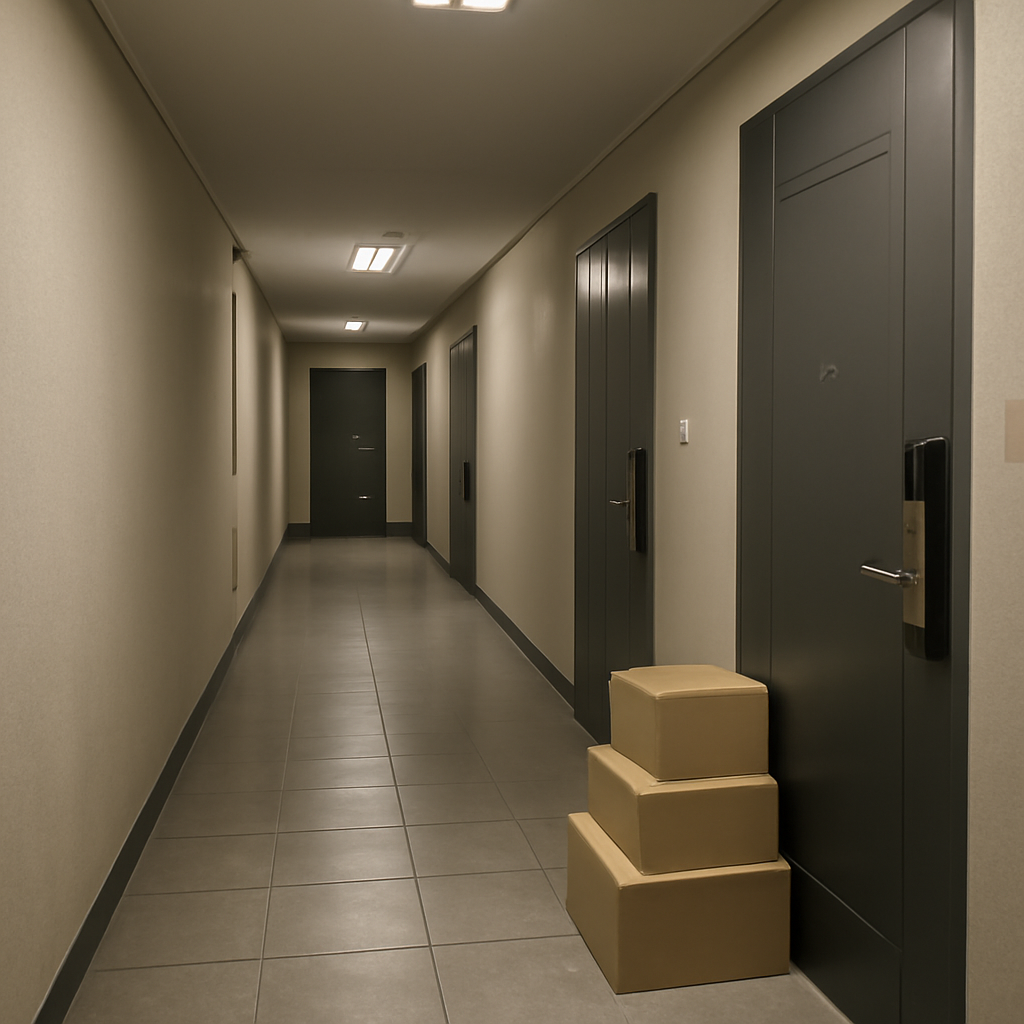
    A quiet apartment hallway in Korea with delivery boxes stacked neatly outside a door

    Moving In: The One Time You Do Introduce Yourself

    There’s exactly one moment when the usual “don’t bother your neighbors” rule flips, and that’s move-in day. Tradition holds that new residents give a small gift — a pack of tissues or laundry detergent are the modern go-tos — to the households directly next door and sometimes above and below, as a sort of “hi, I live here now, sorry in advance for any noise” gesture. I won’t get into the full mechanics of it here since it deserves — and already has — its own dedicated post on this blog, but the short version is: it’s a genuinely nice icebreaker, and it’s the one context where showing up at a stranger’s door in this country is not only accepted but appreciated.

    A Word on Noise Between Floors

    I’ll keep this brief, because I’ve written a whole separate post about the sound my daughter’s feet make on our floor and what the building’s noise rules actually cover. But it’s worth noting here because it bleeds into elevator and hallway life too: Korean apartments are famously sound-conductive between floors, and that shared awareness quietly shapes how people behave in shared spaces generally. It’s part of why the hallway hush and the elevator silence feel less like coldness and more like a whole building of people trying not to add to each other’s noise load. Once you clock that logic, half of the “unfriendly” elevator behavior actually reads as consideration in disguise.

    How I Actually Handle It Now

    These days my approach is simple: I nod if eyes meet, I hold the door without fail, I bow to the guard like my daughter taught me, and I keep my voice down between the elevator and my own front door. I don’t force conversation, and I don’t take the silence personally anymore. Some of the neighbors I’ve bonded with the most started as nothing but elevator nods for a solid year before either of us said a word — and that turned out to be exactly the right pace.

    FAQ

    Should I say hello to neighbors I don’t know in the elevator?

    A quiet nod is enough, and often more natural than a verbal greeting to someone you haven’t been introduced to. Save the actual “hello” for neighbors you’ve met before — through the building, your kids’ school, or a shared event. Nobody will think you’re rude for staying quiet; a loud stranger-greeting is more likely to raise eyebrows than skipping one.

    What if my elevator gets stuck or breaks down often in an older building?

    Older apartment complexes, especially ones built decades ago, can have elevators that are slower or occasionally temperamental. If you get stuck, there’s almost always an intercom or emergency button that connects directly to the security office or a maintenance line — use it and stay calm; response times are usually fast since the guard station is often just downstairs. For chronic issues, mentioning it to the building’s management office (관리사무소) tends to get more traction than complaining to neighbors, since repairs are typically handled through the complex’s maintenance fund.

    Is it rude not to thank someone for holding the elevator?

    Not at all, though a small nod is common courtesy. Korean etiquette in these micro-interactions leans on gesture rather than words — the held door is itself a complete, unspoken exchange. A verbal “thank you” isn’t required, though it’s never unwelcome either, especially if you’re a foreigner still finding your footing; most neighbors will read it as friendliness, not awkwardness.
  • What Koreans Really Mean When They Ask ‘Did You Eat?’

    What Koreans Really Mean When They Ask ‘Did You Eat?’

    My father-in-law texts me almost every morning. Not “how’s it going” or “sleep well?” — just four words, in Korean, that show up like clockwork: 밥 먹었어요? Did you eat?

    The first year I lived in Korea, I answered this question like it was an actual question. I’d type out what I had for breakfast, sometimes with a photo, proud of my toast-and-eggs report. It took an embarrassingly long time for my wife to gently explain that nobody was checking my nutrition. He wasn’t asking what I ate. He was asking if I was okay.

    The Question That Isn’t Really a Question

    “밥 먹었어요?” (bap meogeosseoyo) translates literally to “have you eaten rice?” — bap being the word for cooked rice, and by extension, a meal in general. In practice, it functions the way “how are you” functions in English: a social reflex, not a request for a status update. You’re supposed to say yes and keep walking. Answering with a detailed rundown of your actual meal is, in its own small way, missing the point — like replying to “how’s it going” with your blood pressure numbers.

    I know that now. I did not know that then. And once I understood it, the phrase stopped sounding strange and started sounding, honestly, kind of beautiful.

    Where This Comes From

    You can’t really understand this greeting without going back to the wreckage after the Korean War. The country was flattened. Farmland was destroyed, infrastructure was gone, and for a long stretch through the 1950s and into the 1960s, hunger wasn’t an abstraction — it was a daily, physical fact for a huge share of the population. Whether someone had actually managed to eat that day was not small talk. It was a real gauge of whether they were surviving.

    Asking “did you eat” in that era meant something close to “are you making it.” Neighbors asked each other. Parents asked children the second they walked in the door. It was the most concrete way to check on someone’s wellbeing, because in a country recovering from famine and war, food security and life security were basically the same thing.

    Korea’s economy has obviously changed beyond recognition since then. Nobody in Seoul is worrying about where their next bowl of rice is coming from. But the phrase never got the memo. It stuck around, hollowed out its literal meaning, and kept the emotional core — the part where asking about food is really a way of saying I’m thinking about you.

    Who Says It, and When

    This is where it gets interesting, because the phrase isn’t locked into one kind of relationship. It shows up everywhere, just with different weight attached.

    Parents and grandparents

    This is the classic version, the one baked into Korean dramas and comedy sketches. A mother greets her adult child at the door with it before “hello.” My mother-in-law asks it before she asks about my daughter’s school day. It’s the opening line of care, deployed before any actual conversation starts.

    Bosses and coworkers

    In the office, it softens hierarchy. A boss asking a junior employee “did you eat lunch?” on a busy day is a small, low-cost way of acknowledging that the person under them is human and might be buried in work. It doesn’t fix the workload, but it registers that someone noticed.

    Friends checking in

    Between friends, especially after a rough patch — a breakup, a bad week, news of a layoff — “did you eat?” often stands in for “I heard, and I’m here.” It’s less intrusive than asking directly how someone is coping. It gives the other person an easy, low-stakes way to answer without unpacking their feelings if they’re not ready to.

    Strangers and near-strangers, rarely

    This one is not a stranger-greeting the way “how’s it going” can be tossed at a cashier. It carries some intimacy. Using it with someone you barely know can land as oddly warm, or oddly forward, depending on the context.

    How You’re Supposed to Answer

    The correct response, ninety percent of the time, is simply “네, 먹었어요” — yes, I ate — regardless of whether you actually have. It’s a script, and the script exists so both people can move on to whatever they actually wanted to talk about.

    There is a narrow exception. If it genuinely is mealtime, and you genuinely haven’t eaten, and you’re talking to someone who has the power to feed you — your mother-in-law, a close aunt, a host — saying “no, not yet” can trigger an immediate, sometimes alarming mobilization toward the kitchen. I have watched a pot of stew appear in under four minutes flat. If you’re not in the mood to eat right then, it’s safer to say “괜찮아요” (I’m fine) right after, which signals no rescue mission is required.

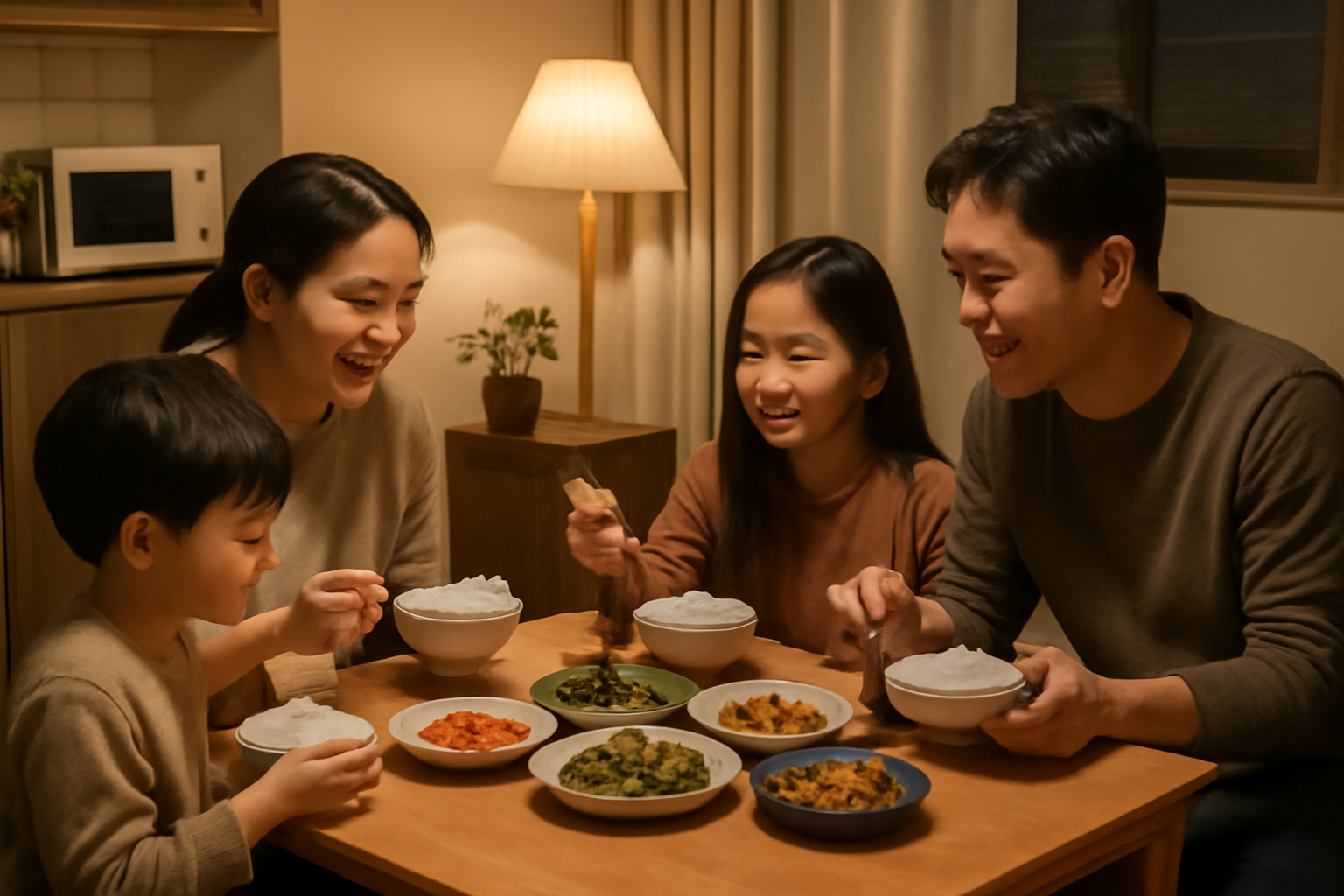
    A Korean family gathered around a home dinner table sharing a meal

    The Foreigner’s Mistake, Made Once (or Twice)

    I’ve made this mistake more than once, actually. Beyond the toast-and-eggs texting incident, there was the time a coworker asked if I’d eaten and I launched into an honest complaint about how the cafeteria was out of my usual dish. He nodded politely and had absolutely no idea what to do with that information, because he hadn’t asked a real question. I’d handed him data he didn’t request, the conversational equivalent of answering “how’s it going” with a full itinerary of your day.

    The mistake foreigners make with this phrase almost always runs one direction: taking it literally. We hear “did you eat” and our brains go straight to logistics — what, when, where, was it good. Koreans hear the same words and register something closer to a hand on the shoulder.

    Not Unique to Korea

    Once you notice this pattern, you start seeing it elsewhere too. Mandarin has “吃饭了吗?” (have you eaten?), rooted in a similar history of famine and postwar scarcity. Filipino culture has “Kumain ka na ba?” as a near-automatic greeting at someone’s door. Older generations in parts of the American South and in immigrant households across the U.S. lean on “are you hungry?” as a default expression of love, because offering food is often easier than naming the feeling directly. What sets the Korean version apart is how thoroughly it’s baked into everyday greeting culture — not just family kitchens, but office hallways and text check-ins, functioning as the default opener rather than an occasional gesture.

    Close-up of a Korean meal with rice and side dishes on a table

    Why It Still Gets Me

    What changed my relationship to this phrase wasn’t a language lesson. It was watching my father-in-law send that same text on a morning when he clearly had bigger things going on — a doctor’s appointment, a bad night’s sleep, whatever it was that had him quieter than usual at breakfast. He still typed it out. Did you eat? That’s when it landed for me: this is a language built by people who once genuinely didn’t know if the people they loved had enough to eat, and who never fully let go of checking. Every time someone asks me now, I don’t hear a question about rice. I hear an old habit of survival that quietly turned into a habit of love, handed down long after the hunger that created it was gone.

    FAQ

    Do I need to actually answer with what I ate?

    No. The expected reply is a quick “yes, I ate,” even if that’s not strictly true. Treat it like “how are you” — a greeting formula, not a request for details. Giving a literal food report tends to confuse the other person more than it informs them.

    Is this only used by older generations?

    It skews more common among parents, grandparents, and older coworkers, but it’s not exclusively an older-generation phrase. Younger Koreans use it too, especially with close friends or after hearing someone had a hard day — it’s just one of several ways they express care, alongside more casual phrases.

    What if someone asks and I actually haven’t eaten and I am hungry?

    Then it’s fine to say so plainly — this is one of the rare cases where the literal meaning and the polite meaning line up. Just know that with close family, especially older relatives, admitting you’re hungry can set off an immediate effort to feed you, so be ready for that if you’re saying it to your Korean mother-in-law and not just a casual acquaintance.

    Is there a more formal version I should use with someone senior to me?

    Yes — “식사하셨어요?” (siksa hasyeosseoyo) is the polite, respectful version, appropriate for a boss, an elder, or anyone you’d address formally. “밥 먹었어요?” works fine with peers, close coworkers, or family.

  • Why Koreans Study for Hours in Cafés: Inside ‘Kongsijok’ Café Study Culture

    Why Koreans Study for Hours in Cafés: Inside ‘Kongsijok’ Café Study Culture

    The first time I ordered a single iced Americano at 9 a.m. and was still nursing the melted ice in the same seat at 1 p.m., nobody blinked. Not the barista, not the college kid with three highlighters and a color-coded notebook, not the guy in the corner who’d built a small fortress out of a laptop stand and a stack of exam books. I glanced around and realized I wasn’t the odd one out. I was just another member of the tribe.

    In Korean, there’s a word for us: 카공족 (kagongjok, also romanized “cagongjok” or “kongsijok”), a mashup of “cafe,” “gongbu” (studying), and “jok” (tribe). Loosely: “the cafe-study people.” Once you know the term, you start seeing them everywhere — headphones on, textbooks open next to a lukewarm latte, entire afternoons quietly disappearing into a corner table near an outlet.

    As a foreign dad who’s spent a fair number of years watching Korean life unfold from a cafe chair, usually while my kid is at an after-school class, I’ve come to think kongsijok culture says more about how this country is built than almost anything else I could point to. It isn’t really about coffee. It’s about space, pressure, and where a person is allowed to sit still and think.

    What Exactly Is a Kongsijok?

    A kongsijok is anyone who treats a cafe as a temporary office, classroom, or library — university students cramming for exams, jobseekers grinding through Korea’s notoriously brutal public-service exam prep, freelancers without a home desk, language learners, even the occasional novelist. The common thread isn’t the drink order; it’s the duration. Two hours, four hours, sometimes eight, in the same seat.

    Walk through any neighborhood near a university, an exam-prep district, or a busy subway hub, and you’ll find cafes that have quietly reorganized around this exact customer: bigger tables, more outlets, seats angled away from foot traffic. Some places have stopped pretending to be regular cafes altogether.

    Why Cafes, and Why So Much of It

    My honest answer, after years of watching this play out: Korean apartments are often small, especially for students and young singles, and shared housing rarely leaves room for a desk usable for long stretches. Libraries exist, but seats fill up fast during exam season and close at set hours. Cafes, on the other hand, are everywhere — Korea has one of the highest cafe densities per capita in the world — and many stay open late with decent Wi-Fi and just enough ambient noise to keep a person from dozing off mid-paragraph.

    Then there’s the exam culture itself. Korea’s academic and career tracks run through high-stakes tests — the university entrance exam (수능, suneung) every November being the most famous, alongside certification exams and the civil service exam (“gosi”). When your future genuinely feels like it hinges on a test date, you don’t study for an hour and call it done. You study until the cafe closes, then find one that’s open later.

    The Unwritten Rules Nobody Hands You a Copy Of

    Nobody sits you down and explains kongsijok etiquette. You absorb it by watching, and occasionally by getting a pointed look from a barista.

    Buy something every couple of hours

    The rough rule of thumb: roughly one drink per two to three hours. If you’re settling in for a longer stretch, ordering a second coffee or a small snack isn’t just polite — it’s the toll you pay to keep your seat. A four-hour occupant nursing one cold Americano isn’t generating much per hour compared to a normal cafe’s table-turning rhythm.

    The outlet hunt is real

    If you’ve ever watched someone circle a cafe twice before sitting down, they’re not lost — they’re scouting a power outlet. Seats near outlets get claimed within minutes of opening, and regulars know exactly which tables have one.

    Headphones are basically part of the uniform

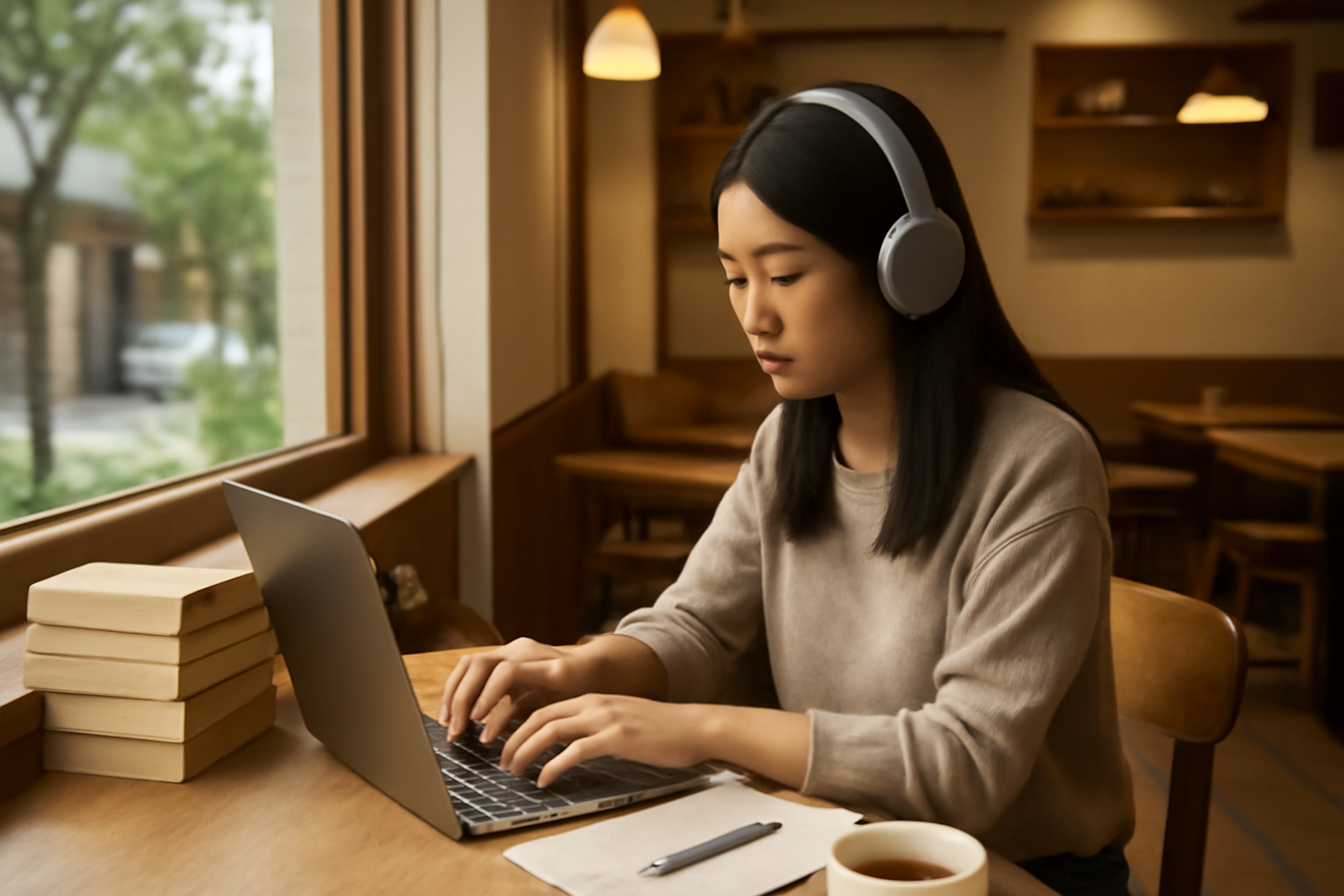
    Noise-canceling headphones aren’t a fashion statement here so much as load-bearing equipment. A kongsijok has to build their own quiet in the middle of espresso machines and background chatter. Big over-ear headphones have become such visual shorthand for “please don’t talk to me” that you can usually tell who’s open to a chat and who absolutely is not, just from what’s on their head.

    Watch the peak hours

    Camping out with a laptop in a small, independently owned cafe during lunch rush or busy weekend afternoons can genuinely annoy the owner and customers who just want a table for twenty minutes. Seasoned kongsijok shift to a quieter time, pick a cafe built for long stays, or free up the table during the busiest window.

    A person studying with a laptop and books at a window seat in a Korean cafe

    Enter the Study Cafe: A Whole Different Business

    Here’s where it gets interesting. Korea didn’t just tolerate the kongsijok phenomenon — it built an entire industry around it. “스터디카페” (study cafes) aren’t coffee shops that happen to have quiet corners. They’re a distinct category: part reading room, part co-working space, running on a pay-by-time model instead of a pay-per-drink one.

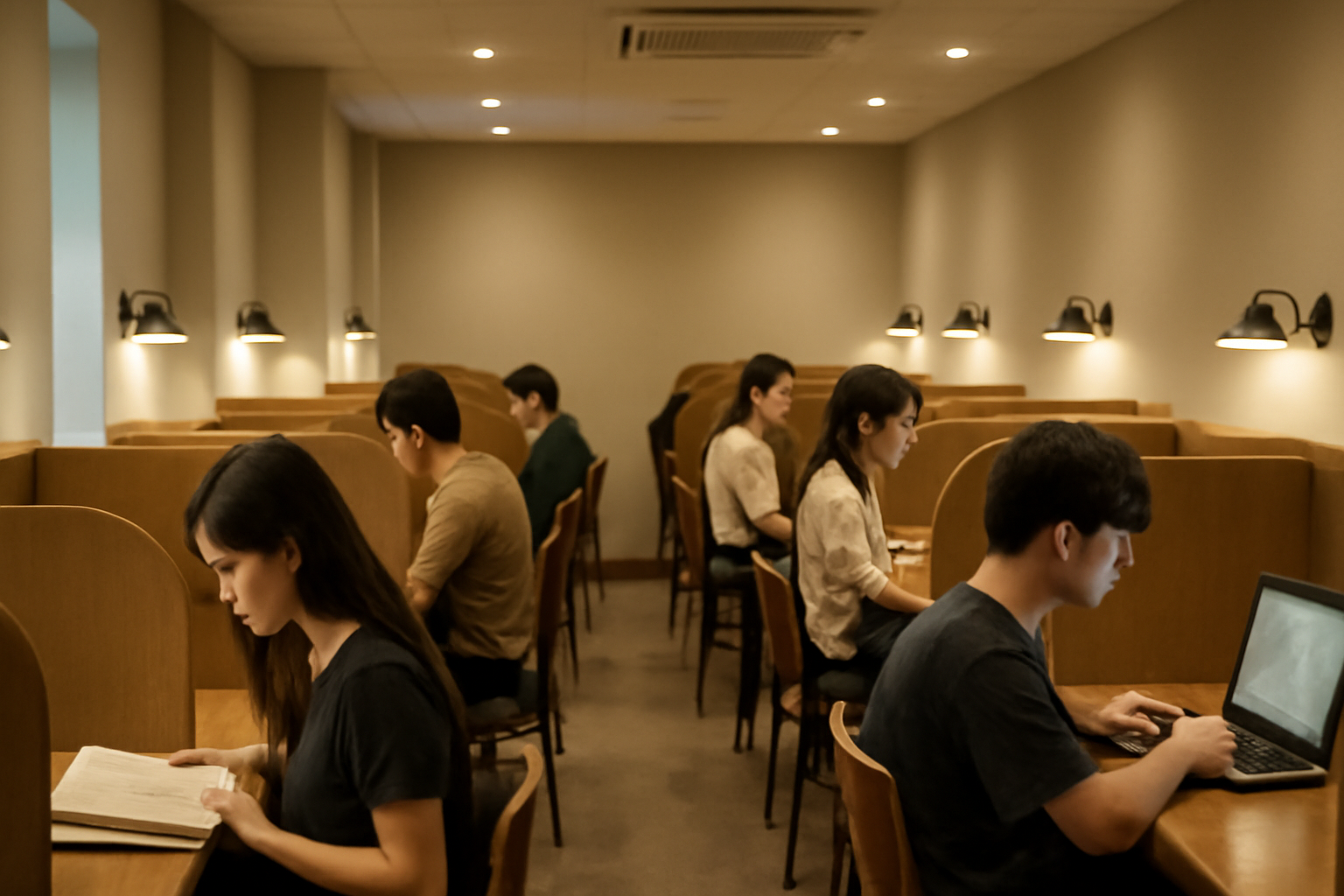
    You buy a block of time — a same-day pass, a bundle of hours usable whenever, or a weekly or monthly unlimited pass — typically a few thousand won per hour, cheaper the more time you commit to. Many operate unattended twenty-four hours a day, checked in with a keypad or app, with individual desks, privacy partitions, lockers, and a self-serve coffee machine instead of a barista out front. Nobody raises an eyebrow if you sit for six hours, because six hours is exactly the product you bought.

    This quietly resolves the tension above. A regular cafe wants table turnover; a study cafe wants long-term tenants. Splitting the two into separate businesses means a student cramming before finals doesn’t feel guilty about a seat meant for a quick coffee break, and a couple catching up over lattes doesn’t have to compete with someone’s flashcards.

    The Friction Underneath the Trend

    I’d be doing this topic a disservice if I made it sound perfectly harmonious. There’s real tension here, and it shows up regularly in local news and online debate. Small independent cafe owners have posted handwritten signs — no laptops after noon, time limits during peak hours, or “no study zone” policies with a hard two-hour cap. A few cafes have gone the opposite direction and banned laptops entirely, positioning themselves as places for conversation, not concentration.

    It’s a reasonable business tension, not a moral failing on either side. A cafe survives by turning tables; a kongsijok survives by finding somewhere quiet and cheap enough to actually get work done. Study cafes exist precisely because that mismatch needed its own solution.

    Rows of individual desks in a Korean pay-by-hour study cafe

    Where I’ve Landed on It

    Raising a kid in this system, I understand the pressure fueling kongsijok culture, even if I don’t love every part of it. But I’ve also come to appreciate the flip side: a country dense enough, caffeinated enough, and design-conscious enough to build entire categories of business around the simple human need for a decent place to sit and concentrate for a few hours. There’s something almost communal about it, even though everyone’s wearing headphones and ignoring each other on purpose.

    These days, when I need a few uninterrupted hours myself, I’ve made peace with becoming exactly what I used to quietly judge from the next table over. I order the second coffee. I know which seats have outlets. Welcome to the tribe.

    Frequently Asked Questions

    Is it rude to stay all day at a regular coffee shop?

    Depends on the cafe. Large chains with plenty of seating generally tolerate long stays outside peak hours, as long as you order something roughly every two to three hours. Small, independently run cafes with limited tables are different — hours on one drink during a busy stretch reads as inconsiderate, and some owners now post explicit time limits.

    What’s the actual difference between a study cafe and a regular cafe?

    A regular cafe sells drinks and treats seating as incidental; a study cafe sells time, with coffee as a secondary perk. Study cafes charge by the hour or via time passes, often run unattended around the clock, and are built for long, quiet, single-person study rather than conversation.

    Why are outlets such a big deal in Korean cafes?

    Because so many people work or study on laptops for hours at a stretch. Seats near outlets fill up first, and some cafes have added more specifically to accommodate long-staying customers — which in turn attracts even more of them.

    Is kongsijok culture unique to Korea?

    The basic idea of studying in a cafe isn’t unique — plenty of countries have laptop-heavy coffee shops. What’s distinctly Korean is the scale: extremely high cafe density, a dedicated study cafe industry, an intense exam culture that rewards marathon sessions, and social etiquette built specifically around cafe studying.

  • 리츠(REITs) 투자란? 배당형 부동산 간접투자 총정리 (2026년 기준)

    리츠(REITs) 투자란? 배당형 부동산 간접투자 총정리 (2026년 기준)

    월세 받는 건물주가 되려면 최소 몇 억은 있어야 한다고 생각했다. 그런데 증권 계좌에 5만 원을 넣고 매수 버튼을 누른 지 석 달 만에, 통장에 배당금이 찍히는 걸 봤다. 금액은 크지 않았다. 그래도 “이게 되는구나” 싶은 순간이었다. 리츠(REITs) 이야기다.

    리츠란 무엇인가

    리츠는 Real Estate Investment Trust의 약자로, 여러 투자자의 자금을 모아 오피스빌딩, 물류센터, 호텔, 데이터센터 같은 부동산에 투자하고 거기서 나오는 임대료와 매각차익을 주주에게 나눠주는 회사다. 주식처럼 증권시장에 상장되어 있어서 몇만 원 단위로도 사고팔 수 있다. 부동산을 직접 사는 게 아니라 부동산을 굴리는 회사의 지분을 사는 구조라고 보면 된다.

    도심 오피스 빌딩과 부동산 투자

    왜 배당이 꼬박꼬박 나올까

    한국 리츠는 법적으로 배당가능이익의 90% 이상을 주주에게 분배해야 한다. 회사 내부에 이익을 쌓아두기 어려운 구조라서, 실적이 나면 배당으로 흘러나올 수밖에 없다. 2026년 7월 기준 국내 상장 리츠는 23개인데, 이 중 15개가 배당수익률 8%를 넘고 11개는 10%를 웃돈다. 다만 숫자만 보고 좋다고 판단하면 곤란하다. 임대수익이 탄탄해서 배당률이 높은 종목도 있지만, 주가가 떨어져서 수익률이 상대적으로 커 보이는 경우도 섞여 있다. 일회성 특별배당이 낀 해도 있다.

    국내 리츠의 유형

    투자 대상에 따라 오피스형, 리테일형, 물류센터형, 호텔형, 데이터센터형 등으로 나뉜다. 공공임대리츠나 공공지원민간임대리츠처럼 공익 목적으로 설립돼 운영 기간 내내 무배당으로 굴러가는 정책형 리츠도 있다. 같은 ‘리츠’라는 이름을 달았어도 성격이 완전히 다르니, 유형부터 구분해서 봐야 한다.

    세금은 어떻게 매겨지나

    리츠 배당소득에는 15.4%가 원천징수된다. 여기까지는 예금이자와 비슷하다. 문제는 그다음이다. 연간 금융소득이 2000만 원을 넘으면 다른 소득과 합산되는 금융소득종합과세 대상이 되고, 소득 구간에 따라 최고 49.5%까지 세율이 올라갈 수 있다. 다만 3년 이상 보유한 리츠는 배당금의 9.9% 분리과세 혜택을 받을 수 있는 제도가 마련되어 있고, ISA 계좌를 활용하면 3년 만기 시 순이익 비과세 한도 내에서 세부담을 크게 줄일 수 있다. 정부가 2026년 경제성장전략에서 상장 리츠 배당소득 저율 분리과세를 추진하겠다고 밝힌 만큼, 세제는 앞으로도 바뀔 여지가 있다.

    배당 수익과 재무 차트 분석

    장점과 함께 봐야 할 위험

    소액으로 시작할 수 있고, 매매가 주식만큼 쉽고, 임대료 기반이라 현금흐름이 비교적 예측 가능하다는 게 리츠의 강점이다. 반대로 금리가 오르면 부동산 가치와 조달비용에 동시에 부담이 생겨 주가가 눌리는 경향이 있고, 공실률이나 임차인 계약 조건에 따라 배당이 줄어들 수도 있다. 상장주식이다 보니 부동산 실물 가치와 무관하게 주가 자체가 시장 분위기에 휘둘리는 날도 있다. 배당수익률이 높다는 이유만으로 접근하면 낭패를 볼 수 있다는 뜻이다.

    자주 묻는 질문

    리츠 배당소득세는 정확히 어떻게 계산되나요

    기본적으로 배당금의 15.4%가 원천징수된다. 연 금융소득 합계가 2000만 원을 넘으면 종합과세로 전환돼 세율이 더 올라갈 수 있고, 3년 이상 보유 시 9.9% 분리과세를 선택할 수 있는 제도가 있으니 본인 상황에 맞춰 세무 상담을 받아보는 걸 권한다.

    주식과 리츠는 뭐가 다른가요

    둘 다 증권시장에서 사고파는 지분 상품이라는 점은 같다. 다만 리츠는 투자 대상이 부동산으로 한정되고 배당가능이익의 90% 이상을 의무적으로 분배해야 한다는 규제를 받는다. 일반 기업은 이익을 유보하거나 재투자할 자유가 있지만, 리츠는 구조상 현금흐름이 주주에게 흘러가도록 설계돼 있다.

    최소 얼마부터 투자할 수 있나요

    상장 리츠는 주가 수준에 따라 다르지만 대체로 몇천 원에서 몇만 원대 1주 가격으로 거래되기 때문에, 5만 원 안팎으로도 첫 매수가 가능하다. 목돈이 없어도 부동산 간접투자를 경험해볼 수 있다는 게 리츠가 자주 언급되는 이유 중 하나다.

    이 글은 리츠의 개념과 구조, 세금, 장단점을 설명하는 정보 제공 목적으로 작성되었으며 특정 종목의 매수를 권유하지 않습니다. 투자 판단과 그에 따른 책임은 전적으로 투자자 본인에게 있습니다.

  • 잡채 만드는 법, 명절 잡채 황금비율 레시피

    잡채 만드는 법, 명절 잡채 황금비율 레시피

    결혼 첫해 추석, 시어머니 옆에서 잡채를 도왔다가 당면을 통째로 말아먹은 적이 있다. 눈대중으로 삶아서 건져놓고 한참 야채 볶는 사이 당면이 퉁퉁 불어 떡처럼 뭉쳐버렸다. 시어머니는 웃으시며 “당면은 시간이 아니라 비율로 삶는 거야”라고 하셨다. 그날 배운 숫자들을 십 년 가까이 그대로 써먹고 있다. 물 1.5L에 진간장 100ml, 당면 300g. 이 하나만 지켜도 잡채가 불지 않는다.

    당면 고르기부터 다르다

    마트 진열대에 서면 당면 종류가 너무 많아서 뭘 사야 할지 헷갈린다. 고구마전분 100%로 만든 당면이 쫄깃함이 오래가고, 감자전분이 섞인 저가형은 삶고 나서 30분만 지나도 흐물흐물해진다. 봉지 뒷면에 원재료명을 꼭 확인하자. 고구마전분 함량이 높을수록 가격은 조금 비싸지만, 명절 상에 하루 이틀 올려둘 잡채라면 이 차이가 크게 갈린다.

    재료 준비 (4~5인분 기준)

    당면 300g, 돼지고기 잡채용 또는 소고기 채썬 것 200g, 시금치 150g, 당근 1/2개(80g), 양파 1개(200g), 건표고버섯 6개(불려서 사용), 목이버섯 3개, 파프리카 빨강·노랑 각 1/2개. 당면보다 야채와 고기 합친 양이 더 많아야 한다. 300g : 480g 정도 비율이면 물리지 않고 씹는 맛이 산다.

    당면과 채소, 고기 재료가 준비된 잡채 재료 사진

    당면 삶는 법, 붇지 않는 황금비율

    끓는 물 1.5L에 진간장 100ml, 흑설탕 3큰술을 함께 넣고 팔팔 끓인다. 여기에 당면을 넣고 8분간 삶는다. 9분을 넘기면 이미 퍼지기 시작한다. 타이머는 꼭 맞춰두자. 건진 당면은 찬물에 두 번 헹궈 전분기를 빼고, 가위로 적당히 잘라 식용유 1큰술을 넣고 미리 버무려둔다. 기름 코팅을 해두면 나중에 야채와 섞을 때 서로 들러붙지 않는다.

    간장양념 황금비율

    진간장 5큰술, 설탕 3큰술, 참기름 3큰술, 다진 마늘 1큰술, 후추 약간. 여기에 당면 삶을 때 쓰고 남은 국물 2큰술을 더하면 감칠맛이 확 올라간다. 이 양념의 절반은 당면에, 나머지 절반은 볶은 야채에 나눠서 넣는다.

    조리 순서

    1. 불린 표고버섯과 목이버섯은 채썰어 식용유 1큰술에 소금 한 꼬집 넣고 중불에서 2분간 볶는다.
    2. 양파와 당근은 채썰어 각각 따로 볶는다. 색이 다른 재료를 한 팬에 같이 볶으면 물이 생겨 질척해진다.
    3. 파프리카는 살짝만, 30초 정도 볶아 아삭함을 남긴다.
    4. 시금치는 끓는 물에 소금 넣고 40초만 데친 뒤 찬물에 헹궈 물기를 꽉 짠다.
    5. 고기는 간장 1큰술, 다진 마늘 약간으로 밑간해 5분 재웠다가 센 불에서 3분 볶는다.
    6. 큰 볼에 삶은 당면과 양념 절반을 넣고 먼저 조물조물 무친다.
    7. 볶아둔 재료를 모두 넣고 남은 양념을 부어 골고루 섞는다. 마지막에 참기름과 통깨를 뿌린다.
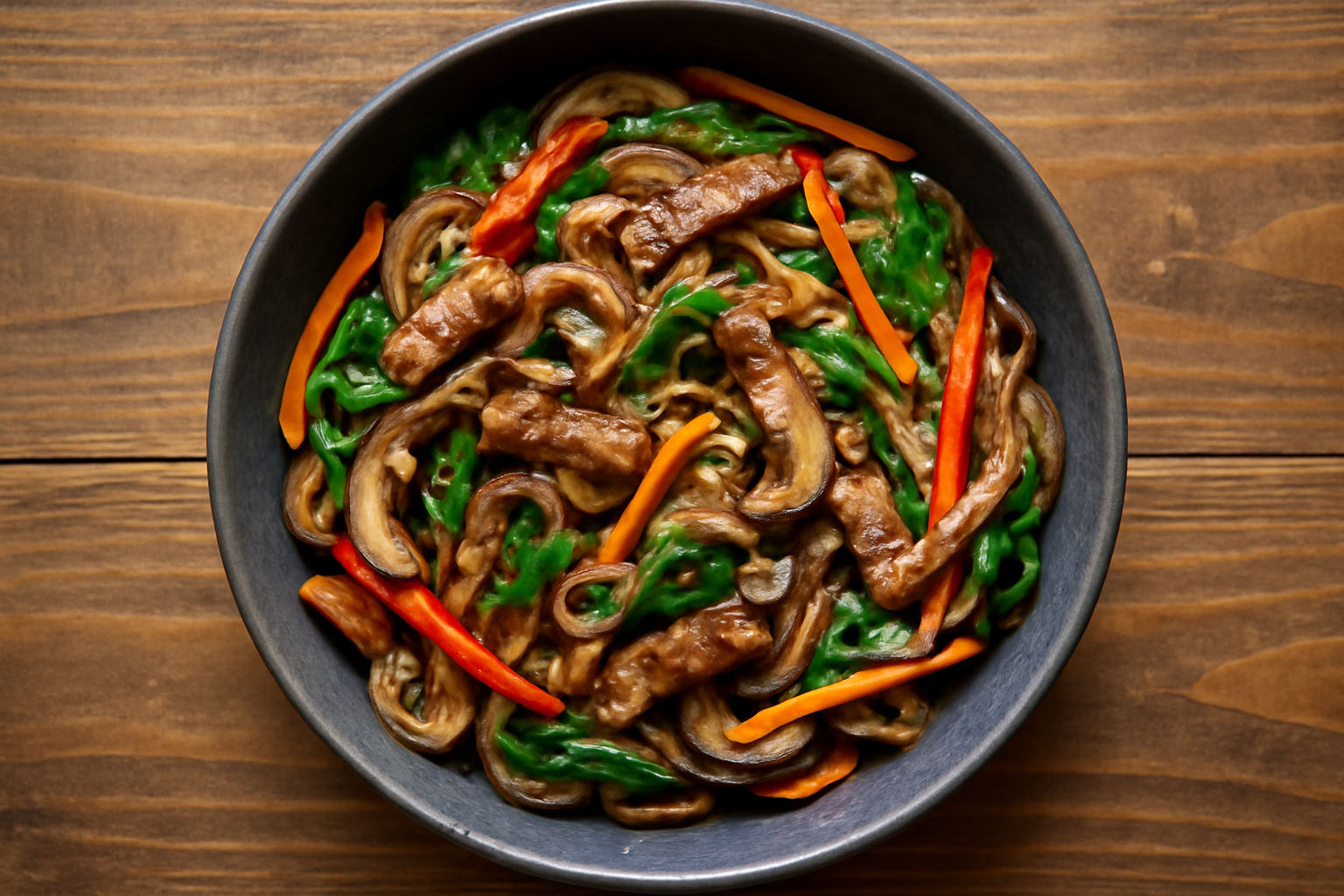
    완성된 잡채를 그릇에 담은 모습

    명절에 미리 만들어두는 팁

    당면과 고기, 버섯은 하루 전날 미리 볶아 각각 밀폐용기에 따로 보관한다. 시금치와 파프리카처럼 숨이 죽으면 물이 나오는 재료는 당일 아침에 넣는 게 낫다. 재료를 한꺼번에 섞어두면 다음날 물이 흥건해지고 당면이 다시 불어버린다. 명절 전날 밤, 재료별로 나눠 냉장 보관해두고 아침에 5분만 다시 버무리면 갓 만든 맛이 그대로 난다.

    자주 묻는 질문

    당면이 붇는 걸 막으려면 어떻게 해야 하나요?

    삶는 시간을 8분으로 정확히 지키고, 삶자마자 찬물에 헹궈 기름을 발라두는 것이 핵심이다. 양념에 무친 뒤 실온에 오래 두지 말고 바로 냉장 보관하면 붇는 속도가 크게 줄어든다.

    미리 만들어서 냉장 보관하면 며칠까지 괜찮을까요?

    밀폐용기에 담아 냉장 보관 시 2~3일까지는 맛이 크게 변하지 않는다. 다만 시간이 지날수록 당면이 양념을 흡수해 짜지므로, 먹기 전에 참기름 한 스푼과 물 1큰술을 넣고 다시 버무리면 처음 맛에 가깝게 돌아온다.

    냉동 보관도 가능한가요?

    가능은 하지만 추천하지는 않는다. 당면 식감이 해동 후 뚝뚝 끊기고 시금치는 물러진다. 냉동해야 한다면 시금치는 빼고 나머지 재료만 냉동했다가, 해동 후 시금치를 새로 데쳐 넣는 방법이 그나마 낫다. 해동은 냉장실에서 반나절 천천히 하는 게 안전하다. 전자레인지로 급하게 녹이면 당면 겉면만 눅눅해지고 속은 딱딱하게 남는 경우가 많다.

    양념이 싱겁거나 짤 때는 어떻게 조절하나요?

    완성 후 간을 보고 싱거우면 국간장을 반 큰술씩, 짜면 참기름과 설탕을 각각 반 큰술씩 추가하며 조절한다. 소금보다 국간장으로 맞춰야 색이 탁해지지 않는다. 명절처럼 여러 명이 나눠 만들 때는 마지막에 한 사람이 전체 간을 통일해서 보는 게 실수를 줄이는 방법이다.

  • 제주도 2박3일 가족여행 코스, 오름과 흑돼지로 짠 알짜 동선

    제주도 2박3일 가족여행 코스, 오름과 흑돼지로 짠 알짜 동선

    오후 6시, 협재해수욕장 주차장에 차를 세우자마자 여덟 살 둘째가 신발도 벗지 않고 모래밭으로 뛰어갔다. 첫째는 편의점에서 산 죠스바를 입에 문 채 “오늘 오름 두 개 올랐는데 다리 하나도 안 아파”라며 웃었다. 지난 7월 말, 두 아이와 함께 2박3일 동안 제주를 돌면서 짜 본 동선이다. 이동 시간을 최대한 줄이고 하루에 명소 3~4곳만 넣었더니 아이도 어른도 마지막 날까지 지치지 않았다.

    왜 반시계 방향 루프인가

    제주공항은 제주시 서쪽에 있다. 첫날 서부로 나가서 협재·애월권에서 하루를 묵고, 둘째 날 남쪽을 거쳐 동쪽 구좌·성산권으로 넘어간 뒤, 마지막 날 아침 동부 해변을 즐기고 공항으로 복귀하는 흐름이다. 동서를 하루에 오가는 코스는 편도로만 1시간 20분 넘게 걸려서 아이 낮잠 시간까지 차 안에서 날려버리기 쉽다. 숙소는 첫날 애월, 둘째 날 성산 근처로 잡았다.

    1일차 — 새별오름과 협재 노을

    오전 11시 제주공항 도착, 렌터카 수령까지 30분. 제주시내에서 흑돼지로 이른 점심을 먹고 서쪽으로 이동한다. 새별오름은 편도 20분이면 정상에 닿는 낮은 오름이라 유치원생도 어른 손을 잡고 오를 만하다. 정상에서 내려다보는 억새밭과 한라산 능선을 보면 아이들도 잠깐은 조용해진다.

    제주 오름 억새밭과 한라산 풍경

    오후 4시쯤 협재해수욕장에 도착해 두 시간 정도 물놀이를 한다. 수심이 완만해서 초등 저학년도 튜브 없이 발목까지 들어갈 수 있는 구간이 넓다. 근처 협재솥(한림읍 한림로 354, 오전 10시~오후 9시, 목요일 휴무)은 해변이 통유리로 보이는 자리가 있어 저녁 예약을 걸어두면 좋다. 흑돼지 두루치기와 전복 솥밥을 더해 4인 기준 9만원 안팎이 나왔다.

    2일차 — 따라비오름에서 성읍민속마을까지

    애월 숙소에서 아침을 먹고 남쪽 표선 방향으로 이동한다. 따라비오름은 능선이 세 갈래로 갈라져서 걷는 재미가 있는데, 편도 25분에 경사가 완만해 유모차는 어렵지만 초등학생은 무난하다. 능선마다 색이 다른 억새가 펼쳐져서 사진 찍느라 예상보다 시간이 더 든다.

    점심은 성읍민속마을 인근에서 먹고, 오후에는 마을 안 돌담길을 40분쯤 걸었다. 실제 주민이 사는 초가집 사이를 지나는 코스라 입장료 없이 제주 옛 생활을 자연스럽게 보여줄 수 있다. 아이가 지루해할까 걱정했는데 흑돼지를 키우던 통시(전통 화장실 겸 돈사) 구조를 보더니 오히려 질문이 끝없이 이어졌다. 저녁에는 동쪽으로 넘어가 성산 근처 숙소로 들어간다.

    3일차 — 월정리 해변과 만장굴

    체크아웃 전 아침 산책 삼아 월정리해수욕장 카페거리를 걷는다. 에메랄드빛 바다를 보며 30분만 걸어도 아이들 컨디션이 확 올라온다. 점심은 도민상회(구좌읍 행원로1길 32-3, 매일 오전 11시~오후 11시)에서 흑돼지를 먹었는데, 저녁이면 웨이팅이 길다는 말을 듣고 낮 12시 전에 갔더니 대기 없이 바로 앉았다.

    협재 흑돼지 구이 상차림

    비행기 시간이 넉넉하면 만장굴을 30~40분 코스로 다녀올 만하다. 동굴 안은 여름에도 서늘해서 아이들이 더위를 식히기 좋고, 조명이 낮은 구간이 있어 손을 꼭 잡고 걸어야 한다. 공항까지는 만장굴에서 40분 정도로, 오후 5~6시 비행기 기준이면 시간이 빠듯하지 않다.

    제주 협재해수욕장에서 노는 아이들

    자주 묻는 질문

    비 오는 날에는 어떻게 하나요

    오름과 해변 일정을 오설록 티뮤지엄이나 유리의성 같은 실내 체험형 장소로 바꿔둔다. 두 곳 다 주차가 넓고 카페 공간이 있어 비를 피하면서 한 시간은 거뜬히 채운다. 성읍민속마을은 처마 아래로 이동하며 볼 수 있는 구간이 많아 우산만 챙기면 소나기 정도는 버틸 만하다.

    오름은 몇 살부터 데려가도 괜찮나요

    새별오름과 따라비오름 정도의 낮은 오름은 만 4~5세부터 어른이 손을 잡아주면 가능했다. 다만 유모차는 두 곳 모두 흙길이라 접어서 들고 가야 한다. 정상 부근은 바람이 세니 얇은 겉옷 하나는 꼭 챙기는 게 좋다.

    렌터카 없이도 이 코스가 가능한가요

    대중교통만으로는 오름과 해변을 하루에 묶기 어렵다. 버스 배차 간격이 30분~1시간이라 이동만으로 반나절이 사라질 수 있어서, 아이를 동반한다면 렌터카를 기본으로 잡고 카시트를 미리 요청해두는 편이 마음 편하다.

  • Korean Noraebang Culture Explained: What Happens Inside Those Neon Rooms

    Korean Noraebang Culture Explained: What Happens Inside Those Neon Rooms

    The first time my father-in-law handed me a tambourine and told me, without a hint of irony, that my job was to “shake it like you mean it,” I understood something about Korea that no guidebook had managed to explain. We were four drinks into a Friday night, packed into a room the size of a walk-in closet, neon light bouncing off a mirrored wall, and a nine-year-old song number machine was about to become the most important object in the room. Welcome to noraebang.

    Noraebang (노래방) literally means “song room,” and if you live in Korea long enough — married into a Korean family the way I have — you stop thinking of it as karaoke and start thinking of it as a piece of social infrastructure. It’s where office dinners go to loosen up, where breakups get processed, where teenagers celebrate exam results, and where my in-laws, who otherwise seem allergic to public displays of anything, turn into completely different people the second the microphone comes out.

    What Actually Happens Inside a Noraebang

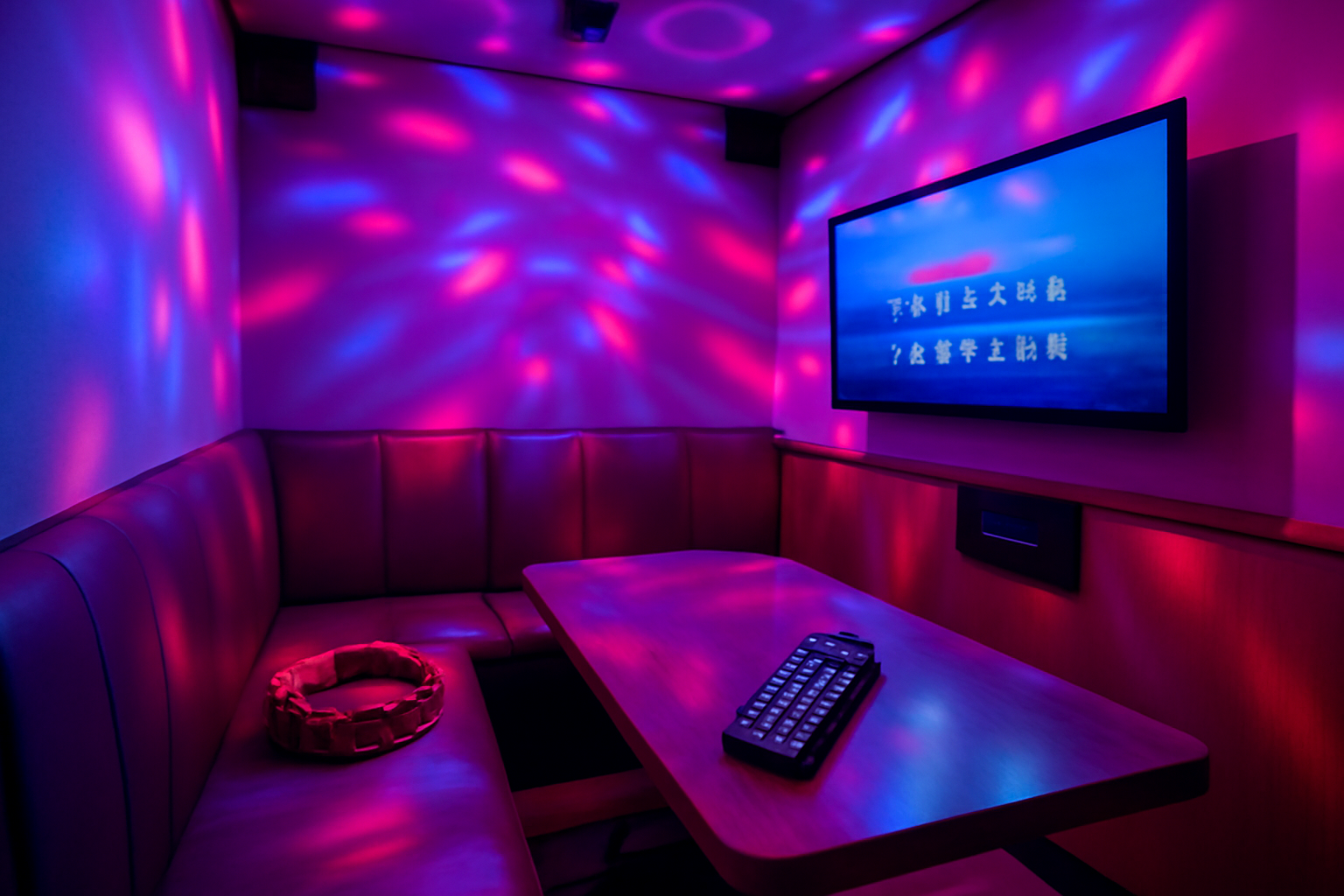
    Picture a hallway lined with numbered doors, like a motel built for sound instead of sleep. Behind each door is a private room — not a stage, not an open floor, just your group and four padded walls. There’s a big screen for lyrics and music videos (usually something gloriously unrelated to the song playing), a remote-style number pad, a coffee table sticky with the ghosts of a thousand splashed beers, and a couch that seats however many friends you dragged in with you.

    You don’t perform for strangers. That’s the whole point. The room is soundproofed enough that your terrible high notes stay exactly where they belong — inside, with the people who already love you.

    The Song Number System

    Every song in the machine has a number, and every regular has a mental library of their go-to numbers memorized the way some people remember phone numbers from childhood. There’s a thick, well-worn songbook on the table for browsing, organized by artist and title, but half the fun is watching someone punch in a five-digit code from memory without even glancing down. My father-in-law still remembers the number for a 1990s trot song faster than he remembers his own postal code. There’s an English-language section too, buried a bit deeper in most books, so foreigners aren’t stuck with only K-pop and trot.

    How the Money Works

    Standard noraebangs charge by the room, per hour, not per person — which is exactly why groups love them. A basic room runs somewhere around 15,000 to 25,000 won an hour depending on the neighborhood and how late it is, and that price gets split five or six ways without anyone blinking. Fancier “luxury” rooms with better sound systems and mood lighting cost more, and there’s also a newer, cheaper option that’s exploded in popularity: coin noraebang, where you feed in coins or tap a card per song instead of renting a whole room. It’s the solo, no-commitment version — perfect for one person who just wants to belt out two songs before the bus comes.

    Service Time: The Best Kind of Korean Hospitality

    Here’s the detail that catches every newcomer off guard. You book an hour, you’re singing your heart out, the clock hits its final minute — and then it doesn’t end. The timer resets itself, jumping back up to twenty or thirty extra minutes, completely free. This is “service time” (서비스 타임), a small, unannounced gift from the owner, and it’s one of my favorite quiet examples of Korean generosity in action. It’s not guaranteed, and it tends to show up more generously on slow weeknights than on a packed Saturday, but being polite, ordering a round of drinks or snacks from the front counter, and just being a decent, high-energy customer all seem to help your odds. Nobody explains the rules. You just learn to say a genuine thank-you when the numbers jump.

    A private Korean noraebang karaoke room with neon disco lighting, a lyrics screen, and a tambourine on the couch

    The Tambourine Is Not Optional

    If you sit quietly on the couch while someone else sings, you are, in the gentlest possible way, doing it wrong. Every room comes stocked with tambourines, maracas, sometimes a pair of little shakers shaped like fruit, and picking one up is basically the noraebang version of applause. You don’t need rhythm. You don’t need to know the song. You shake something, you clap along on the chorus, you cheer when your friend nails — or spectacularly misses — the high note. The energy in the room is a group project, and the tambourine is how you clock in.

    Why It’s Always the Second or Third Stop

    Noraebang rarely happens on its own. It’s a chapter, not the whole book. A typical night out follows a rhythm almost everyone here intuitively understands: dinner and soju first, then maybe a second round at a pub or a beer hof, and only after the group is sufficiently warmed up does someone say the magic words — “노래방 가자” (let’s go to noraebang). By the time you’re inside that little room, inhibitions have already left the building, which is exactly why noraebang works as well as it does. Nobody sober enough to care about pitch is walking through that door. It’s the release valve at the end of the evening, the part where hierarchy melts a little and your usually reserved boss might grab the mic for a power ballad nobody asked for.

    A group of friends laughing together in a Korean karaoke room, holding a tambourine and a microphone

    Unwritten Rules Worth Knowing

    Nobody hands you a manual, but a few norms show up so consistently they might as well be written on the wall. Pass the microphone around — don’t hog it for three songs in a row just because you found your anthem. Cheer for everyone, especially the person who’s clearly nervous and off-key; enthusiasm counts for more than accuracy. If you’re a guest of honor or the most senior person in the group, you’ll often get gently nudged toward singing first, and it’s polite to at least try. And when the room’s volume creeps up past what the walls can handle, someone — usually an aunt or a manager — will good-naturedly tell everyone to bring it down a notch.

    Frequently Asked Questions

    Do I have to sing?

    Not technically, no one is going to physically hand you the microphone against your will. But sitting there in total silence tends to read as awkward rather than reserved. Even picking one easy, familiar song — or just grabbing a tambourine and getting loud during the chorus — goes a long way toward fitting in.

    Is noraebang the same thing as karaoke bars in Japan?

    They’re cousins, not twins. Japanese karaoke boxes are built around a similar private-room concept, but noraebang culture leans more communal and less polished — the tambourine energy, the free service time, the fact that it’s almost always a group activity rather than a solo indulgence, all feel distinctly Korean. Song selections and interfaces differ too, with plenty of trot and K-pop numbers you won’t find on a Japanese machine.

    Can kids go to noraebang?

    Absolutely, and plenty of families do exactly that, especially in the daytime or early evening before the drinking crowd takes over. My own kids treat our neighborhood coin noraebang like a playground — a few songs, a lot of tambourine shaking, home before dinner. It’s really only late-night, alcohol-heavy rooms that skew toward an adult crowd.

    What if I don’t know any Korean songs?

    No problem at all. Every machine has a solid English section, and honestly, an enthusiastic, off-key rendition of a song everyone half-knows tends to get a bigger cheer than a technically perfect one nobody recognizes.

    Years in, I still don’t have a great singing voice, and I’ve made peace with that. What I’ve got instead is a tambourine arm that never gets tired and a genuine soft spot for those cramped, neon-lit rooms where an ordinary Tuesday can turn into something worth remembering. That, more than any single song, is what noraebang is really about.

  • 주택연금이란? 2026년 가입조건과 수령액 계산법 총정리

    주택연금이란? 2026년 가입조건과 수령액 계산법 총정리

    서울 성북구에서 32년째 같은 아파트에 살고 있는 68세 박모 씨의 통장에는 지난 7월부터 매달 91만원이 들어온다. 은퇴 후 소득이 끊긴 지 3년, 그가 가진 재산은 시세 5억원 남짓한 낡은 아파트 한 채뿐이었다. 집을 팔지 않고도, 자식에게 손 벌리지 않고도 매달 돈이 들어오는 이 구조가 바로 주택연금이다.

    한국주택금융공사(HF)가 운영하는 이 제도는 2007년 도입 이후 누적 가입자가 15만 가구를 넘어섰다. 2023년 10월 제도 개편으로 가입 가능 주택가격 기준이 공시가격 9억원에서 12억원으로 상향되면서, 서울 중형 아파트를 보유한 은퇴 세대도 가입 문턱을 넘기 쉬워졌다. 그런데도 “내 집이 담보로 잡히는 것 아니냐”는 오해 때문에 신청을 망설이는 사람이 여전히 많다.

    서울의 오래된 아파트 앞에 서 있는 노년 부부
    주택연금은 살던 집에서 계속 거주하며 매달 생활비를 받는 국가 보증 제도다.

    주택연금 가입조건, 어디까지 해당될까

    가입 자격은 크게 네 가지로 나뉜다.

    연령 — 부부 중 한 사람이라도 만 55세 이상이면 신청할 수 있다. 나이가 많은 배우자가 아니라 젊은 배우자 기준으로 55세를 넘기면 된다는 점을 놓치는 사람이 의외로 많다.

    주택가격 — 부부 합산 공시가격 12억원 이하 주택 또는 주거용 오피스텔이 대상이다. 시세가 아니라 공시가격 기준이라, 시세 15억원짜리 아파트도 공시가격이 12억원 아래면 신청이 가능한 경우가 있다.

    보유 주택 수 — 원칙은 부부 합산 1주택자다. 다만 공시가격 합산이 12억원을 넘지 않는다면 2주택 이상 보유자도 가입할 수 있고, 12억원을 초과하는 2주택자는 3년 안에 1채를 처분하는 조건으로 가입 문이 열려 있다.

    거주 요건 — 담보로 제공하는 주택에 실제로 거주해야 한다. 전세를 주고 있는 집은 대상에서 빠진다.

    수령액은 어떻게 계산될까 — 9억원 주택 예시

    월 지급금은 단순하다. 가입 당시 나이·지급방식별로 정해진 월지급률에 주택가격(상한 12억원)을 곱한 값이다. 문제는 이 지급률이 3개월마다 시장금리에 따라 조정되고, 가입 유형(정액형·전후후박형·정률형)에 따라서도 달라진다는 점이다.

    가장 많이 선택하는 종신지급방식 정액형을 기준으로 보면, 2026년 상반기 공시된 지급률은 대략 이렇다.

    9억원 주택을 보유한 사람이 55세에 가입하면 월 지급률 약 0.047%가 적용돼 월 42만원 안팎을 받는다. 같은 주택으로 65세에 가입하면 지급률이 0.081% 수준으로 올라가 월 73만원 정도, 70세라면 지급률 0.112%로 월 100만원을 넘긴다. 가입 나이가 늦을수록 남은 기대여명이 짧아지는 만큼 월 지급액은 커지는 구조다.

    노년 부부가 식탁에서 계산기와 서류를 놓고 수령액을 계산하는 모습
    실제 지급률은 가입 시점 금리에 따라 달라지므로 공식 계산기 조회가 필수다.

    여기서 짚어야 할 게 있다. 위 수치는 예시일 뿐, 실제 가입 시점의 「주택담보노후연금보증모형 운영지침」에 따라 매번 달라진다. 정확한 금액은 한국주택금융공사 홈페이지(hf.go.kr)의 예상연금조회 계산기에서 생년월일과 주택가격만 입력하면 즉시 확인된다. 회원가입도 필요 없다.

    장점과 단점, 둘 다 있다

    장점부터 보면 명확하다. 국가가 보증하는 상품이라 공사가 파산해도 지급이 끊기지 않는다. 집값이 나중에 떨어져 수령 총액이 집값을 넘어서더라도 자녀에게 차액을 청구하지 않는다. 재산세는 25% 감면받고, 살던 집에서 평생 거주할 수 있다는 심리적 안정감도 크다.

    반면 단점도 뚜렷하다. 가입 이후 집값이 크게 오르면 그 상승분을 온전히 누리지 못한다. 초기보증료(주택가격의 1.5%)를 내야 하고, 중도 해지 시 이 보증료는 돌려받지 못한다. 상속인 입장에서는 물려받을 재산이 줄어드는 셈이라, 자녀와 미리 상의하지 않고 신청했다가 가족 간 갈등으로 번지는 사례도 종종 보인다.

    거실 소파에서 편안하게 쉬고 있는 노년 부부
    평생 거주가 보장되지만, 상속 재산이 줄어드는 점은 가족과 미리 논의할 부분이다.

    자주 묻는 질문

    배우자가 먼저 세상을 떠나면 연금이 끊기나요?

    아니다. 부부 중 한 명이 사망해도 남은 배우자에게 동일한 금액이 계속 지급된다. 이게 일반 종신보험과 가장 다른 부분이다. 다만 가입자가 아닌 배우자 앞으로 소유권 일부가 이전돼 있어야 이 보장이 정상 작동하니, 신청 시 소유 형태를 확인해 두는 게 좋다.

    대출이 남아 있는 집도 가입할 수 있나요?

    가능하다. 기존 주택담보대출 잔액이 있어도 주택연금 가입과 동시에 인출한도 범위 내에서 그 대출을 상환하는 방식(대출상환용)을 선택할 수 있다. 다만 대출 상환에 쓰는 만큼 월 지급금은 줄어든다. 예를 들어 9억원 주택에 잔여대출 1억원이 있다면, 이를 먼저 갚고 남은 금액을 기준으로 매달 받는 돈이 산정된다.

    가입 후 집값이 폭등하면 손해 아닌가요?

    매달 받는 연금액 자체는 가입 시점 가격으로 고정되니, 이후 집값이 오르든 내리든 지급액은 바뀌지 않는다. 집값 상승분을 못 누린다는 아쉬움은 있지만, 반대로 집값이 떨어져도 정해진 금액을 계속 받을 수 있다는 뜻이기도 하다. 손해와 이득을 가르는 절대 기준은 없고, 본인의 자산 구성과 생활비 필요 수준에 따라 판단이 갈리는 문제다.

    주택연금은 만능 해법이 아니다. 다만 별다른 현금성 자산 없이 집 한 채로 노후를 버텨야 하는 사람에게는, 집을 팔지 않고도 매달 현금 흐름을 만들 수 있는 몇 안 되는 국가 보증 제도라는 점은 분명하다. 가입을 고민하고 있다면 한국주택금융공사 상담센터(1688-8114)나 가까운 공사 지사에서 정확한 예상 수령액부터 확인해보는 걸 권한다.

  • 메리 셀레스트호의 미스터리, 선원이 모두 사라진 유령선의 진실

    메리 셀레스트호의 미스터리, 선원이 모두 사라진 유령선의 진실

    1872년 12월 4일 오후, 대서양 한복판. 캐나다 국적의 상선 데이 그라티아(Dei Gratia)호 선원들은 수평선 위에서 이상하게 흔들리는 돛을 발견했다. 배는 지그재그로 표류하고 있었다. 망원경으로 살펴봐도 갑판 위에 사람 그림자가 보이지 않았다. 두 시간을 쫓아간 끝에야 그들은 배 이름을 읽을 수 있었다. 메리 셀레스트(Mary Celeste). 승선해보니 배 안에는 단 한 명도 없었다.

    안개 낀 대서양 위를 떠도는 낡은 범선

    발견 당시 상황

    메리 셀레스트호는 1872년 11월 7일, 뉴욕항을 출발했다. 목적지는 이탈리아 제노바. 선적된 화물은 공업용 알코올 1,701통이었다. 12월 5일(선원들이 배에 오른 날짜 기준), 포르투갈령 아조레스 제도에서 약 400해리 떨어진 지점에서 데이 그라티아호 선장 데이비드 모어하우스는 부하들과 함께 승선을 결정했다.

    배 안 풍경은 기묘할 만큼 정돈돼 있었다. 침구는 정리돼 있었고, 선실 탁자 위 미싱은 그대로였으며 아이 장난감마저 흩어져 있지 않았다. 식량과 물은 6개월치가 남아 있었다. 화물창엔 바닷물이 조금 차 있었지만 침몰을 걱정할 수준은 아니었다. 그런데 구명보트와 항해 기록계, 육분의는 사라지고 없었다. 항해일지는 11월 25일자에서 멈춰 있었다.

    사라진 선원들

    당시 배에는 총 10명이 타고 있었다. 선장 벤저민 브릭스(Benjamin Briggs), 그의 아내 세라, 두 살배기 딸 소피아, 그리고 항해사와 선원 7명. 브릭스는 술을 입에 대지 않는 성실한 선원으로 평판이 높았다. 항해 경력도 풍부했고 가족을 배에 태운 것도 익숙한 항로였기 때문이었다.

    수색은 이후 몇 주간 이어졌지만 실오라기 하나 찾지 못했다. 선체에는 다툼이나 화재의 흔적이 없었다. 도끼 자국처럼 보이는 흠집이 뱃전에서 발견됐으나, 조사 결과 정상적인 목재 결 손상으로 판명됐다. 사람이 배 밖으로 강제로 끌려 나간 정황도, 폭력의 증거도 나오지 않았다.

    여러 가설

    가장 널리 받아들여지는 것은 알코올 증기 가설이다. 화물칸의 나무통 일부가 흔들림으로 새며 가스가 차올랐고, 폭발을 두려워한 브릭스가 승객 전원을 작은 구명보트로 대피시켰다는 시나리오다. 실제로 밧줄이 배 뒤편에 묶인 흔적이 남아 있어, 구명보트를 매단 채 잠시 거리를 두려 했을 가능성이 제기된다. 그러다 밧줄이 끊기거나 폭풍을 만나 구명보트가 본선과 멀어졌고 모두 조난했다는 것이다.

    해적설도 오래전부터 거론됐지만 선실 안 귀중품과 선장의 개인 금고가 손대지 않은 채 남아 있었다는 기록 때문에 설득력이 약하다. 거대한 파도나 해저지진으로 인한 순간적 공황설, 선원들의 반란설도 나왔으나 뒷받침할 물증은 없다. 1884년 코난 도일이 이 사건을 각색한 소설을 발표하면서 유령선이라는 이미지가 대중에 깊이 박혔고, 이후로도 온갖 초자연적 해석이 덧붙었다.

    폭풍우 치는 대서양 파도와 흑백 톤의 범선

    현재까지의 결론

    해양 역사가들 다수는 알코올 증기로 인한 오판과 공포가 가장 합리적인 설명이라 본다. 브릭스가 위험을 과대평가해 구명보트로 피신했다가 악천후 속에서 본선을 놓치고 표류하다 실종됐다는 쪽이다. 완벽하게 입증된 것은 아니다. 배가 발견된 지 150년이 넘도록 선체 목재나 항해일지에서 새로운 결정적 단서는 나오지 않았다. 메리 셀레스트호는 이후에도 여러 차례 다른 선주에게 팔려나갔고, 불운한 배라는 소문 속에 1885년 보험 사기 목적으로 좌초되며 생을 마감했다.

    자주 묻는 질문

    메리 셀레스트호는 그 뒤 어떻게 됐나요?
    발견 이후 배는 여러 선주를 거치며 화물선으로 계속 운항됐다. 1885년, 아이티 인근 산호초에 고의로 좌초시킨 보험 사기 사건에 연루된 뒤 폐선 처리됐다.

    가장 유력한 가설은 무엇인가요?
    화물칸에서 새어 나온 알코올 증기가 폭발할지 모른다는 두려움에 선장이 승객 전원을 구명보트로 대피시켰다가 본선과 떨어져 조난했다는 가설이 가장 많은 지지를 받는다.

    실종된 사람들의 시신은 찾았나요?
    아니다. 승선했던 10명 중 어느 누구의 시신도, 유품도 끝내 발견되지 않았다.

  • 40대 이후 고혈압, 생활습관으로 혈압 낮추는 법

    40대 이후 고혈압, 생활습관으로 혈압 낮추는 법

    토요일 아침, 헬스장 프런트에 놓인 자동혈압계에 팔을 넣었다. 화면에 뜬 숫자는 145/95. 재작년 건강검진 때만 해도 128/82였는데 2년 사이 훌쩍 올라 있었다. 어지럽지도, 두통이 있지도 않았다. 그냥 평소와 다름없는 몸이었다. 문제는 여기에 있다. 고혈압은 아무 신호 없이 온다.

    몸이 보내는 작은 신호들

    대한고혈압학회 기준으로 정상 혈압은 120/80mmHg 미만이다. 130~139/85~89는 고혈압 전 단계, 140/90 이상이면 고혈압으로 분류된다. 40대부터 혈압이 눈에 띄게 오르는 이유는 혈관 탄력이 서서히 줄고, 대사량은 낮아지는데 식습관과 스트레스는 그대로이기 때문이다. 뒷목이 뻐근하거나 아침에 얼굴이 붓는 정도가 전부일 때가 많다. 두통이나 어지럼증이 나타났다면 이미 수치가 꽤 올라간 뒤일 가능성이 크다. 집에서 혈압을 재보지 않으면 놓치기 쉬운 이유다.

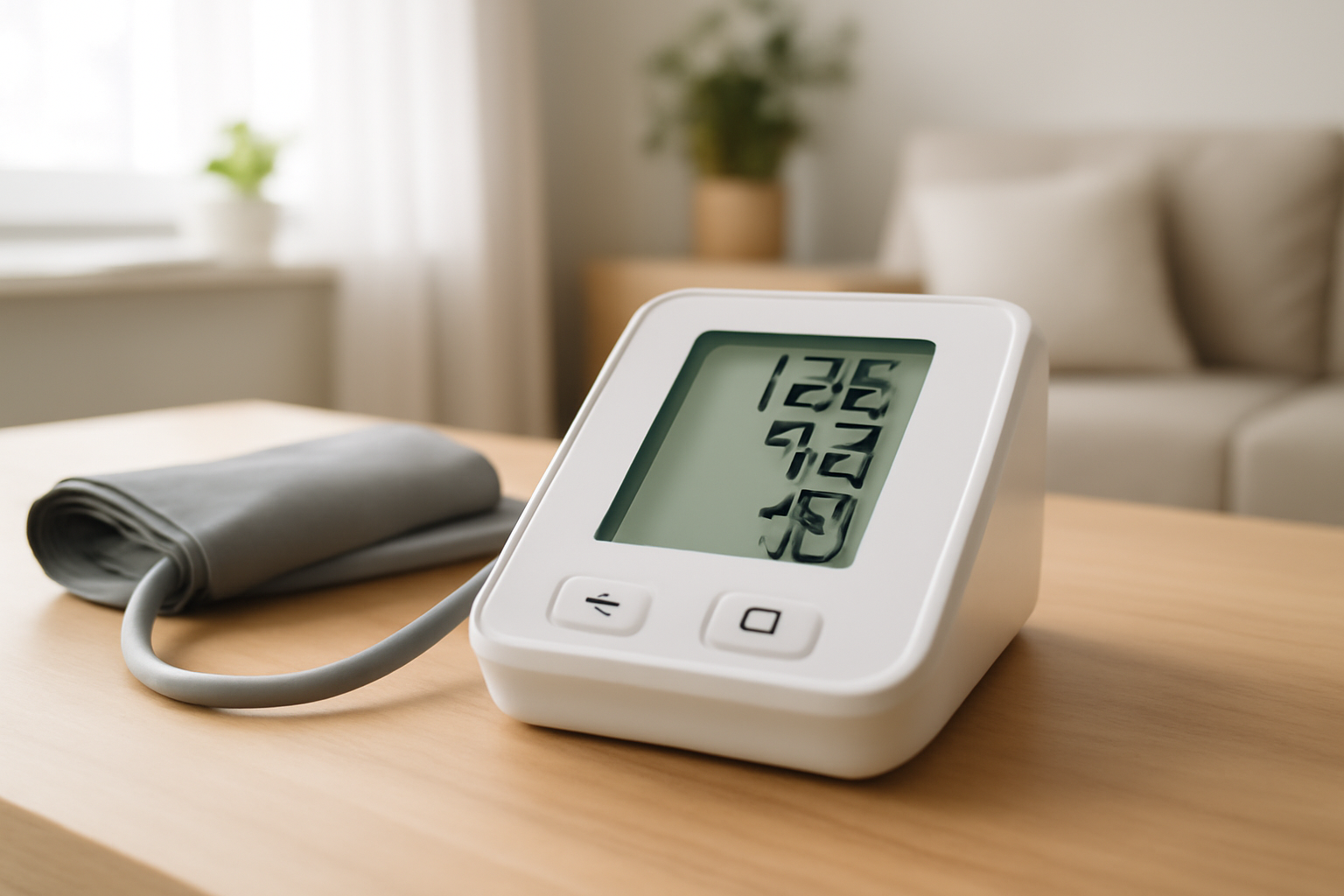
    가정용 디지털 혈압계로 혈압을 측정하는 모습

    왜 40대부터 확 오를까

    가장 큰 원인은 나트륨이다. 세계보건기구 권장량은 하루 2,000mg(소금 5g) 미만인데, 한국인 평균 섭취량은 이보다 훨씬 많다. 국물 요리, 배달 음식, 가공식품에 익숙해진 식습관이 혈관에 압력을 계속 준다. 여기에 앉아 있는 시간이 길어지고 운동량이 줄면서 체중이 함께 늘어난다. 야근과 회식이 잦아지는 시기라 수면 시간은 짧아지고 카페인과 음주로 임시방편의 각성을 찾는 경우도 많다. 스트레스 호르몬은 혈관을 수축시켜 혈압을 순간적으로 끌어올리는데, 이 상태가 매일 반복되면 혈압계 숫자는 서서히 기준선 자체를 옮겨놓는다.

    오늘부터 바꿀 수 있는 것들

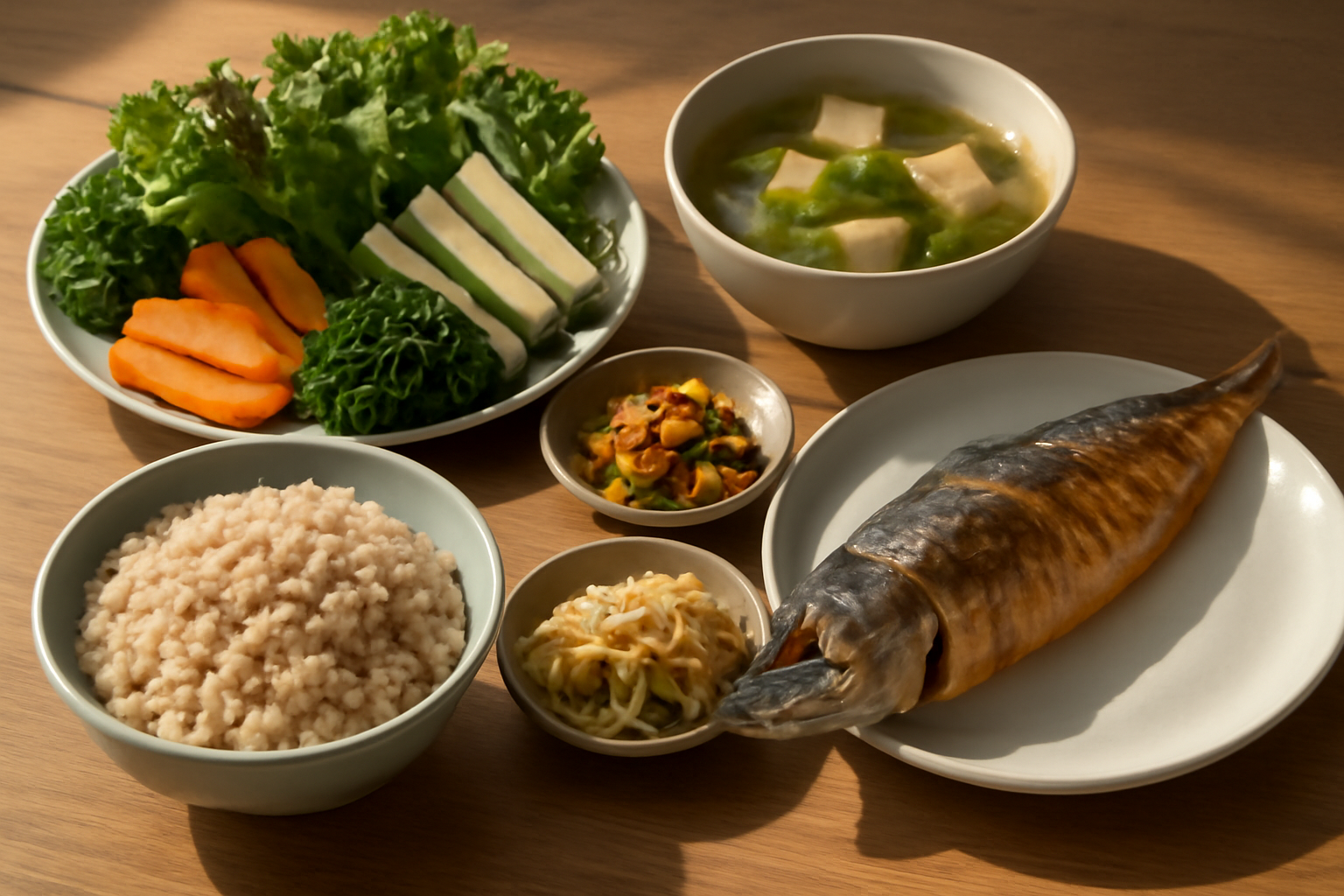
    식단에서는 나트륨을 줄이는 동시에 칼륨 섭취를 늘리는 쪽이 효과적이다. 국물을 절반만 먹고, 국이나 찌개 대신 나물이나 샐러드를 곁들이는 것만으로도 하루 섭취량이 눈에 띄게 줄어든다. 바나나, 시금치, 감자처럼 칼륨이 풍부한 식품은 나트륨 배출을 돕는다.

    나트륨을 줄인 건강한 저염식 식단

    운동은 거창할 필요 없다. 빠르게 걷기, 자전거, 계단 오르기 같은 유산소 운동을 주 5회, 하루 30분씩 하면 수축기 혈압을 4~9mmHg까지 낮출 수 있다는 연구 결과가 있다. 점심시간에 15분만 걸어도 안 하는 것보다 낫다.

    공원에서 빠르게 걷기 운동을 하는 40대 남성

    수면도 무시할 수 없는 변수다. 하루 6시간 미만으로 자는 날이 이어지면 혈압을 조절하는 자율신경 균형이 흐트러진다. 잠자리에 들기 두 시간 전 스마트폰을 내려놓고, 카페인은 오후 2시 이후로 넘기지 않는 규칙만 지켜도 수면의 질이 달라진다. 체중을 1kg 줄이면 혈압이 약 1mmHg 낮아진다는 보고도 있으니, 작은 변화를 쌓는 쪽이 결과적으로 빠르다.

    자주 묻는 질문

    Q. 혈압은 하루 중 언제 재야 정확한가요?
    아침 기상 후 1시간 이내, 배뇨 후 식전 상태에서 측정하는 것이 가장 안정적이다. 저녁에는 잠자리에 들기 전 편안한 상태에서 재면 된다. 측정 직전 5분은 앉아서 쉬고, 팔은 심장 높이에 맞춰야 오차가 줄어든다.

    Q. 짠 음식 말고 혈압을 올리는 다른 습관은 무엇인가요?
    과도한 음주와 흡연, 만성 수면 부족, 진통제 남용도 혈압을 끌어올리는 요인으로 꼽힌다. 잦은 야식과 정제 탄수화물 위주 식사도 체중 증가를 통해 간접적으로 영향을 준다.

    Q. 생활습관만 바꿔도 약 없이 혈압이 떨어지나요?
    경계성 수치라면 체중 감량과 나트륨 제한만으로도 개선되는 경우가 있다. 다만 수치와 심혈관 위험도는 사람마다 달라서 스스로 판단해 약을 끊거나 미루는 것은 위험하다.

    병원에 가야 할 때

    생활습관 교정은 혈압 관리의 출발점일 뿐, 전부는 아니다. 가정용 혈압계로 재도 수치가 반복해서 140/90을 넘거나 두통, 흉통 같은 증상이 동반된다면 미루지 말고 병원을 찾아야 한다. 정확한 진단과 치료는 전문의와 상담하세요.