카카오톡 프로필을 오늘만 세 번째 눌러봤다. 마지막 접속 시간은 어제 밤 11시 42분에서 멈춰 있다. 그런데 내가 보낸 메시지 옆에는 여전히 ‘1’이 그대로다. 웃긴 건 인스타그램 스토리는 어제도, 오늘 아침에도 새로 올라왔다는 거다. 나만 빼고 다 잘 지내는 느낌. 바쁜 건가, 아니면 이게 그 유명한 ‘잠수 이별’인가 — 이 질문 하나로 하루 종일 일이 손에 안 잡힌 사람이라면, 이 글이 도움이 될 것이다.
사흘의 침묵, 이거 정말 위험 신호일까
결론부터 말하면 ‘3일’이라는 숫자 자체엔 절대적인 기준이 없다. 사람마다 연락 빈도가 다르고, 원래도 하루에 한 번 안부만 주고받던 사이라면 사흘의 침묵이 이상 신호가 아닐 수도 있다. 반대로 매일 아침저녁으로 카톡을 주고받던 사이였다면 하루만 조용해도 불안이 스멀스멀 올라온다. 중요한 건 날짜 수가 아니라 ‘평소 패턴 대비 얼마나 벗어났는가’다. 어제까지 시시콜콜한 하루 일과를 실시간으로 중계하던 사람이 갑자기 세 마디 답장으로 줄었다면, 그건 사흘이 아니라 하루 만에도 이미 신호다.
그렇다고 완전히 안심할 일도 아니다. 한 결혼정보업체가 미혼남녀를 대상으로 진행한 설문에서 ‘썸이 깨지는 신호’를 묻자 응답자의 51.6%가 ‘연락이 없어지거나 텀이 길어진다’를 꼽았다. 뒤를 이어 ‘말투가 변한다’가 24.7%, ‘약속 잡는 횟수가 줄어든다’가 15.8%였다. 즉 연락 텀이 늘어나는 건 실제로 관계가 식어갈 때 가장 흔하게 나타나는 첫 신호이긴 하다. 다만 이게 밀당인지 진짜 정리 수순인지는 이 숫자 하나로는 구분이 안 된다는 게 문제다. 그래서 필요한 건 숫자가 아니라 ‘무엇이 함께 달라졌는가’를 보는 눈이다.
‘밀당’과 ‘잠수’를 가르는 결정적 차이
여기서 밀당이랑 잠수를 같은 걸로 헷갈리는 사람이 은근히 많다. 밀당의 침묵은 ‘의도가 있는 침묵’이다. 상대는 여전히 SNS에 스토리를 올리고, 다른 사람 게시물엔 좋아요도 누르고, 프로필 사진도 자주 바꾼다. 존재감은 여전히 흘리면서 단지 나한테만 답장 속도를 늦추는 식이다. 심지어 답장이 온 다음엔 평소보다 더 다정하거나 애교 섞인 말투로 오는 경우도 많다 — 밀당은 상대를 완전히 놓을 생각이 없다는 전제에서 나오는 행동이기 때문이다.
반면 잠수 이별의 침묵은 ‘설명을 아예 회피하는 침묵’이다. 카톡은 물론이고 인스타그램 스토리도 뜸해지거나, 심하면 팔로우를 끊거나 스토리 공개 범위에서 나를 제외해버린다. 답장이 와도 단답이고, 예전과 달리 애정 표현이나 이모티콘이 사라진다. 무엇보다 “요즘 좀 바빠서”라는 말만 반복하고 정작 언제 만나자는 약속은 끝까지 잡지 않는다. 친구들과의 약속 인증샷은 꼬박꼬박 올라오는데 정작 나한테는 “일이 많아서 정신없다”는 말만 돌아온다면, 그건 바쁜 게 아니라 우선순위에서 밀려난 거다. 밀당이 ‘긴장감을 주는 기술’이라면, 잠수는 ‘이별 통보를 회피하는 방식’에 가깝다.
왜 우리는 답장 10분, 20분에 이렇게 목을 매게 될까
그 사흘 동안 유독 신경 쓰이는 게 하나 더 있다. 바로 답장 속도다. 답장 속도에 웃길 정도로 예민해지는 게 요즘 연애의 특징이라고 해도 과언이 아니다. 실제로 연애 조언을 다루는 한 SNS 계정에서는 “상대가 10분 안에 답하면 10~20분 내로, 2~3시간 후에 답하면 비슷한 템포로 맞추라”는 팁까지 돌 정도다. 우습게 들릴 수도 있지만, 이게 완전히 근거 없는 얘기는 아니다. 답장 속도는 상대가 지금 나를 얼마나 우선순위에 두고 있는지를 보여주는 가장 직관적인 신호이기 때문이다. 그러니 사흘째 답이 없는 상황에서 유독 시계를 자꾸 들여다보게 되는 것도, 사실은 이 ‘속도 = 관심’이라는 감각이 몸에 배어 있어서다.
문제는 이 속도 게임이 종종 과도한 해석으로 이어진다는 점이다. 회의 중이었거나, 운전 중이었거나, 그냥 폰을 무음으로 해놓고 낮잠을 잤을 수도 있는데 우리는 그 몇 시간의 공백에 온갖 서사를 채워 넣는다. “혹시 다른 사람이 생긴 건 아닐까”, “내가 뭘 잘못 말했나” 하고 대화 내용을 스크롤해서 다시 읽어보는 것도 흔한 패턴이다. 답장 속도 하나로 관계 전체를 판단하려는 순간, 오히려 진짜 신호를 놓치기 쉽다.
심리학은 ‘잠수’를 어떻게 설명할까
잠수 이별을 학술적으로는 ‘고스팅(ghosting)’이라고 부른다. 심리학자 피터 조나슨(Peter Jonason) 연구팀이 2021년 학술지 ‘Acta Psychologica’에 발표한 논문은 참가자 341명을 대상으로 고스팅에 대한 태도와 경험을 조사했는데, 상대의 감정보다 자기 보호와 갈등 회피를 우선시하는 성향—흔히 ‘다크 트라이어드(Dark Triad)’라고 부르는 성격 특성이 높은 사람일수록 고스팅을 더 쉽게 받아들이고 실제로 저지르는 경향이 나타났다. 거창하게 들리지만 쉽게 풀면 “불편한 대화를 마주할 용기가 지독하게 없는 사람일수록 말없이 사라지는 쪽을 택한다”는 얘기다. 즉 잠수는 단순히 마음이 식어서라기보다, 이별 통보라는 껄끄러운 순간 자체를 견디지 못하는 회피 습관에 가깝다.
오스트리아의 심리학자 라인하르트 할러(Reinhard Haller)도 비슷한 지적을 한다. 스마트폰과 SNS 같은 디지털 소통 수단이 발달하면서 오히려 ‘침묵으로 도망치기’가 훨씬 쉬워졌다는 것이다. 상처받는 입장에서는 억울할 수 있지만, 뒤집어 보면 그만큼 잠수를 타는 쪽도 정면으로 부딪힐 용기가 없다는 뜻이기도 하다. 내가 못나서, 매력이 없어서 잠수를 당한 게 아니라 상대가 갈등을 감당할 그릇이 안 됐을 뿐이라는 얘기다.
‘밀당’과 ‘잠수’를 가르는 체크리스트 4가지
아래 항목 중 서너 개 이상 겹친다면 밀당보다는 잠수 이별 쪽에 무게를 두는 게 현실적이다.
첫째, 연락 텀이 서서히 늘어난 게 아니라 갑자기 뚝 끊겼다. 밀당은 보통 점진적인데, 잠수는 어느 날을 기점으로 급격하게 조용해지는 경우가 많다. 어제까지 하루 열댓 통씩 오가던 카톡이 오늘부로 완전히 멈췄다면, 이건 서서히 식은 게 아니라 어떤 결정을 이미 내린 뒤일 가능성이 크다.
둘째, SNS 활동 자체가 줄었거나, 유독 나와 관련된 반응에서만 조용해졌다. 스토리는 계속 올리는데 나한테만 답장이 없다면 이건 밀당일 가능성이 높지만, 친구들과 놀러 간 인증샷은 올라오는데 정작 나와 나눴던 대화나 함께 찍은 사진에는 좋아요조차 안 눌러준다면 얘기가 다르다.
셋째, 마지막으로 나눈 대화에서 미묘하게 갈등이나 서운함이 오갔다. “그건 좀 서운했어”라는 말 한마디 이후로 대화가 뚝 끊겼다면, 그 침묵은 밀당의 ‘튕기기’가 아니라 정리의 시작일 확률이 크다.
넷째, 약속을 구체적으로 잡으려 하면 계속 미뤄지거나 흐지부지된다. “다음 주에 보자”는 말만 반복되고 정작 날짜는 한 번도 확정되지 않는다면, 이건 상대가 이미 관계를 정리하는 쪽으로 마음을 굳혔을 가능성이 크다.
이미 잠수라는 확신이 들었다면, 지금 당장 멈춰야 할 행동
답이 없다고 메시지를 연달아 세 통, 네 통 보내는 건 오히려 역효과다. 상대가 밀당 중이었다면 부담을 느껴 더 멀어질 수 있고, 진짜 잠수 이별 중이었다면 그 침묵을 더 정당화해줄 빌미만 준다. 감정을 쏟아내기보다 “네 설명을 기다리고 있어” 정도의 담담한 메시지 하나를 남기고 기다려보는 편이 심리적으로도 더 유리하다. 내가 ‘기다려지는 을’이 아니라, ‘설명을 요구할 권리가 있는 사람’이라는 걸 잊지 않는 게 핵심이다.
그리고 무엇보다, 사흘이라는 시간 동안 내 일상을 완전히 상대의 답장 여부에 저당 잡히지 않는 게 중요하다. 고작 그 사람의 ‘읽씹’인지 ‘안읽씹’인지 때문에 내 소중한 주말 오후와 저녁 메뉴 고르는 즐거움까지 빼앗기기엔 너무 억울하지 않은가. 오히려 이 시간 동안 친구를 만나거나 평소 미뤄뒀던 일을 하면서 스스로 여유를 되찾은 사람들이, 나중에 상대가 연락을 다시 해왔을 때도 훨씬 담담하게 반응할 수 있었다는 이야기를 주변에서 많이 듣는다.
자주 묻는 질문
Q1. 원래 연락을 잘 안 하는 스타일인데, 이것도 잠수 이별일 수 있나요?
평소 패턴이 원래 그랬다면 사흘의 침묵은 큰 의미가 없을 가능성이 높다. 판단 기준은 절대적인 날짜 수가 아니라 ‘이 사람의 평소 연락 빈도 대비 얼마나 달라졌는가’다. 원래 답장이 느린 사람이 갑자기 며칠째 조용한 것과, 원래 하루에도 몇 번씩 연락하던 사람이 갑자기 뚝 끊긴 것은 완전히 다른 신호로 봐야 한다.
Q2. 잠수 탄 것 같아서 화가 나는데, 계속 연락해도 될까요?
감정적으로는 이해가 가지만 실질적인 도움은 안 될 확률이 크다. 하루 이틀 간격으로 짧은 메시지를 두세 번 보내는 정도까지는 자연스럽지만, 그 이상 반복되면 상대에게 오히려 침묵을 정당화할 명분만 주게 된다. 한 번 담담하게 의사를 전달한 뒤엔 답이 올 때까지 기다리는 편이 관계에서든 스스로의 감정 회복에서든 더 나은 선택이다.
Q3. 밀당인 줄 알았는데 결국 잠수 이별로 끝나는 경우도 많나요?
적지 않다. 밀당으로 시작했다가 상대가 아예 관계를 정리하기로 마음먹으면서 그대로 잠수로 넘어가는 경우도 흔하다. 그래서 이 둘을 딱 잘라 구분하기보다는, 위에서 언급한 체크리스트—SNS 활동 변화, 약속 잡기 패턴, 갈등 직후의 침묵 여부—를 시간을 두고 계속 관찰하는 편이 더 정확하다.
아침에 창문 열었다가 유리에 맺힌 물방울 보고 흠칫한 적 있을 것이다. 어젯밤엔 분명 멀쩡했는데. 9월 중순 넘어가면서 낮에는 26도까지 오르다가 새벽엔 15도 아래로 뚝 떨어지는 날이 이어지는데, 이렇게 실내외 온도차가 10도 이상 벌어지는 순간이 결로를 만드는 진짜 범인이다. 따뜻하고 습한 실내 공기가 차가운 유리·벽면에 닿으면 공기 중 수증기가 이슬점 온도 아래로 식으면서 그대로 물방울로 맺히는 것뿐이라, 에어컨을 껐다 켰다 반복하거나 낡은 창틀 코킹도 거들긴 하지만 근본 원인은 온도차 그 자체다. 그래서 일교차가 벌어지는 환절기가 1년 중 제일 취약한 시기가 된다.
문제는 이게 물기 닦고 끝날 일이 아니라는 점이다. 눈에 잘 안 띄는 창틀 패킹이나 벽지 뒷면, 붙박이장 안쪽에 습기가 계속 스며들면 놀랍게도 단 2주 만에 검은 곰팡이 포자가 자리를 잡는다. 그때 가서 락스 뿌리는 것보다, 애초에 물방울이 맺히지 않게 습도와 환기를 관리하는 쪽이 훨씬 적은 노력으로 끝난다.
환기, 아무 시간에나 하면 오히려 역효과다
창문만 열면 다 해결될 거라 생각하기 쉬운데, 시간대를 잘못 잡으면 습한 바깥 공기를 실내로 들이는 꼴이 된다. 새벽 5~7시나 해 진 뒤 저녁 시간대는 바깥 습도가 오히려 실내보다 높은 경우가 많아서 이때 환기하면 방을 눅눅하게 만드는 셈이다. 그렇다면 언제 열어야 할까. 기상청 습도 데이터를 봐도 보통 오전 10시~오후 2시 사이, 해가 올라와 기온이 오른 직후 바깥 공기가 가장 건조하다. 이 구간에 하루 2~3회, 한 번에 10~15분씩 환기하는 게 정석이다.
창문 하나만 빼꼼 여는 것보다 집 안에서 서로 마주 보는 창을 동시에 여는 편이 훨씬 효율적이다. 맞바람이 통하면서 5분 만에도 공기가 확 뒤바뀌는데, 창 하나만 열어놓으면 15분을 열어도 방 안쪽 공기는 거의 안 움직인다. 화장실이나 주방처럼 습기가 몰리는 공간은 문을 살짝 열어두고 환풍기를 같이 돌리는 게 좋고, 샤워 직후에는 환풍기를 최소 30분은 더 돌려야 벽 타일 틈 결로가 줄어든다.
비 오는 날이나 미세먼지 나쁨인 날엔 창문 열기가 부담스러울 수 있는데, 그런 날은 환기 대신 실내 습도계로 수치를 확인하면서 제습기나 에어컨 제습 모드로 40~60% 구간을 유지하는 쪽이 낫다. 습도 60%를 넘어가는 시간이 하루 누적 6시간 이상 되면 곰팡이 포자가 발아하기 좋은 조건이 갖춰진다고 보면 된다.
제습제는 아무 데나 놓는다고 효과가 나는 게 아니다
마트에서 파는 염화칼슘 제습제, 그냥 방 한가운데 던져놓고 쓰는 사람 많은데 사실 그건 제일 비효율적인 위치다. 습기는 공기 중에 고르게 퍼져 있는 게 아니라 차가운 표면 근처에 몰려 있다. 구체적으로는 찬 공기가 스며드는 창틀 바로 밑, 그리고 공기가 정체되기 쉬운 붙박이장 구석 바닥처럼 손이 잘 안 가는 자리다. 그래서 제습제는 방 중앙보다 창틀 하단이나 벽 모서리, 붙박이장 바닥 쪽에 두는 게 훨씬 흡습 효율이 높다.
용량 대비 공간도 따져봐야 한다. 시판 제습제 한 통(보통 200~300ml 흡수 용량)은 1.5평 안팎의 밀폐 공간을 기준으로 만들어진 제품이 많다. 붙박이장처럼 문을 닫으면 완전히 밀폐되는 공간이라면 한 칸에 하나씩, 옷장이 크면 위·아래 칸에 각각 하나씩 놓는 식으로 배치해야 한다. 물이 다 차오르면 흡습력이 떨어지니 2~3주에 한 번은 물통을 확인하고, 물이 가득 차기 전에 미리 교체하는 편이 안전하다.
숯을 쓰는 사람도 있는데, 숯은 화학 제습제보다 흡습 속도는 느리지만 냄새까지 같이 잡아준다는 장점이 있다. 다만 숯 자체가 습기를 머금다 보면 어느 시점부터는 방출하는 쪽으로 돌아서기 때문에, 2주에 한 번 정도는 햇볕에 3~4시간 널어 말려서 다시 써야 한다. 안 그러면 오히려 숯이 습기 저장고가 되어버린다. 신발장이나 옷장 서랍 한 칸에 200g 안팎을 그물망에 담아 넣어두면 적당하다.
벽지에 곰팡이가 이미 폈다면, 락스보다 먼저 할 일
동전만 한 검은 반점이 벽지 구석에 보인다고 바로 락스부터 뿌리는 경우가 많은데, 벽지 표면은 락스 원액에 색이 바래거나 얼룩이 남기 쉬워서 초기 단계에서는 소독용 에탄올을 물에 70% 정도 희석해서 마른 천에 묻혀 톡톡 두드리듯 닦아내는 게 먼저다. 문질러 닦으면 포자가 오히려 주변으로 퍼질 수 있으니 두드리는 방식이 낫다.
닦아낸 뒤에는 반드시 그 자리를 완전히 건조시켜야 한다. 젖은 상태로 방치하면 며칠 안에 같은 자리에 다시 곰팡이가 올라온다. 헤어드라이어 찬바람이나 선풍기로 10분 정도 바람을 쐬어주고, 그 위에 베이킹소다를 살짝 뿌려 습기를 마저 흡수시킨 다음 마른 브러시로 털어내는 방법도 많이 쓴다. 반점이 손바닥 크기를 넘어가거나 벽지 뒤 석고보드까지 검게 번진 흔적이 보이면, 이건 표면 청소로 해결될 단계가 아니라 벽 내부 결로나 누수를 의심해야 하는 상황이라서 관리사무소나 전문 업체 점검이 필요하다.
옷장·신발장, 문 닫아두는 습관부터 고쳐야 한다
외출했다 돌아오면 신발장 문부터 딱 닫는 사람이 많은데, 신발 안쪽 습기가 빠져나갈 틈이 없으면 그 습기가 고스란히 신발장 안에 머물다가 나무 선반이나 신발 밑창 사이 곰팡이로 이어진다. 신발을 벗고 최소 1~2시간은 문을 살짝 열어 통풍시킨 뒤 닫는 습관 하나만 들여도 신발장 냄새와 곰팡이가 눈에 띄게 줄어든다.
옷장도 마찬가지다. 옷을 빽빽하게 걸어두면 옷 사이에 공기층이 없어서 습기가 갇히기 쉬우니, 옷걸이 간격을 손가락 한두 마디 정도는 띄워서 걸어두는 게 좋다. 벽에 완전히 붙여둔 붙박이장이라면 뒤판과 벽 사이에 습기가 맺히기 쉬운데, 이동식 옷장이라면 벽에서 5cm 정도 떼어놓는 것만으로도 뒷면 결로가 확 줄어든다. 이렇게 공간을 띄워도 바닥 쪽은 여전히 습기가 고이기 쉬운데, 이때는 옷장 바닥에 신문지를 몇 장 깔아두는 것도 은근히 효과가 있다. 신문지가 습기를 머금는 동시에 인쇄 잉크 특유의 냄새가 좀약 냄새를 대신 잡아주는 부수 효과도 있어서, 한 달에 한 번 정도 갈아주면 나쁘지 않다.
습도계 하나 사두면 훨씬 편해진다
감으로 “요즘 좀 눅눅한 것 같은데” 하고 넘어가는 것보다, 만원 안팎 하는 디지털 습도계 하나 방마다 놓아두면 관리가 훨씬 수월해진다. 이왕이면 바닥에 세워두기보다 자석 부착형이나 스탠드 겸용 제품을 골라 눈높이 벽면에 붙여두면 지나갈 때마다 자연스럽게 눈에 들어와 확인을 놓치지 않는다. 쾌적하면서도 곰팡이 발생을 억제하는 구간은 실내 온도 18~22도, 습도 40~60% 정도로 보면 된다. 습도가 65%를 넘어가는 시간이 길어질수록 곰팡이 포자 발아 확률이 가파르게 올라가니, 습도계 바늘이 그 선을 넘나드는 게 보이면 그날은 환기 시간을 평소보다 5분씩 늘리거나 제습기를 한 시간 더 돌리는 식으로 바로 대응하면 된다.
자주 묻는 질문
Q. 보일러를 틀어두면 결로가 줄어드나요?
난방으로 실내 온도를 올리면 유리 표면과 실내 공기의 온도차가 줄어들어 결로가 어느 정도 완화되는 건 맞다. 다만 창문을 계속 닫아둔 채 난방만 돌리면 실내 습도 자체는 오히려 높아질 수 있으니, 난방 중에도 하루 한두 번은 짧게라도 환기를 해주는 게 안전하다.
Q. 제습제와 제습기, 둘 다 필요한가요?
역할이 다르다고 보면 된다. 제습기는 방 전체 공기 습도를 빠르게 낮추는 데 유리하고, 제습제는 옷장·신발장처럼 밀폐된 좁은 공간에 지속적으로 놓아두는 용도에 맞다. 거실이나 침실처럼 넓은 공간은 제습기로, 붙박이장이나 신발장 같은 밀폐 공간은 제습제로 나눠서 관리하는 게 효율적이다.
Q. 곰팡이 냄새는 안 나는데 벽지가 자꾸 들뜨는 건 왜 그런가요?
벽지 뒤쪽에서 이미 결로수가 고이고 있다는 신호일 수 있다. 냄새가 나기 전이라도 벽지 아래쪽이나 이음매 부분이 부풀거나 뜯어지는 느낌이 든다면, 그 부분만 살짝 들춰서 안쪽에 물기나 검은 자국이 있는지 확인해보는 게 좋다. 물기가 확인되면 벽면 결로 문제일 가능성이 높으니 환기·제습을 강화하면서 지켜보고, 계속 반복되면 전문 점검을 받아보는 편이 낫다.
A friend once handed me a birthday card, and before I even opened it, my Korean mother-in-law leaned across the table, plucked the red pen out of my hand, and swapped it for a black one without saying a word. No lecture, no explanation, just a quiet trade like she was correcting a typo. I hadn’t even signed anything yet. But the fact that she intercepted it before I could tells you something about how deep these beliefs sit in everyday Korean life. You don’t have to be superstitious to know the rules. You just have to have grown up here, or married into it, or worked in a Korean office long enough to notice that nobody signs anything in red pen if they can help it.
None of this is about whether any of it is true — it isn’t, and Korean people will tell you so themselves, often while still avoiding the fourth floor button on the way to the office. It’s about how a handful of old beliefs about ink color, numbers, whistling, and shoes managed to survive electricity, smartphones, and a very modern, very wired country. Superstition doesn’t need to be believed to be followed. It just needs to be familiar enough that breaking it feels a little rude, or a little risky, even to people who’d swear on their life they don’t buy any of it.
Why Red Ink Still Makes Koreans Flinch
Start with the one that trips up the most foreigners, because it’s an easy mistake to make. Red pens are everywhere — teachers grade with them, editors mark up drafts with them, and yet in Korea, writing a living person’s name in red ink is something you just don’t do. Ask anyone who grew up going through the Korean school system and they’ll tell you a red-pen grade on a test wasn’t just embarrassing, it carried a faint chill to it, the kind of feeling that has nothing to do with the actual score. The origin traces back to old family registries and memorial tablets, where the names of the deceased were recorded in red. Over time the association flipped from “this is how we remember the dead” to “writing a name in red invites death,” and that leap, however illogical it sounds out loud, stuck hard enough that it’s still taught to kids today.
I’ve watched a coworker physically wince when someone used a red highlighter on a colleague’s name tag during a meeting. Nobody explained it. Nobody had to. And this isn’t a rule reserved for solemn occasions, which is what makes it easy to trip over — it applies to birthday cards, sticky notes, group chat name lists, anything with a name attached to it. The safest move, if you’re ever unsure, is to just reach for a blue or black pen and save yourself the questioning look.
The Number 4 Problem: When a Digit Becomes a Design Choice
You might think a superstition about a number is the kind of thing that stays folklore and never touches real infrastructure. Korea disagrees. Walk into almost any older office building, hospital, or apartment complex and check the elevator panel — there’s a decent chance the fourth floor is labeled “F” instead of “4.” For a foreigner riding that elevator for the first time, it’s a genuinely disorienting little moment, like hunting for a platform that isn’t supposed to exist. The reason is almost embarrassingly simple once you hear it: in Korean, the Chinese-derived numeral 4 is pronounced “sa,” which is also the pronunciation of the Chinese character for death. Same sound, different meaning, and somehow that overlap was enough to reroute architecture.
Hospitals take it especially seriously, which makes sense when you think about who’s checking into them. Some skip the fourth floor in patient room numbering entirely, or avoid assigning it to wards altogether. It’s not universal — plenty of newer buildings don’t bother, especially ones aimed at a younger, more skeptical crowd — but it’s common enough that if you’re apartment hunting and notice unit 404 is suspiciously missing, now you know why. It’s the same logic that makes some Western buildings skip a labeled 13th floor, just swapped out for a different number and a different fear.
Fan Death: The Superstition That Refuses to Die
Of all the entries on this list, fan death is the one that gets foreigners the most worked up, usually because it sounds like it should be a joke and yet older Korean relatives will insist on it with total seriousness. The belief is that sleeping in a closed room with an electric fan running overnight can kill you — through suffocation, hypothermia, or some vague combination the explanation always seems to shift depending on who’s telling it. Turns out this isn’t some ancient legend either. It traces back to the early-to-mid 1900s, right around when electric fans started showing up in Korean homes and nobody quite trusted the new technology yet.
What keeps it alive today is a small but real design compromise: a lot of fans sold in Korea still come with a timer function, so you can set it to switch off after an hour or two rather than run all night. Even people who roll their eyes at the superstition will use the timer anyway, because why not, it saves a little electricity too. That’s the pattern with a lot of these beliefs — they don’t need conviction to survive, just a low-cost habit that nobody feels like breaking.
Two Rules for After Dark: Nail Clippers and Whistling
A lot of Korean superstition gets specifically nervous about nighttime, and these next two are the clearest examples of that pattern. First, cutting your nails after dark. The traditional version says trimming your nails at night lets mice sneak in and eat the clippings, and if a mouse eats your nail clippings, it can supposedly transform into a copy of you — a slightly unsettling twist. But the more grounded theory is that this warning dates back to a time before electric lighting, when cutting your nails by candlelight or in the dark genuinely risked cutting yourself. Either way, the rule outlived both the mouse story and the lack of electricity: plenty of Korean households still default to trimming nails during the day, out of habit more than fear. What I find interesting is that this one, more than most, has a plausible non-supernatural backstory that actually holds up — a reminder that not every old belief started as pure fantasy. Some of them started as decent safety advice that picked up a scarier explanation somewhere along the way, probably because “be careful with sharp objects in the dark” isn’t a very memorable warning for a kid.
Right behind the nail clippers comes another nighttime warning, carried on a completely different kind of sound. Whistling at night, the belief goes, calls something toward you — spirits and ghosts in one version of the story, snakes in another, depending on which region or which grandmother you’re asking. Either way, the instruction passed down is the same: don’t do it after dark. You’d think this belongs strictly to campfire-story territory, and mostly it does now, but I’ve noticed it still surfaces as a half-joking correction. Someone starts whistling on an evening walk, and a parent or older relative will say something like “stop that, you’ll bring the snakes,” laughing as they say it, but still saying it. That’s the tell with Korean superstition in general — the belief itself has faded, but the phrase that carries it hasn’t, and it gets repeated almost as a reflex, humor and old fear tangled together in the same sentence.
Never Give Shoes as a Gift (Unless You Add This One Trick)
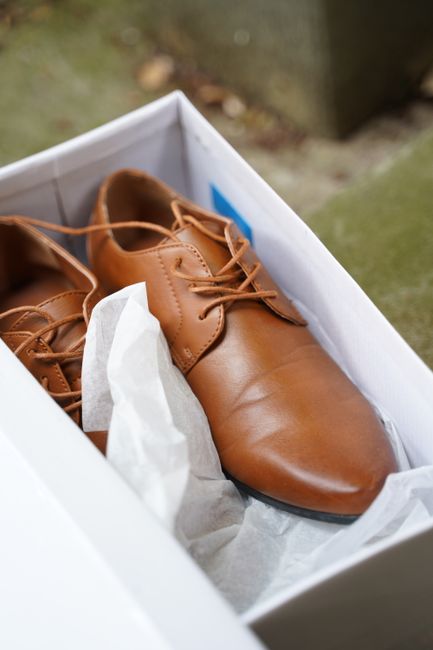
Save this one for anyone dating in Korea, because it comes up more than you’d expect. Giving a romantic partner shoes as a gift is considered bad luck — the idea being that shoes let the person “run away” from you, whether that means leaving the relationship or just leaving in general. It sounds almost too neat as a metaphor, shoes literally being the thing you walk away in, but that’s exactly why it’s memorable enough to have survived as long as it has.
There’s a workaround, though, and it’s the kind of detail that tells you this superstition is taken seriously enough to need a loophole. If someone gives you shoes, you’re supposed to hand them a small amount of money in return, and the amount barely matters — a single 1,000 won note, a handful of loose coins, whatever’s sitting in your wallet works fine. The idea is that you’re technically “buying” the shoes rather than receiving them as a gift, which cancels out the curse. I’ve seen this actually happen at a birthday gathering, a crumpled bill quietly passed back across the table half as a joke and half not, and nobody thought it was strange. That’s superstition doing exactly what it’s built to do: giving people a small, low-stakes ritual so they don’t have to sit with the discomfort of ignoring it entirely.
So Why Do These Superstitions Stick Around?
None of this is really about believing that a fan will kill you or a mouse will impersonate you if you trim your nails at 10 p.m. It’s about the fact that superstitions like these cost almost nothing to follow. Using a blue pen instead of red, taking the stairs instead of pressing 4, tossing a few coins back after a shoe gift — none of it is inconvenient enough to be worth the argument. So people keep doing it, half out of respect for family, half out of a “why risk it” shrug, and the beliefs quietly outlive the generation that actually feared them.
If you’re spending real time in Korea, whether you’re teaching, dating, working, or just visiting long enough to notice the patterns, it’s worth treating these less like rules and more like cultural fingerprints. Nobody expects a foreigner to genuinely believe a fan can suffocate you overnight. But knowing why the fourth floor is labeled “F,” or why your Korean partner might wince at a shoe box under the Christmas tree, tends to land a lot better than shrugging it off as nonsense. It shows you actually paid attention.
FAQ
Do young Koreans actually still believe in these superstitions?
Mostly no, not in a literal sense. Ask a Korean university student if fans really cause death and you’ll probably get a laugh. But belief and behavior aren’t the same thing here — plenty of people who consider themselves not superstitious at all will still avoid red ink for a name or use the fan timer anyway. It’s less about fear and more about habit passed down from parents and grandparents, kept alive because there’s no real cost to keeping it.
Is it considered rude to break one of these superstitions in front of Korean friends or family?
It depends heavily on the person and the specific superstition. Writing someone’s name in red in front of an older relative could genuinely make them uncomfortable, since that one is tied closely to ideas about death. Whistling at night or cutting nails after dark is much lower stakes — you might get a joking comment, but nobody’s going to be upset. When in doubt, especially with elders, it’s safer to just go along with it rather than explain why you think it’s irrational.
Are there other common Korean superstitions besides these six?
Plenty. Dreaming about pigs is considered a sign of upcoming good fortune or money, sitting near a doorway is sometimes discouraged for reasons tied to old beliefs about spirits passing through entryways, and certain dates on the lunar calendar are treated as better or worse for major life events like moving house or getting married. Korean superstition runs deep and wide, and the six covered here are really just the ones a foreigner is most likely to run into within the first few months of living here.
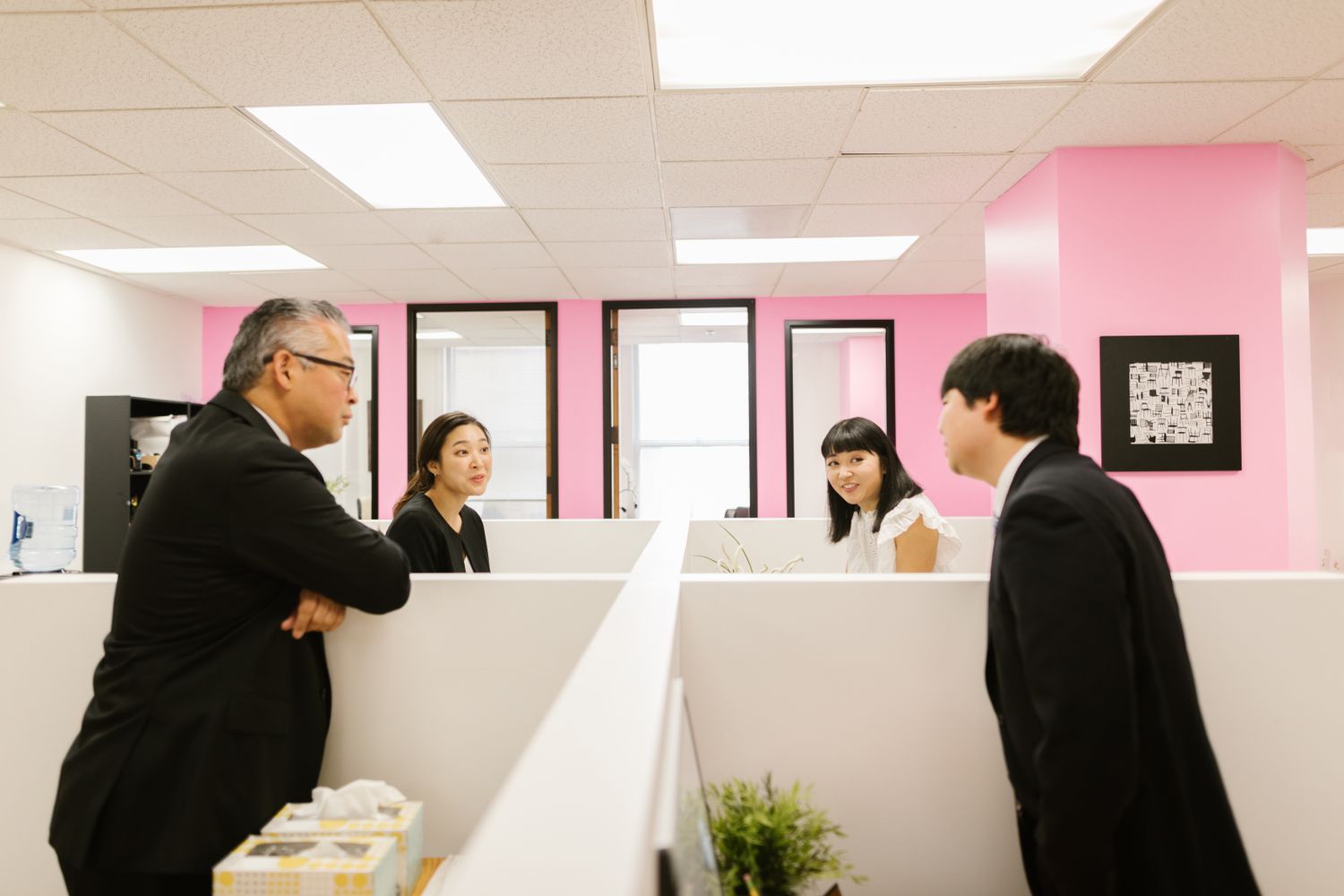
Here’s a scene that trips up almost every foreigner who starts working at a Korean company: someone calls out “Kim Gwajang-nim!” down the hallway, and three heads turn at once. Not because anyone misheard — because there really are three people named Kim holding the title gwajang on that floor, and somehow everyone else in the room already knows which one is being summoned from tone and context alone. One of them is in his mid-thirties and has been gwajang for two years. Another just got promoted into it last spring and still looks a little startled when someone uses the title. The third is closer to forty and clearly the one people defer to when the three of them disagree. To an outsider it looks like a sitcom bit. To everyone else on the floor, it’s just Tuesday. Nobody uses first names. Nobody, most days, even uses last names alone. You are your title, and your title is doing a lot more work than just describing your job.
I want to walk through why that is, because it’s not just a quirk of vocabulary. The title ladder in a Korean office is basically a visible frame holding up who has to speak carefully to whom, who pours the drink first at dinner, and who gets to leave the building before anyone else does. Once you can read that frame, half of what feels confusing or even a little cold about Korean office life starts making a strange kind of sense.
The ladder itself: sawon to bujang and beyond
Most traditional Korean companies — the big conglomerates especially — run on a title system that looks roughly like this, moving up: sawon (사원), then daeri (대리), then gwajang (과장), then chajang (차장), then bujang (부장), and from there into director-level titles like isa (이사) and beyond. You might think this just maps onto “junior, mid-level, senior manager” the way most countries do it, and structurally, sure, it does. But the gap between each rung tends to run three to five years, sometimes longer if the company is conservative about promotions, so a title isn’t really telling you what someone does day to day. It’s telling you how long they’ve been putting in time, and by extension, how much deference the room owes them.
Put rough ages on it and the ladder gets easier to picture. Sawon is typically someone in their late twenties, fresh out of school with a first business card and a first title. Daeri tends to land in the early thirties, after three or four years of proving you can be trusted with something without being watched the whole time. Gwajang usually shows up somewhere in the mid-thirties, and this is arguably the title you’ll bump into most in any office, since it covers the broadest swath of people who are competent enough to run things but not yet senior enough to be in charge of them. Chajang, late thirties to early forties, sits in an odd, in-between spot — deputy department head, essentially, the one who quietly does a lot of the bujang’s actual work without getting the title’s full weight. Bujang, usually mid-forties and up, is the department head himself (and yes, still overwhelmingly “himself” at a lot of legacy firms, though that’s shifting). Above bujang you get into isa, sangmu, jeonmu — director and executive tiers that function almost like their own separate species inside the company.
What surprised me most when I first had this explained to me wasn’t the ladder itself — every country has some version of junior-to-senior. It was learning that the ladder isn’t really optional cultural flavor here. It’s load-bearing, in the literal engineering sense of the word — pull one rung out of place and the whole social structure around it wobbles. Skip a rung, or misjudge where someone sits on it, and you’ve made a real error, not just a minor faux pas.
Why nobody just says your name
This is the part that feels the strangest coming from a Western workplace: you basically stop being addressed by your name the moment you’re hired. Colleagues call each other Kim Daeri-nim, Park Gwajang-nim, Lee Bujang-nim — surname plus title plus the honorific suffix “-nim.” Using someone’s bare name at work, especially toward somebody senior to you, can come across as almost insultingly casual, like walking up to a judge in court and calling them by their first name.
The logic isn’t really about formality for formality’s sake, though. Korean has a whole grammar of speech levels baked into verb endings — the way you conjugate a sentence to someone senior is structurally different from how you’d say the same thing to a peer or a junior — and title-based address is the social anchor that tells everyone which register to use. Say the wrong verb ending to your bujang and it can land as either weirdly stiff or, worse, disrespectful. Using the title correctly is a shortcut that keeps that whole machinery running smoothly without anyone having to think about it consciously.
It also means titles function as a kind of public scoreboard. Everyone in the office roughly knows, at a glance, who’s been there ten years and who’s been there ten months, just from what gets attached to their name — an invisible rank pinned to your collar that never comes off, even at lunch. You might assume that’s uncomfortable, and for some people it genuinely is — being surrounded by reminders of exactly where you rank. But there’s also something almost freeing about it: the ambiguity of “wait, am I allowed to disagree with this person” mostly disappears, because the title already answered that question before the conversation started.
Nunchi: reading the room as an actual job skill
If the title system is the visible structure, nunchi (눈치) is the invisible operating system running underneath it. Nunchi roughly translates to “eye-measure” or “the sense to read a situation,” and in an office context it means noticing, without being told, when your boss is in a bad mood and shouldn’t be approached with a request right now, or that the meeting is dragging because the most senior person in the room hasn’t spoken yet and everyone’s waiting for that cue.
You’d think this is just generic social intelligence, the kind every workplace rewards to some degree. What’s different in Korea is that nunchi gets treated almost as a formal competency — people genuinely get evaluated, informally, on whether they “have” it or not. Someone described as “nunchi-eopda” (눈치 없다, literally “has no nunchi”) is being quietly criticized for a real professional shortcoming, not just an amusing personality trait. It shows up in small moments: knowing not to leave your seat for lunch until the more senior people have moved first, sensing that a junior colleague’s silence in a meeting means they disagree but won’t say so directly, noticing that the copier line should be yielded to the bujang without anyone announcing it.
The reason this matters more here than in a lot of workplaces circles back to the hierarchy itself. In a flatter office culture, if you misjudge the room, the cost is usually mild — a little awkwardness, maybe. In a title-and-seniority system, misjudging the room can mean you’ve accidentally undercut someone senior in front of other seniors, and that’s a much harder thing to walk back.
Why leaving before your boss feels like a small crime
Nunchi doesn’t clock out at six. If anything, that’s when it gets tested the hardest — in a lot of Korean offices, there’s a real reluctance to leave the building before your boss does, even after your own work is finished. You might be completely done for the day, laptop closed, nothing left on your plate, and still find yourself scrolling your phone at your desk because the bujang hasn’t left yet.
It’s not usually an explicit rule anyone states out loud. It’s closer to an accumulated social pressure — leaving early can be read as a signal that you don’t respect the senior person’s time, or that you’re not fully invested in the team’s workload even if your individual piece is done. Some of this traces back to an older cultural assumption that showing your face matters as much as showing your output, that being visibly present is itself a form of contribution. And there’s a status dimension too: the boss walking out last, or being seen to still be working, reinforces the sense that their time and their burden outweighs everyone else’s.
This is exactly the kind of norm that’s under the most active pressure right now, and it’s the same generational fault line that runs through nearly every custom in this list — more on that in a minute. Younger employees are increasingly willing to just leave at their contracted time, work finished, without waiting for permission that was never going to be explicitly granted anyway. It causes friction — plenty of older managers still read it as a lack of loyalty — but it’s also one of the clearest signs that the unspoken rulebook is actually being rewritten, not just complained about.
Hoesik: the dinner that’s technically optional
And then there’s the version of the workday that happens after the workday ends. Hoesik (회식) is the company dinner — usually grilled meat and soju, sometimes moving to a second or third round at a different bar — and it gets described in almost every guide to Korean work culture as “team bonding.” That’s true, but it undersells what’s actually going on. If nunchi is the operating system running quietly in the background all day, hoesik is the moment it gets stress-tested in real time, under the added pressure of alcohol and a much less formal setting. Hoesik is where a lot of the real business of the office happens: the informal permission-seeking, the venting that can’t happen at a desk, the moment your bujang decides whether he actually trusts you or just tolerates you.
It’s called optional, and legally, sure, it is. In practice, skipping hoesik too often — especially as someone junior — can read as a lack of commitment to the team, even if nobody says that out loud. There’s also a specific etiquette layered on top of the dinner itself: you generally don’t pour your own drink, you pour for the person senior to you and let them or someone else return the favor, and you’re expected to turn your body slightly away and cover your glass with your hand when drinking in front of someone significantly senior. That gesture has real weight behind it — it traces back to an older Confucian-influenced idea that you don’t drink facing a superior head-on, since meeting their eyes over a glass reads as too direct, almost confrontational. None of this is written down anywhere. You’re just supposed to pick it up by watching, which loops right back to nunchi again.
What’s interesting is that hoesik culture is genuinely getting lighter than it used to be, at least at a lot of companies. A decade or two ago it wasn’t unusual for a dinner to roll into a second and third venue late into the night, multiple nights a week. Now it’s much more common to see a single dinner, done by nine or so, with companies increasingly offering “healthy hoesik” alternatives like movie nights or bowling instead of the drinking-heavy version. The instinct behind it hasn’t disappeared, but the format is visibly softening.
The MZ generation is quietly renegotiating the whole system
“MZ” in Korea gets used as shorthand for millennials and Gen Z together, and in office-culture conversations it’s become the label for a fairly specific pushback: younger workers who see age-based, tenure-based seniority as something closer to a bug than a feature. The employees quietly skipping hoesik and packing up at six sharp aren’t really rebelling against any one rule — they’re the visible edge of this same generational shift working its way through the whole system at once. The complaint isn’t usually “hierarchy is bad” in the abstract — it’s more that deciding who leads a project based on how many years they’ve logged, rather than what they’re actually good at, produces worse outcomes and quietly discourages the more capable junior people from speaking up.
You see this show up in small, specific frictions rather than one big dramatic clash. A newer hire questioning a decision directly in a meeting, where an older-generation employee would have waited and raised it privately afterward. Someone declining a hoesik invitation without much apology attached. A junior employee using a messaging app to flag a problem to a senior colleague instead of walking over and asking in person, which some older employees experience as strangely blunt even though nothing about the message itself was rude.
None of this means the title ladder is disappearing — sawon, daeri, gwajang, bujang are all still very much in daily use, and probably will be for a long time, since restructuring an entire linguistic and social system isn’t something that happens overnight. But the meaning attached to each rung is shifting. It matters less now, at a growing number of companies, whether you climbed the ladder purely by waiting your turn, and more whether you’re actually good at the job once you’re on a given rung. That’s a real change, even if it’s showing up gradually rather than all at once.
FAQ
Do I have to use someone’s title even at a small startup?
It depends a lot on the company, honestly. A lot of Korean startups and tech companies have deliberately moved away from the traditional title ladder, sometimes having everyone use an English nickname or just “-nim” attached to a first name regardless of rank, specifically to flatten the hierarchy a bit. But at traditional conglomerates and most small-to-mid-size traditional businesses, the sawon-daeri-gwajang structure and title-based address are still the default, and skipping it would genuinely stand out as unusual.
What happens if you get promoted past someone who’s older than you?
This does happen, and it’s one of the more socially awkward situations the system produces, since age-based sunbae-hoobae etiquette and title-based rank don’t always line up neatly. In practice, most offices default to respecting the formal title first — the older-but-lower-ranked employee will typically still use respectful language toward the younger-but-higher-ranked one, at least in work contexts — but plenty of people describe it as genuinely uncomfortable for a while until everyone settles into the new normal.
Is it true you can get in trouble for not attending hoesik?
Nobody’s writing you up on paper for skipping a company dinner, and legally there’s no requirement to attend. But there’s a real difference between the formal rule and the informal read on you. Missing hoesik occasionally, with a decent reason, is generally fine almost everywhere now. Making a habit of it, especially early in your time at a more traditional company, is the kind of thing that can quietly affect how included you feel on the team, even if nobody ever says so directly.
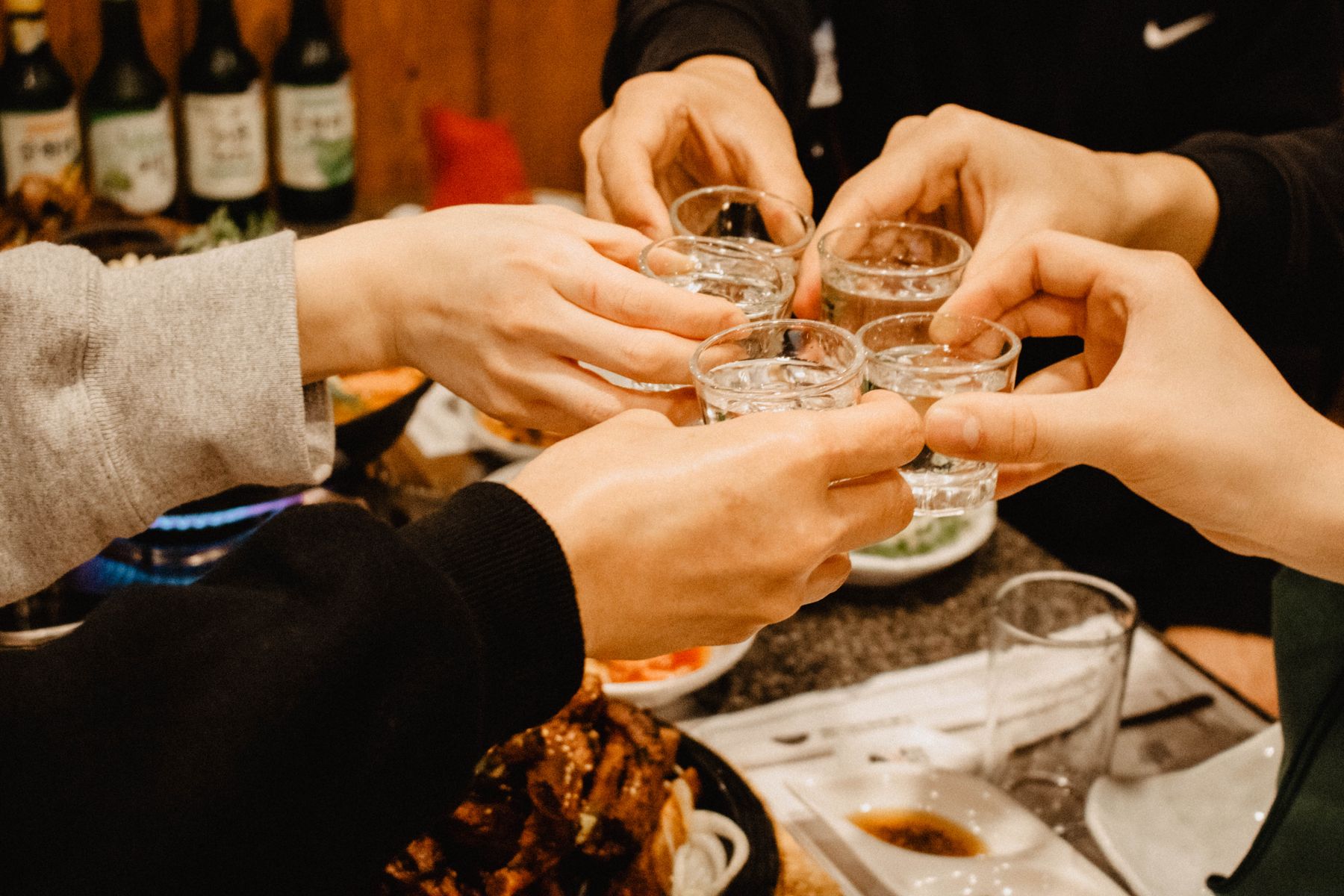
Nobody hands you a rulebook before your first hoesik. One second you’re sitting down to dinner, the next a shot glass is being pushed toward you with both hands, and you’re supposed to already know what to do with your body, your face, and your own glass in the next four seconds. I’ve watched more than one foreigner freeze at that exact moment, glass hovering, unsure whether to grab it, bow, turn sideways, or just laugh it off. The laughing-it-off option usually works fine, honestly — Koreans expect newcomers to fumble a little. What they don’t expect is for you to not even try.
Korean drinking culture gets treated online like a single checklist, as if there’s one etiquette test and you either pass or fail. It’s really more like a set of overlapping habits that all point at the same thing: alcohol in Korea is a social contract, not just a beverage. Who pours for whom, how fast you drink, when you’re allowed to say no — all of it is quietly tracking hierarchy and relationship. Once you notice that underneath, the individual gestures stop feeling arbitrary and start making a strange kind of sense.
Hoesik: the drinking that isn’t really optional
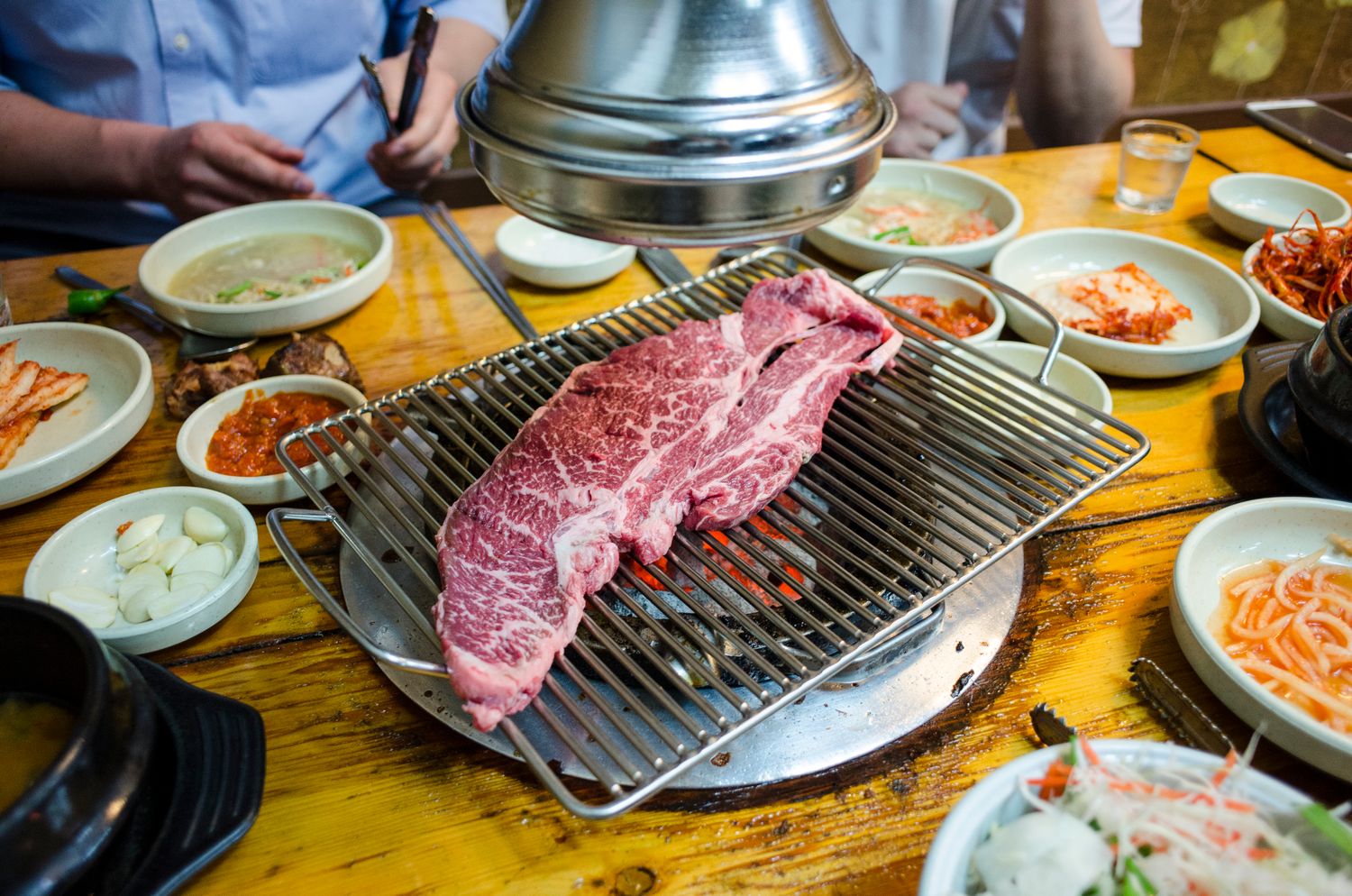
Hoesik (회식) literally just means “eating together,” but in practice it means the after-work dinner-and-drinks combo that’s still baked into a lot of Korean workplaces. The frequency has dropped a lot since the pandemic and since younger employees started pushing back — plenty of companies now do monthly hoesik instead of weekly — but the shape of the night hasn’t changed much. Dinner first, at a Korean barbecue place or a stew joint, then everyone piles out to a second round, or 2차, at a bar for beer and somaek. If the night has legs, there’s a third round at a noraebang, and by then it’s well past 11pm and somebody’s boss is three drinks deep into a trot song nobody asked for. Turning down the first round entirely is still awkward in a lot of offices, even if skipping the later rounds is generally fine.
What surprises a lot of newcomers is that hoesik isn’t really about the alcohol. It’s one of the few settings where junior employees get to sit near senior ones outside the rigid office hierarchy, crack a joke, complain a little, get seen as a person instead of a job title. The drinking is the mechanism, not the point. That’s part of why the etiquette around it is so precise — when the alcohol is doing social work, how you handle it says something about you.
Two hands, always, for pouring and receiving
This is the one rule almost everyone has heard of, and it’s still worth spelling out because the details matter more than people think. When you pour for someone senior — or really anyone you want to show respect to — you use two hands: one holding the bottle, the other resting lightly under your forearm or against your chest. When you’re the one receiving, same idea. Both hands on the glass, or one hand on the glass with the other touching your forearm.
You’ll notice it’s not actually about hand count so much as posture. A slight forward lean, eyes not locked challengingly on the other person, glass held a bit lower than theirs if they clearly outrank you. Do all three and the two-hand thing on its own barely matters. Skip all three and holding the glass with two hands won’t save you — it’ll just look like you memorized a rule without understanding it, which, to be fair, is exactly what’s happening the first few times.
Turning away to drink in front of elders
Here’s the part that looks strangest to visitors the first time they see it: someone gets handed a shot, and instead of just drinking it, they angle their whole upper body away from the senior person at the table, sometimes covering the glass with their free hand, before knocking it back. It can look almost theatrical if you don’t know what’s happening.
The logic traces back to Confucian ideas about not displaying an “open mouth” — the act of drinking — directly to someone older or higher in status. Showing your throat and the motion of swallowing was considered a little too intimate, too physically exposed, for that kind of relationship. So the workaround became: turn away, take the shot, turn back. It’s not about hiding that you’re drinking — everyone at the table sees exactly what’s happening — it’s a formal gesture that signals “I know my place here” without anyone having to say it out loud.
You mainly need to do this with people clearly senior to you — a boss, an older relative, someone significantly older even in a casual setting. Among friends who are peers, nobody bothers, and doing it anyway would actually read as odd, like you’re being weirdly formal at a table where formality isn’t the point. Context is everything with this one, which is exactly what trips people up when they try to apply it as a blanket rule.
The glass you’re not supposed to fill yourself
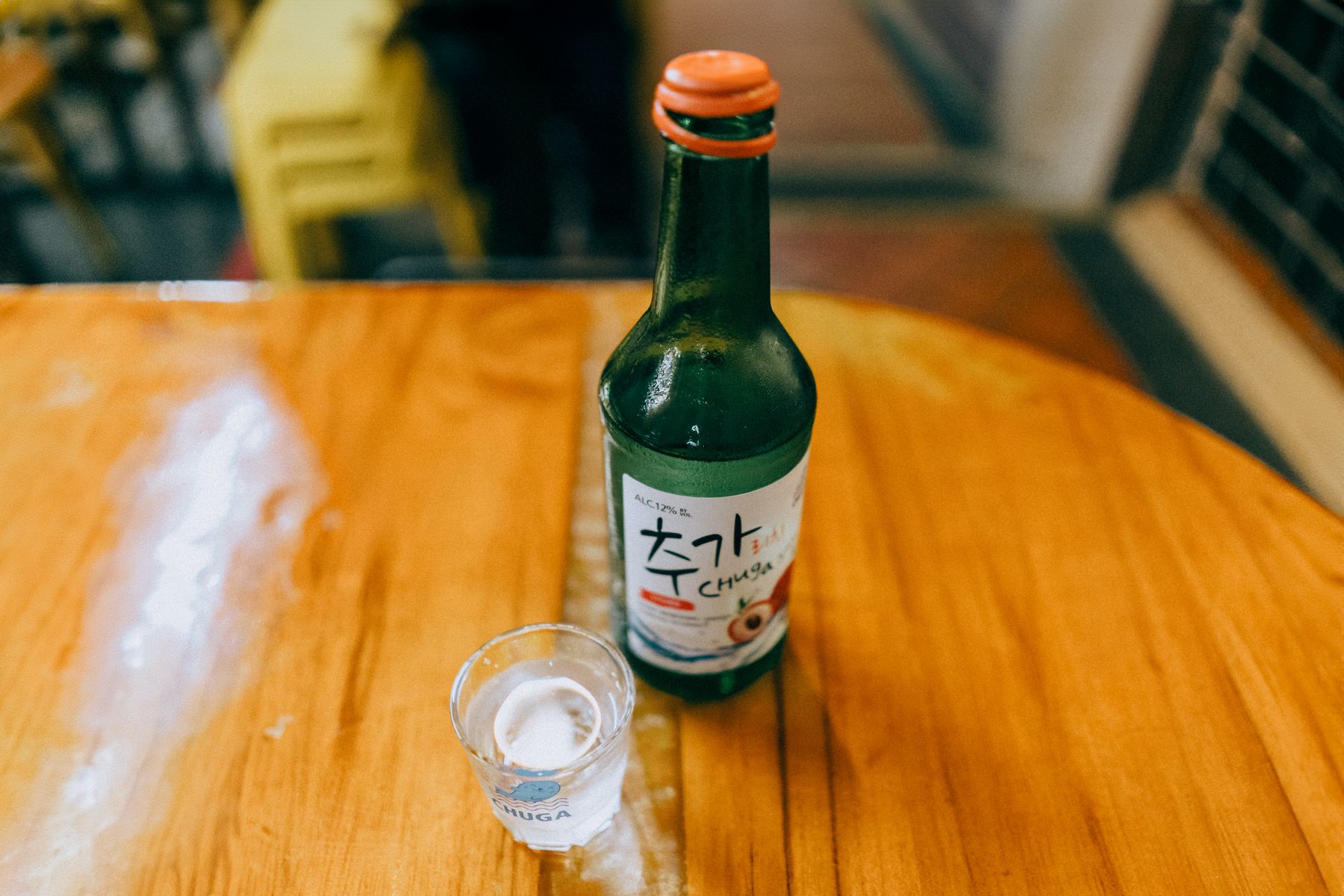
There’s a third rule sitting right next to the first two, and it trips people up constantly: you don’t pour your own soju. If your glass runs dry and nobody’s noticed, the polite move is to wait, or to top off someone else’s glass first and let the gesture come back to you, rather than reaching for the bottle yourself. Part of the reasoning is practical — pouring for others is how the group tracks who’s had how much — and part of it is older superstition around drinking alone being a bit of a bad omen at a shared table. We’ve actually written a full breakdown of exactly why this rule exists and how strictly it’s enforced these days, so if that specific question is what brought you here, that piece goes deeper into it than we will here.
The one-shot tradition — and when you actually don’t have to
“One shot” (원샷) gets shouted across tables in Korea the way “cheers” gets said everywhere else, except it comes with an actual instruction attached: drink the whole glass, now, in one motion. It’s most strictly enforced on the very first toast of the night — that one, you’re generally expected to finish completely, especially if a senior person proposed it.
After that first round, though, the pressure eases more than people assume. Sipping through the rest of the night is completely normal, and a lot of Koreans do exactly that once the obligatory first shot is out of the way. The stereotype of relentless one-shotting all night is mostly a hoesik-horror-story exaggeration — it happens at some tables, especially rowdier ones, but it’s not the baseline expectation everywhere. If someone raises a glass and says “wonshot” later in the evening, it’s often more enthusiasm than rule at that point, and a smaller sip usually gets a pass, particularly for anyone who’s clearly already had enough.
When it’s actually okay to say no
This is where Korean drinking culture is genuinely shifting, and faster than most etiquette guides give it credit for. A decade ago, refusing a drink from a senior colleague could be read as a real breach of respect. These days, especially among younger workers and in bigger companies with more international staff, it’s a lot more acceptable to opt out — you just do it with the right gesture instead of a flat refusal.
Placing a hand lightly over the top of your glass before someone pours is the universal signal, and it’s understood without needing a word attached. Giving a reason on top of that smooths it further — driving, medication, an early flight the next morning, or simply “I’m not really drinking these days” all land fine. Plenty of people who don’t drink at all just quietly keep their glass filled with water, cider, or a non-alcoholic beer instead, and go through every toast of the night without anyone questioning it — from across the table it looks identical to everyone else’s glass. What still lands badly is refusing the very first toast of the night outright, especially from someone senior, without any gesture or explanation at all — that’s the one moment where declining cold, with no softening, can genuinely read as pointed.
Somaek and soju bombs: there’s etiquette here too
Somaek (소맥) — soju mixed into beer — has its own little subculture of showmanship. There’s an actual technique some people take real pride in: dropping a full shot glass of soju into a mug of beer and getting the ratio right, often talked about as roughly three parts soju to seven parts beer, then flipping a spoon or spinning the glass on the table to make the bubbles rise dramatically before it’s downed in one go. At bigger, looser hoesik tables, there’s almost always one person — often an older manager, sometimes just whoever’s had the most practice — who ends up as the unofficial bartender for the whole group, mixing rounds for everyone else while half-joking about their “certification.”
The etiquette part is subtle but real: if someone hands you a somaek they clearly put effort into building — the drop, the flip, the fizz — the polite move is to drink it fairly soon after, while it’s still got some carbonation, and to actually react to it a little. Letting a carefully made bomb shot sit on the table going flat is a small but noticeable social miss, roughly equivalent to letting a coffee someone made you go cold on the counter. It’s not a huge offense. It’s just the kind of small thing that adds up to whether people think you’re paying attention.
Refilling: the empty glass is the actual signal
Nobody announces “your turn to pour,” which is exactly why this part trips people up. The unwritten timing rule is that you watch the glasses around you, and the moment someone’s gets empty — or even close to it — you offer to fill it before they have to ask or reach for the bottle themselves. Letting a senior person’s glass sit empty for more than a minute or two while you’re mid-conversation is a small lapse that people do notice, even if nobody says anything about it in the moment.
There’s a flip side too: pouring for someone who clearly hasn’t finished, or topping off a glass that’s still three-quarters full, can come across as pushy rather than attentive — like you’re trying to speed up how much they drink rather than take care of them. The sweet spot is watching, not hovering: notice when a glass is genuinely low, offer the bottle, and let them wave you off if they’re not ready. It’s a small skill, but it’s the kind of thing that quietly signals you’re paying attention to the table, not just to your own glass.
FAQ
Do I really have to finish every “one shot” toast?
Not every single one, no — but the very first toast of the night is the one where finishing it matters most, especially if a boss or an elder proposed it. After that, sipping is generally fine, and most Koreans do exactly that once the obligatory first round is done. If your tolerance is low, it’s completely reasonable to nurse that first glass slowly rather than gulp it, as long as you’re clearly still participating in the toast itself.
What if I genuinely don’t drink at all — will hoesik be miserable?
It doesn’t have to be. Covering your glass before anyone pours, or asking for a non-alcoholic drink to hold during toasts, is widely accepted now, especially in workplaces with any international presence. The social expectation is really about showing up and participating in the meal and conversation — the alcohol itself is negotiable far more than people assume before they’ve actually tried declining it.
Is it rude to make my own somaek instead of waiting for someone else to mix it?
Not at all — mixing your own somaek for yourself is completely different from pouring your own soju shot, since somaek is more of a shared party trick than a formal pour. The etiquette that matters more is what happens after: if someone else goes out of their way to build one for you, drink it while it still has some fizz instead of letting it sit.
None of this is really about memorizing a checklist before you land in Seoul. It’s about noticing that every one of these habits — the two hands, the turned shoulder, the watched glass, even the somaek someone built just for you — is doing the same quiet job: showing someone you see them and where they sit relative to you, without either of you having to say it out loud. Learn to read that underneath, and the specific gestures stop feeling like rules you’re following and start feeling like a language you’re actually speaking.
It was raining on a Tuesday night in Bundang, the kind of cold October drizzle that makes you want to disappear under a blanket and never move again, when I did something that still feels a little absurd typing out: I ordered a single can of Chilsung Cider off Coupang Eats. Not a meal. Not even a snack to go with it. Just the soda, because I didn’t feel like putting on shoes. Nineteen minutes later, a rider in a green helmet was standing at my door with exactly that — one can, no judgment, receipt tucked under the bag’s flap, delivery fee for the whole errand somewhere around 2,500 won, or roughly two dollars.
Koreans have a phrase for this: “baedal-ui minjok,” or “the nation of delivery” — and yes, that’s also literally the name of the country’s biggest delivery app, Baedal Minjok (usually shortened to Baemin). It’s not just branding bravado. In August 2025 alone, Baemin logged over 23 million monthly active users in a country of roughly 51 million people — meaning close to every economically active adult in Korea opened that one app at least once that month. For comparison, DoorDash’s entire U.S. user base, spread across a country with more than six times the population, sits in a similar ballpark of monthly actives. Scale that down to Korea’s size and the density of delivery-app usage here is on another level entirely. Coupang Eats trails Baemin with close to 12 million, and a newer discount-focused challenger called Ddaenggyeo is climbing fast. This isn’t a niche convenience for busy office workers — it’s infrastructure, as fundamental to daily life here as the subway.
Why “20 minutes” isn’t even the fast option anymore
You’d think 20 minutes sounds like marketing copy, something no company could actually pull off consistently. But depending on where you live, it’s genuinely closer to the norm than the exception. Baemin and Yogiyo, the older-generation apps, tend to run 40 to 50 minutes during peak dinner hours because they route through independent riders juggling several restaurants’ orders at once. Coupang Eats, on the other hand, built its own dedicated rider network and regularly clears 25 to 30 minutes even on a busy Friday.
The real stress test of that speed, though, isn’t a quiet residential alley — it’s an open public park with no street address at all. Along the Han River, at spots like Ttukseom, Banpo, and Yeouido, there are marked “delivery zones” with numbered flags planted in the grass, so a rider can actually find you among a thousand identical blue picnic tarps on a warm Saturday. Order from one of those zones and food still shows up in about 20 minutes flat. I’ve used the Banpo one, sitting cross-legged on a mat with zero landmarks around me except a flag with a number on it, and it worked exactly as advertised. It’s a little unsettling how well it works.
What still gets me, even after years here, is the sheer range of what qualifies as “deliverable.” I’ve ordered a single roll of toilet paper at 11 p.m. because I miscounted my stock. I’ve had someone bring me two ice cubes’ worth of ice — okay, a small bag of ice, but it felt about that dramatic — during a heat wave when my freezer’s ice maker broke. Coffee, a full traditional market’s worth of banchan, a single stick of gum, a phone charger cable, an entire birthday cake with candles already in it — all of it arrives on the back of a scooter, usually faster than you’d get a table at the restaurant itself. In most countries I’ve lived in or visited, there’s an unspoken minimum order size before delivery makes economic sense. Here, that line barely exists.
Chicken, beer, and the traffic-light problem nobody wants to talk about
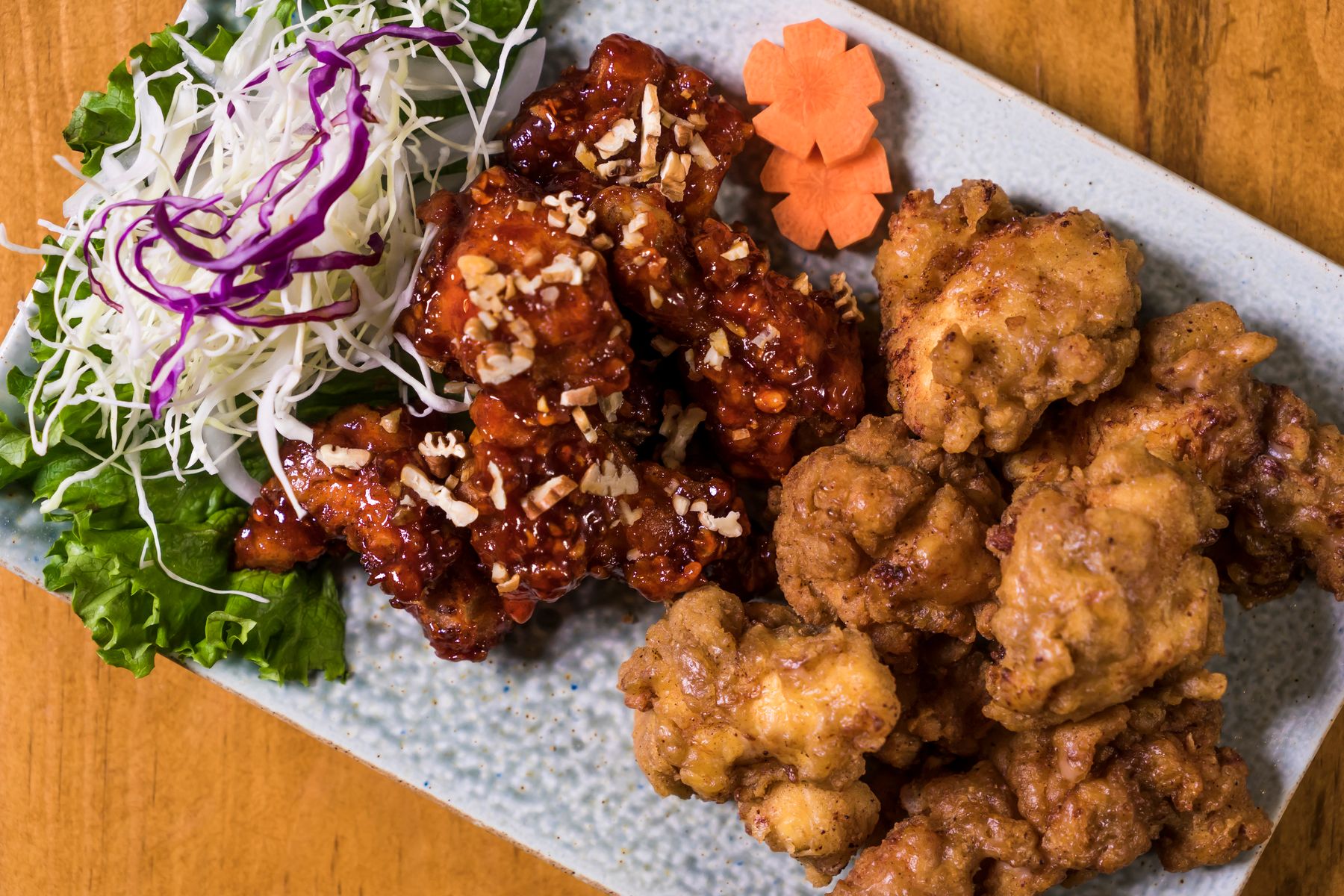
Chicken is what built this industry, more than any single dish. Specifically the double-fried, often gochujang-glazed kind that Koreans eat with beer in a combo so iconic it has its own word, “chimaek” (chicken plus maekju, beer). Walk down almost any residential street after 9 p.m. and you’ll see at least one scooter idling outside a chicken shop, insulated delivery box strapped to the back, engine still running, rider glancing at his phone for the next assigned drop.
Here’s the part that’s less fun to write about but matters: baedal riders often treat traffic lights and lane markings as more of a suggestion than a rule, and that’s not exaggeration for effect. Platforms in Korea have leaned on algorithmic dispatch systems that route riders by estimated delivery windows, and when those windows get tight — especially during rainstorms, snow, or the dinner rush — the pressure to shave off two or three minutes translates directly into riskier riding. Rider deaths and injuries from delivery-related traffic accidents have shown up regularly enough in Korean news coverage that unions representing riders have staged public protests over commission structures and speed-based incentive pay, including organized actions against Baemin’s fee policies in 2025. It’s worth holding both truths at once: the convenience is genuinely remarkable, and it’s built partly on riders absorbing risk that customers rarely think about while refreshing the tracking map, waiting for their wings.
The tracking map, the checkout screen, and zero tips
That tracking map, by the way, might be the single most addictive UI element in the country. Every app shows a little icon — a scooter, sometimes shaped like the food itself — crawling along a live map from restaurant to your building. You can watch it stop at a red light. You can watch it apparently take a wrong turn and correct itself a block later. There’s something almost hypnotic about it, and I say this as someone who has opened the app just to check the dot’s progress instead of doing anything useful with those four minutes.
Once that dot reaches your door, the payment side is where things diverge sharply from what a lot of foreign readers expect. If you’re coming from the U.S., the tipping question is probably the first thing on your mind, and the answer surprises a lot of newcomers: you don’t tip, and nobody expects you to. There’s no tip prompt on the checkout screen, no awkward moment at the door, no mental math about 15 versus 20 percent. Delivery fees are baked into the order upfront — usually somewhere between 2,000 and 4,000 won, or roughly $1.50 to $3, depending on distance and time of day, sometimes waived entirely above a certain order size — and that’s treated as the full and complete cost of getting food to your door. Riders are paid per delivery by the platform or the restaurant, not by customer generosity, so there’s no social pressure hanging over the transaction the way there can be elsewhere. Which, when you think back to that single can of soda from the intro, is what makes the whole system work financially: a flat two-dollar fee on a low-cost item still pencils out because the rider isn’t waiting around for a tip that may or may not come.
That said, it’s not universally a tip-free zone in every micro-context — some apartment complexes and older customers will occasionally hand a rider a canned coffee or a small cash “thank you” for a delivery made in brutal weather, but this is a personal gesture, not a system. Nobody calculates a percentage. Nobody feels guilty for not doing it. Coming from a tipping culture, this took me an embarrassingly long time to get used to — I kept hovering my finger over an imaginary tip button that simply didn’t exist, out of pure muscle memory.
How this rewired daily expectations
Living here long enough changes your baseline for what “reasonable” even means. I now genuinely feel a flicker of impatience if delivery takes 35 minutes, which is a ridiculous thing to admit out loud given that in plenty of other cities I’ve lived, 35 minutes would count as impressively fast. Korea’s delivery ecosystem grew out of a particular combination of factors that reinforce each other: extremely dense apartment living where a rider can hit dozens of doors in one building without moving the bike, a culture where working late is common enough that cooking dinner from scratch isn’t always realistic, small restaurants that depend on delivery volume to survive razor-thin margins, and a broader cultural instinct that treats speed itself as a form of quality and respect for the customer’s time.
That last part matters more than it sounds. In a lot of places, “fast” and “good” service are separate conversations. Here, they’re often treated as the same conversation — a restaurant that’s slow to deliver is quietly judged as worse at its job, even if the food itself is identical.
There’s also a quieter side effect worth mentioning: the sheer convenience has made it easy to almost never cook, which some Korean friends have half-jokingly told me is its own kind of trap. A few have mentioned cutting back on delivery apps specifically because it got too easy to order chicken three nights a week without noticing. I don’t think that’s a uniquely Korean problem — it’s just that the infrastructure here makes the path of least resistance unusually smooth. Once ordering food takes less effort and less time than boiling water for ramen, the decision basically makes itself.
Frequently Asked Questions
Do I need to speak Korean to use delivery apps like Baemin or Coupang Eats?
Not really, at least not anymore. Coupang Eats runs almost entirely in-app with photos and set menus, so you can order by tapping images without typing a word of Korean. Baemin added an English interface option in its settings menu, and both apps let you leave delivery notes (“leave at door,” “call on arrival”) in English — most riders will understand or just default to the standard drop-off if you don’t specify. The trickier part isn’t the language, it’s that both apps typically require a Korean phone number and a Korean bank card or a linked payment method to sign up, which is the actual hurdle for new arrivals.
Is it true you can get things other than food delivered, like from convenience stores?
Yes, and this is one of the more underrated parts of the system. Apps like Baemin have a dedicated “B Mart” or similar quick-commerce section that functions like a mini convenience store — think phone chargers, instant noodles, diapers, beer, ice packs, even basic medicine — and it gets delivered in roughly 20 to 30 minutes from a local dark store, not an actual restaurant. I’ve used this for last-minute birthday candles and, once, a phone case after I dropped mine down a stairwell at 1 a.m.
Why don’t Korean delivery apps have a tipping option built in?
It comes down to how the delivery fee structure was designed from the start. The upfront fee you pay at checkout is meant to fully compensate the platform and rider for that trip, rather than functioning as a base price that assumes supplemental tipping, the way service industries in the U.S. are often structured. Some critics argue this means riders are more dependent on volume and speed bonuses to make a living wage, which ties back into the safety concerns around fast delivery — but from the customer side, the checkout experience stays simple: what you see is what you pay, full stop.
A few years ago, a friend of mine just… vanished. One week he was answering my texts within minutes, cracking jokes about how bad the Lotte Giants were doing that season, and the next week: nothing. No reply for two days, then a short message at 11 p.m. saying he’d just gotten off “training” and could only use his phone for twenty minutes before lights-out. That was my introduction to Korean military service — not a textbook, not a news article, but a friend disappearing into a system that every single Korean man I know has gone through, is going through, or is dreading.
I’m not Korean, and I never served — obviously. Everything I know comes from nine years of living here, marrying into a Korean family with two brothers-in-law who did their time, and a small graveyard of friendships that got put on a low simmer for about a year and a half while guys I knew were off in Gangwon-do somewhere holding a rifle. So think of this as the outsider’s field guide — not policy analysis, just what I’ve actually seen and learned about how this works day to day, from the family side of the fence.
How long, and starting when
Here’s the first thing that surprises most foreigners: it’s not a fixed two years like a lot of people assume from old movies or vague rumors. As of the past few years, Army and Marine Corps service runs about 18 months, the Navy around 20, and the Air Force the longest at roughly 21 months. It used to be closer to 24 months a couple decades ago, so if you’re talking to an older Korean man — say, my father-in-law — his experience is going to sound noticeably harsher and longer than what his own son went through.
Every able-bodied Korean man is legally on the hook starting at 18, and he technically has until 28 to enlist, though almost nobody waits that long on purpose. What actually happens is more interesting than the law itself: most guys start university, do a year or sometimes two, and then enlist somewhere between ages 20 and 22 — right smack in the middle of their degree. Then they come back afterward and finish school. I remember being genuinely confused the first time a friend told me he was a “22-year-old sophomore.” In the U.S. that would sound like someone was held back. Here, it’s completely normal — he just did his 18 months in between.
Around age 19, every man gets called in for what’s basically a full-body and mental fitness physical, and the result is a grade from 1 to 7. Grades 1 through 3 mean active duty. Grade 4 routes you into what’s called “social service agent” duty, or gongik — and if you’ve ever wondered who those young guys in slightly different uniforms are, staffing the metal detectors at subway stations or sitting at the front desk of your local community center, that’s them, serving out their time in a civilian-facing role instead of a barracks. Grades 5 through 7 mean anything from a desk-only wartime role to a full medical exemption. I’ve heard guys joke about which grade they pulled and I’ve heard guys go quiet when it comes up, which tells you it’s not something to poke at lightly — it’s less a single dramatic event and more the starting gun for a countdown that hangs over the rest of university life.
What actually happens once you enlist
Enlistment day itself has become a small, semi-public ritual. Families drive their sons out of Seoul and down to a training center — Nonsan, a couple hours south in Chungcheongnam-do, is the most famous one, practically a household name the way certain boot camp towns are recognizable in other countries — and there’s a very specific choreography to it. The mom cries. The dad tries not to. The girlfriend, if there is one, cries harder than the mom, honestly, because everyone already knows the statistics on relationships that don’t survive an 18-month deployment to a mountain base with spotty phone service. Guys get a buzz cut days or even weeks before they show up, sometimes as a kind of ritual send-off with friends rather than waiting for the army barber.
Once they arrive, the first stretch — about five weeks — is basic training, called hullyeonso, and this is where every K-drama cliché you’ve ever half-watched turns out to be more or less true: the screaming instructors, the crawling through mud, the 5 a.m. wake-up calls. After that, though, life diverges a lot depending on your assigned unit (bo-jik), and this is where I think foreigners get it most wrong. We picture eighteen months of trench warfare readiness. In reality a huge number of conscripts end up doing things that look a lot more like an office job with a uniform — paperwork, logistics, driving, cooking, IT support for the unit. My younger brother-in-law spent a chunk of his service basically doing administrative data entry, which he still complains was “boring, not hard.” My older one, in a combat unit, has very different stories involving winter field exercises in weather I genuinely don’t understand how anyone survives.
One thing that’s changed enough to surprise even Koreans who served fifteen years ago: cell phones. Since around 2020, soldiers have generally been allowed to use personal phones during designated off-duty hours in the evenings and on weekends, and what that actually looks like, according to my brother-in-law, is a barracks room full of guys sprawled on their bunks at 9 p.m., half of them FaceTiming their moms and the other half grinding through a mobile game before lights-out. That sounds small, but ask anyone who served before that policy and they’ll tell you it’s a completely different experience psychologically — the isolation used to be much more total. Food has also improved; the old jokes about grim, gray institutional slop are increasingly outdated, with some bases running buffet-style dining halls now. Pay has changed even more dramatically. A decade ago conscripts were making something like 100,000 to 200,000 won a month — pocket change, basically a symbolic allowance. As of last year a sergeant makes somewhere around 1.25 million won a month, plus a government savings-match program that means a lot of guys walk out with a surprisingly decent lump sum, sometimes north of 10 million won — which is, for many of them, the first real savings account they’ve ever had, and more than a few put it straight toward a post-service trip to Southeast Asia.
How Korean families actually treat it
This is the part I find genuinely touching, and it took me a while to notice the pattern. It’s not treated like an inconvenience. It’s treated more like a rite of passage on the scale of a wedding or a big exam — there’s real ceremony around it. Parents post about “ipdae” (enlistment) day on KakaoTalk with photos of their newly shorn son standing at the gate. Friend groups do a big meal beforehand, sometimes framed almost like a going-away party. And when the guy is finally discharged — jaedae — there’s an equally enthusiastic homecoming, often with a “counting the days” app that girlfriends and mothers alike use religiously, watching a number tick down for a year and a half.
My mother-in-law still talks about visiting my brother-in-law during his “family day” — a scheduled visit weekend partway through training where parents can come see their sons, eat together on base grounds, and take approved photos. She describes it the way you’d describe visiting someone in a very structured, very clean summer camp, not a stint in the armed forces. That tone — half-pride, half-worry, with an undercurrent of “this is just what happens” — seems to be the default emotional register for most families I’ve met here.
Misconceptions foreigners tend to have
The biggest one, by far, is thinking of it as uniformly brutal and dangerous — like every conscript is training for imminent combat every single day. Some units are genuinely tough, no argument there, but a large share of the experience is closer to monotony than danger: standing watch, doing drills, filling out forms, waiting for meals, waiting for the weekend phone window. Boredom, not fear, is usually the dominant emotion people describe once they’re a few months in.
Another one: people assume every Korean man serves the exact same way, when in reality there’s a whole spectrum, from combat units down to that gongik desk job I mentioned earlier. Even the famous cases foreigners have heard about — chart-topping K-pop idols enlisting right on schedule despite millions of fans wishing they wouldn’t — get treated pretty matter-of-factly here rather than as some kind of scandal. Nobody in Korea seems to expect a carve-out; the grade-1 exam result doesn’t care how many albums you’ve sold. And a smaller but persistent misconception: that guys come back from service completely transformed, hardened soldiers. Mostly what I’ve noticed is subtler — better posture, weirdly, a newfound tolerance for early mornings, and an ability to fold laundry with military precision that Korean mothers seem to appreciate more than anyone.
Frequently asked questions
I’m a foreigner married to a Korean woman — does that mean I owe any service?
No, and this is a question I actually got asked by a coworker back home, half-joking. Conscription applies to Korean male citizens, full stop. Marrying into a Korean family, having Korean in-laws, even raising kids here doesn’t put a foreign national on the hook — the only scenario where it would matter is if someone naturalizes as a Korean citizen, and even then there are age-based rules about how that intersects with service obligations. As someone who married in, I’ve never had so much as a form to fill out about it.
Can a guy pick his branch or job, or does the army just assign whatever it wants?
There’s a little more agency than most people assume, but it’s not exactly a menu. Recruits can request certain branches or specialties — Navy, Air Force, KATUSA (the units attached to U.S. forces, which require passing an English test and are famously competitive to land) — but final placement comes down to your exam grade, the timing of your enlistment, and how many spots a given unit has open that month. My older brother-in-law wanted a technical role and ended up in a combat unit instead simply because that’s where the numbers needed filling.
What actually happens to a couple when the guy enlists?
It varies wildly, but the honest answer is: a lot of relationships don’t survive it, and everyone here sort of already knows that going in. The ones that do tend to lean hard on the family-day visits, the weekend phone windows, and a fair amount of care packages — Korean girlfriends mailing snacks and letters to bases is practically its own mini-tradition. The joke I’ve heard more than once is that surviving your boyfriend’s military service is basically a relationship milestone in itself, on par with meeting the parents.
Around 9:50 on a weeknight, if you’re anywhere near Daechi-dong in Gangnam, you’ll see something that looks less like a school letting out and more like a stadium emptying after a concert. Streams of kids in puffer jackets and school backpacks pour out of glass office buildings — because that’s what hagwons usually are, floors 3 through 9 of an ordinary commercial building — and the sidewalk fills with waiting parents in double-parked cars, hazard lights blinking in a long orange chain down the block. It’s not a special event. It’s just Tuesday.
“Hagwon” (학원) simply means private academy, and on paper that sounds as mundane as “tutoring center” does anywhere else. But calling Korean hagwons “tutoring” undersells the scale of the thing by a wide margin. This isn’t a once-a-week session to catch up on algebra. For a huge share of Korean students, hagwon is a second, parallel school system that runs every single weekday, often stacked two or three sessions deep, and it shapes the rhythm of childhood here in a way that’s hard to grasp until you’ve watched it happen block by block, night after night.
What an actual school day looks like, hour by hour
You’d expect regular school to be the demanding part and hagwon to be the add-on. In practice, it often works the other way — regular school is treated almost like the baseline, and hagwon is where the real academic differentiation happens. A fairly typical middle or high schooler’s day might run something like this: school from 8 a.m. to somewhere around 4 or 4:30 p.m., then a math academy from 5 to 7, an English academy from 7:30 to 9:30, and homework from both once they’re finally home — often past 10 p.m., sometimes closer to midnight once exam season hits.
Dinner in that schedule tends to get squeezed into whatever gap exists between academies, which is why gimbap rolls, a cup of instant ramyeon eaten standing at a convenience store counter, or a boxed dosirak meal are such common sights among students in these neighborhoods around 6 or 7 p.m. Step inside one of these buildings and the aesthetic is fairly consistent from one academy to the next: fluorescent-lit rooms divided into narrow desks, whiteboards covered in problem sets, and stacks of thick workbooks that look more like phone books than textbooks. Multiply the daily grind by five weekdays, add a Saturday session for standardized test prep, and you start to see why Korean high schoolers are frequently cited as sleeping somewhere around 5 to 6 hours a night on average, well under what pediatric sleep guidelines recommend for their age group.
What surprised me most isn’t that this happens — plenty of countries have demanding school cultures — it’s how early it starts. This isn’t just a high-school-junior-cramming-for-college phenomenon. Elementary schoolers, some as young as six or seven, already shuttle between an English hagwon and a math hagwon in the same afternoon, sometimes with a piano or taekwondo class wedged in as the “fun” one between two academic ones. Parents refer to this bouncing between academies as a kid’s “schedule,” the same word you’d use for a business executive’s calendar, and by middle school an empty afternoon with nothing booked is often treated less as freedom and more as a gap that needs filling.
The buildings themselves, and the money behind them
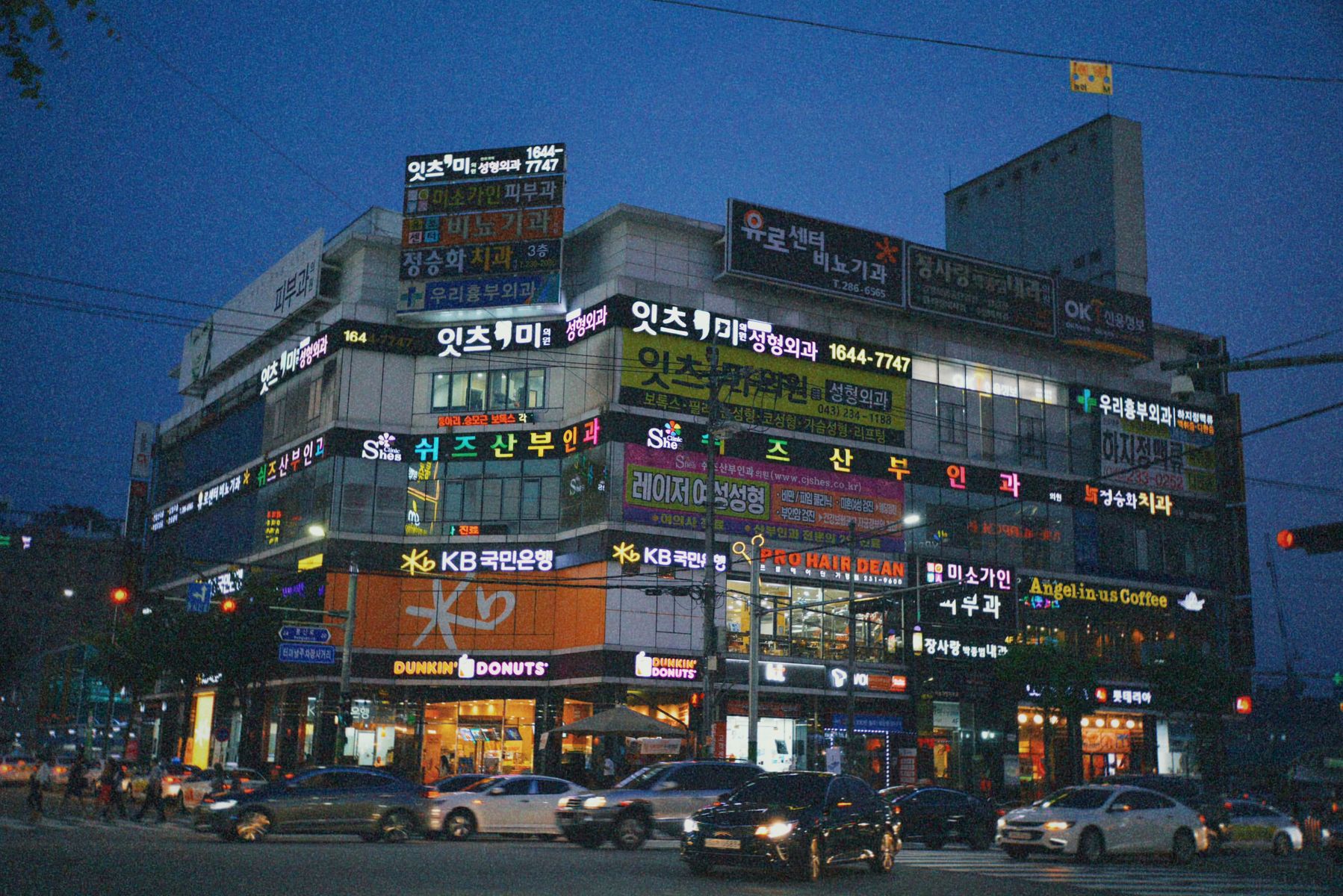
Walk down a hagwon street after dark — Daechi-dong in Gangnam is the most famous example, but every Korean city has its own smaller version — and the first thing you notice is the signage. Buildings that look completely ordinary during the day, just glass-and-concrete offices, turn into vertical stacks of illuminated academy names once the sun goes down: a math academy on the third floor, English on the fifth, a science academy on the seventh, each with its own backlit sign competing for the same sidewalk’s attention. The elevator banks fill up around class-change times with teenagers trading gossip, half-asleep, backpacks heavy enough to visibly round their shoulders.
Korean households collectively spend somewhere north of 27 trillion won a year on private after-school education, according to figures tracked by Statistics Korea — and that figure has climbed almost every year this survey has run, even as the country’s birthrate has fallen to among the lowest in the world. Fewer kids, more spending per kid. That combination alone tells you something about how central this is to Korean family life. A single well-regarded English or math hagwon in a district like Daechi-dong can run several hundred thousand won a month per subject, and it’s completely normal for a family to be paying for two or three subjects simultaneously, per child.
You might assume this spending is concentrated only among wealthy families chasing an edge, and while income obviously affects which hagwons a family can afford, the baseline expectation cuts across income levels in a way that’s genuinely striking. Skipping hagwon entirely, even for families with tighter budgets, is often treated less as a neutral choice and more as an active risk — the fear being that your kid falls behind not just their smartest classmate, but the entire grade’s baseline pace, because so many other students are already ahead of the regular curriculum by the time a topic is taught in class. That fear doesn’t come from nowhere, either — it traces back to a single exam day that looms over the entire system.
Why it got this normalized
It’s tempting to look at this from the outside and assume something has gone specifically, uniquely wrong in Korea. But the roots make a certain kind of sense once you know the history. Korea’s modern hagwon system grew rapidly alongside the country’s postwar transformation from one of the poorest nations on earth into a developed economy within a single generation — and education became the primary, almost the only, socially agreed-upon ladder for that mobility. A single national exam, the Suneung, taken on one day each November, still carries enormous weight in determining which university a student can attend, and university prestige in Korea continues to matter for hiring, marriage prospects, and social standing in ways that are more pronounced than in a lot of Western countries. The scale of what’s built around that one day is honestly hard to overstate — flight schedules get adjusted so planes don’t fly during the English listening portion of the test, stock markets have historically opened later that morning, and it’s not unusual to see a police car giving a panicked, running latecomer a ride straight to their exam hall. When the stakes of one test day feel that concentrated, it’s not exactly surprising that families start preparing years, not months, in advance.
There’s also a structural reason hagwons keep multiplying rather than fading: they’re privately run, for-profit businesses competing directly with each other for enrollment, which means marketing, reputation, and parental anxiety all feed the system’s growth in a self-reinforcing loop. A hagwon that produces visibly strong test results becomes the one every parent on the block wants their kid enrolled in, waiting lists form, and the perceived necessity of academy-based prep gets baked in even further for the next cohort of parents watching from the sidelines.
What it looks like from an expat parent’s chair
This is the kind of thing that rarely makes it into the standard “moving to Korea” checklists about visas and phone plans (I covered more of those practical basics in What I Wish I Knew Before Moving to Korea), but if you’re raising a family here, it ends up shaping your weekly calendar more than almost anything else on that list.
Watching this as an outsider raising kids here puts you in an odd spot, somewhere between admiration and mild alarm, and honestly the two feelings show up in the same five minutes rather than taking turns. There’s something genuinely impressive about the sheer discipline and consistency of it — kids as young as ten managing a schedule that would tire out a lot of working adults, and doing so with a kind of matter-of-fact acceptance, because to them, this is simply what childhood looks like, not an exception worth complaining about. Yet it’s hard not to notice how little unstructured time survives in a given week, and how completely normalized that scarcity has become. Nobody around you treats it as unusual, which somehow makes it feel both less alarming and slightly more so at the same time — like the strangeness has been fully absorbed into the wallpaper of daily life.
To be fair, not every family goes all-in, and there’s more internal debate about this within Korea than outsiders might assume. Some parents have started deliberately pulling back, citing burnout concerns or simply wanting their kids to have evenings free, and there’s ongoing public conversation here about reforming the college admissions system precisely because the pressure has gotten so intense. This piece isn’t trying to render a verdict on whether the system “works” or whether it’s “too much” — those are genuinely contested questions even among Korean parents and educators themselves, and the honest answer is that reasonable people here disagree. What’s not really in dispute is how deeply normalized the hagwon rhythm has become, and how much it structures the visible texture of daily life, right down to the timing of dinner and the traffic jam of parents’ cars outside a nondescript office building at ten at night.
Frequently Asked Questions
Is hagwon only for students who are struggling academically?
Not at all — if anything, it often skews the opposite direction. Many of the students filling hagwon seats are already performing well in regular school and are there specifically to get ahead of the curriculum, not to catch up. A student who’s already the top of their class in math might still attend a math hagwon that teaches a full grade level ahead, because the competitive bar within Korean classrooms is set by the students who’ve had that extra preparation, not by the official curriculum pace.
Do hagwons only cover academic subjects like math and English?
No — the hagwon category is much broader than test-prep subjects. There are hagwons for piano, taekwondo, art, coding, even handwriting practice for young kids. That said, the ones running until 9 or 10 p.m. on weeknights, packed with middle and high schoolers, are overwhelmingly the academic ones tied to school subjects and the university entrance track, since those are the ones parents feel the most pressure to keep up with.
Is this level of hagwon attendance required by law or by the school system?
No, hagwon attendance is entirely optional and privately arranged — there’s no legal requirement or school mandate involved. What makes it function almost like an unofficial requirement is social and competitive pressure rather than policy: because such a large share of a given cohort attends, opting out can feel like falling behind a curve set by everyone else, even though no rule technically obligates any family to participate.
Stand on almost any street corner in my neighborhood in Korea and do a slow 360-degree turn. I’ve actually done this, more than once, half out of boredom and half out of genuine disbelief — and I routinely count four, five, sometimes six cafes without moving my feet. Not coffee carts. Full sit-down cafes, with baristas, oat milk options, and background jazz. One time near Hongdae I counted three coffee shops stacked in the same building, one on top of the other, like some kind of caffeine layer cake — a loud dessert cafe with pink neon on the ground floor, a quiet study cafe with individual desk lamps on the second, and a tiny plant-filled roastery up on the third that you’d never find unless someone told you it existed. By all economic logic, a setup like that should collapse under its own competition. It doesn’t. New ones open anyway.
I moved here assuming Korea would be a tea country, honestly — that was my mental image before I actually lived here, probably left over from vague ideas about “Asian tea ceremonies” that don’t even really apply to Korea specifically. Turns out Korea runs on coffee harder than most Western countries I’ve lived in, and once you dig into why, it stops looking like an accident and starts looking like the natural output of how densely people live here.
The numbers are genuinely absurd
There are somewhere north of 95,000 cafes in South Korea right now, in a country roughly the size of Indiana. Seoul alone is estimated to have more coffee shops per capita than New York, Tokyo, or even Seattle — which, if you’ve ever tried to walk down a street in downtown Seattle without tripping over a espresso stand, tells you something. Korea has around 1,384 specialty coffee shops per million people, more than double Japan’s number, and Japan is hardly a tea-only country either. The average Korean adult drinks something like 405 cups of coffee a year — more than double the global average, and enough that I stopped feeling self-conscious about my own three-a-day habit pretty quickly after arriving.
What surprised me more than the raw number, though, is how the market keeps absorbing new shops instead of collapsing under its own weight. In most places I’ve lived, an oversaturated market gets brutal fast — half the shops close within a year. Here, sure, plenty of small independent cafes do fold, often within twelve months, which locals will tell you matter-of-factly, almost like discussing the weather. But the space gets filled again almost immediately by someone else with a slightly different concept — a plant-themed cafe, a study cafe, a cafe that’s secretly also a bookstore. The churn is real, but so is the demand underneath it. If the business math doesn’t quite add up on paper, the social math underneath it makes a lot more sense — because it turns out this isn’t really about coffee at all.
Why, though — the apartment theory
The explanation that actually clicked for me, after a couple years of just accepting it as background noise, has to do with housing. Korean apartments, especially in Seoul, tend to be small, and hosting people at home isn’t really a default social move the way it is in, say, the American Midwest where I’m from. Nobody’s throwing a dinner party in a 24-pyeong apartment with in-laws visiting for the weekend. So where do you meet a friend, have a work meeting, do a first date, or study for an exam without either paying for a full meal or awkwardly loitering in a park in the middle of winter? The cafe. It’s not a luxury indulgence here so much as a rented living room, and once you frame it that way, 95,000 of them stops sounding like overkill and starts sounding almost logical. Walk into any decent-sized cafe near a business district around 2 p.m. and you’ll see it in action — a couple of guys in suits doing what is obviously a client meeting over Americanos, three moms at the next table who just dropped their kids at hagwon and have ninety minutes to kill before pickup, and a table of teenagers splitting one enormous bowl of shaved-ice bingsu between four spoons because none of them can afford their own.
There’s actually a specific word for one very particular subset of cafe users: kagongjok, roughly “the cafe-study tribe” — students and remote workers who set up camp for four, five, six hours with a laptop, a textbook, and one drink they nurse the entire time. Some cafes have started pushing back with time limits or minimum order policies during exam season, which tells you the phenomenon got big enough to actually threaten table turnover. I’ve sat next to enough of these study marathoners to know it’s not a myth — I once watched a guy hold the same seat from 10 a.m. to closing at 10 p.m., living on one iced Americano and refills of water.
The vending machine parallel universe
Here’s a detail that catches almost every visitor off guard: alongside the artisanal, $6-latte cafe culture, there’s an entire parallel economy of coffee vending machines. They dispense a hot, pre-mixed, syrupy-sweet coffee in a tiny paper cup for around 300 to 500 won — less than fifty cents. You’ll find them tucked into the corner of nearly every convenience store, subway station, and old-school barber shop. Older generations especially still swear by them. There’s something almost touching about watching an ajusshi grab one on his way into work, the exact same ritual his father probably had decades ago, while twenty feet away a line of twenty-somethings waits for a hand-poured single-origin pour-over that costs ten times as much. Both exist side by side, on the same block sometimes. Neither one is going anywhere. Korea just runs two coffee economies at once, and nobody seems to find that strange except foreigners like me.
Mega-chains versus the independents
You’d expect a market this saturated to be dominated entirely by a couple of giant chains, and to some extent it is — Starbucks Korea operates nearly 2,000 stores nationwide, a density that outpaces the chain’s per-capita footprint in the U.S. by some counts, and homegrown challengers like Mega Coffee, Compose Coffee, and Ediya have exploded specifically by undercutting Starbucks on price, some selling a decent Americano for around 1,500 to 2,000 won. But wander two blocks off any main street and you’ll still find a wildly disproportionate number of independent cafes doing something specific and strange — a cafe that only serves drinks in ceramics the owner throws himself, a “book cafe” where you pay by the hour and get unlimited coffee plus a wall of secondhand novels. My favorite version of this is the hanok cafe, where you slip your shoes off at the entrance, sit cross-legged on a heated wooden floor inside a century-old courtyard house, and get handed an iced latte in a to-go cup that feels almost comically modern against the old tiled roof and paper doors around you. The chains handle volume and convenience; the independents seem to exist almost purely to be Instagrammable and specific, and Koreans clearly want both, because both keep multiplying.
Eoljukah: the iced coffee thing that breaks foreigners’ brains
If there’s one Korean coffee habit that genuinely confused me at first, it’s this: Koreans drink iced Americanos in the dead of winter. Not occasionally — as a default. There’s even a slang term for it, eoljukah (얼죽아), short for “I’d rather freeze to death than drink hot coffee,” and it’s said half-jokingly but represents something real. I remember standing in line at a cafe near Gwanghwamun in January, snow actually falling outside, watching person after person order iced drinks while I stood there with numb fingers ordering a hot Americano like some kind of tourist. The cashier didn’t even blink. She’d clearly seen this exact scene play out a hundred times a week.
Ask a Korean friend why, and you’ll get a few different theories, and honestly they’re probably all a little bit true at once. Some say it’s about speed — you can gulp an iced drink in seconds flat, which fits neatly into the broader ppalli-ppalli, “hurry hurry,” pace of daily life here, whereas a hot drink demands you slow down and sip. Others point out that Korean buildings and subways run their heating so aggressively in winter that an iced drink actually feels more balanced once you’re indoors bundled in three layers. My own theory is that it’s partly become an identity marker at this point — ordering hot coffee in January can genuinely mark you as an outsider or an older-generation type, the same way ordering a well-done steak might raise an eyebrow at certain restaurants. I still remember walking down a side street near Gwanghwamun that same January, wind cutting straight through my coat, holding a plastic iced coffee cup that had gone lukewarm-to-cold in about four minutes flat, my fingers stiff around it, and thinking: this is objectively a strange way to survive a Korean winter, and yet I kept doing it, week after week, because somehow it started to feel normal too. Whatever the real mix of reasons behind eoljukah, it’s not fading. If anything, it seems to have gotten more entrenched, not less, since I first noticed it.
Frequently asked questions
Just how cheap — or expensive — is a Korean cup of coffee, really?
It depends entirely on where you go, and the range is wider than in most countries I’ve lived in. A vending machine coffee runs under 50 cents. A Mega Coffee or Compose Coffee Americano is usually somewhere around $1.10 to $1.50. But a specialty pour-over at an independent cafe in a trendy neighborhood like Seongsu can easily run $6 to $8, on par with Melbourne or Portland prices. Korea doesn’t really have one coffee price point — it has at least three running side by side.
Do Korean cafes actually let you sit for hours without buying more?
Traditionally, yes, and that’s exactly why the kagongjok phenomenon took off in the first place — there’s no strong cultural expectation to keep ordering the way there sometimes is in the US. That said, this has been shifting; a growing number of cafes, especially near university areas during midterms and finals, now post explicit time limits (two hours is common) or require a minimum spend per person, precisely because students were treating tables like personal offices for entire days.
Why do so many small independent cafes close if the industry is booming?
Rents are high, competition is fierce, and opening a beautifully designed cafe has become something of a popular small-business dream in Korea — which means a lot of first-time owners underestimate how thin the margins actually are once you account for rent and the cost of imported espresso machines. It’s not unusual for a stylish new cafe to close within its first year even in a busy area, only to be replaced within weeks by another one with a different aesthetic. The demand for cafes as a category stays strong even when any individual shop struggles.
Walk along the Han River on any decent-weather weekend and you will, without fail, pass at least one couple wearing the exact same white sneakers, the exact same oversized shirt, and — I’m not exaggerating, this is genuinely common — the exact same phone case. The first handful of times I noticed it, my brain filed it under “coincidence” or maybe “twins.” It isn’t either. That’s just a normal Saturday in Korea. Once you’ve lived here long enough, matching couples stop registering as unusual at all, which is honestly a strange thing to notice about yourself.
I’m not Korean and I didn’t grow up with any of this — everything here comes from years of just watching, on the subway, in cafes, and from Korean friends explaining a custom to me like it’s the most obvious thing in the world, which to them it is. Korean couple culture has a whole vocabulary and a whole calendar built around it, and once you learn to see it, you genuinely see it everywhere, in a way that’s hard to un-notice afterward.
The 100-day thing, and why it’s not a joke
In most Western dating cultures I’m familiar with, nobody’s marking day 100 of anything. You might vaguely remember when you started seeing someone, sure, but throwing a small celebration for it — flowers, a nice dinner, maybe a little gift — around the three-and-a-half-month mark would strike most people back home as overkill, maybe even a little intense. In Korea, “baek-il,” the hundredth day, is treated as a genuinely real milestone, especially among couples in their teens and twenties. It’s not framed as excessive here at all; if anything, skipping it can read as a mild red flag about how seriously someone’s taking things.
What surprised me is that it doesn’t stop at day 100. Couples keep counting — 200 days, 300, 500, and famously 1,000 days gets its own celebration too, sometimes a bigger one than the hundred-day mark. There are apps built specifically for this — “Between” is probably the most widely used one among Korean couples — that sit quietly on a home screen and just count upward, sometimes pinging a little notification when a milestone like day 500 rolls around. I’ve seen couples check them the way you’d check a step counter. You’d think tracking a relationship down to the exact day would feel almost clinical, oddly unromantic even. In practice it seems to work the opposite way — it turns the passage of time itself into something worth celebrating, instead of just letting anniversaries blur into “sometime last spring.”
Couple rings, couple shirts, couple everything
The matching-outfit thing genuinely was one of the harder adjustments for me, culturally speaking, just because it runs so counter to how I grew up thinking about individual style. Couple rings tend to show up early — often right around that hundred-day mark, sometimes sooner — and they’re worth clarifying aren’t engagement rings at all. Nobody assumes a couple ring means a wedding is coming. It’s a much lower-stakes signal, closer to “we’re official” than “we’re getting married,” and it’s completely normal for a couple to wear them for a few months and then quietly stop if things end, no big ceremony either way.
Once the ring is on, though, it turns out that publicly announcing a relationship is a habit that’s hard to stop halfway. Matching phone cases. Matching sneakers. Full “couple look” outfits where two people show up in the literal same shirt, sometimes down to the color of their socks. There are entire online shopping malls, and stalls in places like the Dongdaemun underground shopping centers, that sell nothing but pre-packaged “couple sets” — one hoodie in a men’s size, one in a women’s size, same design, same box, ready to wear out the door same-day. Walking around in one of these sets reads here as a completely unremarkable choice, because it is. I’ve asked a few Korean friends why this doesn’t feel embarrassing the way it might elsewhere, and the most common answer boils down to this: it’s not read as a loss of individuality here, it’s read as a public, cheerful announcement that you’re a unit now. There’s something almost sweet about that framing once you sit with it for a while, even if my instinct is still to wince slightly every time I see it.
Pepero Day and the calendar full of couple holidays
Korea has stacked its calendar with romantic milestones in a way that took me a while to fully absorb. Pepero Day, November 11th, is probably the most famous one internationally at this point — the date itself looks like four Pepero sticks lined up (11/11), and on that day the biscuit-stick snack basically takes over every convenience store in the country, with giant seasonal displays weeks in advance. As the story goes, it actually started small — middle schoolers around Busan in the mid-1990s supposedly began trading the long, thin cookies as a way of wishing each other to “grow tall and slim like a Pepero stick,” long before the maker of the snack ever ran a single ad about it. Only later did the company notice what was happening organically and lean into it hard with seasonal packaging and country-wide displays. Now it’s simultaneously a corporate marketing event and a genuinely sincere little ritual between couples, friends, and coworkers alike.
But Pepero Day is really just the most visible entry in a much longer list. There’s a “Rose Day” in May, a “Kiss Day,” a “Hug Day,” even a “Black Day” in April specifically for people who are single, where the joke is to eat jjajangmyeon — black bean noodles — together in a kind of ironic commiseration. Whether any individual couple actually observes all of these varies enormously; plenty of Koreans roll their eyes at the more obscure ones the same way people elsewhere might roll their eyes at manufactured retail holidays. But the sheer density of them tells you something real about how much cultural infrastructure exists here specifically for marking a relationship’s progress in small, frequent doses, rather than saving it all up for one anniversary a year — Korea just seems to prefer its romance in installments.
Public affection: more reserved than people assume, but changing
Here’s a misconception I had going in, and I think a lot of foreigners share it: given all the couple-outfit stuff, you might assume Korean couples are also constantly kissing and hugging in public. Actually the opposite tends to be true, at least by older generational standards. Public displays of affection have traditionally been fairly reserved here — holding hands or linking arms is common and unremarkable, but anything more than that, especially around older relatives or in more conservative settings, still tends to get toned down. I’ve noticed this generational split pretty clearly: younger couples in trendy neighborhoods like Hongdae or Itaewon are visibly more comfortable with hugs and quick kisses than what you’d typically see around, say, an older, more traditional part of a smaller city.
What confused me at first is how that reservedness coexists with the couple-outfit intensity, because on paper those seem like contradictory impulses — one very private, one extremely public. But I’ve come to think they’re not contradictory at all; they’re just different channels for the same instinct. Showing affection through physical touch in public may still carry more social weight here than it does in a lot of Western cities, but showing commitment through a shared visual identity — the rings, the matching shirts, the couple photos — doesn’t carry that same weight at all. It’s a different vocabulary for the same underlying thing, and once I stopped expecting Korean couples to express closeness the way couples do back home, all of this made a lot more sense.
And it really has been loosening, even just within the years I’ve been paying attention. Older Koreans will sometimes comment, half-approving and half-scandalized, on how much more physically affectionate younger couples are in public compared to their own generation — a peck on the cheek at a subway platform barely gets a second glance from anyone under thirty now, where a decade or two ago it might have drawn a disapproving look from an ajumma nearby. Dating apps, more couples meeting through work or hobby groups instead of strictly through family introductions, and just general generational drift all seem to be nudging things in a more openly affectionate direction. I don’t think Korea is heading toward some dramatic PDA free-for-all anytime soon, but the gap between “what my Korean father-in-law’s generation considered normal” and “what a 24-year-old couple does on a Friday night in Hongdae” is already wide, and from what I can tell, it’s still widening.
Frequently asked questions
Is the matching-outfit thing actually real, or just a K-drama exaggeration?
It’s real, but not universal — it’s noticeably more common among younger couples, especially in their late teens through twenties, and tends to fade somewhat as couples get older or move toward marriage. You’ll still spot it on the street constantly in university neighborhoods, but it’s not a rule every couple follows, and plenty of Koreans find the full “couple look” a little theatrical themselves.
If you’re dating a Korean partner as a foreigner, are you expected to do all this too?
From what I’ve observed and heard from other foreigners in relationships here, most Korean partners don’t expect a foreign partner to instantly know or follow every tradition — the hundred-day thing tends to come up naturally since it’s so ingrained, but couple rings and matching outfits are usually approached more casually, as something to try if both people want to, not an obligation. It generally comes down to the individual couple, same as anywhere.
What happens on Black Day if you’re single — is it actually sad, or more of a joke?
It leans much more toward self-aware humor than genuine gloom. Groups of single friends will often deliberately go out together for black bean noodles on April 14th, treating it as a mildly funny bonding ritual rather than something to actually mope about — think of it as the Korean equivalent of throwing an ironic “singles’ brunch,” not an occasion anyone takes seriously as a source of real sadness.