The first time it happened to me, I was standing in a friend’s apartment hallway in Bundang with two bags of groceries digging into my fingers, staring at a six-inch step down into the entryway like it was a math problem. My host was already barefoot, waiting. I was still wearing my sneakers, laces double-knotted, completely unprepared for the fact that in Korea, that little step is not decoration. It is a border. And I had just tried to walk across it wearing outside shoes, which, I would learn very quickly, is roughly the etiquette equivalent of putting your feet up on someone’s dinner table.
If you grew up somewhere shoes-on is the norm, this whole system can feel needlessly strict at first. You might think it’s just a preference, like some households ask you to use a coaster. But it isn’t a preference in Korea — it’s closer to a load-bearing rule of the house, and once you understand where it comes from, it stops feeling arbitrary and starts feeling, honestly, kind of brilliant.
The Floor That Heats Itself: A Short History of Ondol
It sounds like it should be a simple answer — cold floors, warm socks, done. It isn’t. The reason Koreans don’t wear shoes indoors traces back to a heating system called ondol (온돌), literally “warm stone.” Archaeological evidence puts early versions of underfloor heating in the Korean peninsula as far back as the Goguryeo kingdom, well over a thousand years ago, and by the Joseon dynasty it had become the standard in ordinary homes. Smoke and heat from a wood fire at one end of the house — usually the kitchen hearth — traveled through channels built under the floor and warmed the stone or clay slab from below before venting out a chimney on the far side.
That might sound like a minor engineering detail, but it changed everything about how people lived inside a Korean home. The floor wasn’t just something you walked on. It was the warmest, cleanest surface in the house, so people sat on it, ate on it, and slept on it directly, with a thin mat instead of a raised bed. Sounds like a small architectural quirk, right? But it reorganized the entire relationship between “floor” and “furniture” in a way that Western homes, built around chairs and elevated beds, never had to deal with.
Modern apartments swapped the wood fire for hot water pipes run through the concrete slab decades ago, starting broadly in the 1970s and 80s as high-rise apartment construction took off in cities like Seoul. Even so, walk into a 30-story tower in 2026 and the floor still gets warm enough in January that people happily sit on it in a t-shirt. The technology changed. The habit of treating the floor as livable, sittable, sleepable space never did.
Hygiene Isn’t an Afterthought — It’s the Whole Point
It sounds almost too obvious once you say it out loud, but stay with me. Once you know people are eating dinner and putting babies down for naps on that exact surface, the hygiene logic stops needing an explanation. Streets carry dust, rain, mud, and whatever else got tracked through a subway station or a market alley — and until relatively recently, a lot of Korea’s roads weren’t paved at all. Bringing that outside grime onto a floor where a toddler is about to crawl around is a different kind of problem than tracking mud onto a rug near a sofa.
You’d think this reasoning would matter less now that most homes have sofas and dining tables. Surprisingly, it hasn’t loosened the rule at all. Even fully Westernized apartments with a living room set and a dining table still enforce shoes-off at the door, because the floor is still where people sit cross-legged to watch TV, where kids do homework, where guests are handed a cushion instead of a chair. The furniture changed. The floor’s job in daily life didn’t.
The Hyeongwan: A Built-In Boundary You Can’t Ignore
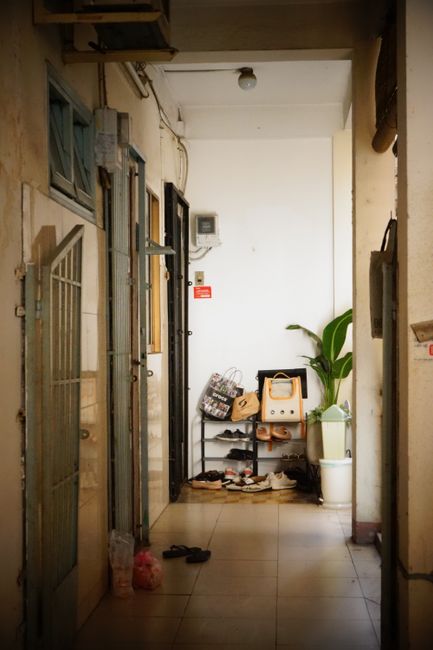
You’d think a doormat would do the same job. It doesn’t, not really. Every Korean home has a small entry area called the hyeongwan (현관), and it’s physically built a few inches lower than the rest of the house — that’s the step I froze in front of with my grocery bags. It’s not just a mat by the door. It’s an architectural line that separates “outside” from “inside” before you even get to say a word. Shoes come off there, get slid into a cabinet or lined up neatly against the wall, and the transition is complete.
There’s a small piece of etiquette that trips up a lot of visitors: when you take your shoes off, you’re expected to turn them around so the toes point back toward the door, ready for you to step into on the way out. It sounds like a minor detail nobody would notice. Oddly enough, people do notice, especially older hosts, and doing it without being told is one of those quiet signals that you’ve spent real time in Korea and picked up the rhythm of the place.
Restaurants With Raised Floors: The Second Ambush
Homes are the obvious case. Restaurants are where a lot of foreigners get caught off guard, because the shift isn’t always announced. Plenty of traditional and mid-range Korean restaurants use jwajik (좌식) seating — low tables on a raised, heated wooden or vinyl platform, the kind you’ll find at samgyetang houses, barbecue joints with private rooms, or a hanjeongsik set-menu restaurant. You’ll usually see a small step up and a shoe rack or cubby right at the edge of it.
You might assume a restaurant is neutral ground, somewhere the home rules don’t apply. They don’t work that way here. The platform is functionally an extension of the ondol floor logic — heated, sat on, sometimes even lain against while waiting for the food — so shoes stay at the edge, same as at home. I’ve seen people juggling a coat, a phone, and a toddler try to hop up onto one of these platforms shoes-and-all out of pure habit, only to get a polite but firm word from the server. It happens more than you’d expect, even to people who’ve lived in Korea a while.
Slippers at the Office, the School, and the Hospital
You might assume this is a house-only rule and everywhere else plays by different logic. It doesn’t stop at the front door of a house, not even close. Korean elementary, middle, and high schools require students to change into indoor shoes called silnaehwa (실내화) the moment they enter the building, with outdoor shoes stored in lockers near the entrance. Plenty of hagwons — the private after-school academies millions of Korean kids attend — follow the same rule, especially ones set up in converted apartment or officetel spaces.
It shows up in less obvious places too. Some smaller offices, especially ones in older buildings or with a more traditional culture, keep a shelf of slippers by the door for staff to change into at their desks. Hospitals are a mixed bag — bigger general hospitals mostly stay shoes-on in public areas, but plenty of smaller clinics, especially ones with ondol-style waiting rooms or pediatric wards, will hand you slippers or ask you to swap at the entrance. You might think a hospital would be the last place worrying about a floor rule. Still, the same “the floor is a lived-in surface, not just something to walk across” logic applies, just quietly, without anyone making a big announcement about it.
The Awkward Foreigner Moments — Yes, I’ve Had Several
Nobody warns you about the sock situation. You get so used to slipping shoes off quickly that you eventually forget socks are now on public display, and there is nothing quite like realizing, mid-bow to someone’s grandmother, that today’s pair has a hole exactly where your big toe lives. It’s a small thing. It also feels enormous in the moment, and I don’t think that feeling ever fully goes away, no matter how long you’ve lived here.
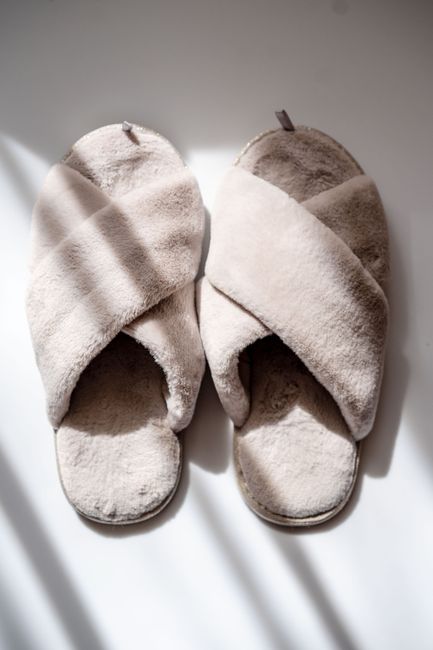
Then there’s the slipper-size problem, which anyone with larger feet knows well — you get handed a pair clearly built for someone several shoe sizes smaller, and you either shuffle around with your heels hanging off the back or just give up and go barefoot. And the classic one: forgetting entirely, striding straight across an ondol platform in outdoor shoes because you were mid-conversation and not looking at the floor, then having to do the awkward backward shuffle-apologize-remove routine while everyone at the table watches. Sounds like it should stop happening after the first year. Oddly enough, it doesn’t, not completely — I still catch myself hesitating at unfamiliar thresholds, checking for that telltale step before committing either way.
What eventually won me over wasn’t the etiquette lecture — it was just how the house feels. Bare feet on a warm floor in the middle of a Korean winter is a genuinely good feeling, one that no amount of central heating blowing hot air from a vent ever quite replicates. You stop seeing the rule as a restriction and start seeing it as the reason the whole system works as well as it does.
FAQ: Quick Answers for Shoes-Off Situations
Do I really need to take my shoes off in every Korean home, even a modern one with a Western-style living room?
Yes, essentially every time, even in a high-rise apartment full of sofas and a dining table. The lowered hyeongwan at the entrance is your cue — if you see that step down and a shoe rack, shoes come off there, no exceptions for how modern the interior looks. When in doubt, just watch what your host does at the door and follow a beat behind them.
How do I know if a restaurant expects shoes off, since not all of them have obvious signs?
Look for a raised platform, a step up near the seating area, or a small shoe cubby at its edge — that’s jwajik seating, and it means shoes stay behind at the step. Regular table-and-chair seating on the main floor usually stays shoes-on. If you’re unsure, a quick glance at other diners’ feet as you walk in tells you everything you need to know before a server has to correct you.
What about hospitals, hagwons, and offices — is it always slippers there too?
It depends on the place rather than being a fixed nationwide rule. Schools and most hagwons are consistent about indoor shoes. Hospitals vary — larger general hospitals tend to stay shoes-on in public corridors, while smaller clinics with ondol-style rooms often provide slippers at the entrance. Offices are the least predictable of the three; some keep a slipper shelf by the door out of habit, others don’t bother at all. The safest move anywhere unfamiliar is simply to look for shoes already lined up at the entrance before you commit to keeping yours on.